What this blog covers
A unified loyalty architecture gives every touchpoint (app, website, store and support) the same customer record, the same balance and the same rules. Key pieces include a loyalty engine as the source of truth, real-time sync between channels, deep links that move customers between web and app, in-store triggers connected to the point of sale and referral rewards. The Coffee Island case describes a loyalty integration that syncs balances across web and app, an app link for “Buy on App,” an in-store NFC feature tied to the point of sale and a referral programme. The page publishes zero quantified results.
Quick Answer: Choose one system to own customer identity, balances and rules, and have the app, website and point of sale read and write through it. Sync balances in near real time, use deep links to carry customers from web to the right app screen, connect in-store triggers to the point of sale, design referral rewards that benefit both sides and test every flow across channels. Keep store, menu and brand data consistent across app, web and listings, since search engines and AI assistants learn the chain from those facts.
Table of Contents
- The Three-Systems Problem
- Step One: Pick the Source of Truth
- Step Two: Sync in Real Time
- Step Three: Connect the Store
- Step Four: Hand Off Between Web and App
- Step Five: Design Referrals With Care
- What the Coffee Island Project Shows
- One Brand, One Entity: Search and AI Visibility
- The Loyalty Architecture Framework
- Client Proof From Our Work
- Key Takeaways
- CXO Takeaway
The Three-Systems Problem
Most chains grow their digital estate in layers: a website first, a loyalty card system next, an app later. Each layer arrives with its own database and its own idea of who the customer is. The result is familiar: duplicate accounts, balances that disagree and staff who cannot answer a simple question.
The fix starts with a design decision, since technology comes second. Decide that the customer has one identity and one balance, and that every channel serves that single record. Everything else in this guide supports that decision.
Our guide on CDP versus CRM helps you decide which system should hold the customer record, and our piece on when a mobile app actually drives business value tests whether the app belongs at the centre of the plan.
Step One: Pick the Source of Truth
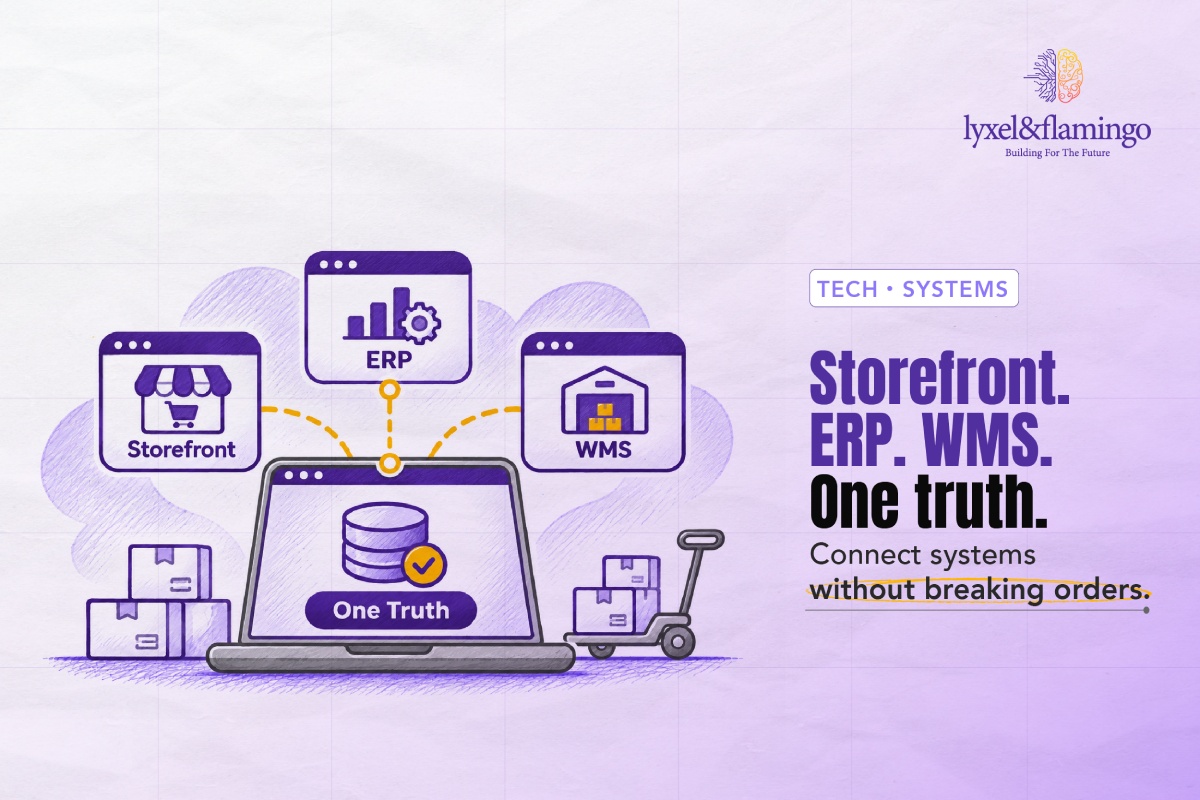
A loyalty engine, a CDP or a CRM can serve as the source of truth. The choice matters less than the commitment: one system owns the member ID, the balance, the tier and the reward rules. The app, website and point of sale call it, and none keeps a private copy of the balance.
Define the core objects: member, transaction, reward, tier and offer. Decide how a customer is identified across channels, usually by phone number or email verified at sign-up. Plan for guests who have yet to join, for merging duplicate accounts and for privacy requests. Document the rules for earning and redeeming in one place, so that a rule change updates every channel at once.
Step Two: Sync in Real Time
A balance that lags confuses customers and invites support tickets. The Coffee Island case describes a loyalty integration with Xeno that syncs loyalty “leaf” balances across web and app. That kind of connection shows the target: when the balance changes anywhere, every channel reflects it within seconds.
Design the sync with the failure modes in mind. Use unique transaction references so that a retry never awards points twice. Show a clear status when the balance is updating. Handle the offline case in stores with poor connectivity by queuing events and reconciling when the connection returns. Reconcile daily: compare transactions in the point of sale with the loyalty engine and flag any gap.
Our guide on the WhatsApp layer in omnichannel customer experience shows how messaging can carry balance and reward updates to customers outside the app.
Step Three: Connect the Store
The store is where loyalty meets habit. The Coffee Island case describes an in-store NFC feature called “Tap Me,” connected to the Posify point of sale, which rewards customers with a free coffee after ten taps.
The lesson applies widely: a store trigger should be quick for the customer and reliable for the staff. A tap, a scan or a phone number lookup must work in a second, even at a busy counter. Link the trigger to the point of sale so the reward posts to the same record the app shows, and give staff a clear way to resolve a failed tap.
Our guide on O2O strategies explains how to bridge online and in-store experiences.
Step Four: Hand Off Between Web and App
Customers move between mobile web and app without thinking about it. Your system should support that move. The case describes Branch.io for a “Buy on App” handoff. Deep linking technology of this kind lets a customer who taps a link on the web land on the right screen in the app, or fall back to the store listing if the app is missing.
Plan the key handoffs: a web banner to open the app, an email link that opens a specific offer, a QR code in store that opens the loyalty screen. Test them on each major device and operating system, with the app installed and uninstalled. Keep link behaviour consistent, so marketing campaigns can rely on it. Our piece on full-funnel CRO strategy explains how to review journeys end to end.
Step Five: Design Referrals With Care
Referral programmes work when both sides gain. The case describes a Buddy Referral Program that gives both the referrer and the new customer 1% extra Leafs.
Keep referral rules simple, show progress inside the app and watch for abuse. Set limits, require a first purchase before the reward posts and review unusual patterns. Measure referral quality as well as quantity: do referred customers return? Our guides on retention marketing and LTV-led growth show how to value repeat behaviour.
What the Coffee Island Project Shows
Coffee Island is a global coffee brand, and the case study, published in August 2026, describes the goal of bringing its digital experience to India with localised UX, real-time loyalty sync, in-store NFC and a referral programme.
The approach started with competitor research for localised UI and UX, then built the integrations described above: Xeno for loyalty sync, Branch.io for the app handoff, NFC tied to the Posify point of sale and the referral programme. The case study publishes zero quantified results, so this article treats it as an architecture reference and quotes zero outcomes.
The pattern transfers to any retail chain: research the local customer, choose one source of truth, connect the store and design hand-offs between web and app.
One Brand, One Entity: Search and AI Visibility
Consistent data across app, website and store listings helps search engines and AI assistants understand a chain as a single, trustworthy entity. Keep names, addresses, hours, menus and offers consistent everywhere. Google’s documentation on local business structured data shows how to share business hours and menu details with search engines in a structured way, and our guide on Google Business Profile optimisation for hyper-local SEO explains how to keep store listings accurate.
Create web pages for loyalty programme rules, reward terms and app features, written in plain language, since customers and assistants ask about them. Link the app store pages from the website and keep naming identical. Our guide on entity-based SEO explains why consistent facts build recognition, and our GEO playbook covers how assistants choose sources.
The Loyalty Architecture Framework
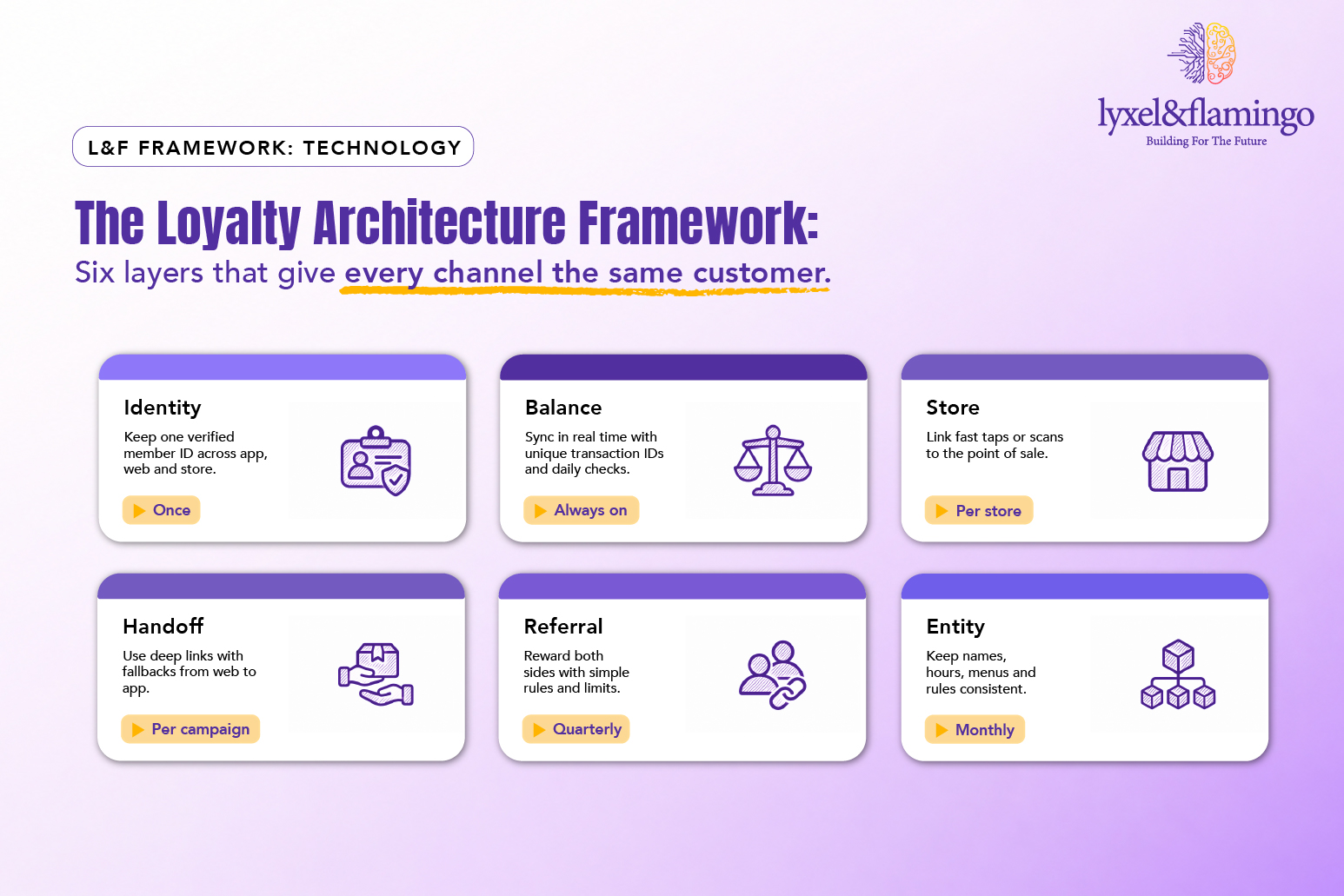
Framework Explained
Treat the framework as a layered build. Identity and balance come first, because every later layer reads from them.
Step 1: Identity. Choose one source of truth for member ID, balance, tier and rules, and verify members by phone or email at sign-up. Check: every channel reads the same record.
Step 2: Balance. Sync balances in near real time with unique transaction IDs, retries and a daily reconciliation against the point of sale. Check: a purchase appears in the app within seconds.
Step 3: Store. Connect taps, scans or number lookups to the point of sale and give staff a clear fix for failures. Check: a busy counter completes a loyalty action in about a second.
Step 4: Handoff. Use deep links that open the right app screen and fall back to the store listing if the app is missing. Check: you tested links on major devices, with the app installed and uninstalled.
Step 5: Referral. Reward both sides with simple rules, show progress in the app and set limits to limit abuse. Check: you measure whether referred customers return.
Step 6: Entity. Keep names, hours, menus and programme rules identical across app, site and listings. Check: a quarterly audit compares them.
CLIENT PROOF POINT: Lyxel&Flamingo built Coffee Island’s India mobile app and website with localised UX, loyalty sync across web and app, in-store NFC connected to the point of sale and a referral programme. The case study publishes zero quantified results. Read the full Coffee Island case study.
Client Proof From Our Work
Loyalty and POS integration carry the architecture in this guide. Coffee Island and Taco Bell both connected loyalty to apps, web and stores.
Coffee Island publishes zero figures. Taco Bell’s figures describe the whole platform and carry zero period label.
Key Takeaways
- Give customers one identity and one balance, owned by a single source of truth.
- Sync balances in near real time and reconcile with the point of sale every day.
- Make store triggers fast for customers and reliable for staff.
- Use deep links so web, email and QR codes land on the right app screen.
- Keep store, menu and loyalty facts consistent so search engines and assistants see one brand.
CXO Takeaway
If a customer asked three different channels for their loyalty balance today, would all three give the same answer? Test it before you plan the next feature. Lyxel&Flamingo’s technology team built Coffee Island’s loyalty flows around that single answer.
Frequently Asked Questions
A design where the app, website and stores read and write the same customer record, balance and rules through one source of truth.
Lagging balances create support tickets and erode trust, while real-time sync keeps every channel identical.
It describes the integrations and features built, and it publishes zero quantified results.
Consistent store, menu and programme facts across channels help search engines and assistants recognise the chain as one entity.