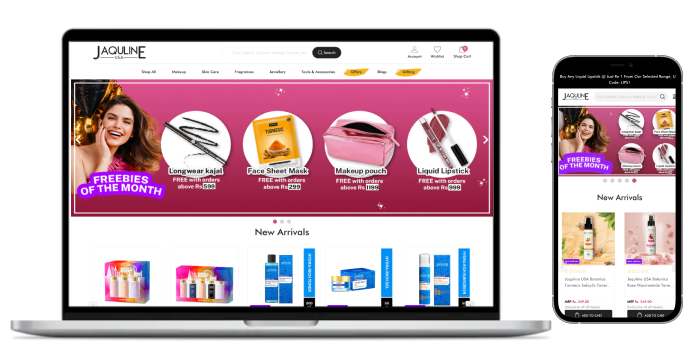
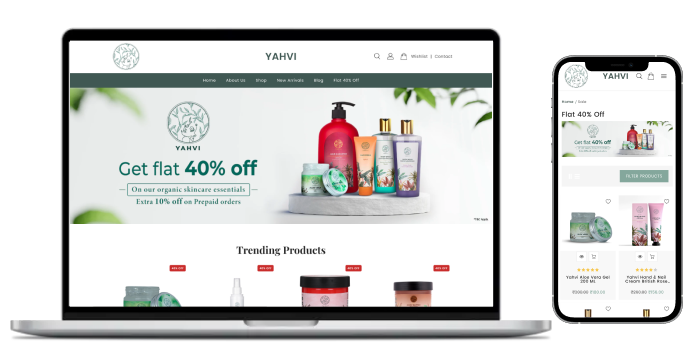
- Mobile Responsive
- Pre-Built Templates
- Basic Theme Customization
- Up to 4 Shopify App Integration
- Speed Optimized
- CMS Based Website
Meet Lyxel&Flamingo, your digital media powerhouse. As a leading force in media planning and digital experience management, we deliver innovative solutions globally. With our expertise in Shopify, we blend creativity with technology, empowering businesses to thrive. Join us on a digital journey where Shopify expertise meets endless possibilities.
Effortlessly set up and utilize Shopify POS, your key to selling in person with seamless integration to your online store.
Unlock the benefits of Shop Pay with Shopify Payments, allowing customers to save their information for swift and efficient checkouts.
Leverage Shopify's renowned drag-and-drop builder, a user-friendly feature that simplifies the process for beginners and seasoned users alike.
Add up to 15 administrators to your Shopify panel, each with their own login and specific permissions for effective management.
Experience a smooth end-to-end setup of Shopify services, ensuring a comprehensive solution for launching and managing your new e-commerce store.
Tailor your Shopify store with customizable themes that match your unique style and brand, ensuring a fully functional and user-friendly e-commerce platform.
Opt for a cost-effective solution with Shopify ecomm sites, providing superior functionality without the hefty price tag compared to alternatives like WordPress or Magento.
Access smart tools for in-depth insights into your store's performance through Shopify's advanced analytics dashboards, facilitating data-driven decision-making for business success.
Our Partners
popular
Our Clients
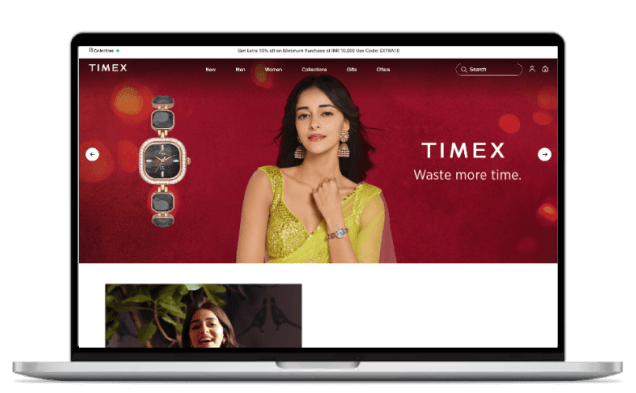
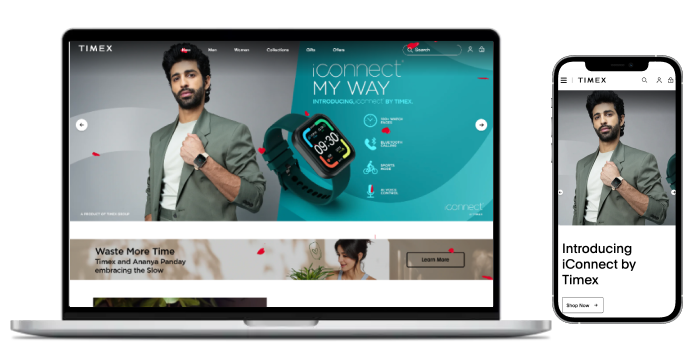
Watches & Accessories
Shopify
RazorPay
Blue Dart
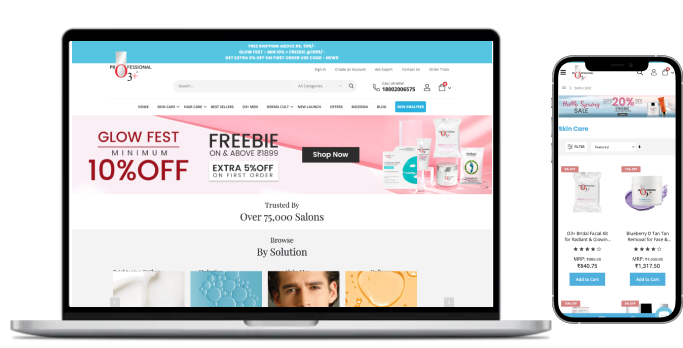
Beauty & Wellness
Shopify
RazorPay
Blue Dart
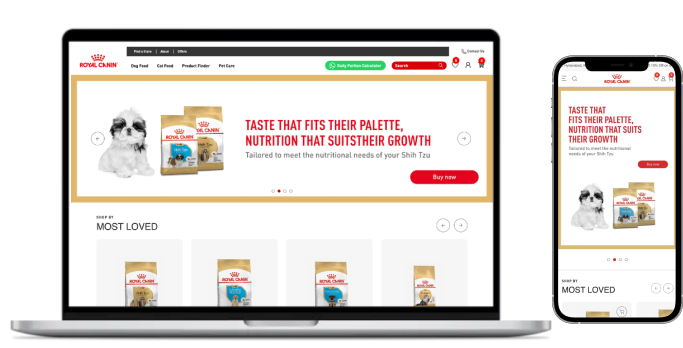
Pet Food
Shopify
Cashfree
Eshopbox
Beauty & Wellness
Shopify
RazorPay
Shiprocket, DHL
Unicommerce
Beauty & Personal Care
Shopify
RazorPay, CC Avenue
Shiprocket
Unicommerce
Beauty & Wellness
Shopify
RazorPay
Shiprocket, DTDC
Shopify takes care of hosting, security, payments, checkout, and order management so brands do not have to. The idea is that the infrastructure runs in the background and the team focuses on merchandising, marketing, and customer experience instead. Storefronts are built on themes, functionality is extended through apps, and everything – products, inventory, customers, orders – is managed through one centralised admin. Pricing is a monthly subscription plus transaction fees. Brands start on a standard theme or go straight to custom theme development or a headless setup depending on what the experience needs to do. The platform runs everything from single-product launches to nine-figure D2C operations.
Shopify Plus is the enterprise tier built for brands processing significant order volume, running multiple stores, selling internationally, or needing deeper customisation. The functional differences that matter most are: dedicated checkout customisation through Shopify Functions and Checkout Extensibility, up to 200 stores under one organisation, B2B native support, higher API call limits, and a dedicated launch manager. The signals that a brand has outgrown standard Shopify are usually operational rather than revenue-based: needing custom checkout logic, running multiple regional storefronts, hitting API rate limits, or requiring B2B and D2C from the same backend. The cost moves from a few hundred dollars a month to roughly $2,500 per month minimum.
Shopify is the right choice for brands that want speed to market, predictable hosting, a mature app ecosystem, and an interface their internal team can actually operate without constant developer involvement. It is the wrong choice for marketplaces with multiple sellers, brands needing complex B2B pricing logic outside what Shopify Plus supports, or businesses where the storefront is genuinely a secondary surface to a custom application. The honest trade-off is platform lock-in – Shopify owns the infrastructure, the checkout, and increasingly the customer relationship through Shop Pay. Brands accepting that trade in exchange for operational simplicity usually find it worthwhile; brands resisting it should look at composable commerce instead.
Most brands do not outgrow Shopify – they outgrow how they have built on Shopify. Before assuming the platform is the constraint, audit whether the issues are theme architecture, app sprawl, data fragmentation, or genuine platform limits. Real platform-level signals to move are: needing fully custom checkout flows that even Shopify Functions cannot support, complex multi-vendor marketplace logic, ERP-led commerce where the storefront is downstream of a master system, or product configurations beyond what variants and metafields can model. For most brands hitting these limits, the next step is either Shopify Plus with a headless frontend, or a composable commerce stack on commercetools, Saleor, or BigCommerce.
A basic Shopify store on a paid theme with standard configuration and a small catalogue typically costs $3,000 to $8,000 in build fees, plus the Shopify subscription. A mid-market D2C store with custom theme work, app integrations, content migration, and a refined design system costs $15,000 to $40,000. A Shopify Plus build with custom checkout, headless frontend, multiple regional stores, or B2B configuration starts at $50,000 and scales upward based on scope. The variables that move these ranges most are design customisation, app integration complexity, content and product data quality at handoff, and the number of stakeholder approval cycles.
A standard Shopify store on a configured theme launches in 3 to 5 weeks with a clean brief and ready product data. A custom-themed D2C store with bespoke design, app integrations, and content migration takes 8 to 14 weeks. A Shopify Plus build with custom checkout, headless frontend, or multi-region setup takes 14 to 24 weeks. The single biggest variable across all timelines is product catalogue and content readiness at kickoff – missing photography, incomplete product descriptions, and unfinished category architecture move launches by weeks, not days.
Headless Shopify decouples the storefront from Shopify’s templating layer, with Hydrogen (Shopify’s React-based framework) typically rendering the frontend while Shopify handles cart, checkout, and order management through the Storefront API. The benefits are real – faster page loads, design flexibility beyond what Liquid allows, and the ability to compose content from multiple sources. The costs are also real – higher build cost, more complex maintenance, and a dependency on a frontend developer team that standard Shopify never required. Headless is worth the complexity when frontend performance is directly tied to conversion, when the brand needs an experience genuinely impossible on a standard theme, or when content lives across multiple systems that need to flow into the storefront.
Dawn is Shopify’s free reference theme – well-built, fast, accessible, and a strong starting point for most brands launching with a budget under $10,000 in theme work. Paid themes from the Shopify Theme Store work for brands wanting a specific aesthetic or layout out of the box, but most paid themes are heavily skinned versions of similar underlying structures – the differentiation is shallower than the visuals suggest. A custom theme makes sense when the brand has a distinct visual identity, complex merchandising logic, or storefront features that don’t exist in any off-the-shelf theme. The honest pattern most brands miss: a customised Dawn build often outperforms a paid theme on speed, accessibility, and long-term maintainability.
Yes, but the experience depends heavily on which tier of Shopify a brand is on. Shopify Plus has native B2B functionality including company profiles, customer-specific catalogues and pricing, payment terms, draft orders, and quote workflows – all running on the same storefront as the D2C side if needed. Standard Shopify supports basic B2B through apps and customer tagging, but lacks the native account hierarchy and price list logic that enterprise B2B usually requires. For brands selling to both end consumers and businesses from the same brand, Shopify Plus B2B is now mature enough to replace separate B2B platforms in most cases. Brands with complex distributor networks or contract pricing should still validate fit before committing.
Yes – Shopify supports subscriptions natively through the Subscription APIs introduced in 2021, with implementation handled by apps like Recharge, Bold Subscriptions, Awtomic, or Shopify’s own Subscription app. The architecture matters: subscription apps now sit inside Shopify’s checkout rather than redirecting to a separate flow, which is the change that made Shopify viable for subscription brands at scale. The decision between subscription apps comes down to billing model complexity, customer portal flexibility, and reporting depth. For brands where subscriptions are the entire business model rather than an add-on, the choice of subscription app is often as consequential as the choice of platform itself.
Shopify Markets is the native international selling layer, supporting region-specific pricing, currencies, languages, payment methods, and domains from a single store. For most brands launching in two to five markets, Markets is the right starting point – it handles geo-detection, currency conversion, local payment methods, and duties calculation without requiring multiple stores. For brands with fundamentally different catalogues, brand positioning, or operational models across regions, separate stores under Shopify Plus’s multi-store setup is the better path. The most common mistake is launching internationally without local payment methods – cards and PayPal alone underperform significantly in markets like Germany (SEPA, Klarna), the Netherlands (iDEAL), Japan (Konbini), and India (UPI).

A clean migration covers four data layers – products and variants, customers and order history, content (pages, blogs, collections), and SEO equity. The SEO layer is where most migrations fail: every old URL needs a 301 redirect to its new Shopify equivalent, meta titles and descriptions need to carry over, and existing structured data needs to be reimplemented in the new theme. Product images, descriptions, and SKUs migrate cleanly through CSV imports or apps like Matrixify. Customer data and order history require careful handling because Shopify imports do not preserve original order timestamps unless explicitly mapped. A staged launch with 30 days of redirect monitoring after go-live is the single most important post-migration practice.
Shopify performance is mostly a theme and app problem, not a platform problem. The largest performance gains come from: choosing a well-built theme (Dawn is faster than 90% of paid themes), aggressively auditing installed apps (each app injects JavaScript and CSS that compound), serving images through Shopify’s CDN with proper sizing and modern formats like WebP and AVIF, lazy-loading below-the-fold content, and minimising third-party scripts especially in the header. Most Shopify stores fail Core Web Vitals not because of Shopify but because of accumulated app debt – 15 to 20 installed apps each adding their own scripts. The fastest stores run 5 apps or fewer.
AI visibility for Shopify stores depends on three layers: technical foundations, content depth, and ecosystem credibility. The technical layer means clean Product, FAQPage, BreadcrumbList, and Organization schema (most Shopify themes implement these partially – they need to be completed and validated), fast page loads, semantic HTML in product descriptions, and a coherent author and brand entity model. The content layer means rich product descriptions that answer real buyer questions, category pages that work as topic hubs rather than thin SKU grids, and blog content that builds topical authority around the products being sold. The ecosystem layer – third-party reviews, PR mentions, marketplace listings – is increasingly the dominant signal AI models weight when deciding which brands to cite as credible.