

Our Partners









Key Stats
Brands
Offices & 2 studios
Full Time Employees
Managed Ad Spends
Average ROAS
Campaigns Executed
Process
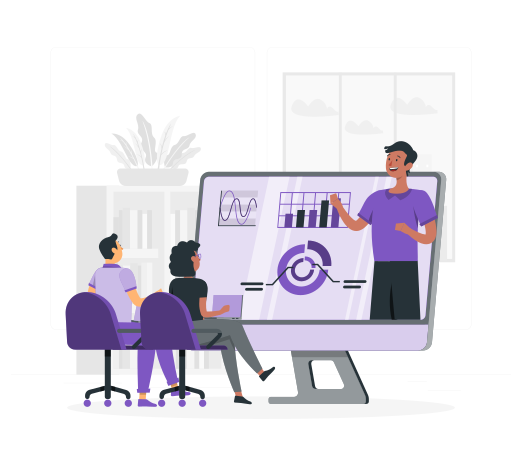
Our process entails a comprehensive examination of your digital assets and campaigns, integrating industry research and insights from top advertising platforms to produce a comprehensive and detailed analysis and audit report.
Get in Touch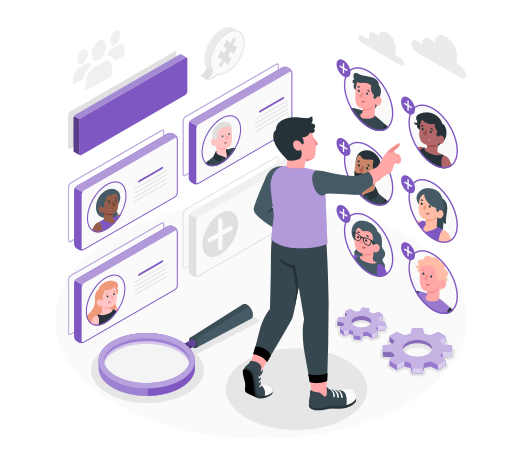
In the next phase of our digital planning process, we delve into audience persona understanding and mapping. This critical step enables us to tailor strategies that resonate with your target audience, enhancing campaign effectiveness.
Get in Touch
Once we reviewed the category, campaigns and also gathered insights on the brands Target audience we work on the detailed Digital Strategy & Planning, where we formulate a cohesive roadmap to harness the insights gathered, ensuring a well-structured and effective digital campaign strategy.
Get in Touch
Here, we implement the devised plan and maintain ongoing vigilance. Our digital experts actively fine-tune campaigns and creatives to surpass business goals, ensuring optimal performance.
Get in Touch
We employ in-house advanced tracking dashboard and industry-leading analytics tools to gauge strategy effectiveness, extract invaluable insights, and fuel continuous enhancement and expansion.
Get in Touch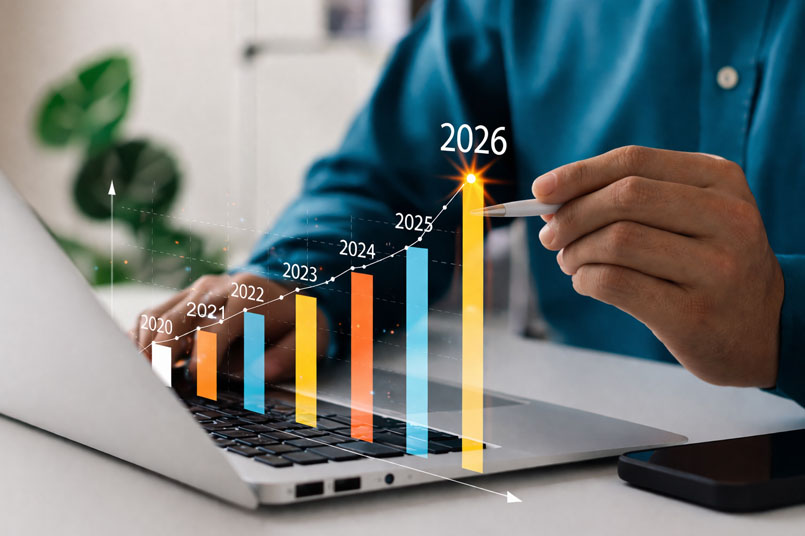
We excel in expanding online businesses and achieving goals through our expert digital marketing strategies. With performance marketing solutions, we optimize your advertising budget for measurable ROI. Our tailored approaches and comprehensive reporting ensure success in boosting sales, increasing app installations, and creating compelling brand stories, helping you thrive in the digital landscape.
Get in Touch
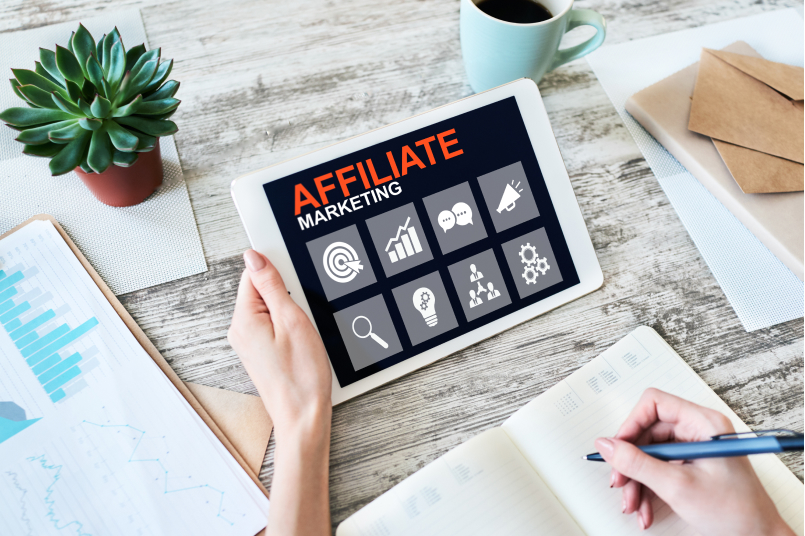
Lyxel&Flamingo offers affiliate and publisher partnerships to fuel online businesses’ growth, increase revenue, and enhance brand awareness. Our paid media services encompass various strategies, like pay-per-conversion, pay-per-install, OTT advertising, branded content, and display ads. Through data-driven campaigns, we optimize marketing channels to deliver tangible results, ensuring maximum ROI and sustainable business growth.
Get in Touch

Lyxel&Flamingo’s brand building solutions foster deeper connections with your audience through YouTube marketing, OTT advertising, and impactful storytelling. We collaborate with relevant publishers to boost brand awareness and loyalty. Data-driven insights ensure optimal performance, positioning your brand for widespread exposure and lasting customer relationships.
Get in Touch
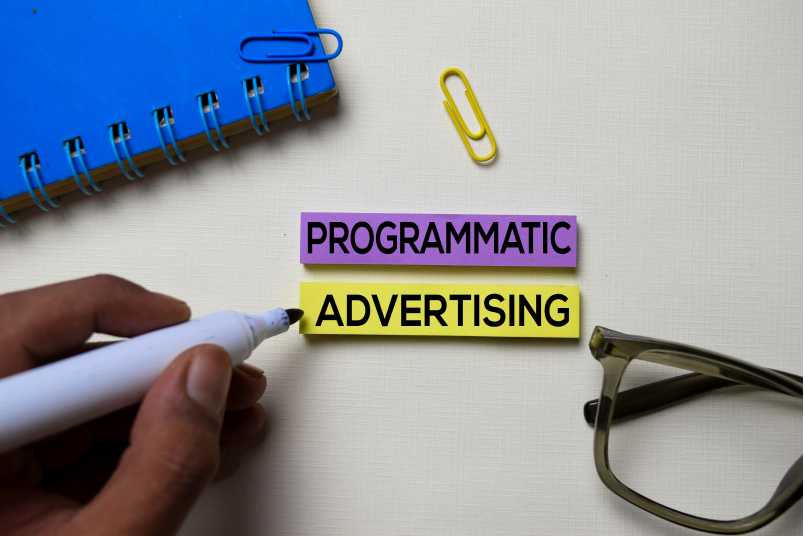
Lyxel&Flamingo provides cutting-edge programmatic and interactive ads solutions that enhance brand reach and affinity. Using advanced algorithms and real-time data analysis, our highly targeted campaigns ensure your brand message reaches the right audience at the right time and in the right context across various digital channels, maximizing your impact in the digital space.
Get in Touch

Lyxel&Flamingo specializes in strategic-level marketing, offering retention campaigns and drip marketing to foster customer loyalty and maximize lifetime value. Personalized messages based on customer data and behaviour engage existing customers, while drip campaigns nurture leads with automated, scheduled emails. Advanced segmentation, A/B testing, and data analysis optimize our approaches, delivering exceptional results and cultivating long-lasting customer connections for sustainable business growth.
Get in Touch

We perform thorough and exhaustive digital audits for brands, assessing the impact of their marketing campaigns, technology infrastructure, branding efforts, content strategies, performance marketing effectiveness. Our commitment goes beyond audits; we collaborate with brand teams to implement recommendations and continuously monitor results.
Get in Touch

Lyxel&Flamingo’s seo services cover website SEO (on-page and off-page), App SEO, YouTube SEO, and vernacular SEO. Our strategic approach boosts online visibility and attracts targeted traffic. With comprehensive content strategy integration, technical SEO expertise, and data-driven optimization, we ensure your brand establishes a strong online presence, reaches a broader audience, and enjoys sustained growth in the competitive digital landscape.
Get in Touch
Our Clients














Our objective was to capture the increased focus of users on fitness & personal well-being. By effectively using our first pa ... read more

We at The Body Shop have a never say die attitude and our agency shares this energy with us. All of us were pushed to a brick wa ... read more
I have been collaborating with Lyxel&Flamingo for the past year, and there are several aspects that I truly appreciate about ... read more


Lyxel&Flamingo has been a true partner in our efforts to scale up as well as optimise our digital marketing across a spectru ... read more

We have been working with the team at Lyxel&Flamingo for almost 9 years now. The team has been one of the core pillars in dr ... read more

Our objective was to capture the increased focus of users on fitness & personal well-being. By effectively using our first party data we were able to offer a personalized experience. We were able to efficiently utilize Google platforms which ultimately resulted in increased sales and an improved ROAS.
We at The Body Shop have a never say die attitude and our agency shares this energy with us. All of us were pushed to a brick wall and forced to respond to a very unusual situation. With support from Google, we set out to touch heights previously thought impossible. The team at Lyxel&Flamingo along with Google saw the trends even before we did and were very proactive in sharing immediately actionable insights. As a result our brand site is buzzing like never before.
I have been collaborating with Lyxel&Flamingo for the past year, and there are several aspects that I truly appreciate about them. They demonstrate agility, and adaptability, and maintain a proactive approach. Above all, they are highly result-driven, not only making promises but consistently delivering the best.
Lyxel&Flamingo has been a true partner in our efforts to scale up as well as optimise our digital marketing across a spectrum of objectives and platforms. As a digital marketing agency, we've been working with Lyxel&Flamingo for many years and have seen them evolve into a more strategic partner, with their cross-platform abilities and deep functional & platform insights based on experience. From targeting conversions from the most affluent consumers for our consumer IPs to enhancing the reach of our content to optimising ROIs for subscription products, Lyxel&Flamingo has worked with our teams across the spectrum. The team is functionally adept and a pleasure to work with, a balance of creative & analytical insights. And more importantly, eager to learn and adapt in an era of hyper-clutter & customised needs.

We have been working with the team at Lyxel&Flamingo for almost 9 years now. The team has been one of the core pillars in driving our brand's growth. Their support has been amazing during all these years and have delivered great results for a large number of campaigns.
Harness The Potential Of The Most Influential Platforms
Connect With Your Target Audience On The World's Largest Social Media Platforms, Effectively Engaging And Converting Potential Customers.
Dominate Search Engine Results And Capture High-Intent Users Through Strategic Google Ads Campaigns.
CASE STUDIES





GA4 Migration
Learn More
Cloud Services
Learn More
Cybersecurity Services
Learn More
Automation
Learn More
Shopify
Learn More
SEO
Learn More
Full funnel marketing
Learn More
Third Party Marketplaces
Learn More
Shopify Plus
Learn More
Technology
Learn MoreMedia Creative Optimization
Learn MoreMedia operations covers the discipline of planning, buying, optimising, and measuring paid media across every platform a brand uses to reach its audience – from search and social to programmatic, retail media, and CTV. In 2026 the work has expanded significantly: signal loss from iOS and cookie deprecation has made measurement a craft in its own right, retail media networks have created new high-intent channels that didn’t exist five years ago, and AI-driven algorithmic delivery means the operations team’s job is now as much about feeding the algorithm well as building the campaign. The functions a modern practice handles: media planning, audience and account architecture, in-platform buying and optimisation, conversion infrastructure (CAPI, server-side tracking, consent management), measurement and incrementality testing, and reporting that connects spend to business outcomes. The difference between a strong practice and a weak one is usually visible in the measurement layer, not the buying layer.
The working paid media stack now spans seven categories: paid search (Google, Bing), paid social (Meta, LinkedIn, TikTok, Snap, Pinterest, X), video (YouTube, connected TV platforms like Hotstar, JioCinema, Netflix Ads, Disney+), retail media (Amazon Ads, Flipkart, Myntra, Blinkit, Instamart, BigBasket Now), programmatic display and video through DSPs (DV360, The Trade Desk, Amazon DSP), audio (Spotify Ads, Apple Podcasts), and increasingly, AI search surfaces (Perplexity, ChatGPT, Bing Chat). Most brands run four to six of these actively at any time. The mistake is treating each platform as a separate campaign rather than as part of a single audience journey – the platforms a buyer encounters in week one shape the conversion that happens in week three on a different platform.
Demand-side platforms like DV360, The Trade Desk, and Amazon DSP let brands buy ad inventory across display, video, audio, and CTV automatically, bidding on individual impressions in real time. That means showing up for the right audience across millions of sites and apps, not just the ones you have a direct relationship with. Programmatic complements paid social and search rather than replacing them: search captures active demand, social builds and converts demand within feed environments, and programmatic builds reach and prospects audiences across the long tail of the internet. The most-asked question is whether programmatic still works in a post-cookie world – the honest answer is yes, but the practice has shifted heavily towards contextual targeting, retail media DSP integrations, and first-party data activation rather than third-party cookie-based segments.
Retail media is advertising on retailer-owned platforms – sponsored product listings on Amazon, Flipkart, Myntra, Blinkit, Instamart, BigBasket Now – that target shoppers at the point of purchase intent. It is the fastest-growing channel in performance marketing because it captures buyers who have already entered the consideration window, with shorter paths to conversion than any other paid surface. The category has grown from a niche on Amazon to a $150B+ global market because every major retailer now monetises its first-party data through an ad network. The strategic shift for brands: retail media is increasingly the budget battle that determines category share, not just a sales acceleration channel – if a brand isn’t visible on the retailer surfaces where its category is bought, no upper-funnel investment compensates.
CTV (connected TV) and OTT (over-the-top) advertising runs across streaming platforms like Hotstar, JioCinema, Netflix Ads, Disney+, YouTube on TV, and the increasing range of ad-supported tiers across SVOD services. The buying happens either directly through platform self-serve interfaces (YouTube, JioCinema, Hotstar) or programmatically through DSPs with CTV inventory. Brands should invest in CTV when they need reach with brand-building creative at TV-quality contexts, when their audience has shifted away from linear TV, or when they need premium video inventory to complement performance-led social and search. Treating CTV as a performance channel is a category error – it works as measurable upper-funnel video, but expecting last-click ROAS from a 15-second pre-roll on streaming is the wrong evaluation frame.
Publishers, creators, and comparison sites earn commission on conversions they drive. That is the affiliate model, and it tends to work well for D2C brands with clear conversion paths and meaningful basket sizes. It is rarely a primary acquisition channel, but it complements paid search and social effectively through comparison content and creator-led recommendations that drive consideration. Affiliate earns its place in the mix when partner quality is strong and tracking is clean – and rarely otherwise.
Attribution hasn’t fully broken, but it has fragmented – iOS signal loss, cookie deprecation, and walled gardens make any single attribution model an incomplete view. The modern measurement approach combines three layers: in-platform metrics for short-term campaign optimisation, incrementality testing for causal lift, and media mix modelling (MMM) for cross-channel budget allocation. The L&F Weavr platform was built specifically to unify these signals into a single view, pulling data from every paid platform a brand runs and reconciling it against business outcomes. The honest framing brands need to accept: no system delivers perfect attribution, and the most expensive mistake is spending years trying to build one rather than operating well with imperfect information.
Media mix modelling is a statistical technique that measures the impact of marketing channels on business outcomes using historical data – typically 2 to 3 years of weekly spend and outcome data across paid media, organic channels, pricing, distribution, and external factors. Multi-touch attribution (MTA) works at the user level, tracking individual journeys across touchpoints and assigning conversion credit. The two answer different questions: MTA tells you which ad in a user’s journey deserved credit; MMM tells you how much each channel actually drove revenue at a portfolio level. With signal loss eroding MTA accuracy, MMM has returned to prominence – particularly modern MMM tools like Meta’s Robyn, Google’s Meridian, and commercial platforms like Recast and Aryma that compress MMM cycles from quarterly to weekly.
Incrementality testing measures the causal lift a paid media channel delivers – the conversions that would not have happened without it – by comparing outcomes between exposed and unexposed audiences. ROAS measures attributed revenue divided by spend, but treats every attributed conversion as if the ad caused it. The gap between the two is often significant: incrementality studies regularly show that 30% to 50% of ‘ROAS-attributed’ conversions on lower-funnel paid search and remarketing would have happened anyway. This matters because brands optimising on ROAS without incrementality checks tend to over-invest in channels that capture demand rather than create it – which is why most performance-led brands eventually hit a growth ceiling that more spend doesn’t fix.
iOS 14.5’s App Tracking Transparency and the gradual deprecation of third-party cookies in Chrome have together removed the user-level identifiers that drove targeted advertising and conversion tracking for over a decade. The modern response operates on three fronts: server-side conversion tracking (Conversions API on Meta, Enhanced Conversions on Google, Stape and similar GTM server containers) to recover lost signal, first-party data activation through customer data platforms (CDPs) and CRM integrations, and measurement approaches that don’t depend on user-level tracking – incrementality and MMM. Brands waiting for signal to come back are operating on a flawed premise: signal loss is permanent, and the operational discipline of working with it is now the differentiator between strong and weak media practices.
The Conversions API is Meta’s server-side method for sending conversion events directly from a brand’s servers to Meta – bypassing the browser-based Pixel which is increasingly degraded by iOS tracking restrictions, ad blockers, and consent management. Google has an equivalent in Enhanced Conversions, and most major platforms now offer similar server-side APIs. Implementing CAPI typically recovers 20% to 40% of conversion signal that the browser-side pixel alone misses, with the recovery rate higher for iOS-heavy audiences. The implementation cost is moderate – 1 to 3 weeks of engineering depending on stack complexity – and the ROI is usually clear within 30 days through improved attribution and algorithm performance. Skipping CAPI in 2026 is operating with a measurable handicap.
There is no universal answer, but the working framework for most consumer brands starts with category and funnel logic, then layers in business stage. For D2C brands with strong product-market fit, a 50-30-20 split between paid social (Meta, TikTok), paid search (Google, Bing), and reach-building channels (CTV, YouTube, programmatic) is a reasonable baseline. Retail-heavy brands should shift 20% to 40% of budget to retail media (Amazon, Flipkart, Blinkit, Instamart). Brands in awareness-building stages skew towards reach channels; brands in efficiency stages skew towards demand capture. The dangerous version of channel allocation is letting last-click attribution drive the split – it concentrates spend on demand-capture channels and starves the channels that create demand in the first place.
The honest answer most agencies won’t give: in-housing makes sense for brands with the scale, talent budget, and operational depth to run media as a permanent capability. The threshold is usually around $5M+ in annual digital media spend, a dedicated head of growth or media, and the willingness to invest in measurement infrastructure beyond what comes free with the platforms. Below that threshold, agencies typically deliver better outcomes because the same brand cannot afford to hire specialists across every channel – the depth penalty of generalist in-house teams costs more than the agency fee they save. The hybrid model – in-house strategy and decisioning with agency execution and specialist channels – works well for brands transitioning between the two.
Most agencies price in one of three ways. Some charge a percentage of media spend, typically 8% to 15%, with the rate coming down at higher spend tiers. Others work on a monthly retainer, usually somewhere between $3K and $30K depending on scope. The third model is outcome-based, a base retainer with a performance bonus tied to specific KPIs. Under $50K a month in paid media spend, a flat retainer tends to make the most sense. Between $50K and $500K, percentage-of-spend or hybrid structures are more common. Above $500K, brands usually negotiate fixed-fee arrangements with defined service-level agreements. The cheapest agency is rarely the most economical – lost performance from weak optimisation costs more than fee differentials in most engagements.
AI search and AI Overviews are absorbing high-intent queries that previously drove paid search clicks – some categories now see 20% to 40% of informational queries resolved without a click-through. The paid media response operates on three fronts: shifting budget from generic informational keywords (which AI absorbs) towards branded and high-intent transactional terms (which AI still routes to advertisers), investing in retail media surfaces where AI Overviews don’t yet compete, and treating brand search visibility as a paid media outcome rather than only an organic concern. The deeper shift: paid media is increasingly being asked to compensate for organic visibility loss to AI – and brands building GEO authority simultaneously protect both their organic surface and their paid efficiency.