What this blog covers
On Amazon and Flipkart, every keyword needs the right field, the right purpose and zero competition from another keyword on the same listing. Few brands design that structure on purpose. This guide explains what keyword architecture means on a marketplace, how a field map decides where each term lives, why each platform needs its own placement, and how overlap and stuffing waste indexing and ad spend. Practitioners get the Four-Tier Keyword Map linking listing fields to ad campaigns, plus a monthly search-term review that keeps the structure current.
Table of Contents
- What keyword architecture means on a marketplace
- The field map that decides where every keyword lives
- Why each marketplace needs its own keyword placement
- The overlap and stuffing mistakes that waste indexing
- Keyword architecture for Amazon and Flipkart: the Four-Tier Keyword Map
- The framework explained
- Let search term reports rewrite the architecture every month
- Client proof point: Bosch Power Tools on Amazon
- Key takeaways
- The CXO takeaway
Most marketplace listings run on a pile of keywords scattered across fields. The winners run on keyword architecture.
Quick answer: Keyword architecture for Amazon and Flipkart is a planned structure that gives every keyword a tier (brand, category, attribute and use case, or long-tail), a listing field and a campaign role. On Amazon, keep each term unique across fields and respect the single backend search-terms field, reported by Amazon staff at 250 bytes. On Flipkart, confirm field rules in Seller Hub. Review search term reports monthly and let converting terms climb the structure.
What keyword architecture means on a marketplace
Keyword architecture gives every keyword a job. Each term gets a tier and a home, on the listing and inside ad campaigns. When the plan is missing, teams drop keywords wherever space allows and repeat the same terms across fields, wasting the little room a listing has.
This matters more on marketplaces than on a website. Listings have fixed fields with strict limits, and shoppers search inside the platform, where the first few results take most of the attention. Brands must decide which words earn a title slot and which belong in bullets, descriptions or hidden fields. Space is the scarce resource.
Architecture also joins organic and paid. A keyword that converts in a campaign deserves a place in the listing. A keyword that earns impressions and zero sales deserves a rethink. As our marketplace growth strategy across Amazon, Flipkart and Myntra shows, each platform rewards different signals. One plan per platform.
Begin with the shopper’s language. Collect terms from search reports, reviews, questions and service tickets, then group them by intent: brand, product type, attribute and problem-led. Group before you place.
The field map that decides where every keyword lives
Each marketplace offers a set of fields, and each field has a different job. On Amazon, the main text fields are the title, bullet points, description and A+ Content, plus a hidden search-terms field. Flipkart has its own title, key features, description and search keywords field. Confirm current fields and limits in Amazon Seller Central and Flipkart Seller Hub, since they vary by category and change over time.
Treat the title as the headline for your most important terms. Front-load the words that identify the product and keep it readable, because mobile shoppers see only the first part. PDP copy for humans and algorithms applies here: plain answers first, depth second. A title that reads like a sentence persuades shoppers.
The Four-Tier Keyword Map: where each tier lives
Bullets and descriptions carry attributes and use cases: material, size, compatibility and the problems the product solves. Keep each term in one place unless a repeat has a clear purpose. Spread, always.
The hidden field carries the extra terms visible fields leave out. Amazon staff have stated on the Seller Central forum that the generic keywords field is a single field with a 250-byte limit, measured in bytes, and Amazon’s search terms guidance advises lowercase, spaces between words and unique terms. Check the rule for your marketplace. Exceed it, and the field may stop indexing.
Why each marketplace needs its own keyword placement
Amazon and Flipkart differ in field structure, shopper behaviour and the signals that earn visibility. A set built for one leaves gaps on the other, so copy-paste across platforms costs rank. The elements shoppers decide on in three seconds shows how much of the decision happens before a shopper reads a single keyword.
Share the research, localise the placement. Terms, intent groups and competitor language can be common. Placement, title format and campaign structure follow each platform’s rules. Check each platform’s seller guidelines for banned content like competitor names and unsupported claims.
Seasonal demand adds a layer. Festive marketplace SEO explains why listings that build relevance early compete better when festive searches spike. Add gifting and occasion phrases to the architecture before the peak.
Platform rules shift, and forum advice ages fast. Use official seller guidelines as the final word and record the date you last checked. Verified, dated, owned.
The overlap and stuffing mistakes that waste indexing
Repetition is the commonest mistake. A word already in the title, bullets or description can stay out of the hidden field, because the platform already indexes it. Repeats burn bytes that could carry new terms. Audit for duplicates first.
Stuffing comes second. A title crammed with synonyms reads badly, lowers click-through and risks policy trouble, while an irrelevant hidden field attracts mismatched traffic. Relevance beats volume, and conversion feeds rank.
Third: a campaign structure that ignores the listing. The Big Billion Days and Great Indian Festival listing checklist shows how titles, images and stock must be ready before a sale, and the same readiness applies to every keyword you bid on. Align campaigns to listing strength.
Add negatives with equal care. Exclude terms that bring irrelevant traffic, and promote converting terms from broad campaigns into exact match. Every term, one job. Prune as you grow.
Keyword architecture for Amazon and Flipkart: the Four-Tier Keyword Map
Four tiers give every keyword a place, a purpose and an owner.
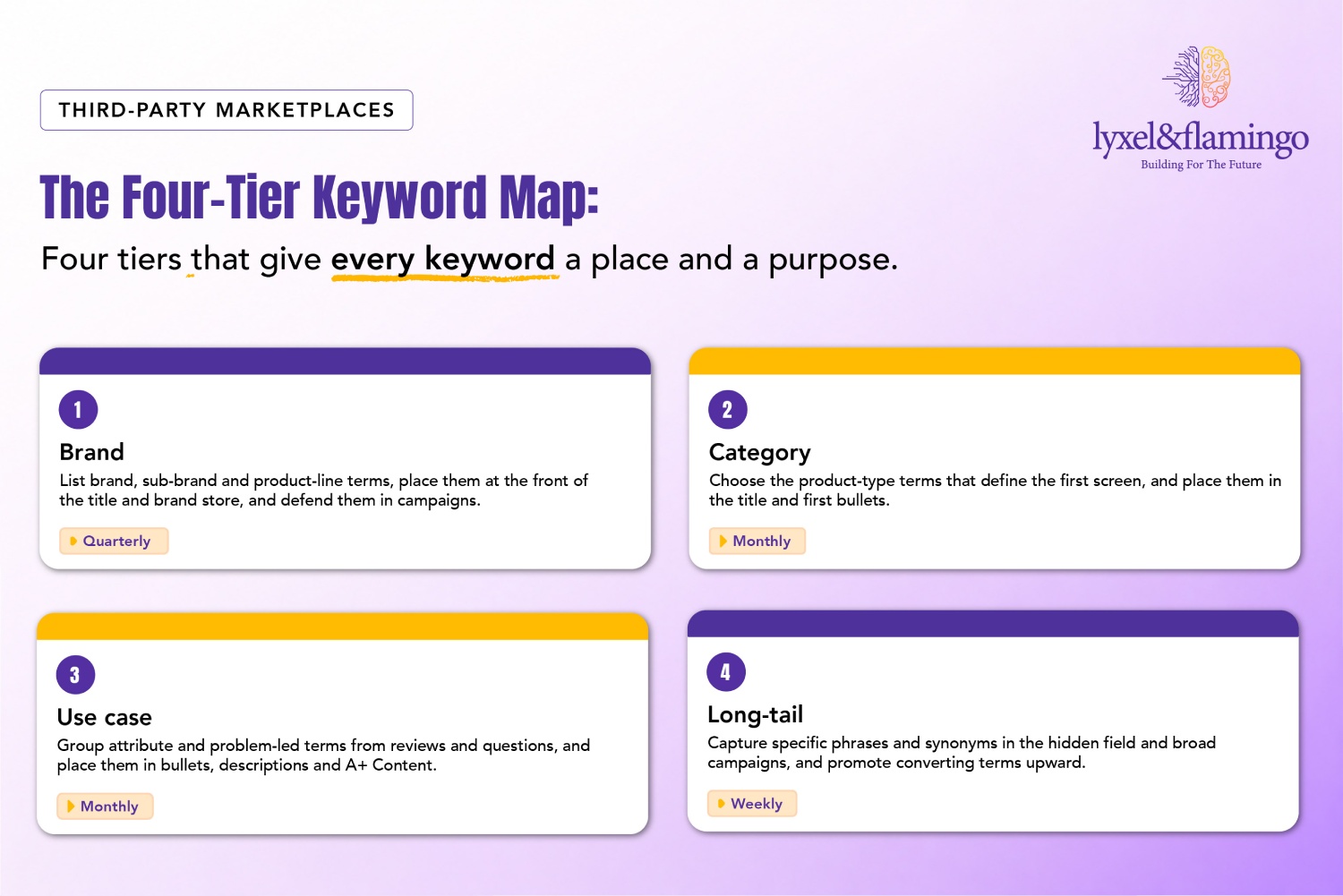
The framework explained
Brand: Start with the terms already yours: brand, sub-brands and product lines. Lead the title and brand store with them, and cover them in campaigns at a controlled cost so your name stays yours. The cheapest tier to defend, and the costliest to lose.
Category: Choose the product-type terms shoppers use before they know a brand. They define the first screen, so place them in the title and opening bullets, and bid with a clear share-of-voice target. Refresh monthly, since category language shifts with seasons and launches.
Use case: Group the attribute and problem-led terms that qualify the product: material, size, compatibility, skin or hair concern, occasion. Mine reviews, questions and service tickets, and write them in the shopper’s own words. These terms convert because they answer a specific need.
Long-tail: Capture specific phrases, synonyms and spelling variants in the hidden field, within its limit, and in broad or automatic campaigns. Review search term reports weekly, promote winners into exact match and listing fields, and exclude poor performers. The long tail is where you discover your next category term.
Let search term reports rewrite the architecture every month
Shoppers tell you what they want, in their own words, in search term reports. Review them monthly for terms that convert, terms that earn clicks and few sales, and surprise terms. Converting terms move up the structure. Clicks with low sales get questioned.
Standard practice promotes converting search terms from automatic or broad campaigns into exact match and adds poor performers as negatives. That loop turns paid discovery into a permanent asset. Link it to your listing review, so a term that proves itself in a campaign also earns a field on the page.
Report the structure on one page: visibility, conversion, efficiency and availability, each with an owner, plus share of voice on brand and category terms.
Protect your own terms. Defending ROAS through the festive bidding war explains why competitors bid hardest on high-intent terms in peak weeks. Keep brand terms covered and cap generic ones. A defended brand tier is cheap insurance.
Client proof point: Bosch Power Tools on Amazon
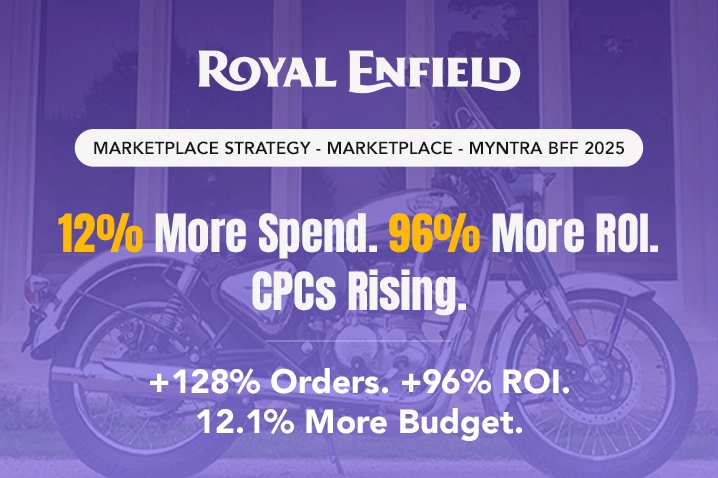
Bosch Power Tools’ Amazon campaigns lacked segment structure, which brought irrelevant searches and a higher ACoS. With Lyxel&Flamingo, the brand segmented campaigns, added relevant keywords on a regular rhythm and used negative keywords to control irrelevant spend across sponsored brand, sponsored brand video and other formats.
- +114% sales in one year, focused on relevant keywords
- +100% order rate, with ACoS held below category benchmark
- +36% conversion rate in one year
- 36% lower ACoS, even as spend increased
Read the full story in the Bosch Power Tools case study.
Key takeaways
- Keyword architecture gives every keyword a tier, a field and a campaign role.
- Amazon and Flipkart have different fields and rules: one research base, two placements.
- Repeat a term across fields only with a reason. Space is the scarce resource.
- Promote converting search terms from broad campaigns into exact match and into the listing.
- Review search term reports monthly and rewrite the structure on the evidence.
The CXO takeaway
Ask your marketplace lead for a one-page keyword map per platform showing each tier, its listing field and the campaign that covers it. Confirm brand terms are defended and every repeated term has a reason. Ask to see the monthly search-term review and the terms promoted into listings. Tie the map to total sales and share of voice, and assign one owner per marketplace for field rules and their last-checked date.
A question for your next planning meeting: if you printed your three best-selling listings today, could you point to the job each keyword is doing?
The Lyxel&Flamingo marketplace team designs keyword architecture, listing structure and campaign mapping across Amazon and Flipkart. Share your top listings and we will map the first tiers with you.
Frequently Asked Questions
A list is a collection of words. Architecture assigns each word a tier, a listing field and a campaign role, and strips out repeats. The structure shows gaps and overlaps at a glance and keeps the work repeatable when people or seasons change.
Amazon staff have said on the Seller Central forum that the generic keywords field is a single field with a 250-byte limit, measured in bytes. Use lowercase, spaces between words and skip terms already in the title, bullets or description. Limits vary by category and marketplace, so confirm in Seller Central.
Share the research, localise the placement. Fields, limits and shopper behaviour differ, so title formats and field use should follow each platform’s guidelines. Check Flipkart Seller Hub for current rules and record the date you checked.
Review search term reports monthly and the full architecture before each festive season and major launch. Promote converting terms, exclude poor performers and refresh synonyms as shopper language shifts. Make small, dated changes and give each a few weeks before judging.
Build the structure at category and sub-brand level, then template it across products with product-specific attributes filled in. Start with the highest-revenue listings, use search term reports to prioritise refinements and keep a master record of tiers, fields and last-check dates.