What This Blog Covers
On quick-commerce apps the search results are the shelf, and most orders go to the first products a shopper sees, yet few brands know where they appear. This article explains why share of voice and top-of-search position matter more than impressions, how a query map and a narrow hero range hold position, and why store-level availability decides whether visibility can pay. It also gives a CMO a weekly scorecard for Blinkit, Zepto and Instamart that links media, content and stock, so every rupee of visibility lands on a shelf that can actually fulfil the order.
Qucik Answer: Quick commerce search optimisation means winning visible positions for the queries your buyers type or tap, with stock available in the stores that serve them. Share of voice and top-of-search visibility matter most because most purchases come from the first few products shown. Map your queries, focus on hero products, protect store-level availability and track share of relevant searches, not raw impressions.
Table of Contents
- Why on a Ten-Minute Shelf the First Results Take the Orders
- The Paid Squeeze Reshaping Who Wins the Quick-Commerce Shelf
- What a Query Map and Hero Range Do for Share of Voice
- What Metrics Matter When Impressions Mislead
- What the Ten-Minute Shelf Model Asks You to Run
- Framework Explained
- The Stock Signal That Decides Whether Your Ranking Earns Revenue
- CLIENT PROOF POINT
- KEY TAKEAWAYS
- The CXO Takeaways
Why on a Ten-Minute Shelf the First Results Take the Orders
Quick commerce changes how shoppers decide. They are not browsing a catalogue; they want something now and choose from what appears first. The shelf is the search result. A brand outside the first screen is not on it.
That makes position a business metric, not a search detail. It decides whether a shopper sees you at all. First screen or nothing. Ask who in your organisation owns it.
The guide to quick commerce marketing states the consequence: share of voice and top-of-search visibility are the most important metrics because most purchases come from the first few visible products. That is an analytical judgement rather than a platform statistic. It is still the right starting point for a scorecard. Build yours around it.
Ask a simple question of your own account. For your ten best queries, where do you appear on the first screen? If the answer is “we do not know”, you have found the first task. That ownership question matters because search position spans media, content and supply, and without one accountable leader each team will optimise its own piece and lose the shelf together.
The Paid Squeeze Reshaping Who Wins the Quick-Commerce Shelf
A guide to winning on quick commerce reports Blinkit above 50% market share as of September 2025, Zepto at roughly 29% and Swiggy Instamart at around 24.1%. It also reports that the three platforms crossed ₹3,000 crore in FY25 advertising revenue and were expected to reach ₹4,900 crore the following year. Market shares overlap because sources differ, so treat the figures as a guide to scale, not a precise ranking. The direction is clear: the shelf is getting more expensive.
Paid placement therefore competes with organic position for the same first screen. The guide to winning on quick commerce shows how a brand that only buys ads pays for what better discoverability will earn. Buying visibility is a legitimate tactic; relying on it is an expensive habit. Balance the two in the plan.
Ad formats differ by platform, so plan the mix before you commit budget. Format first, budget second. Ask each platform what is available to your category and at what minimum. As paid placement grows more crowded, organic discoverability becomes a competitive advantage that is harder to buy and easier to defend, which argues for balanced investment.
Listing alone does not produce revenue. A brand can pay to be listed on all three platforms and still see weak sales if the funnel behind the listing is broken. Fix the funnel before you buy more reach. Listing is the ticket, not the result.
What a Query Map and Hero Range Do for Share of Voice
Start with a query map. List the generic, category and branded terms your buyers use, then check where you appear for each in the stores that matter. Focus budget and content on the products that convert for those queries. The map turns “visibility” from a feeling into a table.
The listing side matters as much as the media side. The guide to Blinkit, Zepto and Instamart SEO covers titles, content and discoverability, so organic position does part of the work. Organic position lowers the amount of paid support you need to hold the same place. A query map is also the simplest way to brief an agency, because it replaces vague requests for visibility with a ranked list of terms, owners and targets.
Narrow ranges win here. Spreading thin dilutes position and complicates availability. Fewer products, firmer position. Pick the hero products by conversion, not by internal politics.
Review the map monthly. Queries change with season, festivals and new launches. Add a column for who owns each query and when it was last checked. Position decays without attention.
What Metrics Matter When Impressions Mislead
A guide to winning on Blinkit states the measures that matter: share of relevant searches in the top results, store-level in-stock rate, conversion on viewed products and sustained velocity, not raw impressions. Vanity sits in impressions. The signal sits in whether you hold position. Give leadership a one-page weekly view with these four measures, so decisions about bids, stock and content are made from the same facts.
Share of relevant searches in the top results tells you whether you own the first screen for queries that matter. In-stock rate tells you whether that position can turn into an order. Conversion on viewed products shows whether the page and price persuade. Velocity shows whether position will hold.
Each measure answers a different management question, and the discussion in winning on Blinkit: assortment, visibility and the ten-minute shelf shows how they connect. Ask your team to report all four weekly, side by side. A rise in one with a fall in another is the pattern to investigate.
Retire impressions as a headline metric in leadership reports. Keep them for diagnostics. Position first.
What the Ten-Minute Shelf Model Asks You to Run
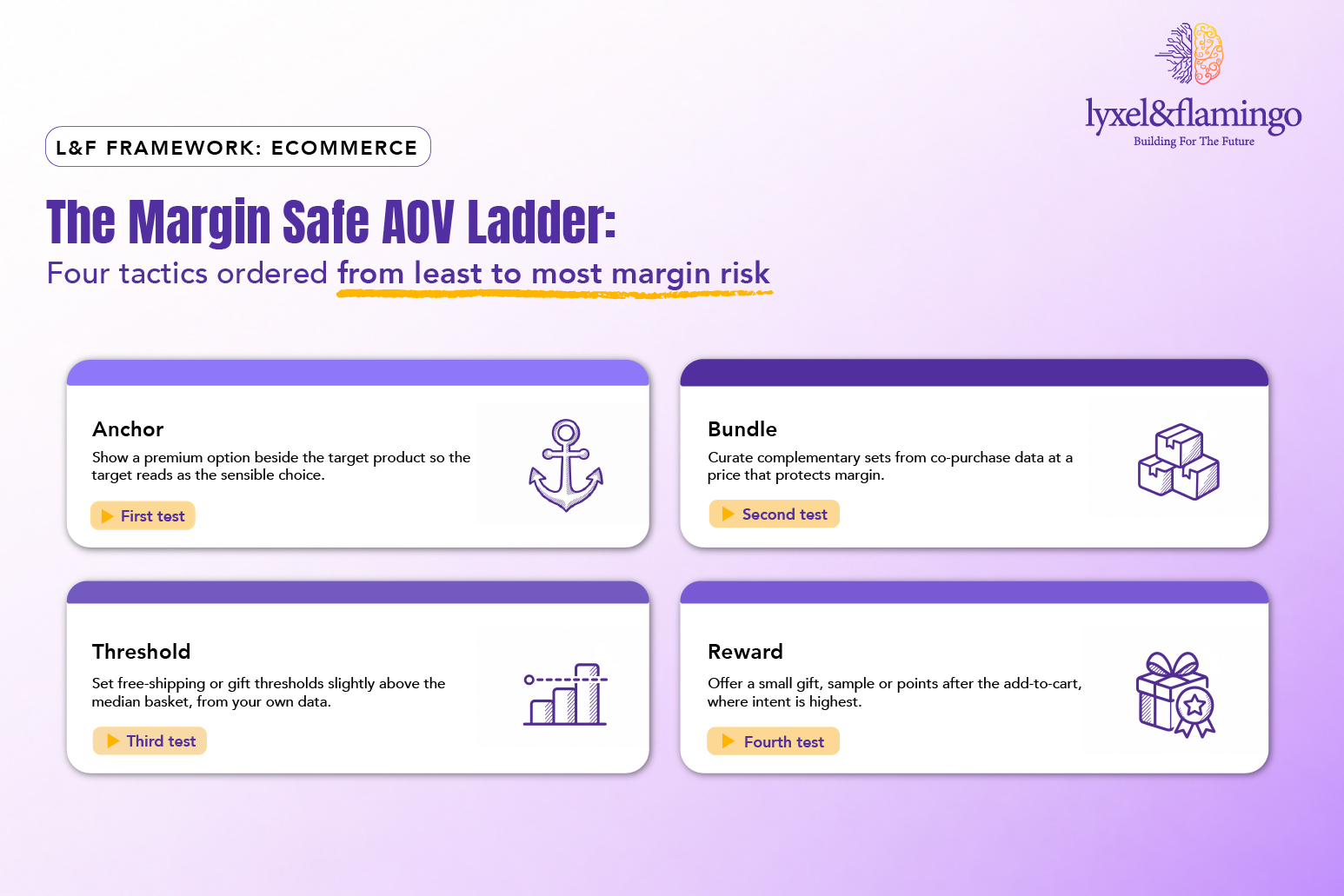
Four steps to own the in-app shelf for the queries that matter. The cadence is a recommended working pattern.
Framework Explained
Find: The query map is your shelf plan. List the generic, category and branded terms buyers use, then record where you appear for each in your priority cities. The map shows where you already hold position, where competitors do and which terms deserve budget, so every later decision starts from evidence.
Fit: Narrow the range to the hero products that convert for each priority query. Give them clear titles, strong imagery and pricing that matches what the shopper wants in that moment. Fewer, better products hold position more reliably than a wide range that dilutes visibility and complicates stock.
Stock: Availability is a precondition for visibility. Link campaign controls to store-level in-stock rate so spend shifts away from empty shelves and towards stores that can fulfil. Coordinate with supply planning, because the best placement fails when the nearest dark store has no stock.
Sustain: Position decays without attention. Review share of relevant searches in top results, conversion on viewed products and velocity every week, and adjust bids and placements. Repeat the full loop before each festive window, when shopper behaviour and competitor spend both shift.
The Stock Signal That Decides Whether Your Ranking Earns Revenue
A top position on a product that is out of stock in the nearest dark store produces nothing. Visibility and inventory must be planned together, store by store. Visibility and stock, together. Share the demand map between marketing and supply planning.
This is the logic of availability as marketing. Paid support should pause or shift when stock is low, and replenishment should follow your demand map. Set automatic rules rather than relying on daily attention. A rule is cheaper than a lost week.
Watch for channel effects too. Strong quick-commerce growth can pull volume from other trade, so review it against general and modern trade sales. The goal is incremental revenue, not a transfer between channels. Report both views.
Know the formats. Zepto and Instamart ad formats sets out where discovery happens, so spend lands where shoppers look. Match each format to a query type and a product role. Agree a trigger with supply planning, for example pausing support on a product when store-level stock falls below an agreed level, so that spend never chases an empty shelf.
CLIENT PROOF POINT
Soulflower on Blinkit: Soulflower, a clean beauty brand, entered the hair-oil category on Blinkit against long-established names. By concentrating on hero products and protecting their visibility, it grew share of voice past its own festive peak. The comparison period is October to December 2024.
+23% share of voice · +21% units sold · +27% gmv · +40% new customer acquisition · +12% market share
Source: L&F case study (October to December 2024), cross-checked with the live post Winning on Blinkit: Assortment, Visibility and the Ten-Minute Shelf. The results appear in the case study document and in that post; no standalone case study page was found.
KEY TAKEAWAYS
- On quick-commerce apps, the first results capture most orders, so search position is the shelf.
- Track share of relevant searches in top results, in-stock rate, conversion on viewed products and velocity, not impressions.
- Build a query map and concentrate on hero products that convert for those terms.
- Link paid support to store-level availability so visibility never points at an empty shelf.
- Review the map and the metrics weekly; position decays without attention.
The CXO Takeaways
Ask your marketplace lead for your top-of-search share on your ten most valuable queries, split by city. If nobody can supply it, you are buying quick-commerce reach without a shelf plan. Make one leader accountable for search position across media, content and supply, and review a one-page weekly view of share of relevant searches in the top results, in-stock rate, conversion on viewed products and velocity. Agree a stock trigger with supply planning, so paid support pauses on any product that falls below an agreed level in the stores serving your key pin codes.
Frequently Asked Questions
The principles overlap, though the shelf is smaller and store-level. A brand competes for a few visible slots in a pin-code-specific catalogue, so availability and conversion matter as much as keywords. Titles, content and pricing still shape discoverability, yet a product that is out of stock in the nearest dark store loses its position however well it is written. Plan quick-commerce search as a joint effort between content, media and supply, not as a keyword task alone.
Do both in order of readiness. Fix titles, content and stock so products convert, then add paid support to the products and queries that already perform. Organic position lowers the amount of paid support you need to hold the same place, which makes it a direct saving. Review the split monthly, since festive demand and competitor spend change what it takes to hold the first screen.
Share of relevant searches in the top results, store-level in-stock rate, conversion on viewed products and velocity. Impressions alone hide whether you hold position. Report all four weekly, side by side, so a rise in one with a fall in another is visible straight away. Keep impressions for diagnostics only, and show the trend by city, since position differs by pin code.
Start with the hero products that convert for your priority queries and expand when they hold position. Spreading thin dilutes visibility and complicates availability. Choose hero products by conversion and margin, not by internal preference, and review the list each month. Add a product only when stock is deep in the stores that serve your key pin codes.
Review position on your priority queries weekly and the full query map monthly. Queries shift with season, festivals and new launches, so a map that was right in August is out of date by Diwali. Give each query an owner and a last-checked date, and set a trigger for action when your position drops off the first screen. Run a fuller review before every festive window, when competitor spend and shopper behaviour both change.