
What this blog covers
Why one-off CRO sprints produce diminishing returns, and how a persona-led programme connects the two ends of the conversion problem who you are designing for, and what the events prove they did into a continuous loop. This is the blog that ties strategy (personas) to measurement (events and pixels) into a single operating discipline.
Table of Contents
Persona-led CRO, defined: Closing the loop between who and what
Persona-led CRO is conversion rate optimisation organised as a continuous loop that begins with a clear definition of who the user is and ends with measured evidence of what they did, then feeds that evidence back into the next design decision. It joins two disciplines that are usually kept apart: persona strategy, which decides who you are designing for and what job they are trying to do, and behavioural measurement, which records how they actually behaved. Most CRO fails in the gap between them, either optimising without knowing who for, or measuring without a hypothesis worth testing. Persona-led CRO removes that gap by making the two ends of the same loop.
Why one-off CRO sprints stall
CRO is frequently run as a series of disconnected experiments: change a button, shorten a form, test a headline that produces a burst of improvement and then flatten out. They flatten because they optimise tactics without a strategy for who is being served or a system for learning from the result. The lever that keeps the returns compounding is relevance, and relevance comes from knowing your personas: McKinsey found that companies which get personalisation right generate 40% more revenue from those activities than average performers (Next in Personalization, 2021), and personalisation is impossible without personas to personalise for. Meanwhile, the leaks a sprint mindset never systematically finds keep costing: cart abandonment averages 70.19% (Baymard Institute, 2024), and closing it durably requires a loop, not a one-off fix.
Where CRO programmes break
- Optimising without personas: Testing changes without knowing who you are optimising for produces a slightly better average experience and no real relevance gain.
- Personas without instrumentation: Beautiful persona work that is never connected to event data stays theoretical – you never learn whether the journeys you designed actually worked.
- Measurement without a hypothesis: Reading analytics with no persona-driven question to answer produces observation, not insight data you can describe but not act on.
- Sprint, not loop: One-off experiments deliver a spike and then stall, because nothing feeds the result back into the next decision.
- No per-persona view: Aggregate conversion rates hide which persona is converting and which is failing; the single most useful cut of the data goes unmeasured.
The defining feature is the arrow from step 5 back to step 2: this is a loop, not a line. Each pass makes the personas sharper, the journeys better, and the measurement more targeted.
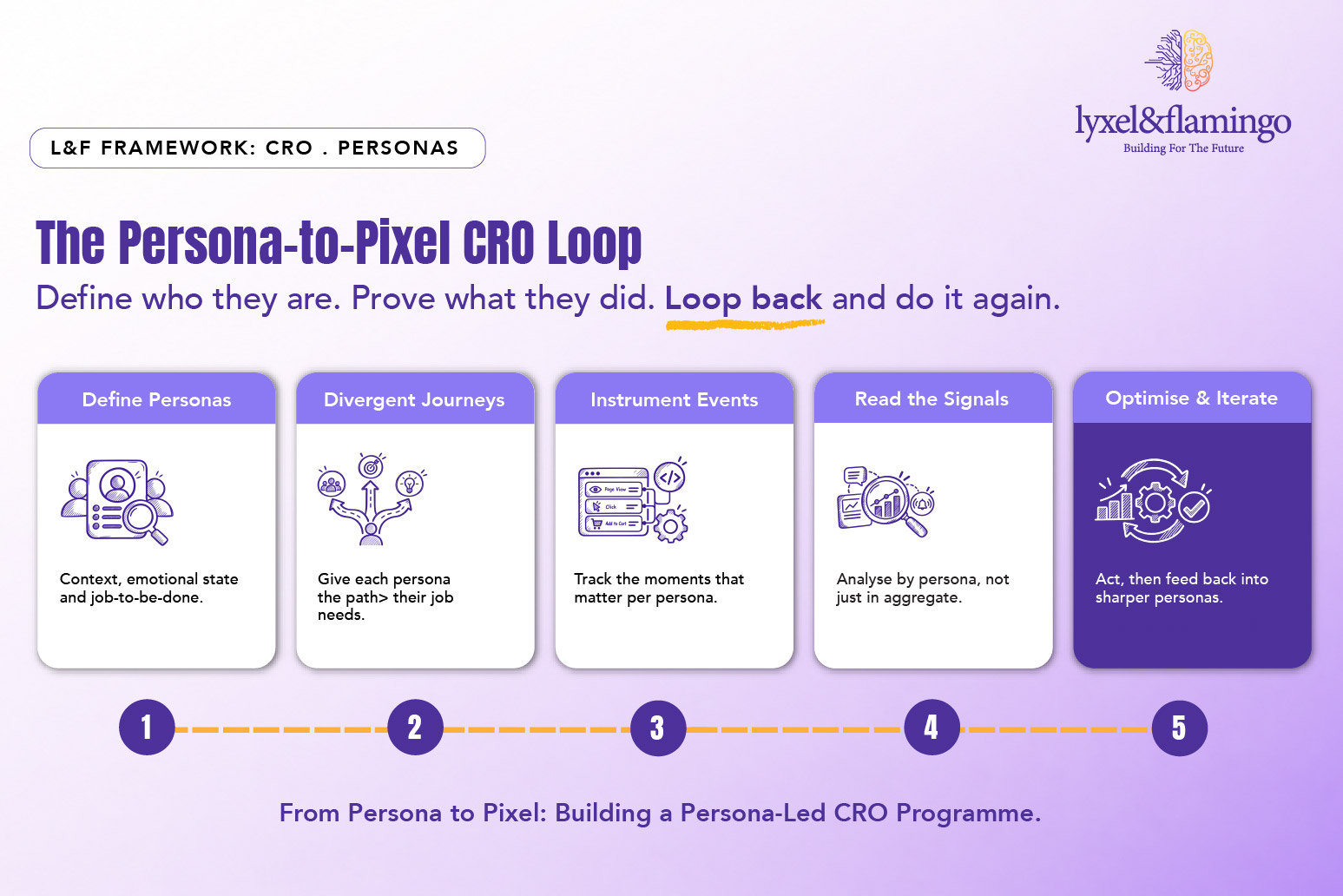
The Framework explained
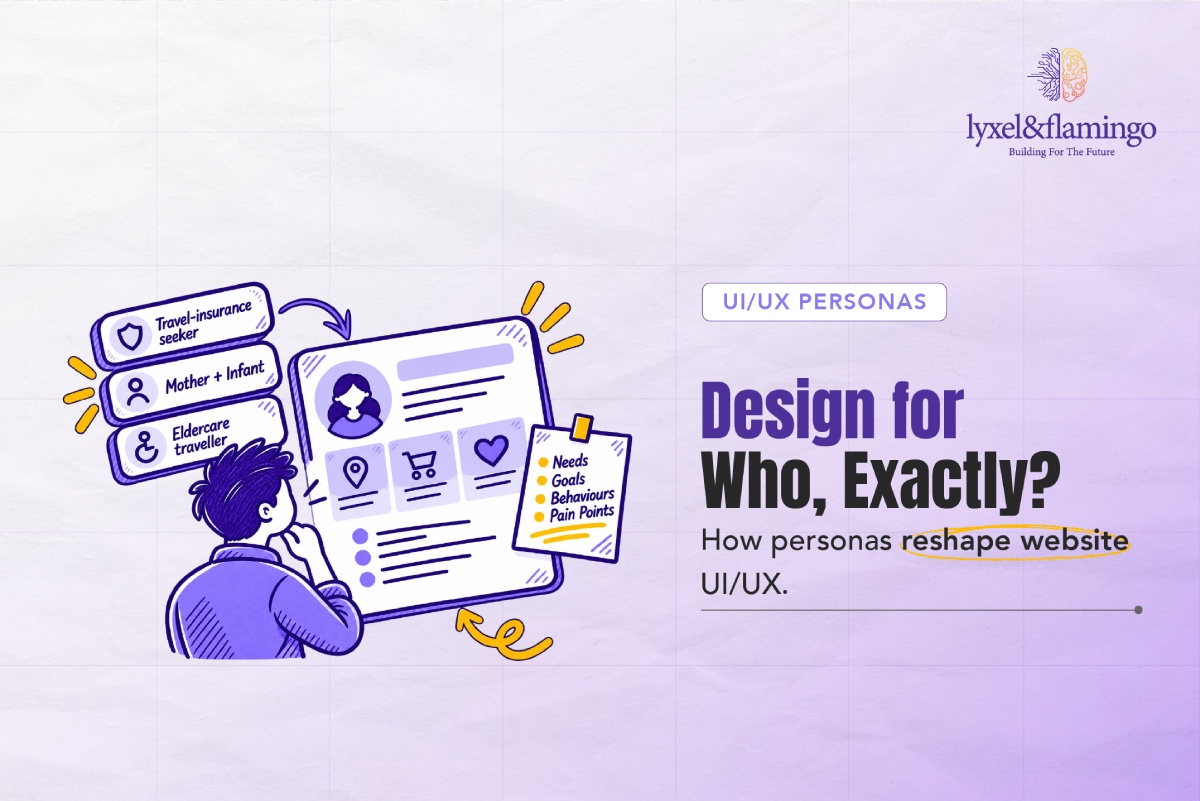
Define personas: Is the strategic anchor, because optimisation without a defined user is just polishing an average. A persona built on context, emotional state, and job-to-be-done, not demographics, gives every subsequent test a subject and a purpose. This is the same cohort-led thinking that shapes UI/UX across industries: you cannot meaningfully improve an experience until you know whose experience it is.
Design divergent journeys: Turns personas into interface reality. Different personas need genuinely different paths, modules, and content, even on the same site – the risk-aware buyer and the returning enthusiast are not served by an identical funnel. Designing those journeys deliberately, rather than defaulting to one average path, is what creates a hypothesis worth measuring. On a high-performing storefront, this is the difference between a catalogue and a guided decision.
Instrument per-persona events: Is where strategy meets measurement. For each persona journey, you decide which interface moments reveal whether it is working – the micro-conversions, the hesitation points, the completion steps – and you instrument them so the behaviour is captured. Without this step, a persona is a hypothesis you can never test; with it, every journey becomes measurable.
Read the signals: The analysis that most programmes skip: cutting the data by persona rather than reading it in aggregate. An overall conversion rate can be stable while one persona is converting brilliantly and another is being quietly failed, and only a per-persona read reveals it. This is the cut of the data that turns numbers into a decision about who to fix next.
Optimise and iterate: Closes the loop. You act on the evidence, remove the friction the data exposed, strengthen the journey that is working and then feed the result back into sharper personas and better journeys. The compounding comes from the loop itself: each pass is better targeted than the last, which is why persona-led CRO keeps improving long after a sprint-based approach has plateaued. This is the operating rhythm behind sustained full-funnel conversion work.
Real-world scenario: Biotique and Timex
Two L&F engagements show the two halves of the loop working. On the Biotique skincare rebuild, the front half of the loop personas and journeys was the whole point. Navigation was rebuilt around how a customer with a specific skin concern actually moves from concern to product to confidence, and the discovery journey was validated through interactive prototypes before a line of code, so the experience shipped already shaped around real behaviour rather than assumption. That is steps one and two done rigorously: define who is arriving, and design the journey their job requires.
On the Timex programme, the back half of the loop instrument, read, iterate – was run as a measured system, with GA4, Search Console, and a full analytics stack instrumenting every change so that each decision was evidence-led. The outcome was a compounding one: 5X organic revenue growth over seven months, produced not by a single fix but by a programme that kept reading the data and acting on it. Put the two halves together – Biotique’s persona-and-journey rigour at the front, Timex’s measured-iteration discipline at the back – and you have the full Persona-to-Pixel loop: designed for who the user is, proven by what the events say they did, and improved on every pass.
Going deeper: running the loop
To operate persona-led CRO as an ongoing programme:
- Personas are defined by context, emotional state, and job-to-be-done, and kept current
- Each persona has a documented, distinct journey through the site or app
- Per-persona events are instrumented for the moments that matter in each journey
- Analytics can segment conversion and drop-off by persona, not just in aggregate
- A regular cadence reviews per-persona performance and prioritises the next change
- Every optimisation is logged with its hypothesis and its measured result
- Findings feed back into refined personas and journeys, not just isolated tweaks
Key takeaways
- Persona-led CRO joins two disciplines usually kept apart: who you design for (personas) and what they did (events).
- One-off CRO sprints plateau; a loop keeps compounding because each pass is better targeted than the last.
- Relevance is the lever, and relevance requires personas – the same condition behind McKinsey’s 40% personalisation-revenue finding.
- The most useful and most-skipped step is reading conversion by persona, not in aggregate.
- Biotique (personas and journeys) and Timex (measured iteration) show the two halves of the loop that together produced 5X organic revenue growth.
The CXO takeaway
For a CXO, the shift from CRO-as-sprint to CRO-as-loop is the difference between buying occasional uplifts and building a compounding capability. A sprint delivers a number this quarter; a loop delivers a system that gets better every quarter, because it learns. The two ingredients are ones most organisations already have but rarely connect: a strategy for who they serve, and the data on what those people do. Joining them – personas at the front, instrumented events at the back, and a disciplined cadence turning the loop – is what turns conversion optimisation from a periodic project into a durable advantage. In a market where relevance is the scarcest commodity, the business that knows exactly who it is optimising for, and can prove what worked, wins the compounding game.
Frequently Asked Questions
Standard CRO often tests tactics in isolation. Persona-led CRO anchors every test in a defined user and a designed journey, and reads results by persona - which makes the learning targeted and cumulative rather than one-off.
Persona segmentation needs enough volume per persona to read signals reliably, but the discipline scales down: with lower traffic you run fewer, higher-confidence changes and lean more on qualitative validation alongside the events.
Full-funnel CRO covers the whole journey from awareness to post-purchase; persona-led CRO is the operating loop that runs within it, ensuring each stage is optimised for a specific user and proven with data.
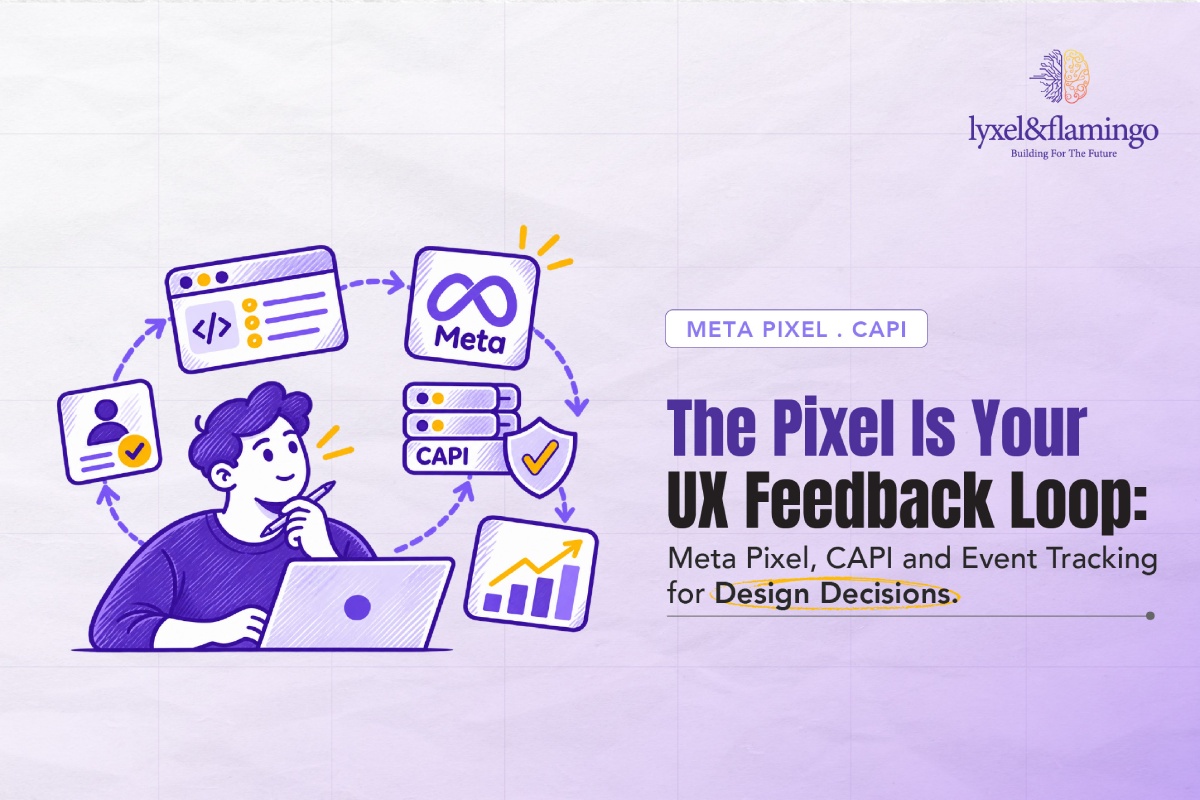
The event schema. Per-persona journeys define which interface moments matter, and those moments become the events - pixel, CAPI and GA4 that let you measure whether each journey worked.
They do the persona work or the measurement work, but never connect them and they run sprints instead of a loop. Closing the loop is the single highest-return change.