What this blog covers
ChatGPT now answers questions about where to buy, who to hire and what to choose, and founders want to know how to get named in those answers. This guide explains in plain words how ChatGPT finds businesses, which technical door can quietly keep your website out, why clear descriptions beat clever copy, and which outside proof makes an AI trust a small brand. Founders get the Four-Door Visibility Plan, Open, Explain, Prove, Check, with a one-page checklist, a four-week plan and a ten-minute monthly test.
Table of Contents
- What ChatGPT actually does before it names a business
- The locked door that can keep your website out of ChatGPT
- Why plain words about what you do and where beat clever copy
- The outside proof that makes an AI trust a small business
- How to get my business on ChatGPT: the Four-Door Visibility Plan
- The framework explained
- The four-week plan a founder can run alone
- Why you should test ChatGPT yourself every month
- Key takeaways
- The CXO takeaway
A ChatGPT listing is free and form-free. What decides whether ChatGPT names your business is simpler, and most of it sits in your hands.
Quick answer: How to get my business on ChatGPT? To show up, let OpenAI’s search crawler (OAI-SearchBot) reach your website, make sure your pages are indexed in Google and Bing, describe what you do and where in plain words, and keep your business listings consistent. Then earn reviews and mentions on sites people trust, and test ChatGPT monthly with the questions your customers ask. Free, form-free and fully in your hands: four doors to open.
What ChatGPT actually does before it names a business
ChatGPT answers some questions from training and others by searching the web live. When it searches, it behaves like a researcher: fetch pages, read them, build an answer. OpenAI uses third-party search providers such as Bing. In plain terms, ChatGPT can only name a business it can find and understand.
The audience is huge. Hundreds of millions of people use ChatGPT every week, and many now ask it for recommendations, from the best dentist in a suburb to the right sofa for a small flat. A founder missing from those answers is missing from a growing share of first impressions.
The mechanics are simpler than the hype. How to get cited in AI search explains why systems quote sources that state clear, verifiable answers, and the same logic applies to your business. Easy to find. Easy to understand. Everything else follows.
Know the limits of any promise. Every business gets found through the same public signals, and agencies work from those same signals. Anyone guaranteeing a place in ChatGPT is guessing. Findable first, measured second.
The locked door that can keep your website out of ChatGPT
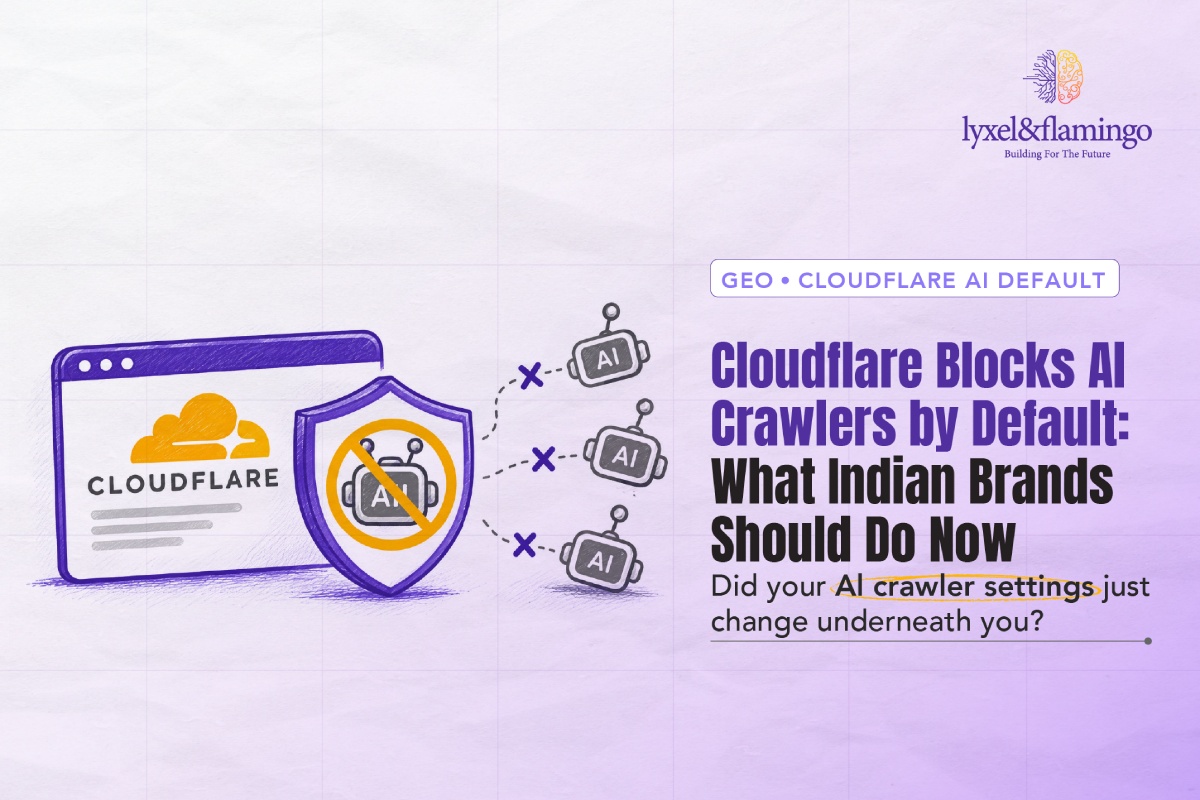
Your website has a small text file, robots.txt, that tells automated visitors which pages they may read. OpenAI uses a visitor called OAI-SearchBot to decide which sites can appear in ChatGPT search answers, and OpenAI’s crawler documentation says sites that opt out will be left out of those answers, apart from plain links.
This door gets locked by accident more often than you would expect. A developer, a security setting or a plug-in can quietly block unknown visitors, OAI-SearchBot included. Ask your developer or host one question: is OAI-SearchBot allowed? Get the answer in writing.
A one-page checklist for showing up in ChatGPT
- Let the crawler in
What to do: Check robots.txt and your host or firewall allow OAI-SearchBot
Where: Website host or developer
Time it takes: About 30 minutes - Confirm you are indexed
What to do: Check key pages appear in Google Search Console and Bing Webmaster Tools
Where: Search tools
Time it takes: About 1 hour - Say it plainly
What to do: Write what you do, for whom, where and at roughly what price, on one clear page
Where: Your website
Time it takes: About 2 hours - Claim your listings
What to do: Complete Google Business Profile and Bing Places with identical details
Where: Listing sites
Time it takes: About 1 hour - Earn proof
What to do: Ask happy customers for reviews; share facts with local press and trade bodies
Where: Outside your site
Time it takes: Ongoing - Test
What to do: Ask ChatGPT your customers’ ten questions and record who it names
Where: ChatGPT
Time it takes: About 30 minutes a month
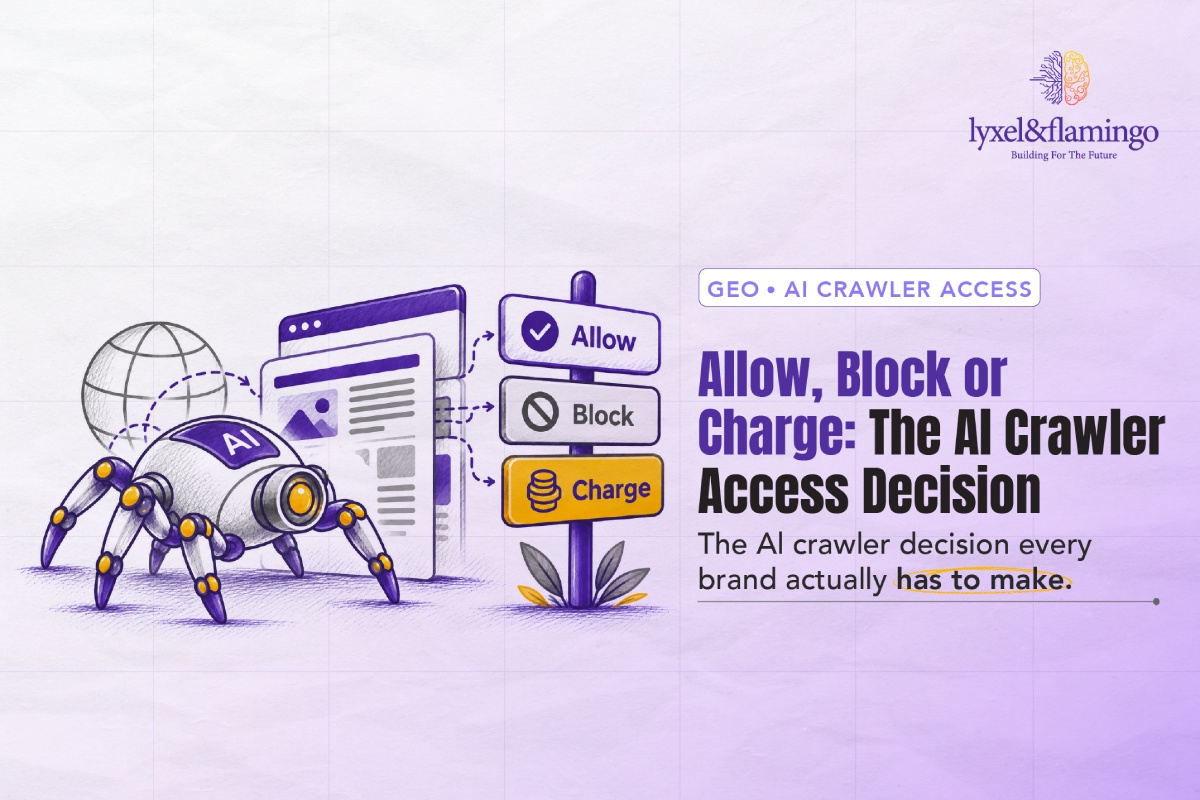
A second visitor, GPTBot, does a different job: it gathers content that may be used to train OpenAI’s models. You can allow OAI-SearchBot while blocking GPTBot if you want to be findable while keeping your content out of training. Decide each separately and write the choice down.
Changes land fast. OpenAI says robots.txt updates reach its search systems in about 24 hours. Check the file the day after any change. Small change, big difference.
Why plain words about what you do and where beat clever copy
ChatGPT recommends what it can summarise. “We craft experiences” gives it little to quote. “We are a family dental clinic in Indiranagar offering same-day crowns” hands it a sentence it can use. Plain beats poetic.
Write one clear page per thing you sell, and lead with the answer: what it is, who it is for, where you operate and roughly what it costs. Local SEO for multi-city retail brands shows how place names and local detail help systems match you to nearby questions.
Answer the questions customers really ask. List the ten you hear most and give each a short, direct reply on your site, in the customer’s words. Hear it twice a week? Publish it.
Google’s guidance on AI features confirms that special files and AI-specific rewriting are unnecessary: a page needs to be indexed and eligible to show with a snippet. The same basics help everywhere. Skip the tricks.
The outside proof that makes an AI trust a small business
An AI system looks for confirmation beyond your own claims. Brand trust as a ranking factor applies to a corner shop as much as a large brand: reviews, directory listings, local news, trade bodies and mentions on trusted sites. For a small business, outside signals often outweigh anything on its own website.
Start with listings you control. Claim your Google Business Profile and Bing Places listing, and keep name, address, phone, hours and description identical everywhere. Bing matters because OpenAI names Microsoft among its search partners. Consistency is the proof.
Then earn real reviews. Ask satisfied customers for honest reviews on platforms they already use, reply to every one and fix what reviews reveal. Show who you are and what you have done. Keep every review genuine.
Finally, earn mentions. A local news story, a trade association listing or a customer’s blog post adds weight, and SEO and PR working together shows how coverage and search reinforce each other. One credible mention beats ten empty listings.
How to get my business on ChatGPT: the Four-Door Visibility Plan
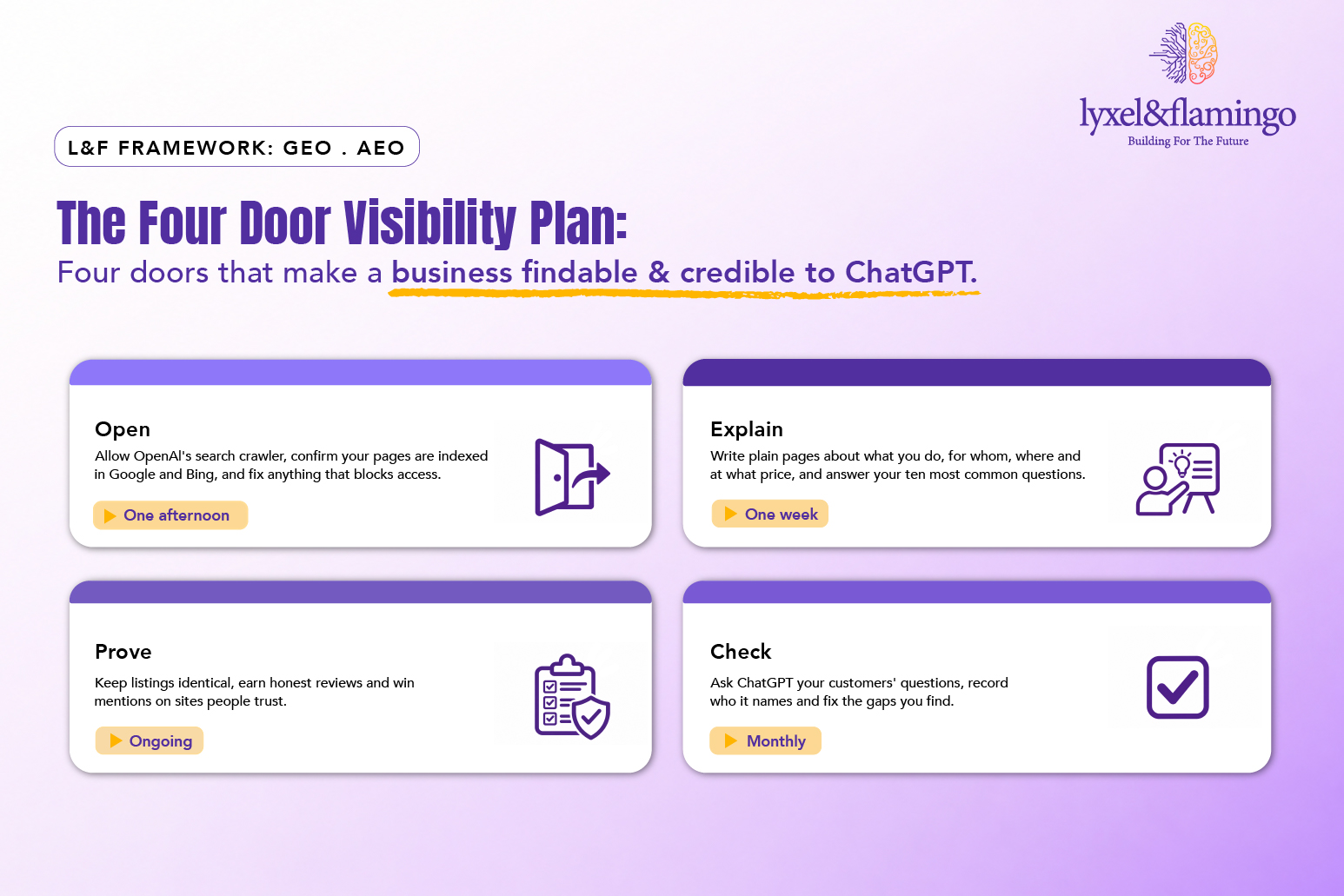
Four doors, opened in order, make a business findable and credible to ChatGPT.
The framework explained
Open: Access comes first, because every other step depends on it. Confirm OAI-SearchBot is allowed in robots.txt and any firewall, and that key pages are indexed in Google and Bing. Decide separately on GPTBot, and re-check a day after any change.
Explain: Write for a stranger. For each product or service, open with what it is, who it is for, where you operate and roughly what it costs. Add short answers to the ten questions customers ask most, in their words, one topic per page.
Prove: Make the outside world agree with your website. Match Google Business Profile and Bing Places to your site, gather honest reviews and reply to each, and share useful facts with local press and trade bodies. A few genuine signals beat many empty ones.
Check: Test monthly with the same ten questions. Record whether ChatGPT names you, how it describes you and who appears instead, asking each question more than once. Compare with last month, then pick the next two fixes.
The four-week plan a founder can run alone
- Week 1: open the door. Ask your developer or host, in writing, whether OAI-SearchBot is allowed. Check key pages appear in Google and Bing, decide on GPTBot and re-check after 24 hours.
- Week 2: write plainly. Pick your three most important products or services and write one clear page each, plus short answers to your ten common questions.
- Week 3: tidy your listings. Claim and complete Google Business Profile and Bing Places with details identical to your site. Ask five happy customers for honest reviews and reply to every one.
- Week 4: test and plan. Ask ChatGPT your customers’ ten questions, record who it names, choose the next two fixes and set a monthly calendar reminder.
Why you should test ChatGPT yourself every month
The simplest measurement is free. Write ten questions your customers would ask, like “the best clinic for this problem near me”, and ask ChatGPT each one. Record whether you are named, how you are described and which competitors appear. Same day, every month.
Expect answers to shift day to day. Why ChatGPT, Gemini and AI Overviews rarely cite the same source explains why one test is a snapshot. Ask each question more than once and read the pattern over months. Trends beat single answers.
Act on what you learn. When a competitor gets named for a service you also offer, read how they describe it and check that your page answers the same question. When you are named with wrong details, fix your listings and site.
Mind the season. Why “best Diwali gifts under ₹2000” is a ranking problem shows how specific, intent-rich questions reward preparation. Add festive and occasion questions to your list a month before the peak.
The Lyxel&Flamingo SEO and GEO team builds exactly this foundation for brands of every size, from JK Lakshmi Cement’s hyperlocal listings to Chicco’s local search growth.
Key takeaways
- Free and form-free: findability and clear descriptions decide who ChatGPT names.
- Allow OpenAI’s search crawler (OAI-SearchBot) and confirm your pages are indexed in Google and Bing.
- Describe what you do, for whom and where in plain words, and answer your customers’ ten most common questions.
- Keep listings identical, earn honest reviews and win mentions on trusted sites.
- Ask ChatGPT your customers’ questions every month and fix the gaps.
The CXO takeaway
Ask your website developer one question this week: is OAI-SearchBot allowed on our site, confirmed in writing. Ask your marketing lead to list the ten questions customers ask most and publish a short, plain answer to each. Claim and complete your Google Business Profile and Bing Places listing with identical details. Start a monthly ten-question ChatGPT test, keep the results in one sheet and decide separately whether OpenAI may use your content for training.
The question for your next planning meeting: if a customer asked ChatGPT for a business like yours nearby today, would it find a clear reason to name you?
Send your ten customer questions to Lyxel&Flamingo and we will help you test them.
Frequently Asked Questions
ChatGPT listings are free and form-free, and every agency works from the same public signals. ChatGPT names businesses it can find, read and trust through its search crawler and outside sources. Spend your effort on access, clear pages and proof.
OAI-SearchBot is the crawler OpenAI uses to find websites for ChatGPT’s search answers. OpenAI says sites that opt out will be left out of ChatGPT search answers, apart from plain links. Ask your developer or host to confirm it is allowed in robots.txt and any firewall; changes take about 24 hours to reach OpenAI.
The foundations overlap: clear pages, honest details and good reviews help in both. ChatGPT also draws on sources like Bing and builds an answer from several pages instead of a ranked list. Confirm you are indexed in Google and Bing, and treat ChatGPT as one more place to be found.
Start with the basics. Google has said special files and AI-specific rewriting are unnecessary for its generative features, and the same applies elsewhere: crawlable pages, clear text and accurate details. Structured data supports clear content; fix access and clarity first.
Technical fixes can land within days, since robots.txt changes reach OpenAI in about 24 hours. Reviews, mentions and reputation take longer. Test monthly, judge the trend over several months and, if a quarter passes with a flat trend, check which of the four doors is still shut.