What this blog covers
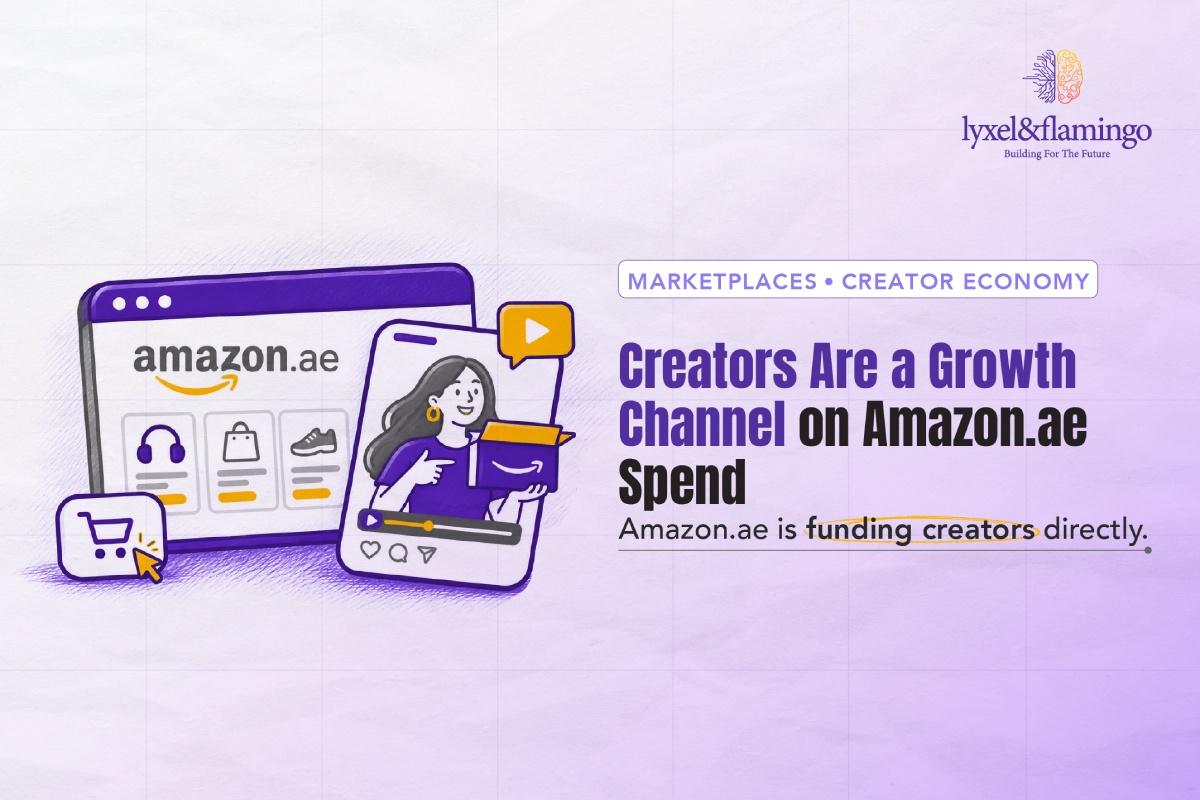
Amazon Now brings 15-minute grocery delivery to the UAE through partner micro-fulfillment hubs rather than Amazon’s own warehouses, while noon’s Smart Delivery Box partnership with Flyby turns its Minutes and Food bikes into a mobile out-of-home ad medium. This piece breaks down what each development actually changes for a brand’s marketplace advertising plan, where stock readiness and sponsored placement now intersect, and the questions worth asking before shifting budget toward either new channel.
Quick Answer: Quick commerce is adding two new advertising surfaces to the UAE marketplace landscape at once. Amazon Now’s 15-minute delivery model, built on partner networks like Emirates Post’s 7x and Lulu rather than new warehouses, makes stock readiness and hourly restocking a precondition for sponsored placement to even matter. noon’s Smart Delivery Box, developed with adtech company Flyby, turns its own delivery fleet into a mobile digital out-of-home channel with location, date, and time targeting. Brands evaluating either channel should treat them as additions to an existing marketplace advertising plan, not replacements, and should ask for exposure and measurement data upfront, since both are new enough that published benchmarks barely exist yet.
Table of Contents
- Why Quick Commerce Is Rewriting the UAE Advertising Map
- Amazon Now Changes What “In Stock” Means for Advertisers
- Noon’s Delivery Fleet Just Became a Moving Ad Channel
- Where Quick-Commerce Advertising Fits Alongside Sponsored Search
- The UAE Quick-Commerce Advertising Framework
- Framework Explained
- Capability Note
- What to Ask Before Committing Budget to a New Channel
- Key Takeaways
- CXO Takeaway
Why Quick Commerce Is Rewriting the UAE Advertising Map
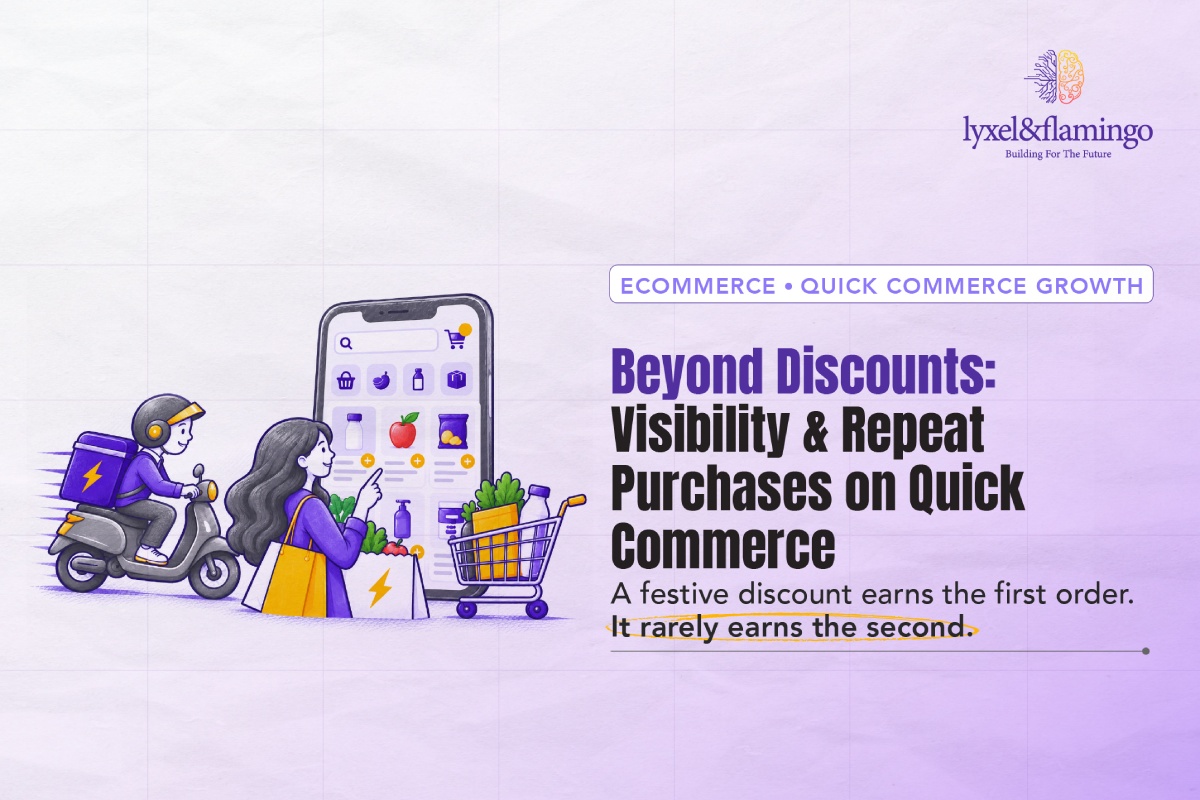
Two changes landed in the UAE marketplace space within months of each other, and together they point at the same shift. Amazon launched Amazon Now, a 15-minute delivery service, across the UAE’s biggest cities, built through partnerships rather than new infrastructure: Emirates Post’s 7x brand converting post offices into micro-fulfillment centers, alongside Lulu locally and Al Othaim in Saudi Arabia. Separately, noon partnered with adtech company Flyby to install a Smart Delivery Box across its noon Minutes and noon Food fleet, turning delivery bikes into a mobile advertising medium.
Neither move is really about delivery speed alone. Amazon’s VP for MENA framed grocery as the company’s least-penetrated online category globally and regionally, in a market estimated at just $1 to $1.5 billion in online grocery spend against total grocery spend that dwarfs it. noon, meanwhile, already sells digital retail media through noon Ads, and the Flyby partnership extends that same media business onto physical, moving inventory. Quick commerce in the UAE right now is as much an advertising story as a logistics one.
Amazon Now Changes What “In Stock” Means for Advertisers
Amazon Now restocks inventory hourly instead of daily, relying on AI and machine learning to manage demand across a network of neighborhood micro-fulfillment hubs rather than Amazon’s own large warehouses. That operating model matters directly to anyone running Sponsored Products or Sponsored Brands on Amazon.ae, because a sponsored placement against a SKU that is not actually sitting in a nearby micro-hub at that hour buys a click that cannot convert into a 15-minute delivery promise.
Amazon’s own framing of the challenge is blunt: Mouchawar described the quick-commerce build as “the shortest one. It’s the most delicate, accurate,” a line that applies just as much to inventory-aware advertising as it does to logistics. A brand treating its Amazon.ae catalog as one undifferentiated pool of SKUs, rather than distinguishing which products are realistically stocked for 15-minute fulfillment in a given city, risks spending sponsored budget against a promise the fulfillment layer cannot keep hour to hour.
Noon’s Delivery Fleet Just Became a Moving Ad Channel
The Flyby Smart Delivery Box runs mobile digital out-of-home ads directly on noon’s delivery bikes as they move through dense urban areas, a format static billboards cannot replicate. Placements are hyperlocal and timed to when and where the fleet is actually operating, with targeting available by location, date, and time, and reporting available on exposure and impressions.
Fouad Aoun, noon’s GM of New Ventures, described the goal as giving advertisers “real-time, highly targeted exposure” through an expanded media network, while Flyby CEO Cheyenne Kamran positioned the Smart Delivery Box as proof that last-mile infrastructure “can set a new standard for mobility and advertising in the region.” Sharper, purpose-built creative matters here too, since noon and Flyby handle the technical adaptation of brand assets into this new moving format, while the underlying creative concept still has to earn attention in a few seconds of street-level visibility.
Where Quick-Commerce Advertising Fits Alongside Sponsored Search
Neither Amazon Now’s stock-readiness requirement nor noon’s moving DOOH inventory replaces the advertising a brand already runs on sponsored search and display. Scaling Sponsored Products, Sponsored Brands, video, and DSP spend still carries the bulk of a marketplace ad budget’s weight, and that strategy does not need to change simply because a 15-minute delivery option now exists alongside it.
What changes is the layer underneath. A brand’s highest-velocity, most 15-minute-eligible SKUs are worth flagging for sponsored priority specifically because the fulfillment promise behind them is real, while noon’s mobile DOOH format is best treated as an awareness and reach play that complements rather than competes with existing sponsored placements. Running both without first confirming which SKUs can actually back up a quick-commerce promise wastes spend the same way a weak product listing does, regardless of how well-targeted the campaign is.
The UAE Quick-Commerce Advertising Framework
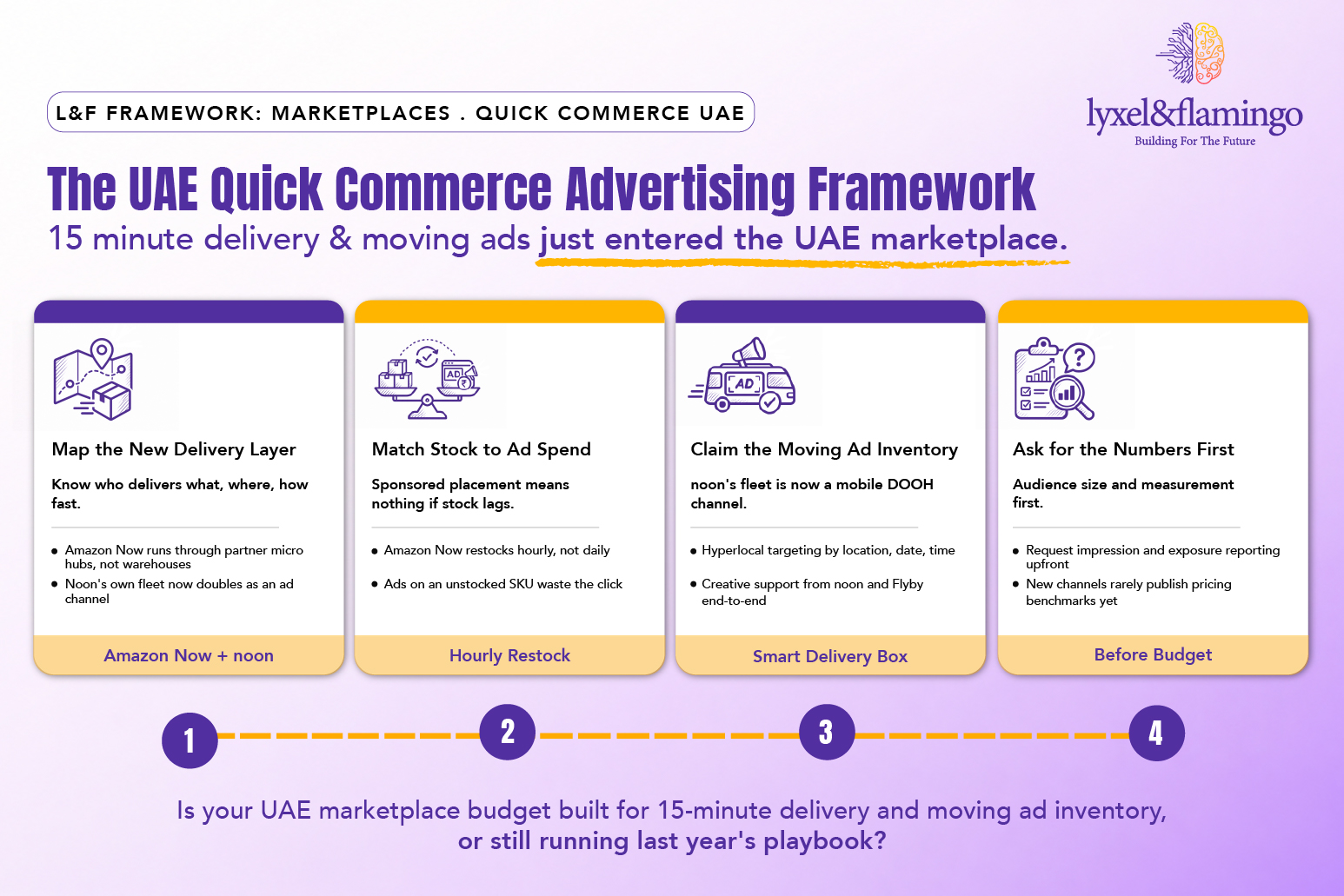
The table below maps the four moves worth making before shifting budget toward Amazon Now or noon’s Smart Delivery Box.
Framework Explained
Map the New Delivery Layer: Means understanding that Amazon Now runs through partner micro-hubs, not Amazon’s own warehouses, while noon’s fleet now doubles as an ad channel, before deciding where either one fits a brand’s plan.
Match Stock Readiness to Ad Spend: Keeps sponsored budget pointed at SKUs the fulfillment network can actually deliver in 15 minutes, since a fast ad promise backed by slow stock still converts poorly.
Claim the Moving Ad Inventory: Treats noon’s Smart Delivery Box as its own creative format, not a repurposed banner, given how briefly a moving ad is actually visible to a passerby.
Ask for the Numbers First: Protects budget from a format still too new to have published pricing or performance benchmarks, by requesting exposure and measurement data directly from noon and Flyby before committing.
Capability Note
CAPABILITY NOTE: Lyxel&Flamingo’s marketplace team helps brands translate new UAE retail formats like Amazon Now and noon’s Smart Delivery Box into practical marketplace advertising plans, as part of ongoing third-party marketplace engagements. Both channels are new enough that a dedicated performance case study is not yet published, so this reflects an active strategic read rather than a standalone proof point.
What to Ask Before Committing Budget to a New Channel
Both Amazon Now and noon’s Smart Delivery Box are recent enough that neither has published the kind of performance benchmarks a brand would normally expect before shifting budget. The Flyby partnership announcement itself included no fleet size, impression volume, or pricing detail, despite describing growing regional interest from advertisers and aggregators.
A brand considering either channel should ask directly for exposure and impression reporting, the measurement methodology behind it, and realistic pricing ranges, rather than assuming either platform’s media kit speaks for itself. The same discipline applies to Amazon Now: confirming which specific SKUs and cities actually qualify for 15-minute fulfillment, city by city, before reallocating sponsored budget toward them, keeps spend pointed at a promise the fulfillment layer can genuinely keep.
Key Takeaways
- Amazon Now brings 15-minute delivery to the UAE through partner micro-fulfillment hubs, restocked hourly, rather than Amazon’s own warehouses.
- Sponsored placement against a SKU that cannot actually fulfil in 15 minutes wastes budget regardless of how well the campaign is targeted.
- noon’s Smart Delivery Box, built with Flyby, turns delivery bikes into a mobile, hyperlocal digital out-of-home ad channel.
- Quick-commerce advertising formats complement sponsored search and display rather than replacing them.
- Both channels are new enough that brands should request exposure, measurement, and pricing data directly before committing budget.
CXO Takeaway
Is your marketplace ad budget built for a UAE where delivery happens in 15 minutes and ads now move through the streets on delivery bikes, or is it still running last year’s playbook? The brands capturing an early advantage are the ones matching sponsored spend to real fulfillment readiness and treating new formats like noon’s Smart Delivery Box as a deliberate test, not a reflexive budget shift. Lyxel&Flamingo’s marketplace team helps brands build that kind of deliberate, evidence-first approach to new UAE retail media formats.
Frequently Asked Questions
Amazon’s 15-minute delivery service in the UAE, built through partnerships with networks like Emirates Post’s 7x and Lulu rather than Amazon’s own warehouses, with inventory restocked hourly using AI-driven demand management.
Yes, in the sense that sponsored priority is worth reserving for SKUs genuinely stocked for 15-minute fulfillment in a given city, since a fast ad promise against slow-moving stock converts poorly.
A mobile digital out-of-home ad unit, developed with adtech company Flyby, installed across noon’s Minutes and Food delivery fleet, offering hyperlocal targeting by location, date, and time.
Not without first requesting exposure, impression, and pricing data directly from each platform, since both formats are recent enough that published benchmarks are still limited.