What this blog covers
Hiring an SEO agency in 2026 requires looking beyond keyword rankings and organic traffic. As buyers increasingly use ChatGPT, Perplexity, Gemini, and Google’s AI Overviews to research products and services, brands need visibility across both traditional search results and AI-generated answers.
This blog outlines 15 essential questions to ask before hiring an SEO agency, covering five areas: proof, planning, content quality, technical resilience, and contract terms. It explains how to evaluate an agency’s past results, measure AI visibility, assess content expertise, verify crawler access, and ensure transparent reporting and account ownership.
The blog also shares Lyxel&Flamingo’s work with Kurlon, which reported growth in AI Overview visibility, brand mentions, organic sessions, and search impressions over seven months. Finally, it offers five practical steps businesses can take before signing an agency contract. The key takeaway is simple: choose an SEO partner that can demonstrate measurable results across traditional search and AI-driven discovery, rather than relying on rankings alone.
Table of Contents
- What Is Generative Engine Optimisation?
- Why Your SEO Agency's Scorecard Is Out of Date
- Why Page One No Longer Guarantees a Mention in the Answer
- What the 2026 Data Says About Where Buyers Look
- The Agency Vetting Stack: 15 Questions to Ask Before Hiring an SEO Agency
- How a Brand With Six Decades of Trust Earned a Place in AI Answers
- 5 Things to Do This Week Before You Sign Anything
A clean rankings report no longer proves your SEO agency is earning its retainer. Google’s CEO told investors in July that AI Mode has passed 1 billion monthly active users since going global in October 2025. BCG, meanwhile, found that shopping-related GenAI use grew 35% between February and November 2025. A buyer can now read an AI-written answer about your category before opening a single search result, and a rankings report built on positions and sessions misses that answer.
That mismatch is where retainers lose value. The brand keeps paying for positions, sessions and keyword counts. Meanwhile, ChatGPT, Perplexity and Google’s AI Overviews may keep recommending a competitor with more third-party coverage, nobody in the monthly meeting owns that problem.
In our reviews of agency reports, the same gap keeps showing up. The deck lists impressions and top-ten keywords, then says nothing about whether AI answers name the brand, which sources the engines used, or what any of it did to enquiries. Hiring an SEO agency should now be a test of evidence, and the 15 questions below work as well on the agency you already pay.
What Is Generative Engine Optimisation?
Generative engine optimisation (GEO) is the work of making a brand easy for AI systems to find, trust and cite inside their answers. It covers ChatGPT, Perplexity, Gemini, and Google’s AI Overviews and AI Mode. You will also see it called AI search optimisation. Classic SEO aims for a click from a results page, while GEO aims for a mention inside the answer, and that depends partly on what other sites say about you.
Google’s own guide to generative AI features says that, from its side, optimising for generative AI search is still SEO. It also tells anyone weighing third-party GEO advice to read Google’s guidance on evaluating third-party SEO advice first. Read it that way, SEO services for AI search are SEO foundations plus two additions, new measurement and off-site work, and that mix is what you should test an agency on.
Why Your SEO Agency’s Scorecard Is Out of Date
A traditional SEO scorecard tracks rankings, organic sessions and backlinks. None of those numbers is wrong on its own. The trouble is that buyers now split their research between Google and AI assistants, and the scorecard only sees one of them.
McKinsey’s August 2025 survey of 1,927 US consumers found that 44% of AI search users call it their primary and preferred source of insight, ahead of traditional search at 31%. Gartner’s January 2026 release adds a useful counterweight to that figure, since only about one-third of consumers think GenAI chatbots are as effective as search engines for learning new information. So buyers use both, and an agency that watches only the Google leg has no data on the rest.
Brands share the blind spot: in McKinsey’s September 2025 survey of about 30 Fortune 500 consumer-brand CMOs, only 16% of brands systematically tracked AI search performance. The sample is small, so read it as a signal, not a census. The agency you hire can close that blind spot, or bill you monthly for leaving it open.
An agency that reports only rankings and sessions is measuring one of the two places your buyers now look.
Why Page One No Longer Guarantees a Mention in the Answer
Google’s own AI features are the simpler case. Its guide says AI Overviews and AI Mode are rooted in core Search ranking and quality systems. The model also uses query fan-out, which means it generates a set of related queries at the same time to gather more information. So for Google, ranking well still feeds the answer.
Other engines behave differently, and a September 2025 University of Toronto preprint shows how. It compared AI search tools with Google and found that the AI tools lean heavily on earned media, meaning third-party authoritative sources, over brand-owned and social content. Google’s own mix of sources was more balanced. McKinsey adds that in many cases a brand’s own site makes up only 5-10% of the sources AI search references. If your agency edits only your pages, it works on a thin slice of what the engine reads.
That is the real gap between classic SEO and the newer work. The skills overlap heavily, but the inputs differ, and a good brief keeps them apart:
| SEO-only brief | AI-era brief | |
| Goal | Rank pages and earn clicks | Earn a mention inside the answer, and still earn the click |
| Main signal | Rankings, sessions, backlinks | Answer inclusion rate on a fixed prompt set, branded search, assisted conversions |
| Where trust comes from | Your site and links to it | Your site plus reviews, press, forums and video |
| Technical check | Googlebot crawl and indexing | Googlebot plus OpenAI’s OAI-SearchBot, other AI crawlers and CDN rules |
| Reporting | Search Console clicks and impressions | Search Console’s Generative AI performance report, GA4 AI referrals, sampled prompt tests |
Page-one rankings feed Google’s AI answers, but they don’t control what other engines choose to cite.
What the 2026 Data Says About Where Buyers Look
Google reports that AI Mode has passed 1 billion monthly active users since its global expansion in October 2025. Alphabet’s CEO added that AI features send billions of clicks to websites every week. Google’s 2026 marketer guide calls total organic clicks from Google Search relatively stable year over year, though it admits traffic is shifting from some sites to others. Both are Google’s own claims, so check them against your Search Console data.
Gartner found that 51% of the US consumers it surveyed say generative AI changed how they research, yet only about one-third think chatbots match search engines. Buyers are adding AI to their routes, not dropping Google, which is why agencies need both skills. The 51% comes from a July to August 2025 survey of 365 US consumers.
BCG reports that shopping-related GenAI use grew 35% between February and November 2025, and that more than 60% of consumers express high trust in GenAI results. The October 2025 wave surveyed more than 9,000 people across nine countries, India included.
Adobe measured a 693.4% year-over-year rise in generative AI referrals to US retail sites over the 2025 holiday season, and those visitors converted 31% better than other traffic. Adobe’s own release calls the base of users modest, so treat this as direction, not volume.
IAMAI and Kantar found that 44% of India’s internet users engage with AI-enabled features such as voice search, image search and chatbots. The study surveyed more than 87,000 consumers, and usage reached 57% among people aged 15 to 24 and 52% among those aged 25 to 44.
The Agency Vetting Stack: 15 Questions to Ask Before Hiring an SEO Agency
At Lyxel&Flamingo (L&F), we sort agency vetting into five layers and call the model the Agency Vetting Stack. We start with proof because it is the hardest layer to fake, and we leave terms until last because a contract only matters once the earlier layers hold up. How to choose an SEO agency then becomes a scoring exercise: three questions per layer, one point for a specific answer, zero for a slogan.
There is no single best SEO agency for every brand. There is only the one whose answers survive this stack for your category. In our experience, question 5, on measurement, is where agencies struggle most to be specific.
Layer 1: Proof. Claims are cheap, so start with evidence.
1. Can you show results from brands in my category, with real numbers and dates?
Any SEO agency can describe success, and the real test is whether it can document it. Google’s own guide to hiring an SEO lists the basics: ask for examples of previous work, experience in your industry and experience in your country. Add one filter for the AI era, which is to ask which results came from AI visibility and which came from classic SEO, since a case study can blend the two. Named clients, time windows, baselines and the tool that measured them. Anonymous claims of triple-digit growth with no start date deserve a polite request for the baseline.
2. What has not worked for you in AI search, and what did you change?
AI answers shift between runs, engines and prompts, any agency doing real work has a story about a test that flopped. Listen for specifics: a schema change that moved nothing, or a PR push that earned mentions on the wrong sites. An agency with only wins to report is either new to this or editing its history. Either way, you’d be paying for the learning curve.
3. What will you refuse to guarantee?
Google is blunt in its hiring guide: no one can guarantee a number one ranking, and an SEO who promises first place is one to avoid. The same logic covers AI citations, because nobody controls what ChatGPT or Perplexity will say next month. Better agencies commit to process, deliverables and reporting dates instead. Google also warns about SEOs who claim a special relationship with it or advertise a priority submit, so treat a promised priority route into AI answers the same way.
Layer 2: Plan. Now check that the work has a shape and a scorecard.
4. Is generative engine optimisation a separate programme from SEO in your plan, or the same one?
Both answers can be right, which is why the question works. Google says its AI features rest on the same core ranking systems and treats GEO work as SEO from its side. Gartner tells marketers to optimise for both AI-driven answers and classic search results, and BCG tells brands to add AEO and GEO work to their SEO efforts. A good AI SEO agency explains where generative engine optimisation overlaps with SEO (crawlability, helpful content, structured data) and where it doesn’t (off-site coverage, non-Google crawlers, prompt-level measurement). A weak one sells SEO services for AI search as a magic add-on, or claims nothing has changed.
5. How will you measure visibility inside AI answers, not only rankings?
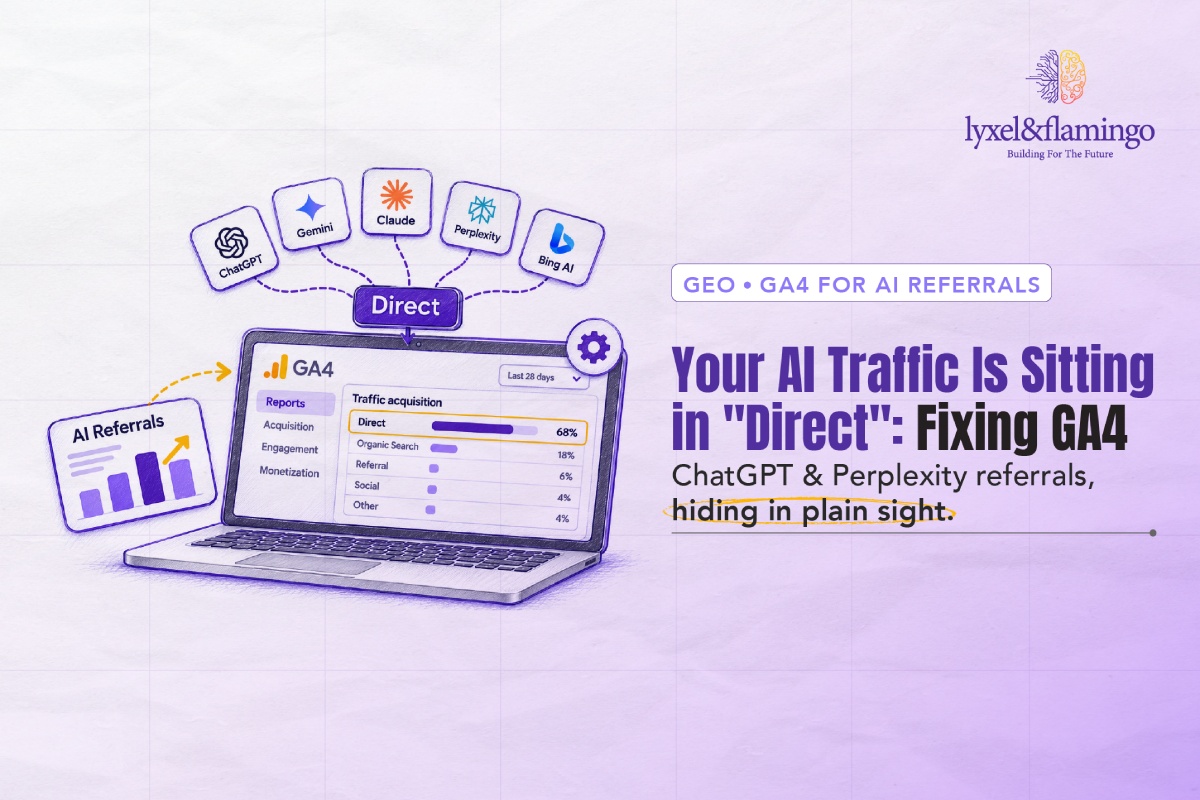
Ask for the method, not a dashboard screenshot. A sound plan starts with a fixed set of buyer prompts. It runs them on a schedule across ChatGPT, Perplexity, Gemini and Google’s AI Mode, and it records whether your brand gets named, cited or left out. It also uses Google’s Search Generative AI performance report, which shows impressions inside AI Overviews and AI Mode, plus GA4 referrals from AI tools. BCG tells brands to monitor how often they appear in AI answers to priority questions, and how accurate those answers are. Results vary from run to run, so a mix of automated tracking and manual spot checks is what you want, and the answer inclusion rate belongs in the report as a range.
Want to see what Google’s new AI report does and doesn’t show? Read this blog: Reading Search Console’s Generative AI Report: What It Shows and What Google Withholds
6. What will you do in the first 90 days, and which business metric should move?
Google’s hiring guide suggests asking what results to expect, in what timeframe, and how the agency will measure success. Turn that into a dated plan with one deliverable per month. Month one is the baseline audit and prompt set, month two is technical and content fixes, and month three is off-site work plus a first report against the baseline. Then pin the plan to one number your finance team already tracks, such as qualified enquiries or assisted revenue. Adobe’s holiday data shows AI referrals converting better than other traffic on US retail sites. But Adobe’s own release calls the base modest, so a promise of big revenue from AI alone should make you pause. Our note on how much SEO budget should shift to AI search in 2027 covers the split.
Layer 3: Craft. This is where the pages get written, and where the risk enters.
7. How do you use AI to produce content, and who signs off before it goes live?
Using AI is fine, and publishing it unreviewed is not. Google’s spam policies list generating many pages with AI tools and no added value as scaled content abuse. Its AI guide says the same about separate pages for every query variation, built mainly to manipulate rankings or AI responses. In May 2026, Google also clarified that its spam policies apply to generative AI responses. Per that clarification, tactics aimed at getting a brand featured in AI Overviews or AI Mode can be treated as spam. Find out who edits, who fact-checks against sources, and whether a subject expert signs off. Fewer pages with real expertise beat a high volume of thin ones.
8. How will you show real experience and expertise on our pages?
Google’s AI guide separates commodity content, which rests on common knowledge, from content with unique expert or first-hand takes that go beyond it. In practice, that means named authors with real credentials, original data from your own customers or sales team, and interviews with your internal experts. If the plan is to rewrite the top ten results in friendlier words, expect commodity content and commodity results. Request two pages the agency wrote for other clients, then judge them yourself.
9. How will you earn mentions on sites we don’t own, without buying them?
AI search leans on sources outside your domain, and both the Toronto preprint and McKinsey’s analysis point that way. An agency that never leaves your site has a ceiling. Their plan should cover reviews, trade press, expert commentary and video. Then ask the harder question: how do they avoid paid or fake mentions? Google’s guide says seeking inauthentic mentions isn’t as helpful as it might seem, and its spam policies now cover attempts to manipulate generative AI responses.
Layer 4: Resilience. Good work still fails when crawlers can’t reach the site, when buyers search in another language, or when a core update lands.
10. Which AI crawlers can reach our site today, and who controls that setting?
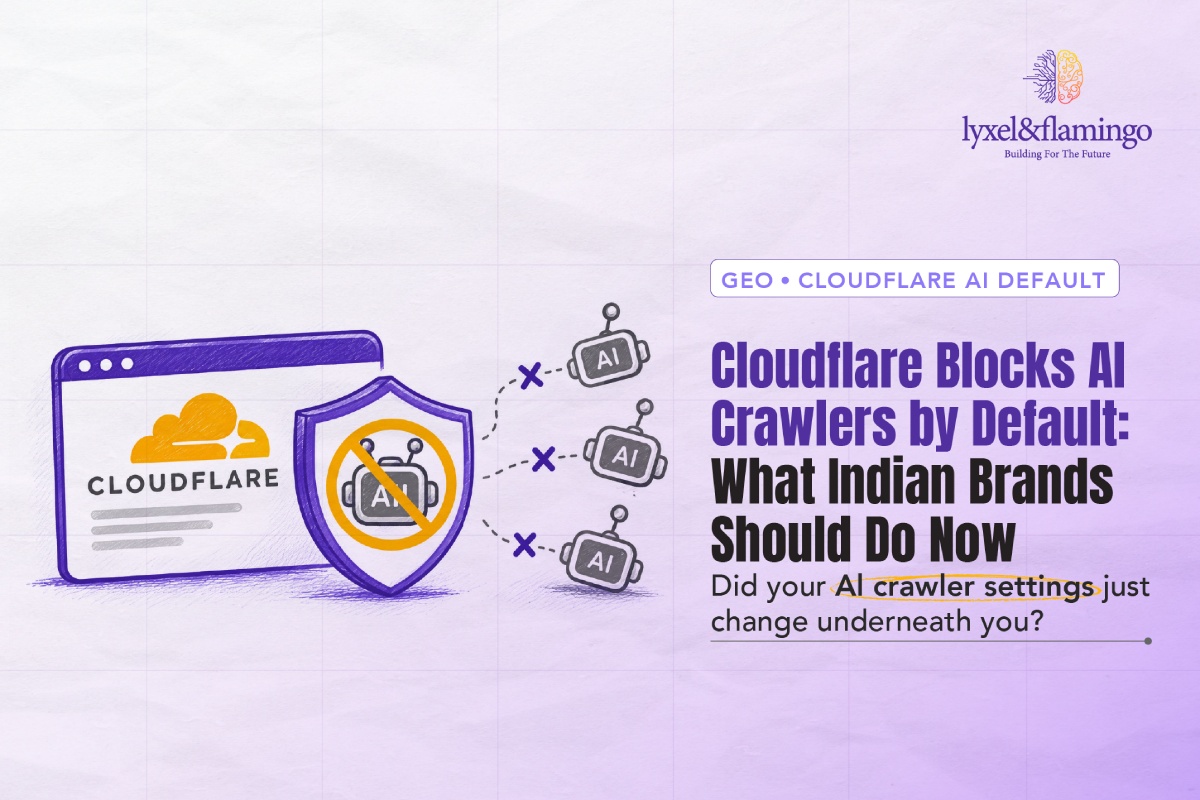
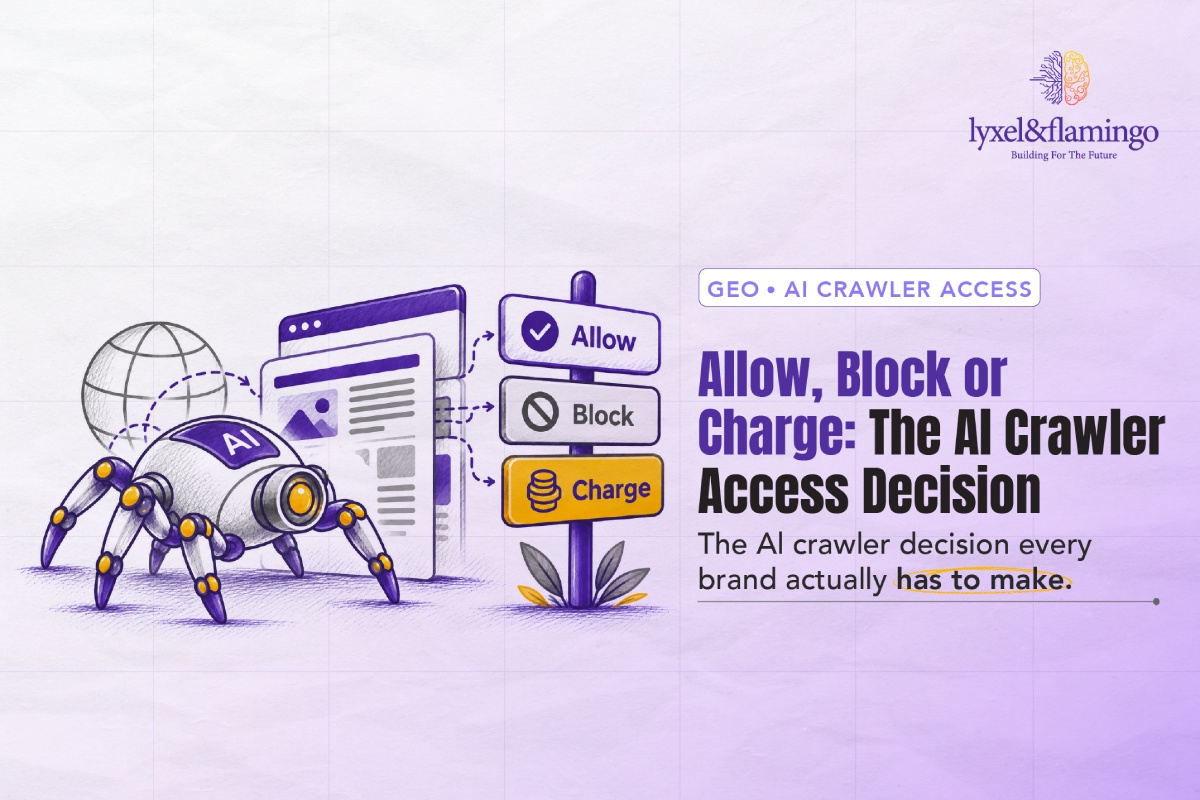
OpenAI’s crawler documentation is plain on this, sites opted out of OAI-SearchBot aren’t shown in ChatGPT search answers, though they can still appear as navigational links. Its search crawler and its training crawler are separate settings, so you can allow one and block the other. The catch is at the CDN layer. Since 15 September 2026, Cloudflare blocks Training and Agent bots by default on ad-bearing pages for newly onboarded domains, while Search bots stay allowed. Cloudflare says multi-purpose crawlers that combine search and training are affected by the Training block too. Google’s guide adds that a site must be included in Search generative AI features in Search Console to be eligible for display, though the guide doesn’t explain the setting. Have the agency check your property there and report what it finds. Request a crawler access audit in week one.
Not sure what Cloudflare’s new defaults mean for your site? Read this blog: Cloudflare Blocks AI Crawlers by Default from 15 September. What Indian Brands Should Do Now
11. How do you handle regional-language and Hinglish queries?
IAMAI’s Internet in India report counts 958 million active internet users, and rural India now makes up more than half of them. If your buyers also search in Hindi, Hinglish, or another regional language, an English-only prompt set will miss them. Ask which languages the agency tests in, who on the team reads them natively, and how they check AI answers in each one. Sometimes the answer is “English only for now”, and that is useful to know before you sign.
Wondering why GEO strategy breaks outside English search? Read this blog: Regional and Vernacular Queries: Why Your GEO Strategy Breaks Outside English Search
12. How do you respond when Google ships a core update?
Google ran three broad core updates between December 2025 and early June 2026. The December update took 18 days, and the March update took 12, running from 27 March to 8 April. The May update ran from 21 May to 2 June. Google’s core updates documentation says Google also makes smaller core updates continually without announcing them, and it advises waiting at least a full week after a rollout ends before judging your data. A good agency has a written routine for this: compare a clean before-and-after window, and avoid knee-jerk rewrites. A weak one blames every dip on the algorithm, or promises to “recover” you with a single fix.
Layer 5: Terms. Last, check who does the work and who holds the keys.
13. Who exactly will work on our account, and how senior are they?
The people who pitch you may not be the people who do the work. Get names, roles, monthly hours and who attends the review call, then meet the person who will build the prompt set and read the crawl logs. Google’s hiring guide also suggests asking how you’ll communicate and whether the agency will share every change it makes to your site. Even the best SEO agency on paper is only as good as the people assigned to your account. The agency’s process, not one star strategist, should hold the knowledge when someone leaves.
14. What will we own and see: accounts, access, content and reports?
You should own your Search Console, GA4 and CMS accounts from day one, with the agency added as a user. Google’s hiring guide advises granting only read access to Search Console at the audit stage, and it reminds you that you are responsible for the actions of any company you hire. Ask for monthly reports which you can open without a login to a vendor tool. Also make sure all content, prompt sets and tracking data stay with you if the contract ends.
15. What should we keep in-house, and how do we exit if it isn’t working?
Deloitte’s 2026 retail outlook, based on 330 retail leaders surveyed in late 2025, found that 94% plan to bring more marketing in-house with AI support. That doesn’t make agencies redundant, but it does raise the bar on what you outsource. Strategy, brand facts and first-party data usually belong with you, while technical audits, digital PR and tracking setup can stay external. A short notice period, a clean handover and a quarterly review. That protects your team’s work, and it gives a good agency every reason to earn its renewal.
How a Brand With Six Decades of Trust Earned a Place in AI Answers
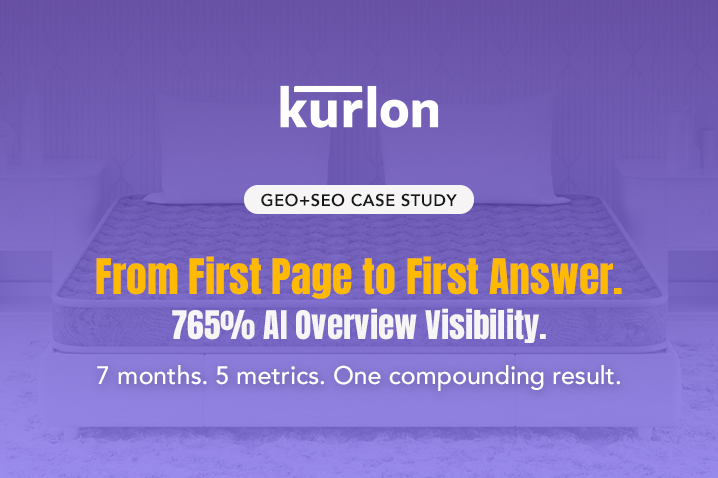
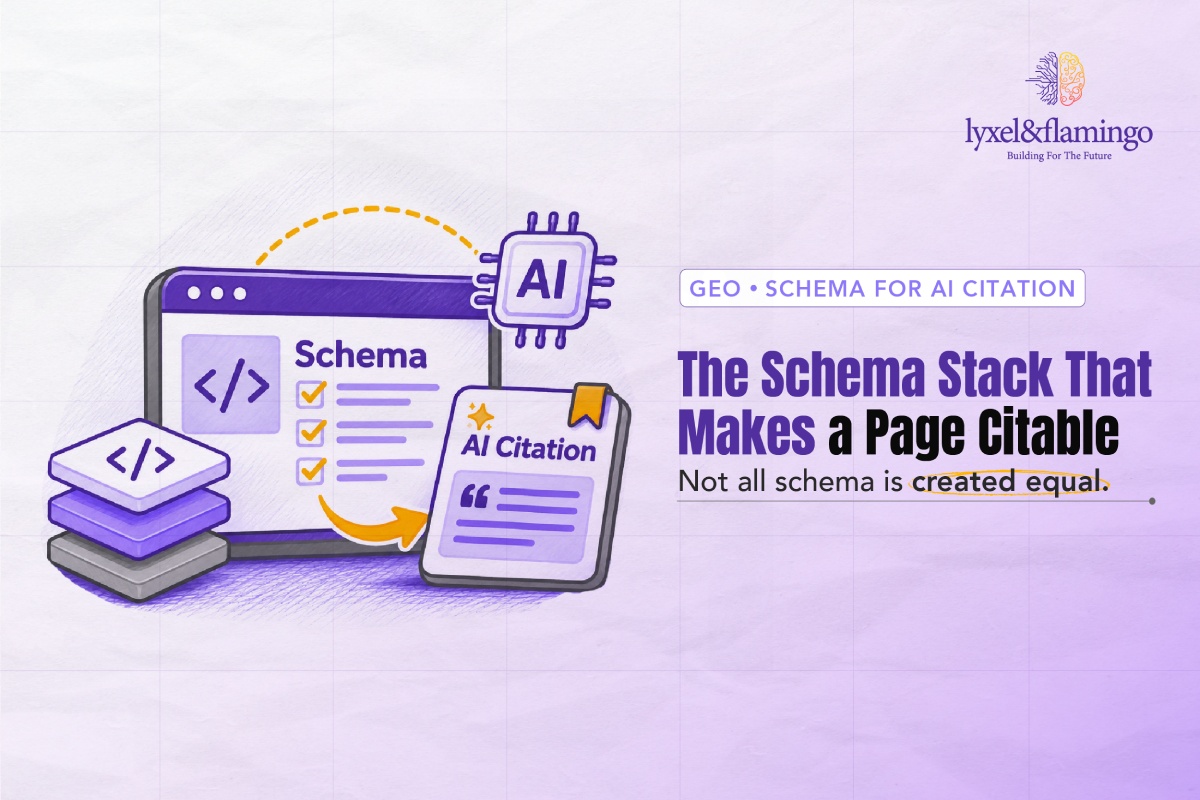
Kurlon was founded in 1962 and is now one of India’s largest sleep brands. It had six decades of offline trust but no place in the answers when buyers asked ChatGPT, Perplexity and Google’s AI Overview which mattress to trust. Lyxel&Flamingo’s team didn’t chase page rankings; instead, they worked in four moves. It mapped 200+ keywords (1.17 million monthly search volume combined) across 15 collection pages without overlap, then built FAQ modules and comparison-led content the site lacked. It also activated on-page reviews and ratings, widened the backlink profile through authoritative guest posts, and deployed Organisation, Product, FAQPage and BlogPosting schema.
Results over seven months, March to October 2025, measured through Google Search Console and GA4:
- 765% growth in AI Overview visibility for high-intent mattress queries
- 600% increase in brand mentions across AI results and AI-powered search surfaces
- 67% rise in search impressions across the seven-month window
- 40% rise in organic sessions over the same period
- 22% improvement in top 10 rankings, with high-value commercial keyword positions improving materially
The last three figures matter most for this blog’s argument. The AI work lifted classic search too, which is why we treat the two as one programme with two scorecards. These are L&F-reported numbers, so apply Question 1 to us as well and ask for the baseline behind any percentage.
5 Things to Do This Week Before You Sign Anything
How to choose an SEO agency in one working week, before any contract lands on your desk:
- Write 25 buyer prompts and run them yourself. Use the questions your customers ask in ChatGPT, Perplexity, Gemini and Google’s AI Mode, and note which brands get named. That is your baseline, and it costs an afternoon.
- Open your robots.txt file and your CDN’s bot settings. Check that your rules allow OAI-SearchBot and Googlebot, and that no default CDN rule blocks search crawlers.
- Mark up your current agency’s last three reports. Highlight every metric that isn’t a ranking or a session count. If nothing is left, you have found your first issue.
- Send every shortlisted AI search optimisation agency the same five questions in writing. Use questions 3, 4, 5, 10 and 14, and put the answers side by side, including your incumbent’s.
- Confirm that your company owns every account the agency touches. Search Console, GA4 and the CMS should belong to your company, with agencies added as users and read-only access for anyone still bidding.
Conclusion
Agencies will keep adding AI to their service pages, so the label will tell you less every quarter, while the questions stay the same. Brands hiring an SEO agency with these tests in hand will build a record of what works in their own category. That record compounds in a way that is hard to buy later. Brands that accept generative engine optimisation as a line item without testing it will keep paying for the label.
You don’t need to read crawl logs or schema markup to run this test. You need to notice when an answer stays vague and keep asking until it doesn’t. If you want help scoring your latest report, schedule a strategy call with Lyxel&Flamingo’s team and we’ll walk through it against these 15 questions.
Frequently Asked Questions
Often your current team can, because Google says optimising for generative AI search is still SEO. Test them on questions 4, 5 and 10. If they can't explain measurement and crawler access in specifics, bring in an AI SEO agency or an AI search optimisation agency to cover those gaps.
No, and an agency that promises it is guessing. Google says no one can guarantee a number one ranking, and nobody controls what AI engines say either. A credible agency promises a process, a measurement plan and reporting dates, then shows movement against a baseline.
Nobody can promise a date, so plan on months, not weeks. The Kurlon results above were measured over seven months, and Google advises waiting at least a full week after a core update finishes before you judge the data. Ask for a dated 90-day plan with a baseline at day 30.
Yes, if people review it and it adds original value. Google's spam policies treat generating many pages with AI tools and no added value as scaled content abuse. Ask who edits, who fact-checks and who signs off.
Yes, but pay for a scope that measures both. Google says its AI features rest on core Search ranking systems, and Gartner found only about one-third of consumers think GenAI chatbots match search engines. Rankings still feed the answer, they no longer prove it.