What this blog covers
A growing share of B2B buyers now start vendor research inside an AI chatbot rather than a search engine, and that early conversation is shaping the shortlist before a brand ever gets a discovery call. This piece breaks down what the research shows about AI’s influence on B2B vendor selection, why this is a shortlist problem rather than a traffic problem, and what it means for how marketing teams should measure and act on AI visibility.
Quick Answer: Recent B2B buyer research (G2’s 2026 Answer Economy report) found that 51% of B2B software buyers now start their research with an AI chatbot more often than with Google, 71% use one at some point in the process, and 69% chose a different vendor than originally planned because an AI chatbot recommended it. This makes AI search a shortlist problem, not a traffic problem: a brand that is invisible to the AI models buyers consult loses consideration before a human salesperson is ever contacted.
Table of Contents
- Where the Buying Committee Actually Starts Now
- The Data on AI’s Influence Over Vendor Selection
- Why This Is a Shortlist Problem, Not a Traffic Problem
- What Makes a B2B Brand AI-Legible
- Measuring Something That Happens Before the Funnel
- What to Do About It This Quarter
- Framework Explained
- Key Takeaways
- CXO Takeaway
Where the Buying Committee Actually Starts Now
The classic B2B buying journey assumed a Google search, a handful of vendor sites, a comparison spreadsheet, and eventually a demo request. That journey now has a new first step for a majority of buyers: a conversation with an AI chatbot that does the searching, comparing, and summarizing before a human touches a vendor’s website.
This matters because a buying committee, not a single decision-maker, drives most B2B purchases, and each member of that committee may be having their own version of that AI conversation independently, forming an opinion before the group ever meets to discuss vendors.
The Data on AI’s Influence Over Vendor Selection
G2’s 2026 Answer Economy research quantifies what many B2B marketers have suspected anecdotally. 51% of B2B software buyers now start research with an AI chatbot more often than with Google, and 71% use one somewhere in their process. 85% of buyers said they think more highly of a vendor when an AI tool includes it in its answer, a direct link between AI visibility and buyer perception.
The more consequential number: 69% of buyers reported choosing a different vendor than they originally planned to, simply because that vendor showed up in the chatbot’s recommendation. A brand that is well known offline and invisible to AI search is competing at a real disadvantage against a less-known competitor the AI model happens to surface.
Why This Is a Shortlist Problem, Not a Traffic Problem
Marketing teams have spent years optimizing for the moment a buyer clicks through to a website. AI-mediated research collapses much of that moment into a single answer the buyer never leaves. The brand does not lose a click; it loses inclusion in the mental shortlist the buyer forms before any click happens.
This reframes the objective. The goal is not driving more B2B traffic through AI search; it is ensuring the model has enough clear, structured, verifiable information about the brand to include it when a relevant buyer question comes up, the same underlying discipline covered in GEO: how to get cited in AI search.
What Makes a B2B Brand AI-Legible
B2B buying decisions hinge on specifics: integrations supported, pricing tiers, implementation timelines, compliance certifications, and how a product compares to two or three named competitors. An AI model can only surface those specifics accurately if they exist somewhere in structured, consistent, and current form.
Case studies, comparison pages, documentation, and review-site presence all feed this. A brand with thin or outdated public information is effectively asking an AI model to guess, and models resolve uncertainty by defaulting to a competitor with clearer information, the same entity-consistency logic covered in entity-based SEO. The schema stack that makes a page citable is the structural layer underneath all of it, reinforced by Google’s introduction to structured data and Google’s broader guidance on demonstrating expertise and trust, the same signals a buyer-facing AI model is trying to verify before it includes a brand in an answer.
Pierag Consulting’s website work with Lyxel&Flamingo is a direct example of this discipline applied to a B2B professional-services brand, and Subway India’s digital commerce work shows the same structured, verifiable presence paying off for an enterprise franchise brand.
Measuring Something That Happens Before the Funnel
Traditional B2B funnel metrics (MQLs, demo requests, pipeline sourced) all measure activity after a buyer has already formed a shortlist. None of them capture whether the brand was even considered during the AI-mediated research phase that now precedes most of that activity.
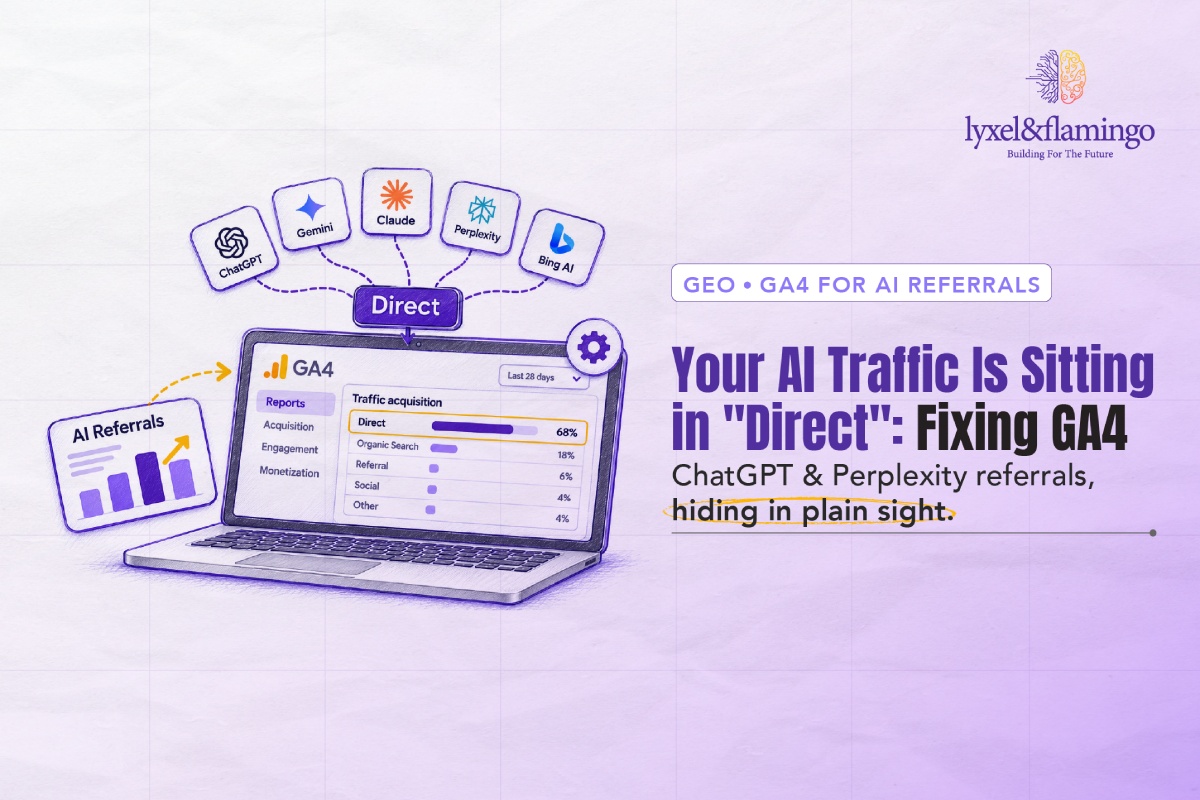
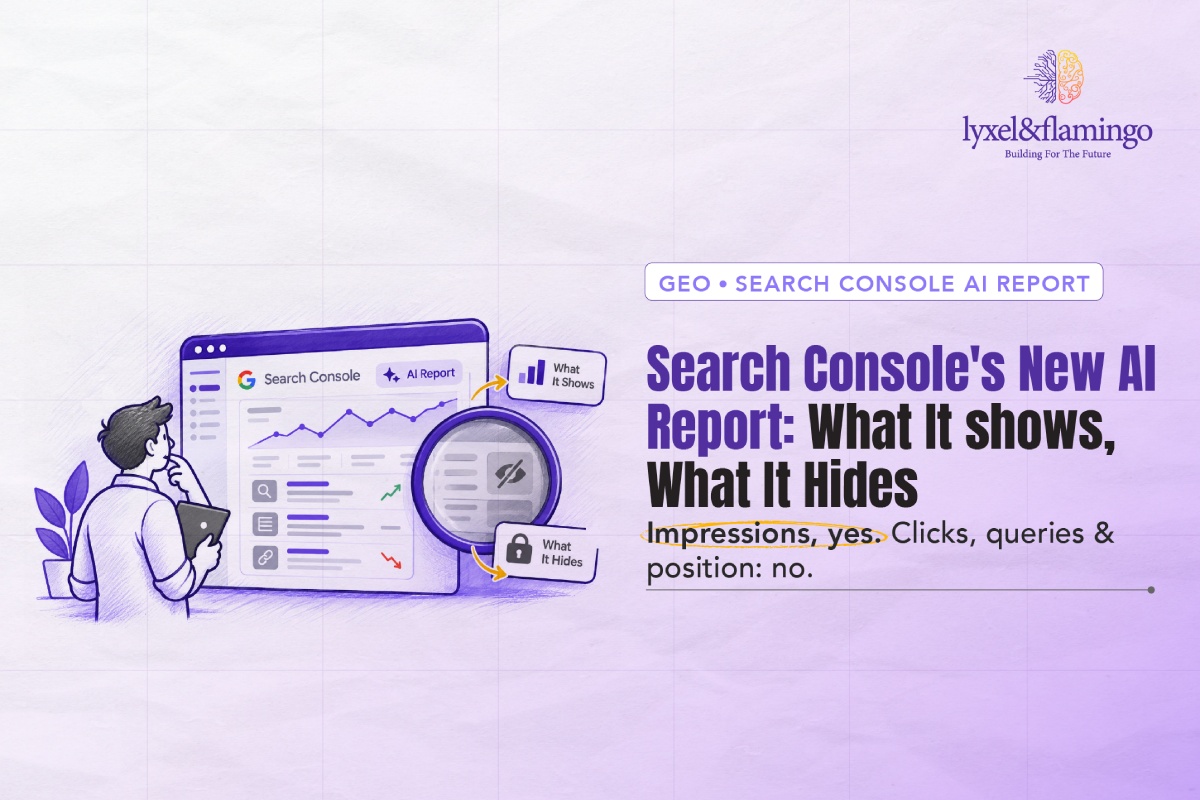
Early indicators worth tracking include AI-referral traffic where platforms report it, brand mention frequency in AI-generated comparison answers, and win-loss interviews that explicitly ask whether AI search tools played a role in vendor discovery. These are imperfect proxies today. They are the closest available signal into a stage of the funnel that used to be invisible and is now measurably shaping outcomes. Fixing GA4 to actually capture AI referral traffic is the practical first step, since most of that traffic defaults into a “Direct” bucket that hides exactly the signal this section is describing. Google Analytics documentation can help with traffic acquisition reporting and channel analysis. Google Search Console’s generative AI report is a second, complementary source worth checking alongside it.
What to Do About It This Quarter
Start by auditing what an AI model currently says about the brand when asked a buyer-style comparison question in the target category. Most B2B marketing teams have never actually run this test, so the findings are often the first real signal of where the gap sits.
From there, prioritize the content and data gaps that most directly affect comparison questions: pricing clarity, integration lists, case studies with verifiable outcomes, and structured company information. This is incremental work, not a single campaign, and it compounds the longer a competitor is left uncontested in that AI-mediated shortlist.
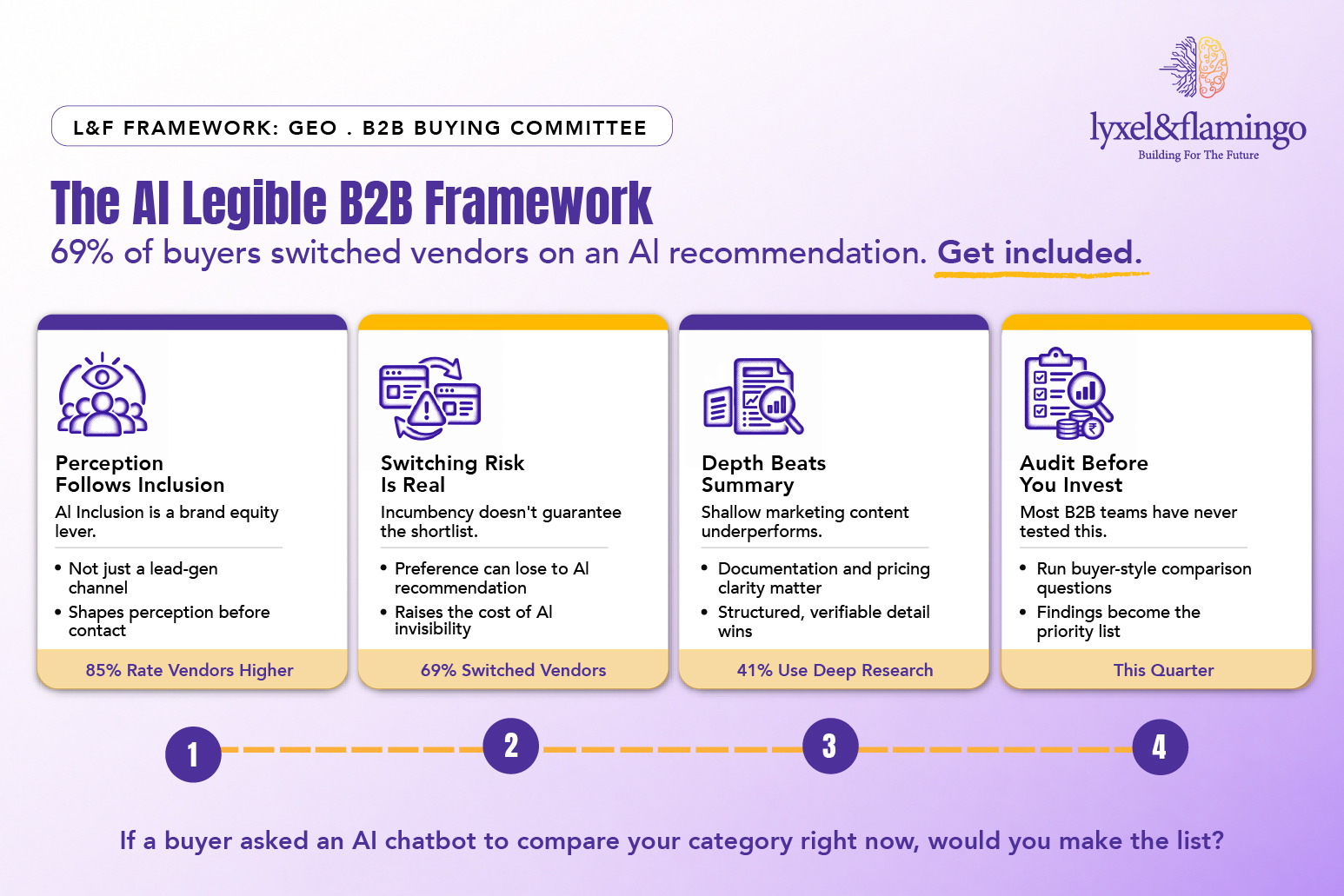
Framework Explained
Perception follows inclusion: buyers do not just discover vendors through AI, they trust the ones AI includes more, making inclusion a brand equity lever, not only a lead-gen one.
Switching risk is real: a majority-preference for an established vendor can still lose to an AI-recommended alternative, raising the stakes of AI invisibility for incumbents.
Depth beats summary: buyers increasingly use deeper research tools, so shallow, marketing-only content underperforms against detailed, structured information.
Audit before you invest: most B2B teams have not tested what AI models currently say about them, making a comparison-question audit the logical starting point.
⚠ GEO READINESS NOTE This piece draws on publicly available third-party research (G2’s Answer Economy report) rather than a completed Lyxel&Flamingo B2B case study, since AI-mediated B2B buying influence is still an early and fast-moving area to measure client-side. The GEO and entity-consistency work referenced throughout is drawn from the agency’s broader SEO and structured-data engagements.
Key Takeaways
- 51% of B2B software buyers now start research with an AI chatbot more often than with Google, and 71% use one at some point in their process.
- 69% of buyers chose a different vendor than planned because an AI chatbot recommended it, a direct link between AI visibility and pipeline outcomes.
- AI-mediated buying is a shortlist problem, not a traffic problem: brands can lose consideration before a human ever visits their site.
- Structured, current, comparison-ready content (pricing, integrations, case studies) is what makes a brand legible to the AI models buyers now consult.
- Most B2B marketing teams have not yet audited what AI models say about them in buyer-style comparison questions.
CXO Takeaway
If a buyer asked an AI chatbot to compare your category right now, would your company make the list? That is the question this data makes unavoidable for any B2B marketing or revenue leader planning next quarter’s priorities. Lyxel&Flamingo’s SEO team can run that comparison-question audit and build the structured content plan to close what it finds.
Frequently Asked Questions
The underlying research is strongest in B2B software, however the buying-committee behavior it describes (AI-assisted early research, shortlist formation before vendor contact) applies broadly across B2B categories with considered, multi-stakeholder purchases.
Traditional SEO optimizes for ranking on a results page a human scans. This is about being included and recommended inside an AI-generated answer the buyer may never leave, which depends more on structured, verifiable data than on keyword-targeted pages alone.
Ask several AI chatbots buyer-style comparison questions in your category (e.g., “best vendors for X, compared”) and record whether, and how, your brand is mentioned. This simple test often reveals the first concrete gap to address.
Not necessarily, however the data shows it meaningfully raises the risk: 69% of buyers in the G2 research switched vendors based on an AI recommendation, so AI invisibility is a real, measurable competitive disadvantage rather than a hypothetical one.