What This Blog Covers
An Amazon Brand Store that genuinely converts is built around shopper intent, not just product listings, using page architecture, merchandising widgets, and curated collections to guide a visit toward a purchase. This piece breaks down what separates a Brand Store that drives incremental conversion from one that simply exists, and how to use it as a real traffic destination rather than a passive landing page.
Quick Answer: An Amazon Brand Store converts when it is built around shopper journeys rather than a flat product grid, using clear category navigation, curated collections for specific use cases, and merchandising widgets like comparison charts and lifestyle imagery to guide a visit toward purchase. Brands that drive paid and organic traffic directly to a well-merchandised store, rather than only to individual product pages, typically see stronger repeat visits and higher average order value than a store treated as a static catalogue.
Table of Contents
- Why Most Brand Stores Are Just a Catalogue With a Logo
- Store Architecture: Guiding a Shopper, Not Listing a Catalogue
- Merchandising Widgets That Actually Drive Add-to-Cart
- Using the Brand Store as a Traffic Destination
- The Brand Store Conversion Framework
- Framework Explained
- Key Takeaways
- CXO Takeaway
Why Most Brand Stores Are Just a Catalogue With a Logo
Amazon makes it easy to launch a Brand Store and easy to leave it alone afterward, which is exactly why so many end up as a flat grid of products under a banner image. That default structure treats every visitor the same, whether they arrived knowing exactly what they want or are browsing the category for the first time. Building a Brand Store at all requires enrollment in Amazon Brand Registry, the prerequisite step brands sometimes skip until a competitor issue forces the conversation.
The cost of that default is invisible in a standard sales report, since a weak Brand Store doesn’t show up as a specific line item anywhere. It shows up as lower time-on-page, fewer pages per visit, and a missed opportunity to cross-sell a full range to a shopper who already trusts the brand enough to click through.
Store Architecture: Guiding a Shopper, Not Listing a Catalogue
A store that converts starts with navigation built around how shoppers actually think about the category, by use case, by collection, or by price tier, rather than by internal SKU logic. A footwear brand, for instance, gains far more from tabs organized around “running,” “training,” and “lifestyle” than from a single undifferentiated grid of every shoe in the catalogue.
The homepage tile of the store carries outsized weight, since it is often the first and sometimes only page a visitor sees. Leading with a hero collection tied to a current campaign or best-seller, rather than a generic brand banner, gives that first screen an actual job to do beyond looking presentable.
Merchandising Widgets That Actually Drive Add-to-Cart
Amazon’s Brand Store builder includes widgets well beyond static product grids: comparison charts, shoppable lifestyle imagery, video modules, and “shop by benefit” tiles. Comparison charts in particular do real work in considered-purchase categories, letting a shopper self-select between product tiers without leaving the store to search elsewhere.
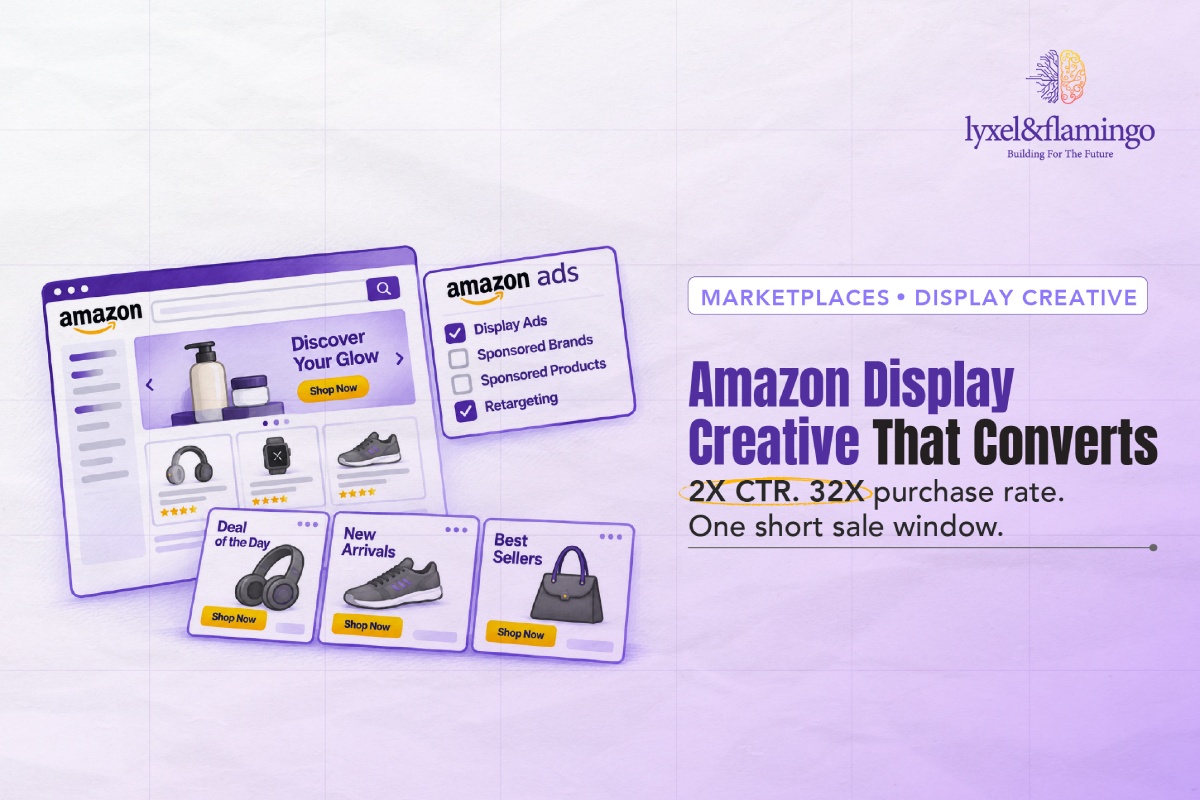
Good ad creative built for campaigns can double as store merchandising content, extending the life of an asset well past its original campaign window. A store that reuses strong creative this way gets more value out of every piece produced, rather than treating the store and the campaign as separate content efforts.
Using the Brand Store as a Traffic Destination
The biggest missed opportunity in most Brand Store strategy is traffic. A well-built store still underperforms if every campaign routes shoppers to a single product page instead, since a shopper who lands on one product never sees the rest of the range at all.
Sponsored Brands campaigns, which route directly to a Brand Store rather than a listing, and social or influencer campaigns linking to a curated store page instead of a generic homepage, both turn the store into an active part of the funnel rather than a page shoppers stumble onto by accident. This kind of full-funnel approach on Amazon treats the store as one deliberate stop in the journey, not an afterthought.
The Brand Store Conversion Framework
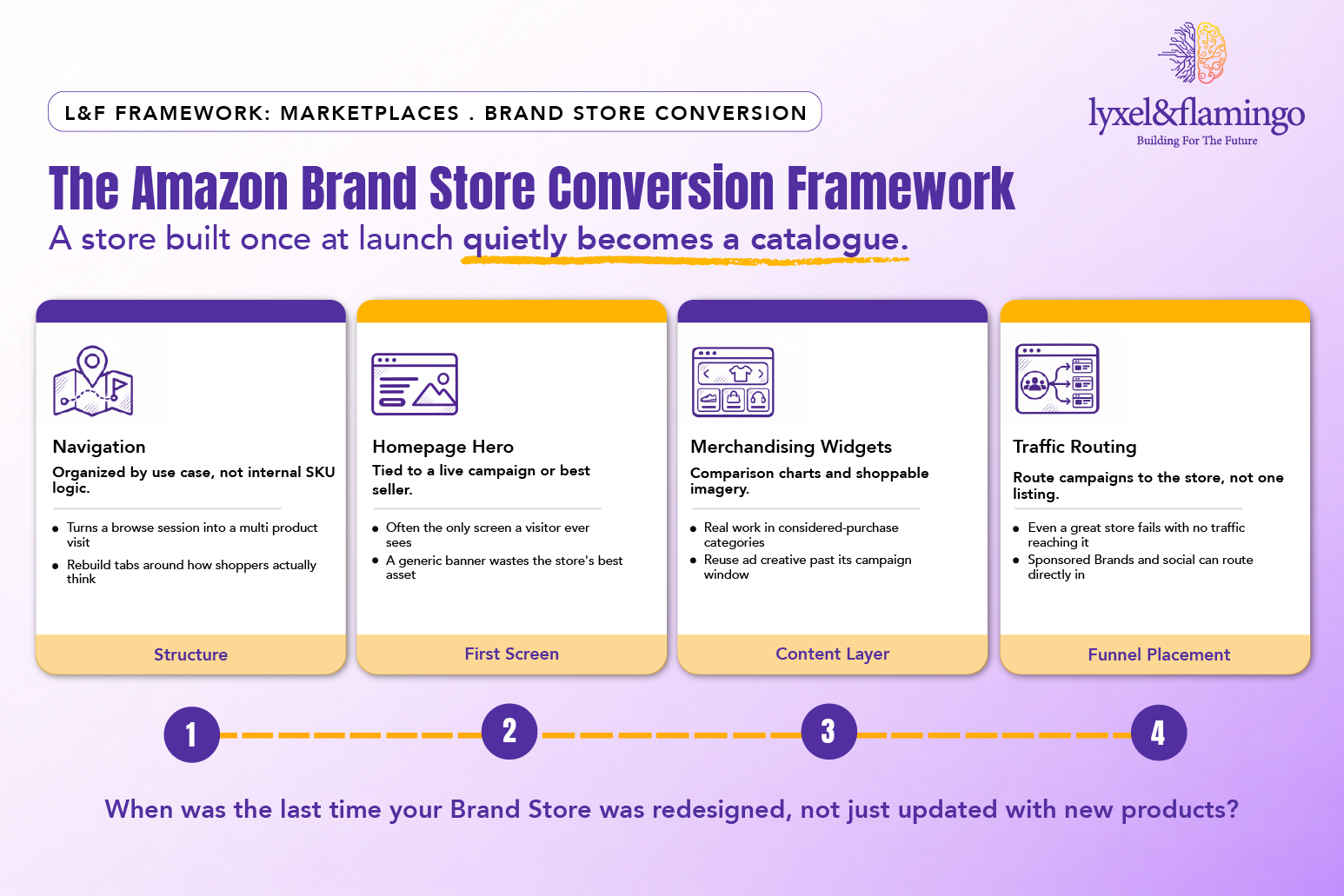
The table below breaks a converting Brand Store into its four working parts, since a store rarely fails or succeeds because of one element alone.
Framework Explained
Navigation: Organized around shopper intent, rather than internal catalogue structure, is what turns a browse session into a multi-product visit.
Homepage Hero: Content tied to an active campaign gives the store’s most valuable screen an actual conversion job, rather than functioning as static branding.
Merchandising Widgets: Comparison charts do real work in considered-purchase categories, letting shoppers self-select without leaving the store.
Traffic Routing: Decisions determine whether the store functions as a destination at all, since even a well-built store underperforms with no dedicated traffic reaching it.
CAPABILITY NOTE: Lyxel&Flamingo builds and merchandises Amazon Brand Stores as part of full marketplace engagements, including navigation architecture, widget selection, and routing strategy, though this is typically delivered as one component of a broader account rather than as a standalone, separately case-studied engagement. In ASICS’s AMS launch work, the brand’s organic traffic to its Amazon brand store grew 40% month over month as a direct result of paid campaigns routed toward it, an example of the store-as-destination approach in practice.
Key Takeaways
- A Brand Store built as a flat catalogue leaves conversion, time-on-page, and cross-sell opportunity on the table.
- Navigation organized around shopper intent, not internal SKU structure, is the highest-leverage architecture fix.
- Merchandising widgets like comparison charts and shoppable imagery do real work in considered-purchase categories.
- Routing paid and organic traffic directly to the store, not only to single product pages, is what makes it a true destination.
- Ad creative built for campaigns can be reused as store merchandising content, extending its value well past the campaign window.
CXO Takeaway
When was the last time your Brand Store was actually redesigned, rather than just updated with new products? A store built once at launch and left alone rarely reflects the campaigns, best-sellers, or shopper behavior that have since changed. Treating the store as a living, merchandised destination, with traffic deliberately routed toward it, turns a compliance requirement into a real conversion asset. Lyxel&Flamingo’s third-party marketplace team builds Brand Stores designed around exactly that.
Frequently Asked Questions
At minimum with each major campaign or seasonal shift, since a hero section and merchandising widgets tied to an outdated campaign quietly stop doing any conversion work.
Not directly, though the engagement signals it generates, time-on-page, pages per visit, and add-to-cart rate from store traffic, can indirectly support overall listing performance.
Rebuilding navigation around shopper use cases or collections rather than internal SKU logic, paired with routing at least one active campaign directly to the store rather than to a single product page.
Yes. Even a small catalogue benefits from a clear hero section and simple, intent-based navigation, since the alternative is usually a near-empty grid that does nothing to build trust or cross-sell.