
What this blog covers
Retail media in India is moving beyond Amazon and Flipkart. Quick commerce platforms such as Blinkit, Zepto and Swiggy Instamart now capture a major share of purchase journeys, especially across FMCG, grocery, personal care and other high-frequency categories. Their short sessions come with strong purchase intent, making sponsored listings useful when shoppers already know what they need. The article explains why brands should rethink their retail media strategy before 2027. It covers the evidence behind quick commerce growth, the expanding dark store network, rising retail media investment and the role of first-party shopper data. It also introduces a practical three-part priority stack based on intent density, data depth and incremental reach. The focus is not on abandoning Amazon or Flipkart. Brands need to understand where their category’s demand actually lives, test newer platforms, improve measurement and review budgets more often. AI shopping agents could change how sponsored listings work, adding another layer to the future of retail media.
Table of Contents
Blinkit, Zepto and Swiggy Instamart together hold close to nine in ten quick commerce orders in India, and not one of them is Amazon or Flipkart. That single fact should worry anyone still building a retail media strategy in India around two platforms and calling it complete.
Most Indian marketing teams treat Amazon Ads and Flipkart Ads as effectively the same thing as retail media advertising, and everything else gets filed under “test next quarter.” It isn’t a rounding error anymore. Quick commerce apps now carry real purchase intent, real first-party data, and a growing share of category ad spend, and the brands that noticed early are already pulling ahead on cost per acquisition through disciplined quick commerce advertising in India programs. This piece looks at where that money is moving right now, what the numbers from the past year say about it, and what a defensible retail media strategy India teams can act on before retail media networks in 2027 force the question on everyone else anyway.
What Is a Retail Media Network?
A retail media network is advertising inventory a retailer sells on its own digital or physical properties, built on the retailer’s first-party shopper data rather than third-party cookies.
A dark-store grocery app running sponsored listings between two ten-minute delivery slots fits it just as cleanly as Amazon does. This matters right now because retail media advertising platforms are multiplying faster than most media plans can track, and the definition is the only thing that stays constant while the list of retail media advertising platforms worth a brand’s attention keeps changing under it.
The Problem: Budgets Stuck on Two Platforms
The outsized influence of Amazon Ads sets expectations that most other retail media networks cannot meet, and brands running dozens of smaller platforms end up with fragmented workflows and shaky incrementality data. Retail media’s problem was never really about demand in the first place. It’s design, and that’s a fair, uncomfortable point any agency running retail media advertising at scale has to sit with.
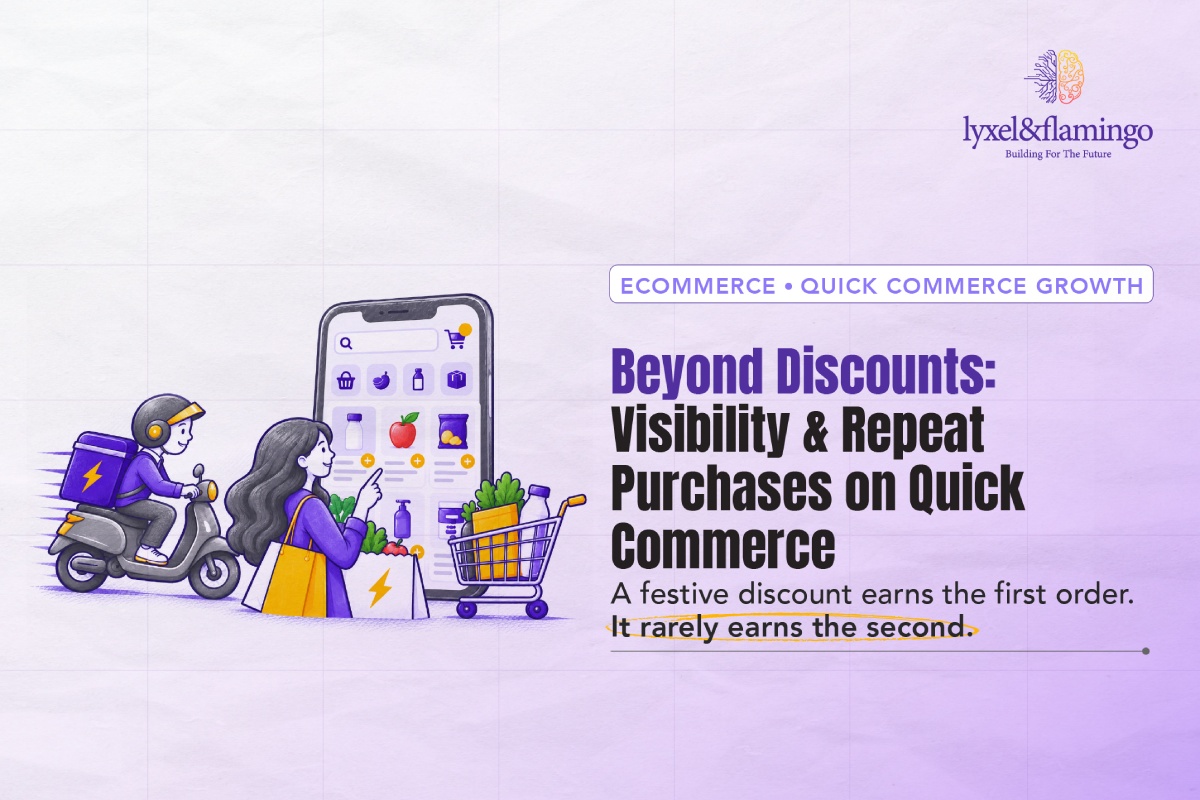
But treating that fragmentation as a reason to stay with two platforms gets the lesson exactly backwards. Brands doing this are optimising for reporting convenience, not for where the shopper stands today. And the shopper, at least for grocery, personal care and a growing list of FMCG categories, has already moved. Quick commerce apps now account for 70% to 75% of all e-grocery orders in India, up from just 35% in 2022, according to IBEF’s FMCG industry data. Two platforms can’t capture demand that has structurally relocated somewhere else, and ignoring quick commerce advertising for another budget cycle only widens that gap.
Want a closer look at how one legacy marketplace still performs during peak season? Read this blog: The Flipkart Big Billion Days Playbook
The Mechanism: Why Intent Beats Reach
The mechanism is simpler than most decks make it sound, but it explains what happens next. Bain’s How India Shops Online 2026 report found quick commerce sessions average under five minutes, compared with over ten minutes on regular e-retail. Yet those shorter visits convert far more often, at roughly eight times the rate. A shopper opening Blinkit at 8 pm usually knows what she needs. She is restocking, not browsing. A sponsored listing then feels closer to a checkout counter than a traditional ad.
That’s the entire mechanical case for quick commerce advertising India teams keep re-explaining to finance every planning cycle, and it’s also why the ground underneath quick commerce advertising India won’t stay still for long. McKinsey’s Rewiring Advertising research, based on its February 2026 Advertiser Survey, found over 55% of consumers already use AI tools for product consideration, with 60% saying AI delivers better answers than a traditional search bar. More than $3 trillion of global consumer commerce is expected to run through AI agents by 2030. Bain’s India data backs this up close to home: the country is now the world’s second-largest ChatGPT market, with usage up roughly 4.5x in a single year to more than 160 million monthly users.
If an AI agent starts picking the product and placing the order, a sponsored listing nobody scrolls past stops mattering the way it does today. That is the honest, slightly uncomfortable core of the future of retail media question, and it’s exactly why nobody serious is calling quick commerce advertising a permanent, self-driving growth lever yet. Any credible read on the future of retail media in this country has to hold both truths at once, the channel works today, and it may work differently tomorrow.
The Evidence: What the Numbers Show
Five numbers won’t settle every argument in a boardroom, but this set makes a strong case for treating retail media advertising as core infrastructure rather than a side bet, and for taking quick commerce ads as seriously as any legacy marketplace line item. Read together, they explain most of retail media trends for 2027 before that year even starts.
- Blinkit holds a 44% quick commerce share and processed 900 million orders in FY26, with Zepto and Swiggy Instamart at roughly 25% and 20%. This means brand budgets sitting entirely on Amazon and Flipkart are structurally missing where 90% quick commerce orders now happen.
- India’s dark store network is set to nearly triple, from around 2,525 stores in 2025 to close to 7,500 by 2030. That’s physical retail media inventory expanding faster than most brands can staff a regional sales team to match it.
- Walmart’s retail media business, Walmart Connect, generated $6.4 billion in fiscal 2026 in the US, a useful preview of what retail media advertising platforms turn into once a retailer stops treating them as a side hustle.
- Global retail media spend is on track to hit $312 billion by 2030, twice what global television advertising will pull in that year.
- Retailers are actively scaling retail media networks specifically to boost profitability and personalisation, not just as an ad-sales afterthought, per Deloitte’s 2026 retail outlook work.
None of that is Amazon or Flipkart revenue, and that’s really the whole point of this article. Every number above is what retail media gets built on, not what today’s retail media advertising platforms looked like five years ago.
The Lyxel&Flamingo Retail Media Priority Stack
Most retail media advertising platforms get evaluated backwards, by whatever budget happens to be left over rather than by what the platform can genuinely deliver. In Lyxel&Flamingo’s own work running Third Party Marketplaces programs for FMCG, appliance and D2C brands, we use a three-layer filter before a single rupee moves toward any retail media advertising platform. We call it the Retail Media Priority Stack, and the order matters as much as the layers themselves, especially with retail media networks in 2027 changing which platforms even qualify for the list.
- Intent Density: Does this platform own real purchase intent for this exact category, right now, this quarter? Grocery, personal care and daily-use FMCG intent lives with quick commerce now, which is exactly why quick commerce advertising India budgets deserve first claim on that layer. Considered electronics and fashion purchases still sit mostly with Amazon, Flipkart and Myntra. Chasing intent on the wrong platform wastes spend that would have converted somewhere else entirely.
- Data Depth: How much closed-loop, SKU-level data does the network genuinely hand back, not what the sales deck promises? A platform that can’t tie an impression to a sale isn’t retail media, it’s just display advertising wearing a retail media badge.
- Incremental Reach: Is this spend reaching a shopper the brand didn’t already own through Google, Meta or its own app, or is it re-taxing demand that would have converted anyway? In our own account reviews, this is consistently the question brands skip, and it’s the one that separates real growth from an expensive accounting shuffle.
A brand that runs every retail media advertising platform through those three questions ends up with a retail media strategy India leadership can genuinely defend in a budget review, rather than a platform list assembled because a competitor got there first. This is also, in Lyxel&Flamingo’s experience, the fastest way to turn a scattered quick commerce advertising India budget into one that a CFO stops questioning every quarter.
What This Looks Like in a Real Portfolio
Most retail media advertising platforms get evaluated backwards, by whatever budget happens to be left over rather than by what the platform can genuinely deliver.
In Lyxel&Flamingo’s own work running Third Party Marketplaces programs for FMCG, appliance and D2C brands, we use a three-layer filter before a single rupee moves toward any retail media advertising platform. We call it the Retail Media Priority Stack, and the order matters as much as the layers themselves, especially with retail media networks 2027 changing which platforms even qualify for the list.
- A sustained sales lift for FMCG brands once quick commerce stopped being a test line item and became a properly funded channel in its own right.
- Category growth that keeps outrunning overall penetration, which means the addressable market is still opening up rather than settling into place.
- A rising share of urban FMCG category sales, especially in snacks, beverages, and beauty and personal care, moving inside these apps a little more with every festive quarter.
The brands moving early on this are compounding an advantage that gets harder to close every quarter a competitor waits. The pattern holds outside packaged food too, skincare and small-appliance brands describe the identical curve once they stop treating this as a bolt-on. A retail media strategy India teams build around this pattern tends to outperform one copied straight off retail media trends 2027 conference slides.
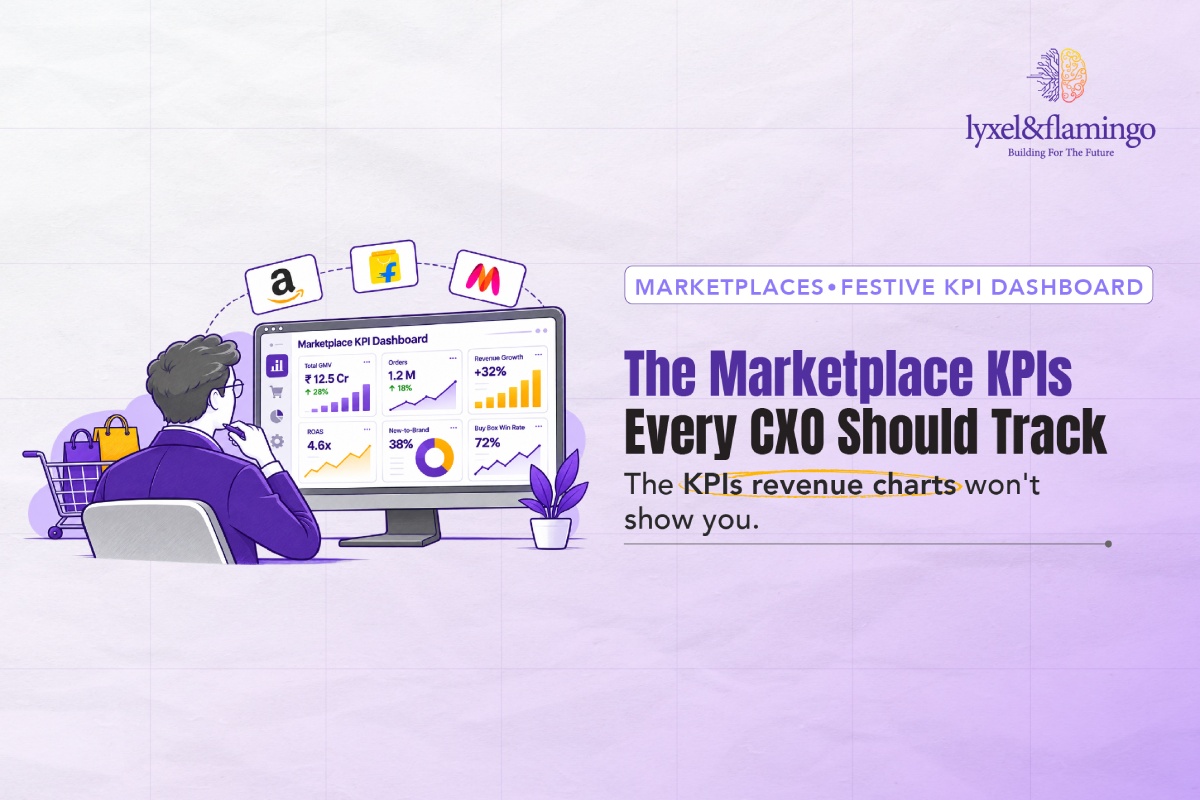
Curious what marketers track once festive ad spend goes live across these platforms? Read this blog: The Marketplace KPIs Every CXO Should Track During Festive Sales
Five Things to Do Before Your Next Budget Cycle
- Audit where your category’s intent lives right now, not where habit says it should. Pull last quarter’s marketplace data and check whether Blinkit, Zepto or Instamart search volume for your category has already overtaken Amazon’s. Most brand teams genuinely haven’t looked closely enough to know.
- Ask every retail media advertising platform for SKU-level attribution before you sign anything. If a platform can’t show impression-to-sale data on request, its pitch deck is describing display advertising, not real retail media advertising.
- Set aside a real test budget for at least one quick commerce advertising platform in India beyond your current two. Even 10% of marketplace spend, run properly for a full quarter, tells you more about retail media advertising than another year of assuming it ever will.
- Build one measurement view across every retail media advertising platform before you scale any single one of them. Fragmented reporting is the real blocker here, not fragmented spend. Getting first-party data infrastructure right has to happen before the media plan, never after it.
- Revisit the plan every quarter, not once a year. The platforms leading retail media trends 2027 conversations right now won’t all still be leading once retail media genuinely arrives, and a plan locked in April rarely survives festive season unchanged.
Conclusion
Brands still treating quick commerce advertising in India as a rounding error are compounding a gap that gets structurally harder to close by the time retail media networks 2027 genuinely arrives. The brands overcommitting to one dominant platform without asking whether it still owns intent two years out are making the same mistake from the opposite direction, just slower and less visibly. Neither extreme survives the next eighteen months of retail media trends 2027 intact, and there isn’t much time left to pick a side deliberately instead of by default, because the future of retail media in India is being decided in exactly these next few budget cycles. A workable retail media strategy India teams can run today doesn’t wait for either extreme to prove itself first.
Want a proper read on where your own quick commerce advertising spend in India stands against this shift? Book a complimentary retail media audit with our Third Party Marketplaces team, or see how we build full-funnel marketing programs across the retail media advertising platforms that now sit ahead of Amazon and Flipkart in a growing share of purchase journeys.
Frequently Asked Questions
Retail media runs on a retailer's own first-party purchase data, inside or right around the moment a shopper is already buying. Google and Meta ads work earlier, on intent and interest signals, before that purchase decision is locked in.
As soon as the category shows real search or order volume on a platform, not after a competitor proves the channel first. Waiting means paying more for the same visibility once cost-per-click rises with demand, which it always does.
It's less of an Amazon-only game than it was two years ago. Quick commerce platforms carry lower entry costs and less competitive noise than Amazon's mature auction, which currently favours smaller and challenger brands more than the incumbents.
Possibly less useful in their current sponsored-listing form, but the first-party data and measurement infrastructure this channel has already built won't disappear, it'll likely just get repurposed for whatever agentic shopping ends up looking like.