
Blog Summary
The festive sale looks like a few frantic days in October. It is really won in the quiet weeks of August and September, in the unglamorous work of getting assortment, listings, stock and creative ready before a single shopper arrives. This is a marketplace-wide readiness playbook across Amazon, Flipkart and Myntra, built backwards from the sale so a brand walk into Big Billion Days and the Great Indian Festival prepared rather than scrambling
Table of Contents
The Sale is won in the Weeks Before it
Every year the festive sale looks like a sprint, a few days in late September and October when Big Billion Days and the Great Indian Festival land together and the whole market moves at once. RedSeer has called this the strongest festive period for e-commerce in five years, with GMV forecast to grow around 20% and order volumes through the season rising by a similar margin. But the brands that come out ahead are rarely the ones who ran fastest during those days. They are the ones who did the quiet work in the weeks before, when there was still time to fix what the sale would otherwise have exposed.
That is the uncomfortable truth of festive readiness. The sale does not reward effort during it nearly as much as it rewards preparation before it, because once demand arrives there is no time to correct a weak listing, a missing pack or a stockout. This playbook is built the way the winners think about it – counting back from the sale, not forward from today.
What Festive Readiness Means
Festive readiness is the state of having every controllable thing in place before the demand arrives: the right products chosen and priced, the listings and creative sharp and approved, the stock positioned where it will sell, and the campaigns built and ready to switch on. It is less a campaign than a sequence of deadlines, each one early enough that the next can depend on it. Miss one and the whole chain slips into the sale itself, which is exactly where a brand cannot afford to be fixing things.
Sixty days out: Assortment, Pricing and Packs
The earliest work is the most strategic. Roughly two months before the sale, a brand decides what it is actually going to sell, the hero products that will carry the season, the pricing that will hold margin while staying competitive, and the pack formats suited to festive demand across each marketplace. Getting this right early matters because everything downstream, from creative to stock, depends on knowing what the brand is leading with. Deciding it late forces every later step to be rushed.
Thirty days out: Listings, A+ and Creative
A month out, the work turns to how those products show up. Listings are optimised for the searches that spike in festive, A+ content and creative are built and, where the platform requires it, submitted for approval with enough runway to clear before the sale. This is also the window to get platform-specific formats right, Myntra’s storefront and studio tools behave differently from Amazon’s, and festive creative that ignores those differences arrives generic. The month-out deadline exists because approvals and indexing take time a brand does not have once the sale is live.
Fourteen days out: Stock and Campaigns
Two weeks before, readiness becomes physical and operational. Stock is positioned where demand will land, brand approvals and catalogue issues are cleared, the kind of onboarding and approval steps that quietly derail a brand if left late and advertising campaigns are built, budgeted and staged to switch on. Nothing here should be invented during the sale. The fortnight before is when a brand moves from planning to a loaded, ready position, so the sale itself is about execution rather than assembly.
Day zero: Live, and Defending
When the sale opens, the work changes from building to defending. The plan is live, and the job is to watch the few numbers that matter availability, share of search, conversion and efficiency and protect the position the brand spent two months earning. The best festive days are quiet ones behind the scenes, because everything that could be prepared already was. Reaction during the sale should be the exception, not the operating mode.
The 60-day Readiness Timeline
Laid out as a sequence, festive readiness is four deadlines counting back from the sale: assortment and pricing at sixty days, listings and creative at thirty, stock and campaigns at fourteen, and a live, defended position at day zero. The point of the timeline is not the exact dates, which shift with each brand and category, but the discipline of working backwards – so nothing lands in the sale that should have been finished before it.
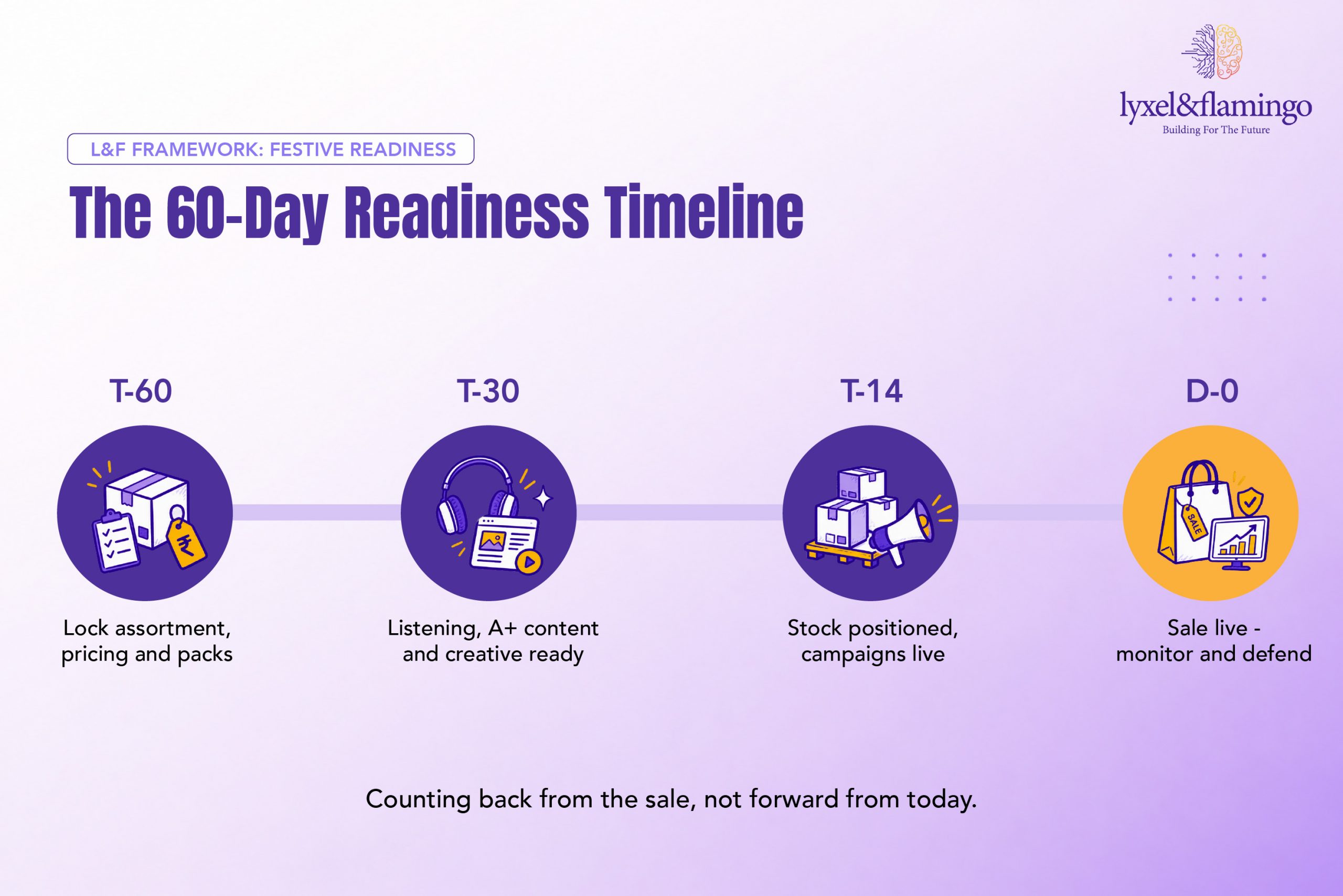
The 60-Day Readiness Timeline: four deadlines, counted back from the sale.
Preparedness as Calm, Not Panic
It is easy to sell festive readiness as fear, the countdown clock, the warning that a brand is already behind. That framing is not just unpleasant; it is inaccurate. Readiness is the opposite of panic. It is the calm of a brand that did the work early and can therefore spend the sale executing rather than firefighting. The brands that look composed during Big Billion Days are not the ones who stayed calm under pressure. They are the ones who removed the pressure in August. So the question worth sitting with is simple: if the sale opened next week, what would you be scrambling to finish – and what would it take to finish it now, while there is still time?
Closing
Festive readiness is a sequence, and it is one Lyxel&Flamingo runs alongside brand teams across Amazon, Flipkart and Myntra from locking assortment to clearing approvals and staging campaigns before the sale opens. If you would like a clear read on how ready your brand is with the season approaching, our marketplace team can audit your festive plan and show you what to finish first. Start that conversation with us whenever you are ready.
Frequently Asked Questions
Around two months before, so assortment, creative and stock decisions each have runway. Festive readiness should begin roughly 60 days before Big Billion Days and the Great Indian Festival, working backwards from the sale date
It is the peak demand event of the year, growing strongly again this cycle. RedSeer forecast Indian festive e-commerce GMV to grow around 20% and called it the strongest festive period in five years.
The way products show up listings, A+ content and creative, with approvals cleared. Listings, A+ content and festive creative should be finalised about 30 days out, since approvals and indexing take time.
Leaving controllable work stock, approvals, creative to be fixed during the sale. The costliest festive mistake is carrying unfinished preparation into the sale, where there is no time to correct it.