
What this blog covers
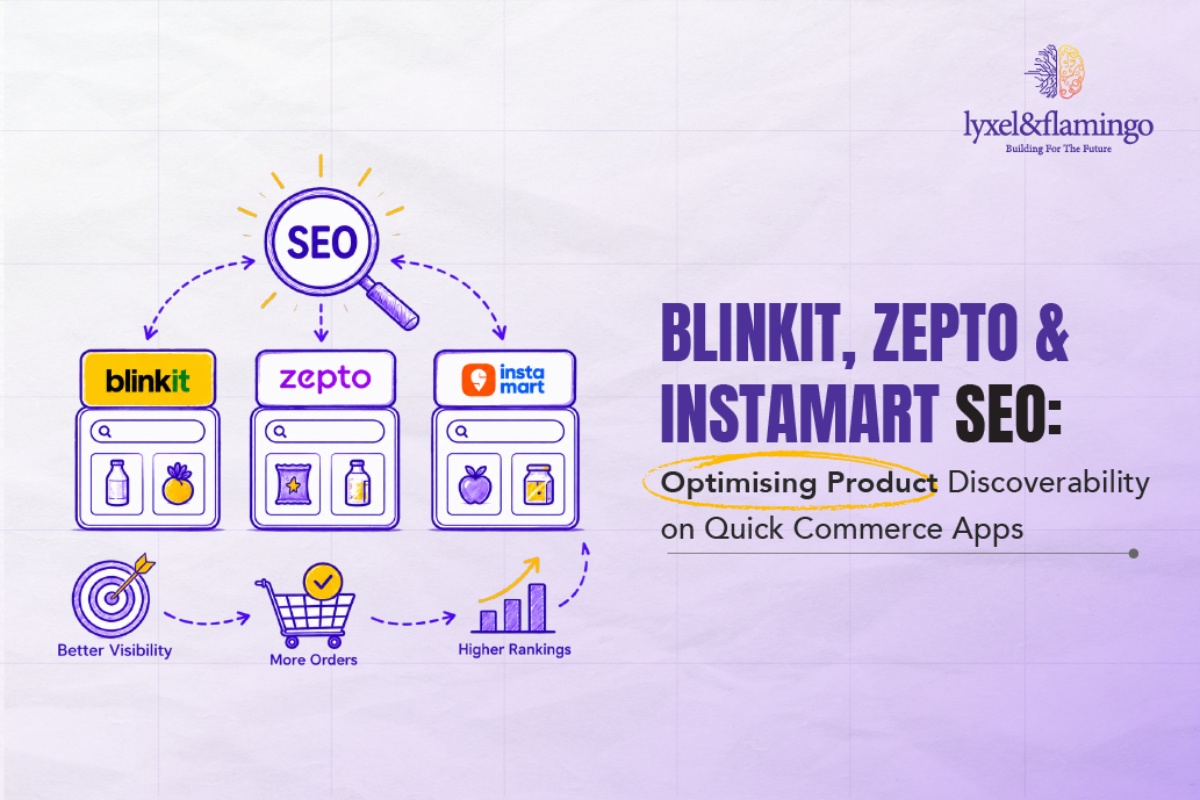
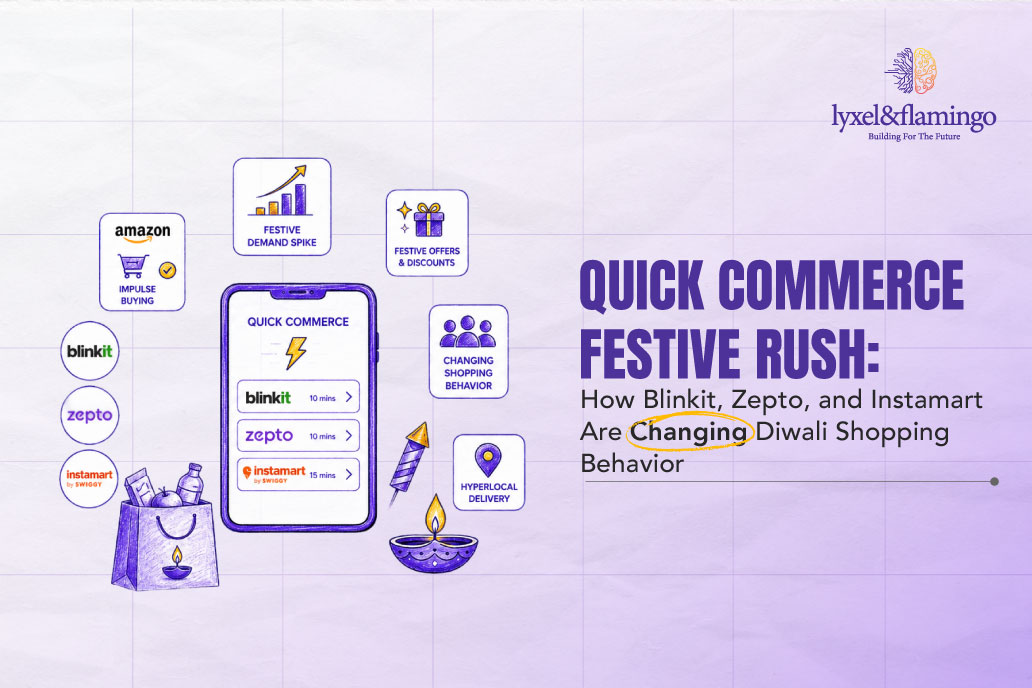
Quick commerce is changing how Indians shop during Diwali, and brands need to rethink their festive plans around this shift. Blinkit, Zepto, and Swiggy Instamart are seeing huge order volumes during the festive period, with shoppers increasingly turning to these apps for last-minute and impulse purchases. From diyas and sweets to gifting items and even gold coins, purchases that once required planning can now happen within minutes. This blog looks at why the traditional festive marketing model is no longer enough. It explains how quick commerce changes purchase behaviour, why dark store availability matters, and where brands often lose sales during peak hours. It also introduces Lyxel&Flamingo’s Festive Velocity Stack, covering inventory, visibility, and reorder opportunities. Finally, the blog shares five practical steps brands can take before their next festive campaign to improve quick commerce readiness, control ad spending, and capture more incremental festive demand.
Table of Contents
- What Is Quick Commerce Diwali Shopping?
- Your Festive Media Plan Is Still Chasing a Shopper Who Stopped Planning
- Why Ten Minutes Beats Two Days During Festive Season
- The Evidence: What the Numbers Really Show
- The Lyxel&Flamingo Festive Velocity Stack
- What This Looks Like When Brands Get It Right
- 5 Things to Do Before Your Next Festive Campaign
- Conclusion
Blinkit processed around 30 lakh daily orders during Diwali week 2025, and Zepto crossed 2 million daily orders for the first time in its history in the same seven days. That’s the scale quick commerce Diwali shopping has reached, and most brand planning calendars have simply not caught up to it yet. This is forcing a rethink of festive strategy well beyond third-party marketplaces like Amazon and Flipkart. Swiggy Instamart, meanwhile, logged over 400% growth in gold and coin orders on Dhanteras alone. None of that happened by accident. And none of it happened on a two-day delivery window either.
Festive planning in India was built around a single peak week, big banner sales, bulk inventory pushes, and a media plan that assumed the consumer would browse, compare, and then wait patiently. Quick commerce broke that assumption apart. The shopper buying diyas at 11 pm the night before Diwali is not behaving like a planner. Neither is the one ordering a last-minute box of mithai an hour before guests turn up at the door. They’re behaving like someone who forgot something, panicked a bit, and now expects the problem fixed in under fifteen minutes flat. That’s a different customer altogether, on a different platform, playing by a different set of rules for who wins their basket in the end.
This shift matters most for brands still routing festive strategy purely through Amazon, Flipkart, and Myntra. Those platforms remain critical, no argument there, and L&F’s own third-party marketplace work continues to show strong festive ROI on them. But here’s the catch. The fastest-growing slice of festive demand right now isn’t happening on a marketplace search bar at all. It’s happening on an app icon someone taps because they need something fixed in the next ten minutes, and if your brand isn’t stocked, tagged, and advertised on that app before the festive week even starts, you don’t really get a second chance. The order’s already gone to a competitor by the time you notice.
What Is Quick Commerce Diwali Shopping?
Quick commerce Diwali shopping is the surge in ultra-fast, 10-to-30-minute grocery and retail deliveries that Indian consumers place through platforms like Blinkit, Zepto, and Swiggy Instamart in the weeks surrounding Diwali. Traditional online shopping gets planned days or weeks in advance. This one doesn’t work that way at all, it’s largely need-based and impulse-driven, covering everything from diyas and rangoli colours to sweets, gifting items, and even gold coins bought on a whim.
It matters now because the scale has stopped being niche, and that shift happened faster than most planners expected. Quick commerce is projected to contribute close to 10% of overall festive e-commerce GMV this year, up from roughly 5% the previous festive season. A category that doubles its festive contribution in twelve months isn’t a side channel anymore, not by any reasonable definition. It’s becoming a core battleground for share of festive wallet. Brands treating it as an afterthought are ceding ground they might not get back so easily.
Your Festive Media Plan Is Still Chasing a Shopper Who Stopped Planning
Most festive marketing calendars in India are still built around a bell curve, and this bit deserves a moment of real thought. Spend ramps up two to three weeks before Diwali, peaks around Dhanteras and Diwali eve, then tapers off like clockwork. That model assumes deliberate, planned purchasing. It’s not exactly wrong. It’s just badly incomplete now.
In January 2026, months after the festive peak had technically ended, quick commerce GMV still hit around ₹11,000 crore, growing close to 100% year-on-year, with daily order volumes up roughly 95% to about 7.8 million orders a day. That isn’t a seasonal spike but a new baseline for instant, unplanned buying, one that festive weeks only amplify rather than create out of nowhere.
This isn’t a case of brands doing festive marketing badly. It’s a case of most of them aiming at the wrong window altogether. A shopper who plans their Diwali decor purchase three weeks out is still valuable, sure, and that shopper still browses Amazon and Flipkart the old way. But a growing share of festive spend now comes from someone who decides at 8 pm they need one more box of dry fruits. Or realises they’ve run out of diyas. Or forgot a gift entirely and has an hour to fix it. That shopper isn’t comparing five listings side by side. They open whichever app is already on their home screen and buy whatever is in stock nearby, and the brand that isn’t visible in that moment simply doesn’t exist to them at all.
Why Ten Minutes Beats Two Days During Festive Season
The mechanism behind this shift has little to do with speed as a product feature. It has everything to do with how speed gradually redefines what qualifies as a “need” in the shopper’s mind, often before the shopper is even aware the definition has changed.
Traditional e-commerce runs on a browse, decide, wait loop, and that’s been true for two decades now. The shopper has time to compare, so the platform’s whole job is winning that comparison through reviews, price, and content depth.
Quick commerce collapses this loop into one motion instead:
- open app,
- see item,
- buy item,
- done.
There’s barely a comparison stage in there at all. Customers on these apps aren’t browsing for long stretches like they used to on Amazon. They open the app to solve one specific need right now, and that trade-off produces smaller baskets but sharply higher purchase frequency, a pattern that keeps showing up across industry commerce analysis. During festive weeks, this specific-need behaviour multiplies fast. One household might place four or five separate Instamart or Blinkit orders across a single Diwali evening. Sweets in the afternoon. Candles once the sun goes down. A last-minute gift when a relative rings up to say they’re coming over after all.
Dark store density is really the infrastructure that makes this whole psychological shift possible in the first place. Reports showed dark store count rising from roughly 5,990 in December 2025 to about 6,280 by January 2026, with orders-per-dark-store productivity improving nearly 15% year-on-year even while platforms expanded into smaller cities.
Every new dark store within a few kilometres of a household shortens the mental distance between “I need this” and “I have this” right now. Festive urgency happens to be exactly the emotional state that punishes any friction left in that gap.
Here’s a comparison that makes the shift a bit more concrete:
| Dimension | Traditional E-commerce (Amazon, Flipkart) | Quick Commerce (Blinkit, Zepto, Instamart) |
| Typical festive AOV | ₹900-₹1,400+ per order | ₹450-₹700 per order, smaller baskets |
| Purchase trigger | Planned, list-based | Impulse, need-based |
| Decision window | Days to weeks | Minutes |
| Order frequency during Diwali week | 1-3 orders | 4-6+ orders per household |
| Brand discovery moment | Search and compare | App-open and instant availability |
None of this means e-commerce loses relevance during Diwali, not even close. Big-ticket gifting, electronics, and planned bulk purchases still route through marketplaces the way they always have, and Bain & Company’s How India Shops Online 2026 report, done alongside Flipkart, pegs India’s overall e-retail GMV at roughly $65-66 billion for 2025, growing 19-21% in value terms.
What’s changing is that quick commerce has become the release valve for every unplanned, last-minute, emotionally driven festive purchase that used to simply not happen, or happen at the neighbourhood kirana store instead.
Want to understand how brands actually structure ad spend and inventory across all three platforms at once? Read this blog: Winning on Quick Commerce: How to Build High-Velocity, High-Conversion Funnels on Blinkit, Zepto & Instamart
The Evidence: What the Numbers Really Show
- Quick commerce daily orders hit new highs across all three major platforms during Diwali week 2025, with Blinkit leading at roughly 30 lakh daily orders, Zepto crossing 2 million for the first time, and Instamart logging 14-16 lakh daily orders between October 18 and 20. That’s a meaningful jump in absolute order volume, concentrated in a single week no less, and it signals festive demand on these platforms is no longer some marginal add-on to their regular business.
- Instamart recorded over 400% growth in gold and silver coin orders on Dhanteras 2025 compared to the previous year, with individual orders reaching as high as ₹4.3 lakh for a single purchase. This one matters because gold buying on Dhanteras is one of India’s most culturally rooted festive rituals. Watching it migrate onto a 10-minute delivery app shows just how far quick commerce trust has stretched beyond groceries already.
- India’s quick commerce sector reached a $7-8 billion market in FY25, expanding at a CAGR of 110-130% between 2021 and 2025, well ahead of most other retail formats in the country by some distance. For brand planners, this means quick commerce isn’t some temporary pandemic-era habit still working itself out of the system. It’s compounding faster than almost any other channel Indian marketers have access to right now.
The Lyxel&Flamingo Festive Velocity Stack
At L&F, we built a three-layer model for brands trying to win the quick commerce festive window, one that doesn’t burn the entire budget chasing daily order spikes nobody can sustain past the weekend. We call it the Festive Velocity Stack. It’s a sequence, not a checklist, and each layer genuinely needs the one before it to work at all.
- Inventory Density Layer: Before any ad spend goes live, the SKU needs stock across enough dark stores in the brand’s priority cities. That way a customer searching for it at 9 pm on Diwali eve finds it close by, not three pincodes away. Ad spend against an out-of-stock SKU during peak festive hours is close to pure waste, and it happens more often than brands expect. Dark store replenishment cycles simply don’t scale automatically with a brand’s own festive demand forecast.
- Search and Visibility Layer: Once stock is confirmed, the SKU needs to rank inside category search and festive collection pages on the platform itself. Not just show up in some generic sponsored banner nobody clicks. This is where most brands under-invest, to put it plainly, because they treat quick commerce ad spend the same way they’d treat Amazon spend. The search behaviour and ranking logic underneath work quite differently, though.
- Reorder and Habit Layer: The third layer is the one brands consistently skip, and it happens to carry the most compounding value of the three. A customer buying mithai from a brand on Blinkit during Diwali week is a candidate for a repeat, non-festive purchase months later. That only happens if the brand follows up through retargeting on the same platform, rather than treating the festive order like a one-time transaction and moving on.
In our work managing quick commerce ad accounts for FMCG and D2C brands, that third layer is consistently the most under-invested one, and it’s also the one with the fastest visible impact once brands finally switch it on. Most festive budgets get spent entirely on layers one and two. The reorder opportunity from a customer who’s already proven festive intent goes unclaimed, week after week.
Want a deeper look at how brands earn and hold shelf space on Blinkit’s dark stores specifically? Read this blog: Winning on Blinkit: Assortment, Visibility and the Ten-Minute Shelf
What This Looks Like When Brands Get It Right
A leading FMCG sweets and snacks brand entered the 2025 festive season with a strong Amazon and Flipkart presence, but almost no structured quick commerce strategy beyond basic listing. The brand’s challenge was fairly straightforward, if you think about it. Festive sweets and dry fruit gifting has a narrow, urgent purchase window, and most of that window was getting lost to competitors already stocked and advertised on Blinkit and Zepto.
L&F’s approach didn’t start with ad spend at all, which surprises some clients. It started with mapping dark store stock availability against the brand’s top 15 festive SKUs across priority metro pincodes. Search visibility and sponsored placements got sequenced in only after stock gaps were closed, following the same layered logic behind the Festive Velocity Stack described above.
The results across the Diwali week window looked like this:
- Order volume grew several times over on quick commerce, well above the brand’s own Diwali week performance the previous year
- Cost per order dropped meaningfully on quick commerce platforms, undercutting the brand’s blended marketplace CPO for the same festive period
- A large majority of quick commerce festive buyers were new to the brand on that platform, not existing customers just migrating channels
- A notable share of festive quick commerce buyers placed a second, non-promotional reorder within a couple of months of the first
What this tells us, in short, is that quick commerce festive spend, when sequenced correctly, doesn’t just capture last-minute demand. It builds a new, cheaper acquisition channel that keeps paying back well after the festive week has come and gone.
5 Things to Do Before Your Next Festive Campaign
- Audit your dark store stock coverage six weeks before Diwali, not two. Pull a city-wise stock availability report for your top festive SKUs across Blinkit, Zepto, and Instamart at least six weeks out. Replenishment and warehouse allocation on these platforms move slower than app-based demand does, so a two-week runway is usually too tight to fix real gaps in time.
- Separate your festive quick commerce budget from your always-on budget. Don’t just scale existing daily spend up by some multiplier and call it a plan. Build a distinct festive line item instead, with its own targets, because cost-per-order and conversion dynamics during peak festive hours behave nothing like a normal Tuesday afternoon. Blending the two makes it near impossible to measure what worked and what didn’t.
- Prioritise search and category ranking over homepage banners. A customer searching “diyas” or “mithai gift box” at 9 pm has already decided to buy something in that category, full stop. Winning that search result matters more for conversion than a generic homepage placement a browsing, undecided customer might scroll straight past.
- Build a reorder retargeting flow before the festive week even starts. Set the campaign structure up to retarget festive quick commerce buyers within 30-60 days, before Diwali week begins rather than after. Waiting until post-festive analysis wraps up means the retargeting window has already shut on most of that cohort by then.
- Track new-to-brand rate on quick commerce separately from marketplace new-to-brand rate. Quick commerce festive buyers often skew toward genuinely new customers, rather than existing ones simply switching channels, per the case pattern above. Skip measuring this split, and you’re probably undervaluing what quick commerce is doing for your funnel.
Conclusion
Quick commerce didn’t just add a new sales channel to the festive calendar. It created an entirely new category of shopper, one who decides and buys inside the same ten minutes flat. Brands still planning festive strategy around a single big sale week, with quick commerce treated as an afterthought, are leaving a fast-growing and increasingly non-grocery share of festive demand entirely uncaptured. The gap between brands who solved for dark store density and search visibility early, and those who scrambled two weeks before Diwali instead, showed up directly in cost per order and new customer acquisition this past festive season. It’s likely to widen further as quick commerce keeps outgrowing the festive GMV pool built around it.
If your brand’s festive planning still starts and ends with Amazon and Flipkart, it’s probably worth a closer look at where quick commerce genuinely fits before the next festive calendar locks in for good. Speak to L&F’s Commerce Strategy team about a festive readiness review, and for more depth.
Frequently Asked Questions
It's the pattern of Indian consumers using 10-to-30-minute delivery apps like Blinkit, Zepto, and Instamart to buy festive items such as diyas, sweets, gifting items, and even gold coins in the weeks around Diwali. It's driven mostly by last-minute, unplanned needs, not advance festive shopping lists drawn up weeks in advance.
Not replacing it, no. Growing faster in share, though. E-commerce festive GMV still grew 20-25% year-on-year past ₹1.15 lakh crore, while quick commerce's share of that overall festive GMV nearly doubled to around 10%. Both channels are expanding at once, but quick commerce is grabbing a bigger slice of incremental festive demand.
Because festive shopping generates constant last-minute, panic-driven needs. Running out of diyas, a surprise guest arriving unannounced, that sort of thing, and these apps solve that exact problem in minutes rather than days. Dark store density near urban households has also expanded enough now to make near-instant fulfilment realistic at real scale.
Treat it as a distinct line item with its own targets, rather than just scaling everyday spend up. Prioritise inventory availability first, then search visibility, then a reorder retargeting flow. Spending on ads against out-of-stock SKUs during peak hours is one of the most common, and most avoidable, losses brands make here.
Generally yes, if the category fits impulse or gifting behaviour well. Customer acquisition cost on quick commerce during festive weeks can run meaningfully lower than blended marketplace CPO, as the case referenced above shows. The bigger risk for smaller brands tends to be under-forecasting stock, not overspending on ads.