
What this blog covers
This blog explains how to get the paid channel mix right across paid search, paid social and shopping. It defines the distinct job each channel does, shows how they assist one another, offers a way to weight the mix by business type and stage, covers the measurement trap that makes teams mis-fund them, and gives a practical way to plan and rebalance. It closes with a self-check and the questions planners ask most.
Table of Contents
The wrong question about channels
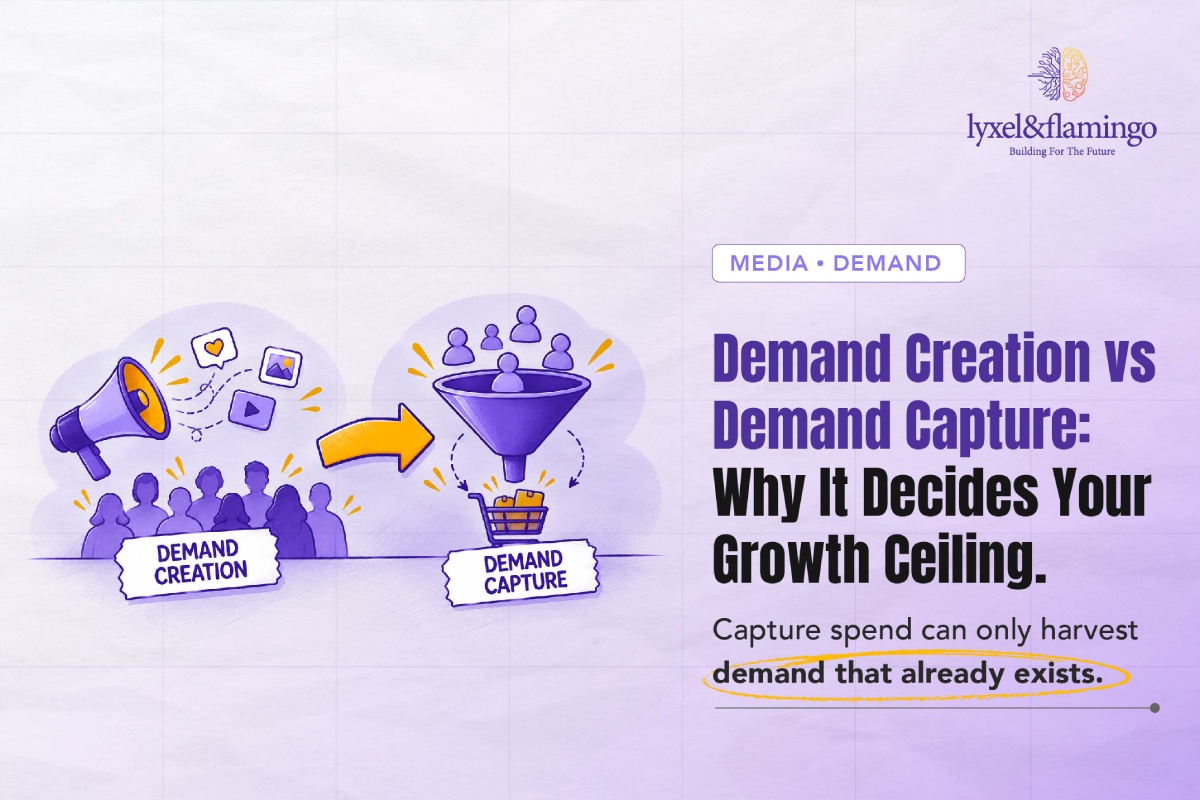
Budget meetings often frame paid channels as rivals: search versus social, one line growing at the other’s expense. It is the wrong question, because the channels are built for different jobs in the customer journey, and judging them against each other on the same metric guarantees that whichever one captures existing demand will win, while the one that creates it looks weak. A brand that funds only its best last-click channel ends up with a mix optimised for harvesting and starved of the demand that feeds the harvest.
The better question is what job each channel does, and whether every job is funded. Once a team sees paid search, paid social and shopping as complementary parts of one engine rather than competitors for one budget, the mix stops being a tug-of-war and becomes a plan.
The job each channel is built for
Paid social is a demand-creation channel. It interrupts people who were not looking for you, introduces the brand or product in a feed, and builds interest where none existed a moment before. Intent is low; you bring the audience to the product, so it is judged on reach, view rate, and assisted conversions rather than on last-click return, and it is where a scroll-stopping creative earns its keep.
Paid search is a demand-capture channel. It meets people who are already looking for the solution and typing it into a search bar, so intent is high, and the audience brings itself. It is judged on ROAS, cost per acquisition, and impression share, and it converts efficiently precisely because the demand already exists demand that something upstream, often paid social or brand-building, helped create.
Shopping and Performance Max are demand-conversion channels. They put the product, its price and its image directly in front of high-intent shoppers at the moment of purchase, across search, shopping and beyond. They are judged on ROAS, contribution margin, and the quality of the product feed, and they reward the same catalogue and feed discipline that makes automated shopping campaigns perform. Each channel is excellent at its job and poor at the others, which is exactly why a brand needs all three.
The Paid Channel-Mix Map
The map lays the three channels against the job each is built to do.
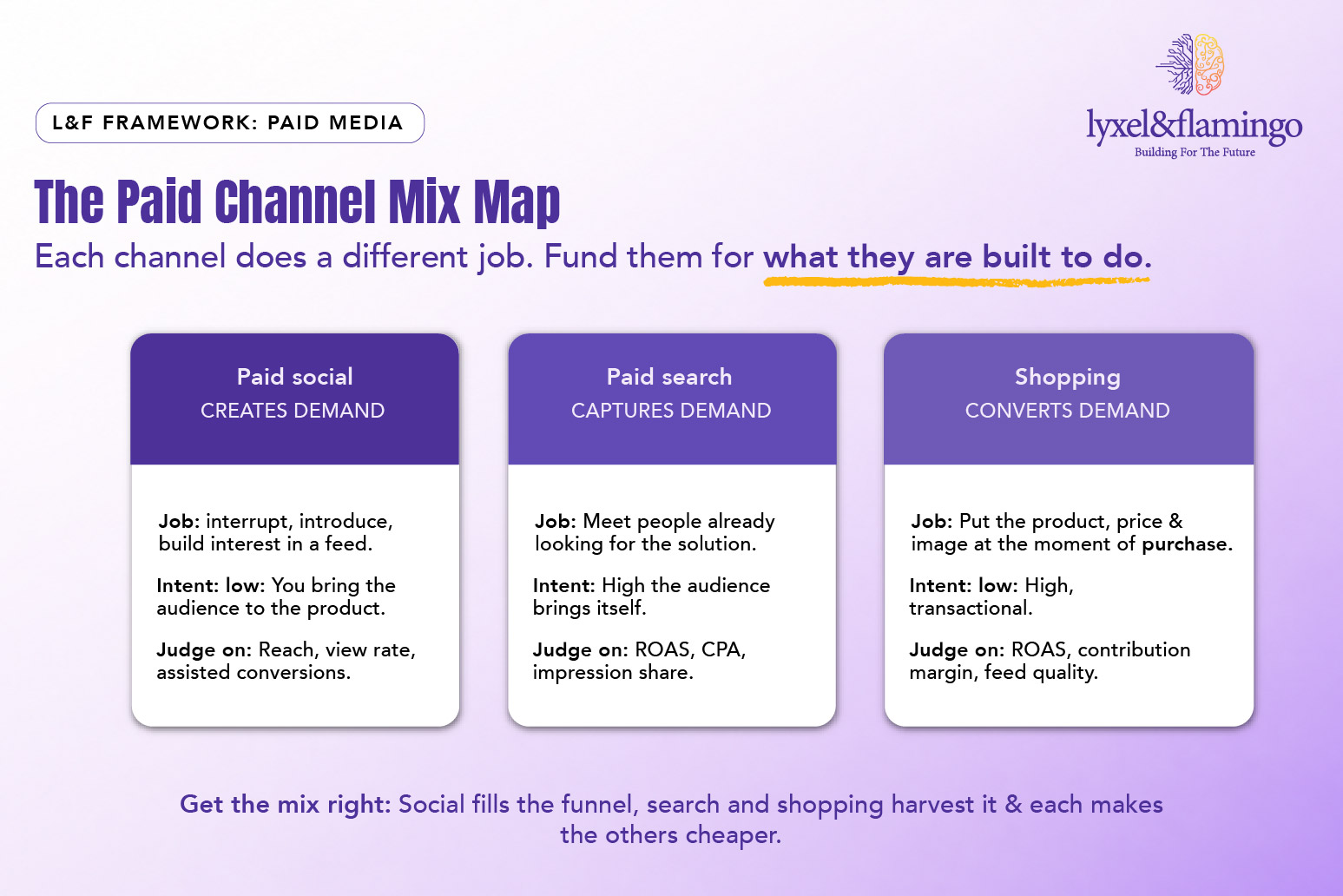
Framework: The Paid Channel-Mix Map: social creates, search captures, shopping converts.
Read across, it turns the mix into a set of deliberate roles rather than a budget contest. Social fills the funnel, search and shopping harvest it, and each is judged on the signal that fits its job – reach and assists for social, ROAS and impression share for search, margin and feed quality for shopping. The value of seeing it this way is that no channel gets cut for failing at a job it was never meant to do.
How the channels assist each other
The channels are not just complementary; they actively make each other work harder. Paid social creates demand that later shows up as branded searches, so a healthy social programme lifts the volume and efficiency of paid search; people who met you in a feed come looking for you by name. Paid search and shopping then capture that warmed demand at high intent and low cost. And because the platforms increasingly optimise on downstream signals, the conversions that search and shopping drive feed back into how well social finds the next wave of prospects.
This is why judging each channel in isolation understates the mix. A paid social campaign that looks mediocre on last-click ROAS may be the reason paid search is cheap and abundant. Measured only on their own conversions, the demand-creation channels always look worse than the demand-capture ones – which is precisely the trap that leads teams to defund the top of their own funnel.
Weighting the mix by business and stage
There is no single correct split; the right mix depends on the business and its stage. A newer brand, or one entering a category, leans harder into paid social, because there is little existing search demand to capture and the priority is creating it the difference between demand creation and demand capture. A mature brand in a category with steady search demand can lean more into search and shopping, because the demand already exists and the job is to capture it efficiently. A high-consideration product needs more nurturing between the first touch and the sale, so mid-funnel weight matters more; an impulse or low-consideration product can move more directly to capture.
Margin and inventory shape the mix too. A strong product feed and healthy margins make shopping a powerful engine; thin margins or a weak feed argue for more selective use. The principle holds across all of these: fund each channel for its job, then flex the weights to the situation rather than to whichever channel posted the best number last month.
The measurement trap that mis-funds the mix
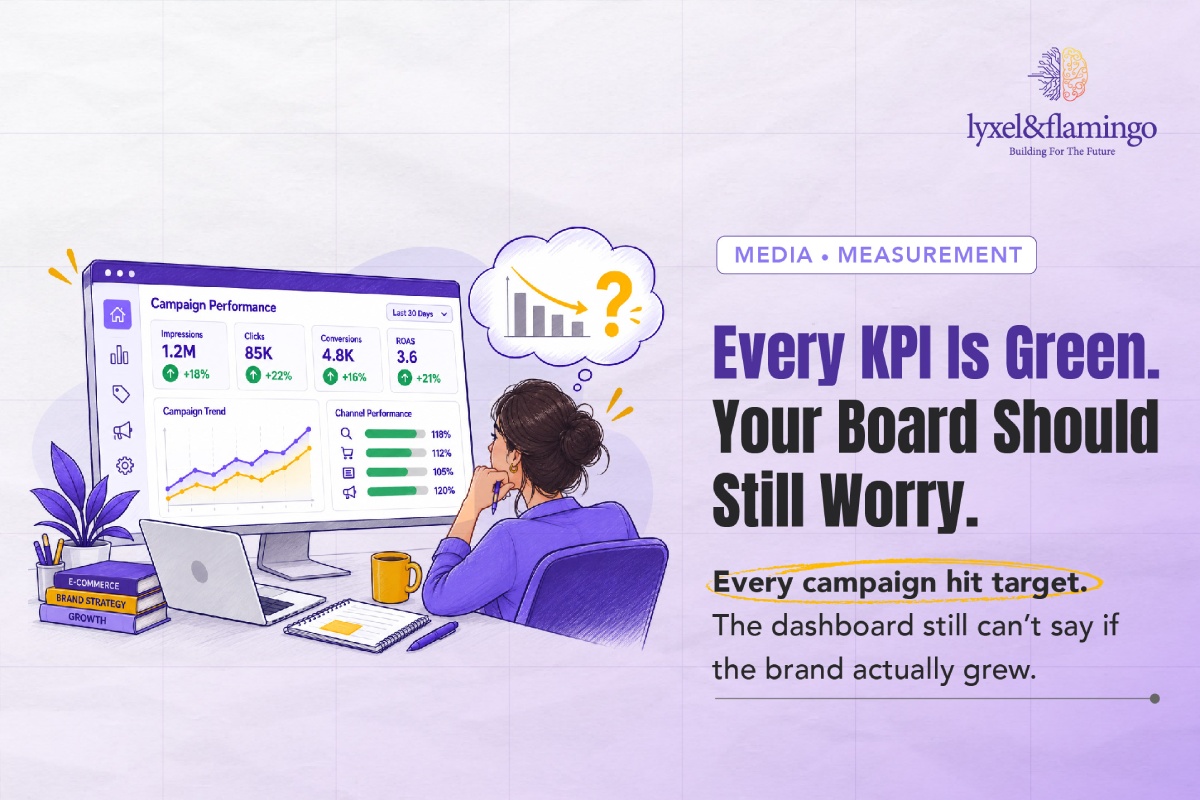
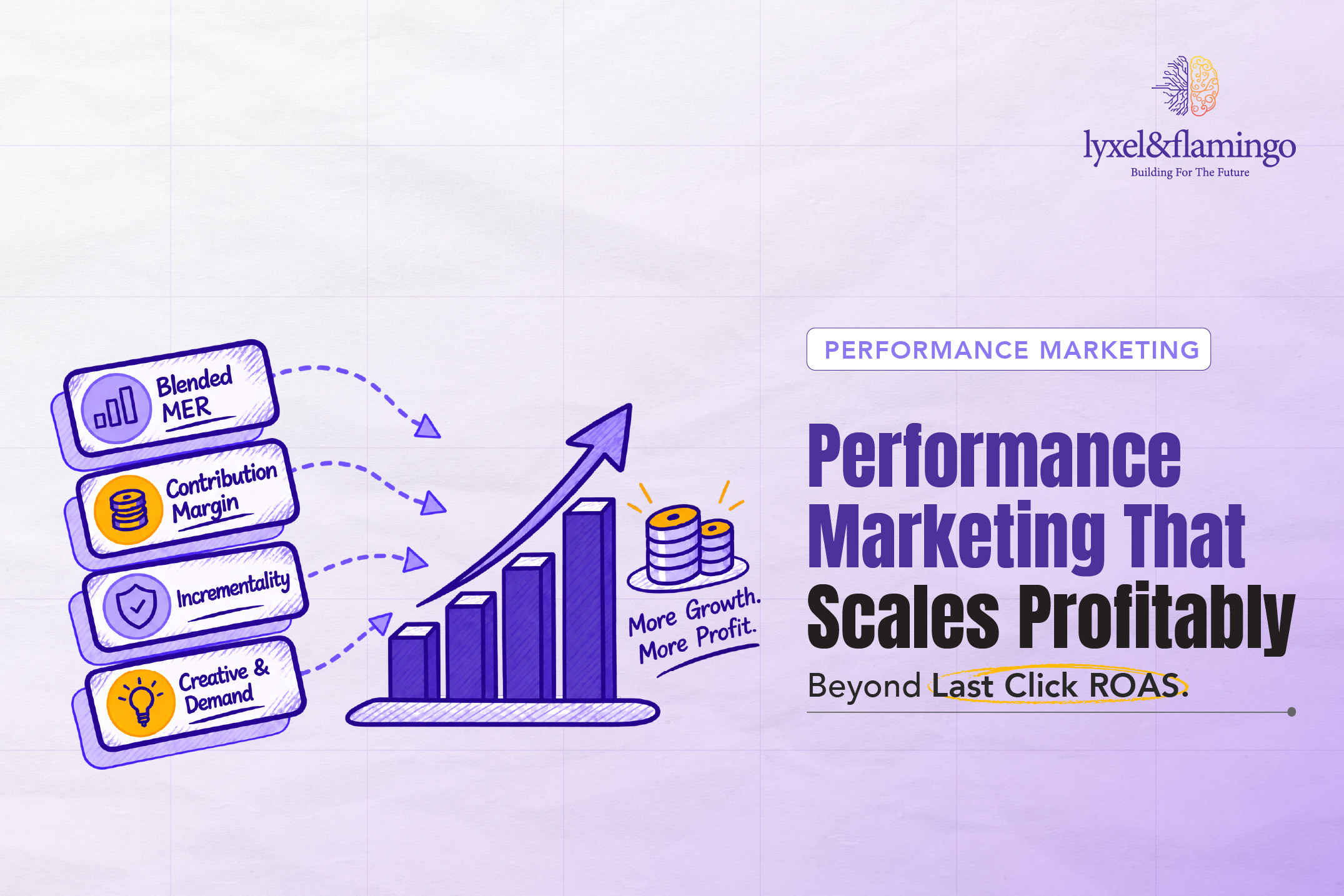
The most common reason a mix goes wrong is measurement. Last-click attribution credits the final channel before the sale usually search or shopping and gives little to the paid social that created the demand in the first place. Fund the mix on that view and a team steadily shifts budget from creation to capture, harvesting a pool nobody is refilling, until search gets more expensive and growth stalls. The fix is to judge each channel on a metric that fits its job and to use blended measurement and incrementality to see the assists, rather than steering the whole mix by last-click ROAS alone.
Self-check: is your mix doing every job?
Score your own mix one point per yes:
- Paid social, search and shopping are funded for distinct jobs, not compared on one metric
- Paid social is judged on reach and assisted conversions, not last-click ROAS
- Search and shopping are judged on ROAS, impression share and margin
- You track how social lifts branded search and downstream capture
- The mix flexes by growth stage, consideration level, and margin
- Blended measurement or incrementality is used to see channel assists
- No channel is cut for failing at a job it was not built to do
Five or more and your mix is doing every job. Three or fewer and the demand-creation channels are probably under-funded.
Key takeaways
- Paid search, social, and shopping do different jobs: creating, capturing, and converting demand so they are not rivals for one budget.
- Paid social creates demand (judge on reach and assists); search captures it (ROAS, impression share); shopping converts it (margin, feed).
- The channels assist each other: social lifts branded search, which feeds search and shopping.
- Weight the mix by growth stage, consideration level, and margin, not by last-click return.
- Last-click attribution mis-funds the mix by starving demand creation; use blended measurement to see the assists.
Closing
The paid channels only look like competitors when they are all measured by the same last-click yardstick. Seen for what they are one that creates demand, one that captures it, one that converts it they stop fighting for budget and start compounding for the business. Getting the mix right is less about picking a winner and more about funding every job the journey needs done, and reading each channel on the signal that reflects its role. Do that, and the whole engine runs warmer, cheaper, and further.
Want a paid mix where every channel does its job?
L&F plans and runs the paid channel mix: social to create, search to capture, shopping to convert, measured so the assists are visible for consumer brands across India and worldwide. We will match your split to the jobs your funnel needs. Talk to L&F about paid media and stop making your channels fight for budget.
Frequently Asked Questions
Paid search shows ads to people who are already searching for a solution, so intent is high and the audience brings itself - it captures existing demand. Paid social shows ads to people in a feed who were not looking for you, so intent is low and you bring the audience to the product - it creates demand. They sit at different points in the journey, which is why they are judged on different metrics and why a brand generally needs both.
Fund each for its job first, then flex the weights to your situation. A newer brand leans more into paid social to create demand it does not yet have; a mature brand in a category with steady search demand can lean more into search and shopping to capture it. High-consideration products need more mid-funnel nurturing; strong feeds and healthy margins make shopping a bigger engine. Avoid setting the split by whichever channel posted the best last-click return.
Neither - they do different jobs, and asking which is better is the wrong question. Paid social is better at creating demand and reaching people before they are looking; paid search is better at capturing demand once it exists. Judged against each other on last-click return, search almost always wins because it harvests demand social helped create. A brand that funds only the apparent winner ends up harvesting a pool nothing is refilling.
Shopping and Performance Max are conversion channels: they put your product, price and image in front of high-intent shoppers at the moment of purchase, across search, shopping and other placements. They reward a clean, well-structured product feed and are judged on ROAS, contribution margin and feed quality. They convert demand efficiently but do not create it, so they work best fed by demand-creation channels upstream.
Because last-click attribution credits the final channel before the sale - usually search or shopping - and gives little to the paid social that created the demand earlier in the journey. Measured only on their own last-click conversions, demand-creation channels always look weaker than demand-capture ones. That is a measurement artefact, not a true reflection of value, and steering the mix by it leads teams to defund the top of their own funnel.
Paid social creates demand that later appears as branded searches, so a healthy social programme makes paid search cheaper and more abundant. Search and shopping then capture that warmed demand at high intent. And because platforms optimise on downstream signals, the conversions capture channels drive feed back into how well social finds the next wave of prospects. Judging any channel in isolation misses these assists, which is why blended measurement matters.
Review it regularly - quarterly is a sensible default - and rebalance on evidence rather than on last-click swings. Watch whether paid social is lifting branded search, whether search cost per acquisition is climbing (a sign upstream demand is thinning), and what blended measurement or incrementality shows about each channel's real contribution. Shift weights gradually toward the jobs that need more support, rather than chasing the channel with the best reported number each month.