What this blog covers
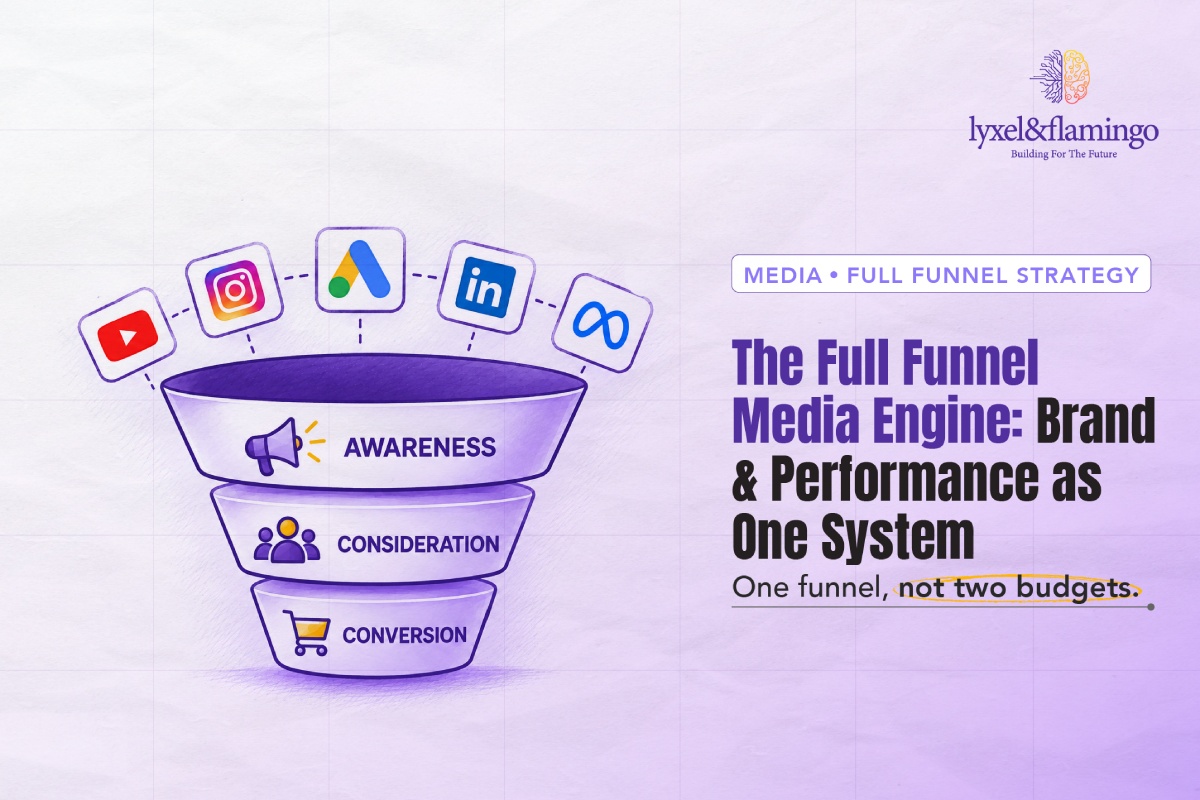
A media mix built for a brand’s actual growth stage consistently outperforms one copied from a bigger competitor, since each stage needs a different balance of reach, consideration and conversion channels. This piece breaks down what changes at each stage, the practitioner mistakes that come from mismatched mixes, and a stage-based matrix for planning next quarter’s channel allocation.
Quick Answer: The right media mix depends on growth stage more than on category or competitor benchmarks: early-stage brands need conversion-heavy mixes to build initial velocity, growth-stage brands need a rising share of consideration and retargeting, and scale-stage brands can sustain a meaningful reach and always-on layer because performance channels are already riding on existing demand. Building a mix by copying a category leader’s channel split, rather than reading your own stage, is the most common practitioner mistake.
Table of Contents
Why Copying a Competitor’s Mix Fails
A scale-stage competitor’s channel mix is the output of years of compounding brand equity, not a template. When an early-stage brand copies that mix, a heavy reach and always-on layer, it is paying for awareness in a market where nobody yet recognises it, without the existing branded search and repeat-buyer base that makes that spend efficient for the competitor.
The reverse mistake is just as common. A scale-stage brand that keeps running an aggressive, conversion-only mix long after it should have added reach media ends up with rising CAC and flat branded search, because performance channels are working harder each quarter to manufacture demand that reach media could generate far more cheaply. Think with Google’s own research on full-funnel media planning covers this same reach-versus-performance tension from the platform side, worth cross-referencing against any single agency’s house view.
What Actually Changes Between Stages
At launch, the priority is proving the offer converts and building the first repeat-buyer cohort, which means the mix should lean heavily toward direct-response channels: search, shopping, and performance social. Reach media at this stage is usually premature, since there is no existing audience to build recognition with efficiently.
As branded search and direct traffic start climbing, that is the signal to begin layering in consideration and light reach media, video and social formats that keep the brand top-of-mind for an audience that has already shown some interest. By scale stage, a brand can sustain a genuine always-on reach layer, because performance channels are consistently converting demand that reach media helped create.
The Role of Always-On vs Burst Planning
How media gets phased across the calendar matters as much as the channel split itself. Early and growth-stage brands generally get more out of bursty, concentrated media planning around key sales moments, since a smaller budget spread thin across always-on channels rarely reaches the frequency needed to build recall.
Scale-stage and category-leader brands can afford a genuine always-on baseline layered with tactical bursts, because the baseline itself is what protects the branded search volume performance media depends on between campaign moments.
Reading Retail Media Into the Mix
For brands selling through marketplaces or quick commerce, retail media is no longer a separate line item, it is part of the core mix from growth stage onward. Retail media networks sit uniquely close to the point of purchase, which makes them one of the most efficient conversion channels available once a brand has enough marketplace presence to make the spend worthwhile.
Ignoring retail media in the mix until scale stage is a common gap, since early visibility on a marketplace search page compounds in the same way branded search does on Google, building a habit of being found in the exact moment a shopper is ready to buy. The IAB’s standards work on retail media measurement is a useful independent reference as this channel matures and measurement conventions are still settling.
The Growth-Stage Media Mix Matrix
Mapping the mix against stage gives a practitioner a starting allocation to adjust from, rather than a blank page or a borrowed competitor plan.
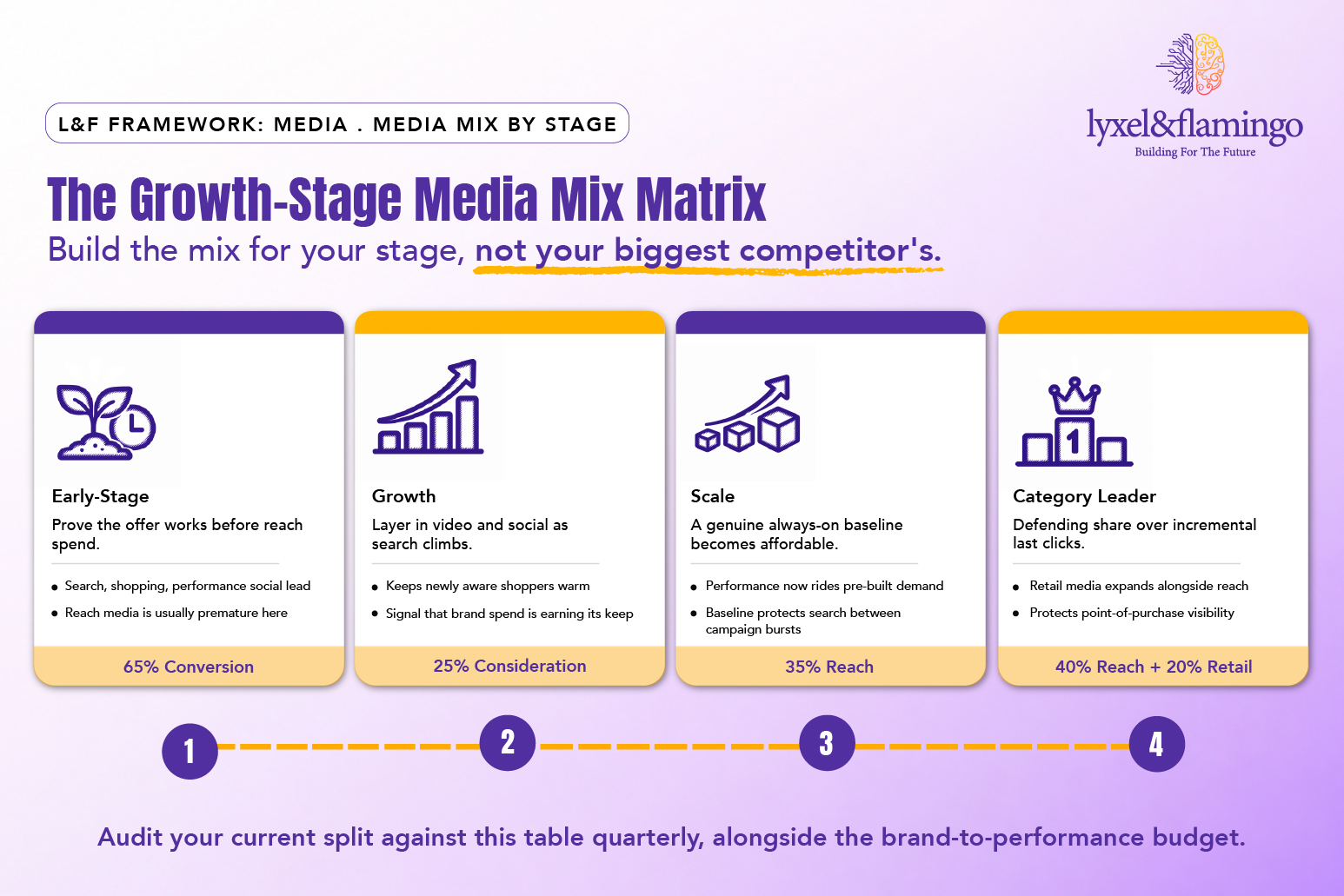
Framework Explained
- Early-Stage: Almost the entire mix is conversion-focused, proving the offer works and building the first repeat-buyer cohort before reach spend has anything to build on.
- Growth: Consideration media starts earning a meaningful share as branded search climbs, keeping newly aware shoppers warm between the first touch and the purchase.
- Scale: Reach media becomes a real budget line, since performance channels are now converting a growing pool of pre-built demand rather than manufacturing it.
- Category Leader: Reach and retail media both expand, defending category presence and point-of-purchase visibility against challengers entering the space.
CAPABILITY NOTE: Lyxel&Flamingo plans and phases media mixes across the full stage spectrum, from early-stage D2C launches through category-leader always-on programs, as part of full-funnel and media operations engagements. A single case study isolating mix-by-stage results alone is not yet published, so this is described as an active planning capability rather than a standalone proof point. RupeeRedee’s full-funnel media work and IndiGo’s channel mix across reach and performance are the closest adjacent proof points, each showing a mix built around the brand’s actual stage rather than a borrowed template.
Auditing Your Current Mix
The practical starting point is comparing the current channel split against the stage table above, not against a competitor’s visible spend. A scale-stage brand still running an 80% conversion-heavy mix is very likely leaving branded search growth, and the CAC efficiency that comes with it, on the table.
Revisit the mix every quarter alongside the brand-to-performance budget split, since the two decisions are connected. A mix correction without a budget correction, or the reverse, rarely moves the needle on its own.
Key Takeaways
- Copying a bigger competitor’s media mix usually means overpaying for awareness or underpaying for it, depending on the stage mismatch.
- Early-stage brands should lean conversion-heavy; scale-stage and category-leader brands can sustain a genuine reach layer.
- Always-on planning suits later stages; burst planning around key moments suits early and growth stages.
- Retail media deserves a dedicated share of the mix from growth stage onward for any brand selling through marketplaces.
- Audit the mix against growth stage quarterly, alongside the brand-to-performance budget split.
CXO Takeaway
Is your current channel mix built for the stage your business is actually at, or the stage it was at when the plan was first written?
Talk to Lyxel&Flamingo about building a media mix phased to your actual growth stage, not a borrowed competitor template. The 60/40 rule for balancing brand and performance budgets is the companion decision that should be set alongside this one, not after it.
Frequently Asked Questions
Not necessarily. Always-on works best once a brand has enough existing demand and budget scale to sustain frequency across the whole year. Earlier-stage brands generally get more from concentrated burst planning around key moments.
For brands selling through marketplaces, retail media typically deserves 10 to 20% of the mix from growth stage onward, rising as marketplace revenue becomes a larger share of total sales.
Copying a category leader’s visible channel split without accounting for the demand pool and branded search volume that makes that mix efficient for the leader, yet inefficient for an earlier-stage brand.
Quarterly, alongside the brand-to-performance budget split, since a mix change without a matching budget adjustment rarely produces a clean read on what worked.