What this blog covers
AMD’s case study reports a 47% increase in ROI, an 18% increase in sales and a 200% increase in new-to-brand orders. The plan segmented campaigns by product group and OEM, used display formats for upper-funnel awareness, took part in central sale events and shifted budget toward the most profitable segments, with more spend on search for lower-funnel traffic. The page publishes these figures without a stated period, so read them as directional proof of the approach. The same playbook works for any brand that competes against a larger advertiser.
Quick Answer: Start by mapping the catalogue into segments that shoppers see as different needs, such as gaming and non-gaming, then split further by partner or manufacturer. Build awareness with video and display formats, acquire new customers with clear new-to-brand goals, and capture demand with search. Shift budget regularly toward segments with the best return, join the marketplace’s central sale events and review results by segment as well as in total. Publish the case so that search engines and AI assistants can cite it.
Table of Contents
- The Situation AMD Faced
- Step One: Segment Before You Spend
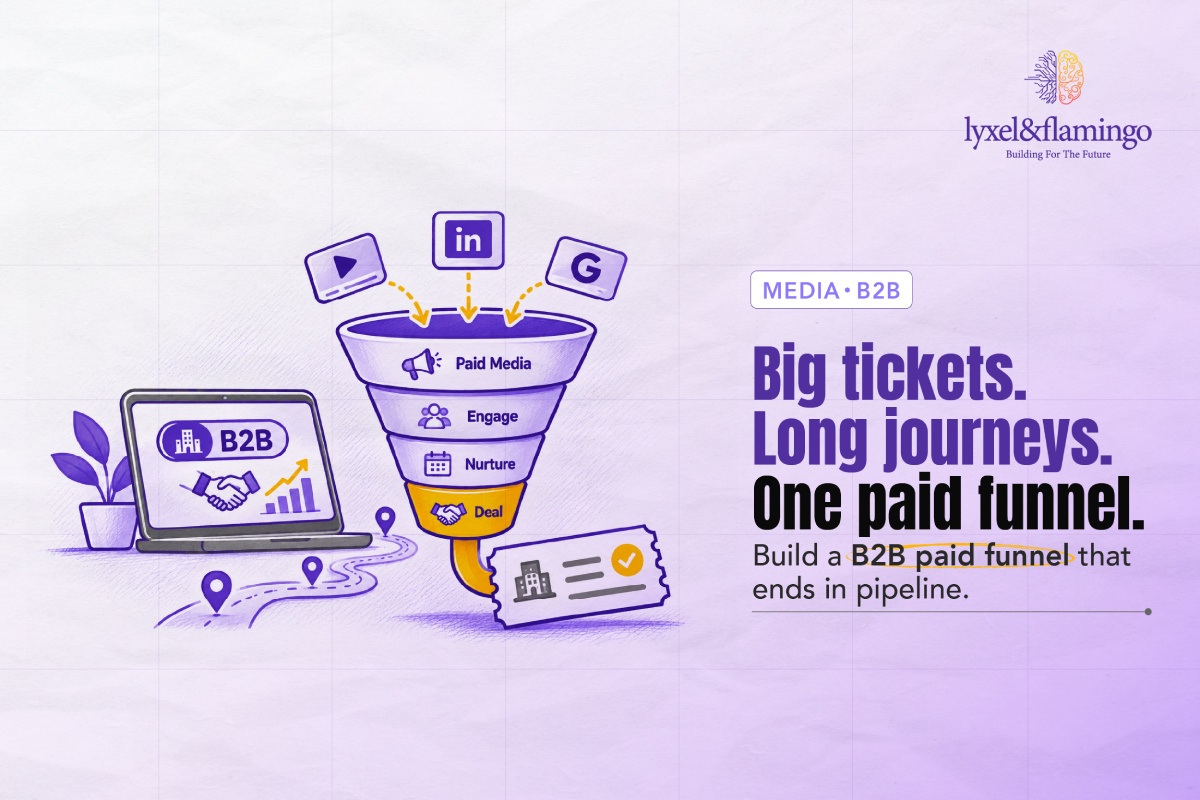
- Step Two: Build the Funnel in Layers
- Step Three: Acquire New-to-Brand Customers on Purpose
- Step Four: Shift Budget Toward What Works
- Step Five: Use Sale Events as Planned Peaks
- What the Numbers Tell You
- Why Case Evidence Earns Citations
- The Acquisition Framework
- Client Proof From Our Work
- Key Takeaways
- CXO Takeaway
The Situation AMD Faced
According to the AMD case study, two things shaped the brief. A dominant competitor was very aggressive on the platform, which raised the cost of visibility. AMD also needed higher conversion of its premium gaming and non-gaming products, since a premium price asks shoppers for more confidence.
Plenty of brands recognise that picture: a larger advertiser sets the pace on the key terms, and your catalogue holds products that sell on proof and specifications. The answer cannot be a blanket increase in bids. It needs structure.
Step One: Segment Before You Spend
The plan started by dividing campaigns into gaming, non-gaming, all-in-one and desktop segments, and then by OEM. That structure matters because shoppers in each segment ask different questions and respond to different messages. A gamer comparing frame rates and a business buyer comparing reliability need different pages, different keywords and different budgets.
Segmenting also makes reporting honest. When a single campaign mixes everything, strong segments hide weak ones. With clear segments, you can see which groups earn their spend and which only absorb it.
Use the same logic for your catalogue. List product groups by buyer need, then by partner or manufacturer where that shapes the purchase. Our guide on full-funnel CRO strategy shows how to connect segments to page experience, and our piece on moving from channels to cohorts explains why audience-first structures work better than channel-first ones.
Step Two: Build the Funnel in Layers
The case describes a full-funnel plan spanning awareness, new-to-brand acquisition and revenue. For the upper funnel, it used display formats such as sponsored brand video, custom banners and featured display slots. Lower down, it gave more budget to search campaigns that capture shoppers who already know what they want.
The principle is simple. Awareness formats introduce the brand to people who have yet to search for it, and search campaigns collect the demand that awareness creates. Brands that fund only search compete for the same finite pool of shoppers as everyone else, and brands that fund only awareness pay for attention without collecting the sale.
Our guides on upper-funnel and lower-funnel advertising and the full-funnel media engine explain how to balance the layers.
Step Three: Acquire New-to-Brand Customers on Purpose
The case lists new-to-brand acquisition as an explicit goal, and the result it reports for it is the largest: a 200% increase in new-to-brand orders. The lesson sits in the word “explicit.” When a team measures new-to-brand orders as a goal, it designs campaigns to find buyers who never purchased before, and it accepts a different cost profile for them.
Set a target for new-customer share, report it next to ROI and review it by segment. Pair acquisition with a plan for the second purchase, because a new customer earns its cost back through repeat orders and word of mouth. Our guide on LTV-led growth covers that follow-through.
Step Four: Shift Budget Toward What Works
The case describes shifting budget to the most profitable segments through sponsored product campaigns. That habit separates good media management from set-and-forget.
Review segment performance on a fixed rhythm, weekly for fast-moving categories and fortnightly for slower ones. Move spend from segments with weak return to segments with strong return, and write down why. Keep a small test budget for new segments, since a promising group needs room to prove itself before it joins the main plan.
Watch for the point where more spend in a segment stops adding return. Rising cost without rising sales is the signal to reallocate. Our guide on moving beyond ROAS explains how to judge efficiency with more than one metric.
Step Five: Use Sale Events as Planned Peaks
AMD took part in the marketplace’s central sale events. Treat those events as planned peaks, with prepared creative, healthy stock, competitive pricing and a budget that scales ahead of demand. Our guides on the Prime Day checklist and defending ROAS during festive bidding cover preparation in more detail.
What the Numbers Tell You
The case study reports a 47% increase in ROI, an 18% increase in sales and a 200% increase in new-to-brand orders. It leaves the time period and the baseline unstated, so treat the figures as evidence of direction. They show that segmentation, full-funnel structure and budget shifting can lift both efficiency and new-customer volume at once, and they leave room for your own results to differ.
Notice the shape of the result: sales rose 18%, while ROI rose 47% and new-to-brand orders rose 200%. A smaller gain in sales alongside a much larger gain in efficiency and new customers suggests spend moved to better places and brought in fresh buyers. Judge your own plan the same way, by looking at efficiency and new-customer share beside total sales.
Set a baseline before you start, define the period and keep it fixed, so that when you report a lift, anyone can check it.
Why Case Evidence Earns Citations
Evidence pages attract searches from buyers who compare agencies and from journalists and analysts who look for examples. Write them with a clear client name, a challenge, actions and results, and state periods wherever you have them. Google’s guidance on creating helpful, reliable content emphasises original information and clear sourcing, and its page on AI features and your website explains that standard SEO fundamentals apply to AI results.
AI assistants cite pages that state facts plainly. A case study with named figures, a clear structure and honest context gives them quotable material. Our GEO playbook explains how to shape pages for citation.
The Acquisition Framework
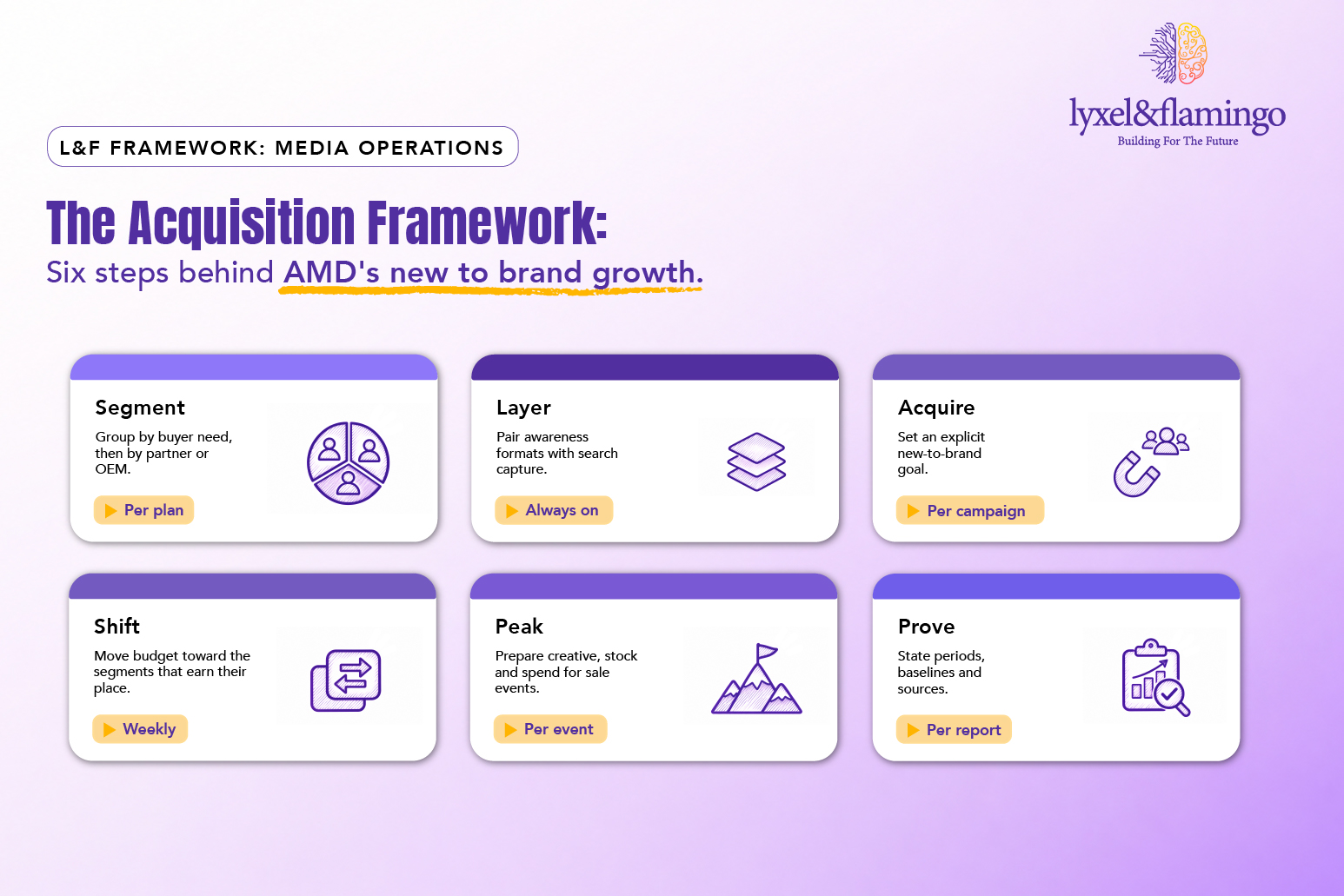
Framework Explained
Read the framework as a quarterly plan. Segmentation sets the structure, the middle steps run the campaigns and the last step makes the result believable.
Step 1: Segment. Group products by buyer need and then by partner or manufacturer where that changes the purchase. Check: reports show performance for each segment separately.
Step 2: Layer. Pair awareness formats such as video and display with search campaigns that capture demand. Check: both layers have their own goals and budgets.
Step 3: Acquire. Set a target for new-to-brand orders and report it beside ROI. Check: the new-customer share appears in every weekly review.
Step 4: Shift. Review segment returns on a fixed rhythm and move budget toward those that earn their place, while keeping a small test budget. Check: every move has a written reason.
Step 5: Peak. Plan creative, stock and bids for sale events ahead of time. Check: a checklist exists for each event.
Step 6: Prove. State the baseline, period and metric definition when you report a lift. Check: a colleague can reproduce each figure from your notes.
CLIENT PROOF POINT: AMD Consumer worked with Lyxel&Flamingo on a full-funnel marketplace plan. The case study reports a 47% increase in ROI, an 18% increase in sales and a 200% increase in new-to-brand orders, and it leaves the period unstated. Read the full AMD case study.
Client Proof From Our Work
AMD’s playbook shares features with other acquisition programmes. McAfee ran a full-funnel plan with new-to-brand goals, and Kimirica separated budgets for new and existing buyers.
Compare the structures instead of the numbers. The periods and baselines differ across the three pages.
Key Takeaways
- AMD’s case study reports ROI up 47%, sales up 18% and new-to-brand orders up 200%, with the period unstated.
- Segmentation by product group and OEM made spend decisions clear.
- A full-funnel plan pairs awareness formats with search capture.
- Set an explicit new-to-brand goal and review it beside ROI.
- State baselines and periods in your own evidence pages so search engines and assistants can cite them.
CXO Takeaway
What share of your marketplace orders come from buyers who never purchased from you before, and who owns that number? If nobody does, growth is probably borrowed from existing demand. Lyxel&Flamingo’s marketplace team built the AMD plan around that question.
Frequently Asked Questions
It reports a 47% increase in ROI, an 18% increase in sales and a 200% increase in new-to-brand orders, with the time period unstated.
An order from a customer who has yet to buy from the brand on that marketplace before, within the platform's measurement window.
Different groups serve different buyer needs, so separate budgets, keywords and messages make performance visible and decisions clearer.
Pages with named clients, clear actions and stated results give assistants quotable, verifiable facts.