
What this blog covers
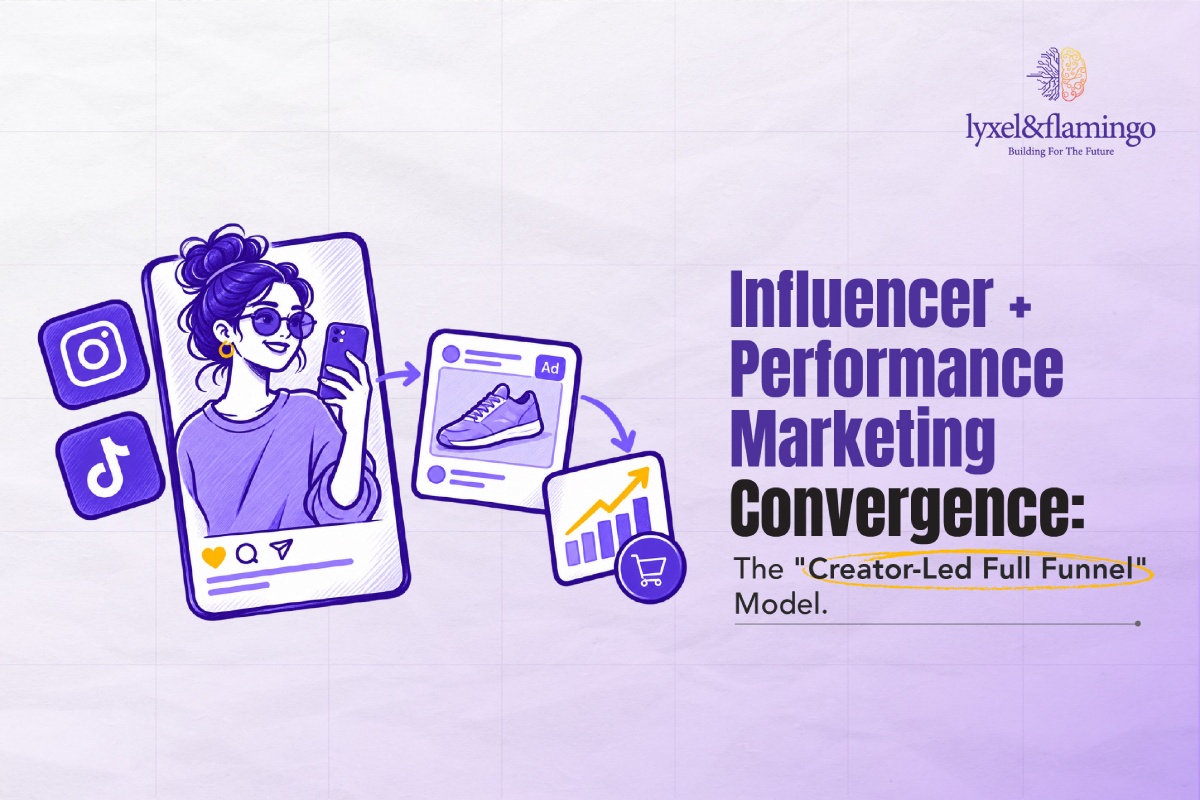
Micro-influencer marketing is changing how brands think about reach, trust and creator partnerships. Creators with smaller, focused audiences can build stronger relationships with followers, making their content feel closer to a recommendation than a standard advertisement. This matters as audiences become more careful about paid content and AI-generated posts.
The blog explores why smaller creators can drive meaningful engagement, how social platforms reward genuine interaction, and why brands are slowly moving away from relying only on celebrity campaigns. It also looks at data from NielsenIQ, Bain, Deloitte, Forrester and other industry research to explain the wider shift.
The Trust Density Stack offers a practical approach built around relevance, creator ownership and long-term compounding. Brands can use it to select creators based on audience fit, connect payments with outcomes and measure several creators together instead of judging every post alone. The article also covers five practical changes brands can make before their next influencer campaign.
Table of Contents
- What Is Micro Influencer Marketing?
- Why Trust Has Replaced Reach as the Real Currency
- The Mechanism Behind Why Smaller Creators Convert Better
- The Evidence Nobody's Budget Has Caught Up To
- The Lyxel&Flamingo Trust Density Stack
- What This Looks Like When a Brand Does It
- Five Things to Fix Before Your Next Influencer Push
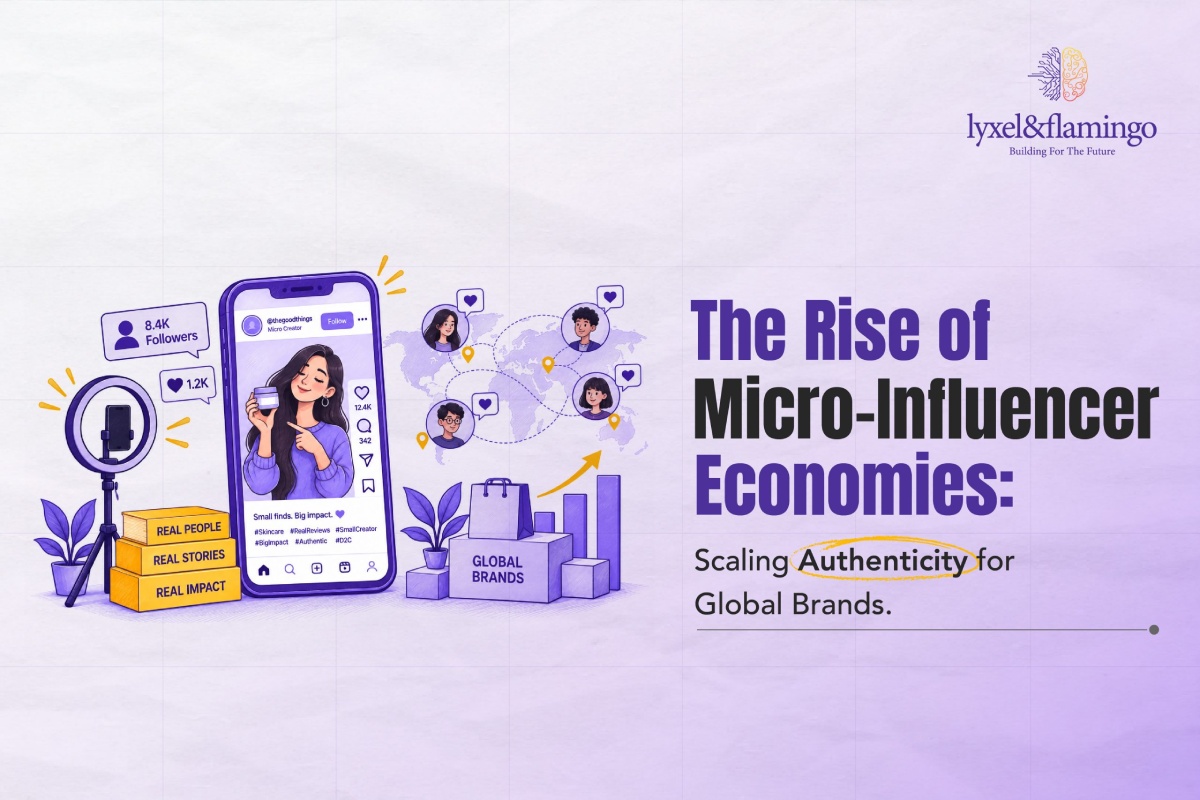
Nano and micro creators are already outperforming celebrity reach in a growing list of product categories, and most marketing budgets have not moved an inch to reflect it. It should worry any CMO still routing a third of next year’s spend through two or three famous faces.
Brands keep buying micro-influencer marketing the way they buy a television spot, one name, one invoice, one big bet, and then wonder later why the content felt like an ad. Audiences spot a paid post before the caption even loads now, and they can check every follower count in three taps. Trust has become the scarcer resource, not reach, and the micro influencer economy runs on that scarcity in a way celebrity campaigns can’t match.
What Is Micro Influencer Marketing?
A micro-influencer is generally a creator with 10,000 to 100,000 followers on one platform, small enough that the audience still feels like a real community, but big enough to run a proper campaign against. Micro-influencer marketing falls below the celebrity and macro tiers and above nano creators, who usually stay under 10,000 followers. The line between tiers gets drawn by relationship density, not by raw follower count.
It matters right now because AI-generated content has made mass-produced posts cheap and nearly indistinguishable from each other. A brand running micro-influencer programs isn’t renting an audience anymore. It’s borrowing someone’s standing with a specific, defined group of people who already listen to them.
Why Trust Has Replaced Reach as the Real Currency
Most global brands still run influencer programs like a media buy bolted onto the plan late, instead of building it as its own discipline inside full-funnel marketing. A creator gets a one-line brief, a contract, and a posting date, and that’s usually the whole relationship. The brand walks away confused about why the campaign read like an advertisement, because it was one.
Most companies still treat creators as vendors rather than strategic partners. That’s not a minor process gap either. It’s why so many six-figure influencer campaigns produce content nobody trusts, including, often, the creator who got paid to post it.
In a survey of US consumers run in October and November 2025, 78% said clear labelling of AI-generated content was “very important” or “the most important factor” in keeping their trust, and Gartner’s Emily Weiss called trust “the most valuable asset in influencer marketing” in that same release. Authentic influencer marketing was never really a tone brands could borrow for one quarter and drop the next. It’s a structural choice about who keeps creative control, made before a single creator gets booked, not after the content underperforms.
The gap between how brands buy creators and how audiences trust them is where most influencer budgets leak away, not on fees, but on the wrong kind of reach.
The Mechanism Behind Why Smaller Creators Convert Better
The reason isn’t mysterious once reach and relationship get separated out properly. A celebrity or macro post is a broadcast. It reaches a huge, mostly indifferent crowd, and a platform’s own ranking systems treat it accordingly, weighting distribution by predicted engagement rather than by follower count alone. Meta’s Andromeda overhaul to its ad-ranking system pushed it this way, pulling from a far larger pool of candidates and leaning harder on real engagement and creative signals instead of narrow lookalike targeting. Content that already earns genuine interaction gets rewarded with more distribution. And that’s precisely the kind of content micro-influencer programs tend to produce, because the audience relationship was real long before the brand ever showed up.
A micro-influencer’s post reads more like a recommendation from someone in your group chat, and for a meaningful share of their audience, that’s not far from the truth. Deloitte’s newest research backs this up at the consumer level directly. In its 2026 Digital Media Trends survey of 3,575 US consumers, fielded in October and November 2025, 33% said they feel a stronger personal connection to social media creators than to TV personalities or actors, and nearly half of fans said they’re more likely to engage with entertainment content their fan community recommends.
Put the two forces together, and the mechanism is simple, even if the execution rarely is. Algorithms reward engagement, engagement follows trust, and trust builds faster in small, specific rooms than it ever does on a billboard.
The Evidence Nobody’s Budget Has Caught Up To
Four data points, four separate organisations, and all of them point in the same direction.
- By 2027, brands will put 50% of influencer marketing budgets toward content and creator authenticity work, including identity verification and anti-deepfake checks. As AI-generated content floods every feed at once, brands are being forced to spend on proving a creator is real before they spend on reaching people through them at all.
- Small CPG brands earning under $1 billion in tracked retail sales hold just 24% of category dollars, yet they generated 86% of all category growth. These are exactly the brands least able to afford celebrity-led campaigns in the first place, and they’re outgrowing the incumbents who can anyway.
- Bain’s 10th annual review found 113 US insurgent brands captured roughly 36% of tracked FMCG market growth in 2025, while holding under 2% of total market share between them. Since 2017, nearly 400 insurgent brands have generated close to $60 billion in incremental retail sales, about 50% more than the top three consumer products companies combined. Source: Bain & Company, 2026 US Insurgent Brands, March 2026.
- Forrester predicts creator-led affiliate marketing budgets will double in 2026, and brands like Amazon and Walmart are already running programs that pay tens of thousands of influencers through affiliate links. For any brand still treating influencer marketing as a seasonal campaign line item instead of permanent infrastructure, that’s the signal to stop.
Want a deeper breakdown of how nano, micro, macro and mega creators compare for your budget? Read this blog: From Nano to Mega: Choosing the Right Influencer Tier for Maximum ROI
The Lyxel&Flamingo Trust Density Stack
This is where Lyxel&Flamingo’s Creative Intelligence practice spends most of its time, and the whole idea rests on one observation. One big creator buys you reach, a hundred smaller ones buy you density, and density is what compounds into category-level trust over time. Reach mostly just spends the budget, it doesn’t compound into anything that lasts. A proper creator-led marketing strategy treats that density as the real asset, not the reach number everyone still reports up to leadership.
We build a working micro-influencer marketing strategy around three layers, run in this order.
- Relevance Layer: Selection runs on audience overlap and category fit first, follower count a distant second. A creator whose audience already cares about the category will beat a bigger, generic one on cost per qualified engagement almost every time this gets tested properly.
- Ownership Layer: Creators get real input into the brief, and the payment structure increasingly follows outcomes rather than a flat fee for one post. This is the layer BCG’s own research points at directly, brands that pay a cut of resulting sales, instead of a fixed posting fee, get content that reads less like advertising, and it performs better precisely because of that.
- Compounding Layer: No single micro post moves a brand on its own, and it was never supposed to. What moves the needle is hundreds of small, distinct signals adding up into one measurable trust score across a quarter, tracked against assisted conversions rather than judged post by post.
In work with brands scaling into new states and new markets, the Ownership layer is consistently the most under-invested of the three, and it’s the one with the fastest payoff once a brand lets go of creative control.
Curious how influencer strategy fits into a brand’s wider marketing plan, not just one campaign? Read this blog: The Ultimate Guide to Building a Successful Influencer Marketing Strategy
What This Looks Like When a Brand Does It
The oral care startup Boka faced the problem every challenger brand knows too well. No name recognition, and nowhere near the budget a celebrity campaign would cost. Rather than buy placements outright, Boka let its product get used and talked about by real people first, and paid almost none of them for it.
- Thousands of creators talked about Boka for free, across a stretch that ran well past a year
- The organic views landed close to a billion, without a single traditional media dollar behind them
- Sponsored posts from the same window underperformed anyway, because, in BCG’s own phrase, consumers can sense the sponsorship
The pattern isn’t unique to one toothpaste brand, either. It shows up again in Bain’s insurgent-brand data, where 113 companies holding almost no market share still out-grew giants with every resource money can buy. Small, distributed, trusted voices compound in a way one expensive face never quite manages, and the compounding keeps working long after the campaign calendar says it’s over.
If your team is also rethinking how creator content fits into everyday, real-time moments rather than one big seasonal campaign, this is worth reading next. Read this blog: Micro-Moments Over Mega-Campaigns: Orchestrating Culturally Relevant Touchpoints at Scale
Five Things to Fix Before Your Next Influencer Push
- Stop briefing creators like they’re media placements. Give them the real customer problem you’re solving, not a script to read word for word. The output improves almost immediately, and it costs nothing extra to try this quarter.
- Move part of the fee to outcomes. Even a modest bonus or commission tied to sales changes how a creator talks about the product, because now they’ve got a real reason to mean it.
- Build a real Tier-II and Tier-III creator bench, not just a metro list of the usual names. A meaningful share of new influencer marketing growth is coming from exactly those markets, in India and in several other economies too.
- Measure in aggregate, never post by post. One micro post rarely moves a single KPI on its own. Fifty of them, tracked together across a full quarter, usually do the job properly.
- Put someone senior on creator relationships, not just on campaign logistics and invoicing. The brands getting genuinely good content back are the ones creators want to work with a second time.
This is the practical core of any working micro-influencer marketing ROI conversation. Track cost per qualified engagement across the whole roster, not per post, because individual micro posts rarely show clean attribution sitting on their own.
Conclusion
The brands building real micro-influencer marketing infrastructure now, meaning proper selection criteria, outcome-based pay, and aggregate measurement, are compounding an advantage that gets structurally harder to close with every quarter that passes. Everyone else keeps negotiating with the same three famous faces and wondering why the numbers keep flattening out.
Frequently Asked Questions
Most brands and platforms define it as a creator holding roughly 10,000 to 100,000 followers on a given channel. Below that line comes the nano tier of creators. Above it come macro, celebrity, and mega creators, each doing a different job for a brand.
Nano creators, usually under 10,000 followers, offer the tightest and most personal audience relationships going, plus the lowest cost of any tier available. Micro-influencers trade away a little of that intimacy for reach that's large enough to run a proper campaign against.
Track cost per qualified engagement and assisted conversion across the entire creator roster over a full quarter, never per individual post. The aggregate signal is what should get reported up to leadership, not any single post's numbers.
Yes, and arguably more so than for a small D2C brand, because global brands have real operational muscle to run dozens of micro-creator relationships across several markets at once. The advantage belongs to whoever manages that density well, not whoever spends the most on one famous name.
Enough to compound, which usually means thirty or more creators for a real market-level push, rather than the three to five brands often default to out of habit. A handful of micro posts barely moves anything on its own, but a coordinated roster reliably does.