
What this blog covers
Social commerce is changing how D2C brands turn social media attention into actual sales. Instead of treating Instagram and WhatsApp only as platforms for discovery, brands can now use them as direct sales channels where customers can discover products, ask questions and complete purchases with fewer steps. The blog explains why sending shoppers from Instagram or WhatsApp to a separate website can create unnecessary friction and lead to lost conversions. It also looks at changing shopping behaviour in India, including the growing role of social platforms among younger shoppers and buyers in Tier 2 and Tier 3 cities. The Lyxel&Flamingo Social Commerce Conversion Stack focuses on three areas: native checkout, conversational selling through WhatsApp, and cross-platform attribution. The blog also shares practical steps for brands, from fixing checkout dead ends to connecting social sales data. The key idea is simple: social should not just create demand. It should help close the sale too.
Table of Contents
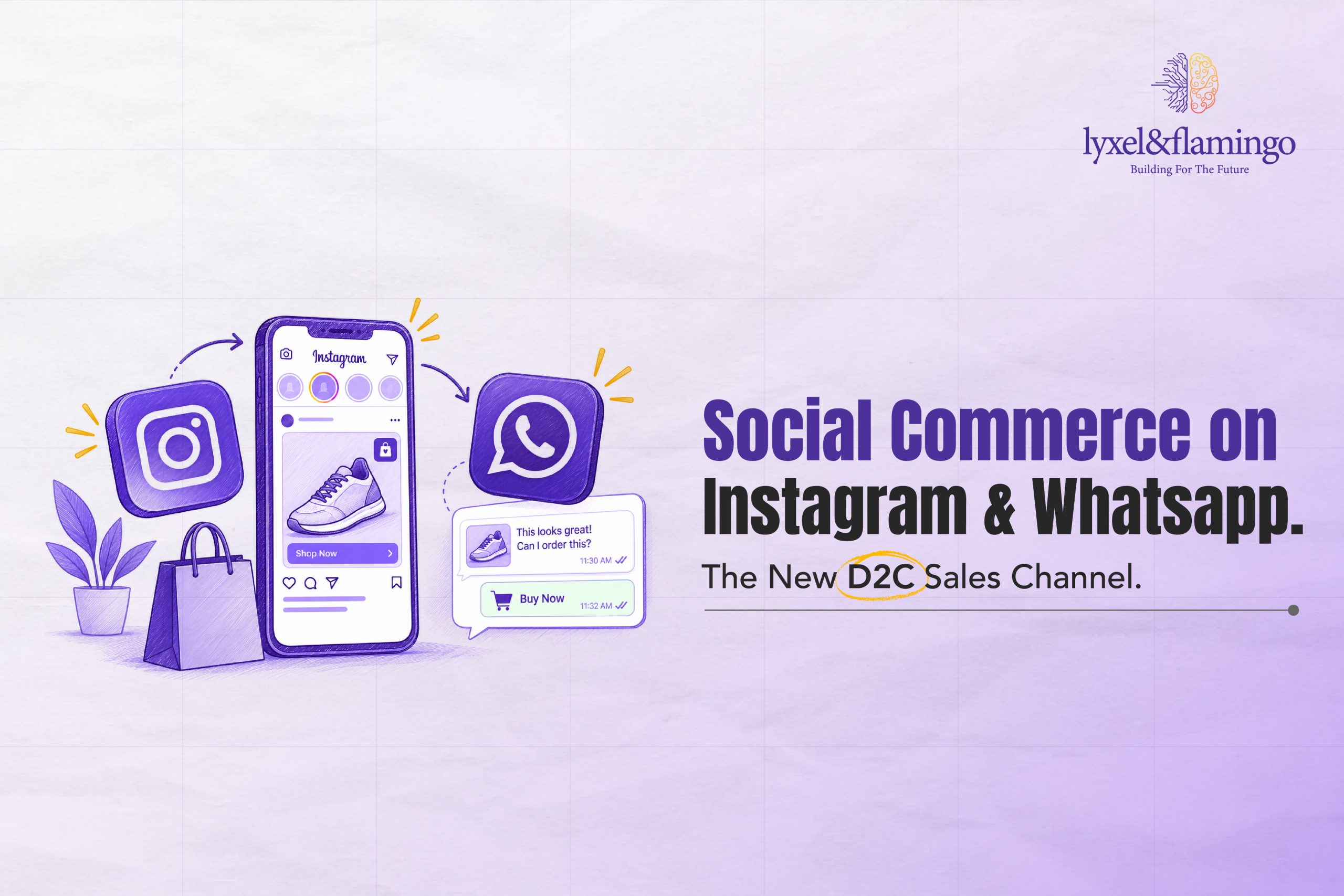
Most D2C brands still run social commerce as an awareness layer that feeds a separate checkout page, and that gap is where they’re losing the sale. The purchase decision now happens inside the app, not after someone clicks away from it. Brands that haven’t rebuilt their funnel around that fact are paying for reach they can’t convert.
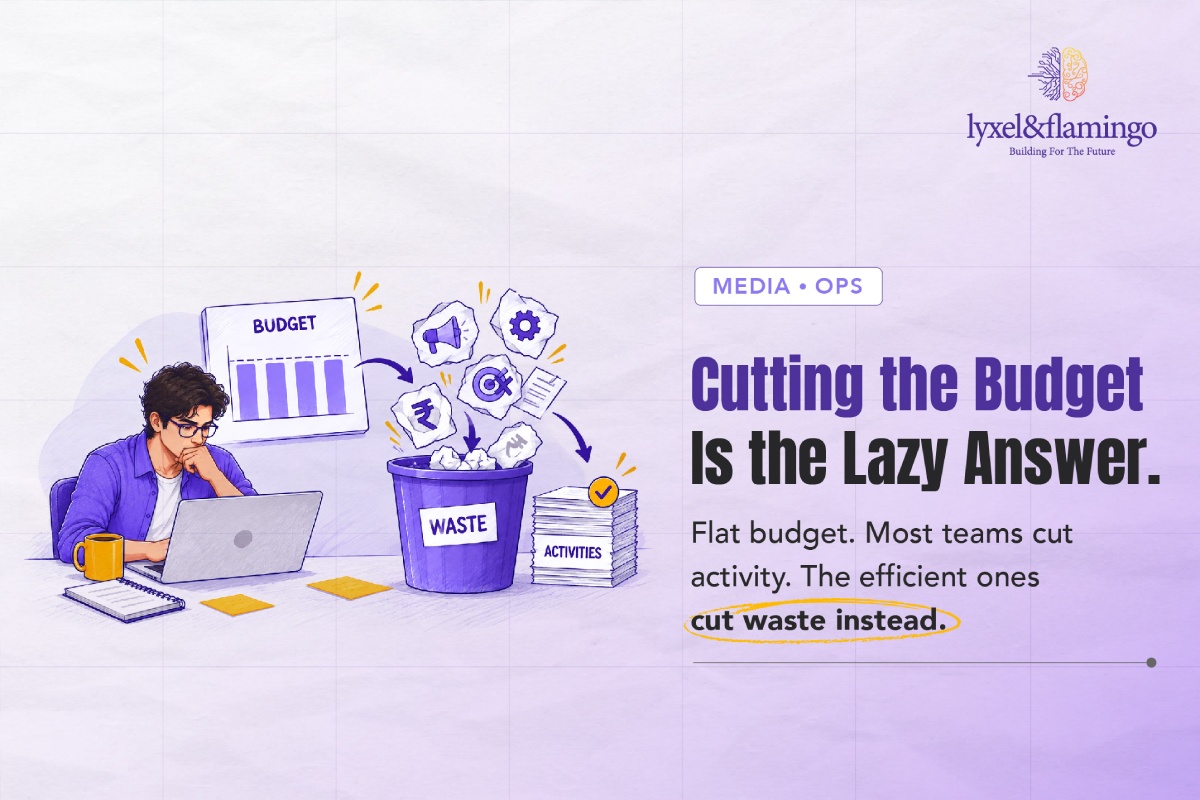
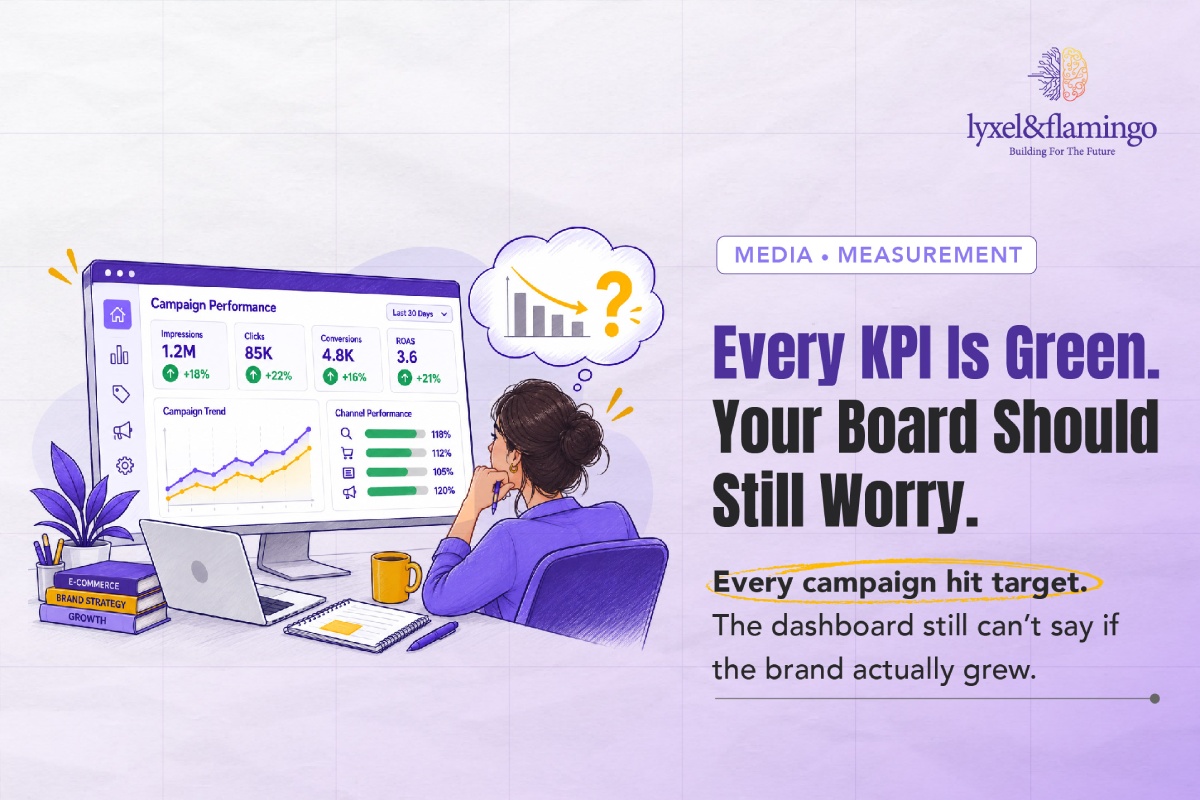
Here’s the tension nobody wants to name in a Monday marketing meeting. Your Instagram engagement numbers look fine. Your social selling metrics look fine too, on the surface. But conversion from social traffic keeps lagging behind paid search or direct, and the usual fix, more spend on the same funnel, doesn’t move the number. That’s not a targeting problem. It’s structural: you’re sending a social-native buyer through a browser-native checkout, and every extra step between the scroll and the sale is a chance for them to leave.
We’ve watched this play out across D2C accounts in beauty, apparel and F&B. The brands still growing off social are the ones who stopped treating Instagram and WhatsApp as top-of-funnel media and started treating them as D2C sales channels in their own right, with their own conversion logic, their own creative rules and their own attribution. Getting that right is what a real social commerce strategy looks like in practice, not a slide deck, a working system.
What Is Social Commerce?
Social commerce is the practice of completing a purchase inside a social media or messaging app, without redirecting the shopper to an external website. It covers in-app checkout on Instagram and Facebook Shops, catalogue-based selling and order completion over WhatsApp Business, and shoppable content formats like Reels and Stories tagged with product links.
It matters now because the browsing and buying moment has collapsed into one screen. A shopper who has to leave Instagram to finish paying is a shopper you might lose to distraction, a slow page load, or simple friction. Social commerce removes that handoff entirely, and for D2C brands built on discovery-led categories, that removal is often the single biggest lever left in the funnel. This shift shows up clearly in social commerce in India, where messaging apps and short video have become the default browsing surface for a huge share of the population, well before most of them ever open a shopping app.
The Problem With Treating Social as a Funnel Feeder
Most D2C teams still build their funnel around a familiar shape: Instagram or WhatsApp drives awareness, and the website closes the sale. That structure made sense when social was purely a discovery surface. It doesn’t anymore, and the gap between how brands built their funnel and how buyers really behave now shows up directly in conversion data.
Bain & Company’s “How India Shops Online 2026” report found that two-thirds of chat and social media users in India have never shopped online, even though they’re active on these platforms daily. It’s not that these users are unreachable. The current online shopping journey, built around apps and websites they have to learn and trust separately, doesn’t fit how they already spend their time. That’s the exact audience social commerce is built to convert, and most D2C brands aren’t set up to catch them where they already are.
The brands losing ground here aren’t losing on reach. They’re losing on the redirect.
Why the Checkout Gap Kills Conversion
The mechanism is simpler than most funnel diagrams make it look. Every extra step between seeing a product and paying for it introduces a decision point, and every decision point risks losing the buyer to hesitation, distraction or a slower connection. A shopper who sees a Reel, taps a bio link, waits for a website to load, searches for the product again, then creates an account just to check out has passed through four separate systems for one intent. Each handoff is a drop-off risk, not a formality.
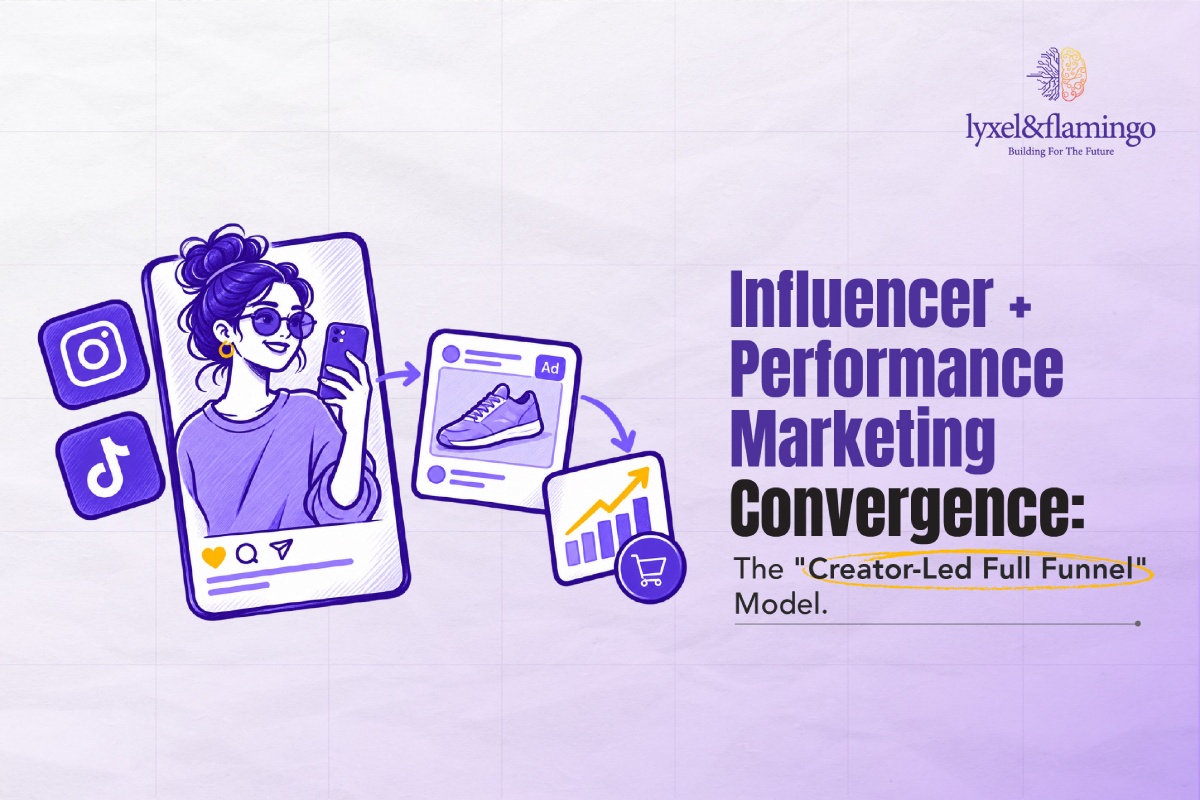
Instagram and WhatsApp both collapse that chain, though they do it differently. Instagram social commerce works through Shops and product tagging, letting a viewer move from content to cart in the same interface they were already scrolling. WhatsApp commerce goes further: because the conversation itself is the interface, a buyer can ask a question, get an answer, and complete payment without ever opening a browser. Neither one is just a checkout feature bolted onto an existing app. Each is a change in what counts as the storefront.
Picture a shop where the fitting room sits in a different building than the till, forcing the customer to walk outside and re-enter just to pay after trying something on. That’s the conventional D2C funnel. Social commerce puts the till in the fitting room. It isn’t that social buyers are more impulsive. Friction compounds, and native checkout removes a category of friction traditional funnels treat as unavoidable.
Want to see how this same friction problem plays out beyond social, and what AI-driven interfaces do to fix it? Read this blog: AI-First UX in 2026: How Smart Interfaces Are Driving Higher Conversions for D2C & B2B Brands
The Evidence: What the Data Shows Right Now
Generational discovery behaviour is diverging fast, and it’s structural, not a trend. McKinsey’s State of the Consumer 2026 report found that 34% of Gen Z shoppers say social media plays a key role in their purchase decisions, compared to just 16% of Baby Boomers, and 23% of Gen Z discovered new brands through social media versus 7% of Boomers. For D2C brands whose category skews younger, this isn’t a marginal shift in channel mix. It’s the primary discovery channel now, whether the brand’s funnel is built for it or not.
D2C demand is moving into markets that were never well served by traditional e-commerce, and social is often the first digital touchpoint there. Tier 2 and Tier 3 cities are expected to drive nearly 66% of new D2C orders in FY26, with order volumes up 33% and GMV up 32% year on year. A shopper in a smaller city discovering a brand for the first time is far more likely to be doing it through a Reel or a WhatsApp forward than a Google search, which makes native social checkout a direct-acquisition question, not just a UX nicety.
India’s D2C market is on a genuinely steep growth curve, and the channel mix funding that growth is shifting. IBEF projects the D2C sector will grow at a 40% CAGR to reach US$60 billion by 2030, within an overall e-commerce market expected to surpass US$163 billion by 2026. Growth at that pace outstrips what most brands’ existing acquisition channels can absorb profitably, which is exactly why D2C customer acquisition through social is becoming less optional and more structural.
Commerce media spend, the budget category social commerce increasingly competes for, is already mainstream among advertisers. BCG found that 86% of respondents say commerce media powered by first-party data drives higher performance than other digital marketing forms, and more than 80% of brands are either already spending on commerce media or plan to. That budget conviction is a leading indicator. It means the internal case for shifting spend toward in-platform commerce is already being made in board decks, even outside pure social contexts.
Automation has entered the funnel, but it hasn’t replaced the human decision yet, and that matters for WhatsApp specifically. Gartner’s 2026 marketing predictions report predicts GenAI shopping tools will generate less than 10% of e-commerce revenue in the near term. That number means the conversational, human-feeling exchange WhatsApp is built around still does most of the persuasive work, not an algorithm. Brands over-automating their chat commerce risk losing the exact quality that made the channel convert to begin with.
The Lyxel&Flamingo Social Commerce Conversion Stack
Most brands approach social commerce as a plugin: add the Shop tab, connect the catalogue, done. That’s not a strategy, it’s a checkbox, and it’s why social commerce for D2C brands so often underdelivers against the engagement numbers feeding it. At L&F, we use a three-layer model when we rebuild a D2C funnel around native social checkout. We call it the Social Commerce Conversion Stack.
- Native Checkout Layer: Every product that appears in organic or paid social content must be purchasable without leaving the app it was seen in. This means Instagram Shops catalogue sync, WhatsApp Business catalogue setup, and Reels/Stories product tagging configured before a single ad dollar goes toward that content, not after.
Want a step-by-step on setting up the ad side of this layer? Read this blog: Meta Advantage+ Shopping Campaigns: Complete Guide to Setup & Benefits - Conversational Conversion Layer: WhatsApp isn’t a support channel bolted onto commerce. It’s a sales surface with its own script. Pre-purchase questions, size or fit queries, and order confirmations should route through structured but human-sounding chat flows, not a generic auto-responder that kills the conversational trust the channel is built on.
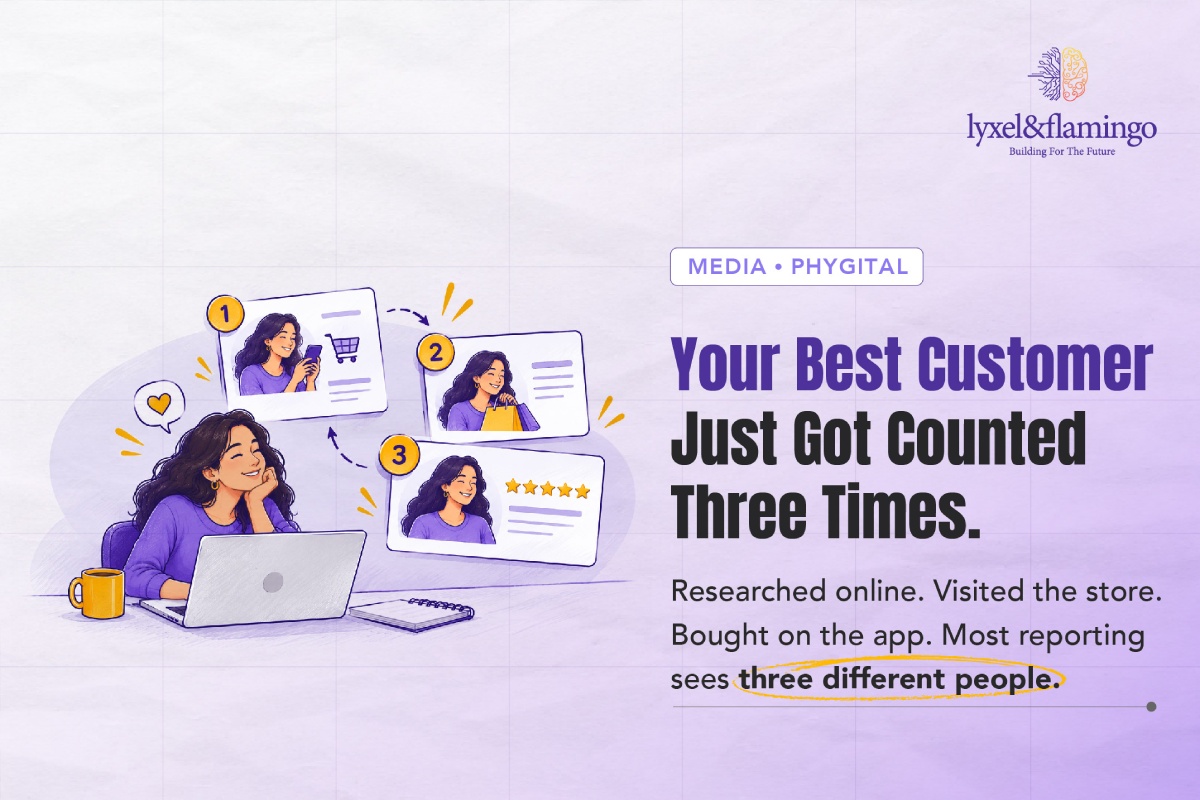
- Cross-Platform Attribution Layer: A sale that starts as a Reel view and closes inside a WhatsApp chat three days later is still one customer journey, but most analytics setups will count it as two disconnected events, or miss it entirely. Attribution has to be stitched across platforms before spend decisions get made on top of it, or the brand ends up cutting the channel that drove the sale in the first place.
In our experience, that third layer, attribution, is consistently the most under-invested and the one with the fastest payoff once it’s fixed. Brands routinely discover their WhatsApp channel was quietly outperforming a paid channel they’d been scaling, simply because nobody had connected the data to see it.
What This Looked Like for a D2C Apparel Brand
A mid-sized D2C apparel brand came to L&F with a familiar complaint: strong Instagram engagement, weak conversion, and a WhatsApp inbox the team treated as customer service alone. We rebuilt their funnel around the Conversion Stack above, moving product discovery and query handling into WhatsApp itself and syncing their catalogue for native Instagram checkout.
Within one quarter:
A meaningful lift in social-attributed revenue, once cross-platform attribution correctly credited WhatsApp-closed sales that originated from Instagram content.
A double-digit drop in checkout abandonment on social-sourced traffic, after native checkout removed the website redirect step entirely.
A noticeably higher average order value on WhatsApp-closed sales versus website-closed sales, likely reflecting the trust built through conversational back-and-forth before purchase.
The revenue wasn’t new demand created from nothing. It was demand that already existed inside the conversation, finally being counted and converted instead of leaking out at the redirect.
5 Things to Do Before Your Next Campaign
- Audit every piece of social content for a checkout dead end. Go through your last month of Instagram and WhatsApp content and flag anything that sends a buyer to an external link instead of an in-app purchase path. Fix the highest-engagement pieces first.
- Set up WhatsApp Business catalogue sync this week, not next quarter. It takes little effort for the payoff it returns, and the Commerce Content Stack approach applies directly here. Your product data, images and descriptions need to stay consistent across the catalogue and your PDPs, or you’ll create trust gaps at the exact moment you’re trying to close a sale.
- Write a conversational script for your five most common pre-purchase questions. Size, fit, delivery time, return policy, and payment options cover most WhatsApp pre-sale queries. A human-sounding, pre-approved response to each keeps the channel fast without losing the trust that makes it convert.
- Stitch your attribution before you touch your ad budget. Don’t reallocate spend based on last-click data that can’t see a sale that started on Instagram and closed on WhatsApp. Get the cross-platform view first, then decide what’s working and what isn’t.
- Treat Instagram and WhatsApp as separate channels with separate jobs. Instagram is still your best discovery surface. WhatsApp is increasingly your best closing surface. Building one social media sales funnel that assumes both platforms behave the same way is the fastest way to under-invest in whichever one is quietly doing more work.
Conclusion
Social commerce isn’t a new marketing channel bolted onto the old D2C funnel. It’s a rebuild of where the sale closes, full stop, and brands that keep routing social-native buyers through a website checkout are paying for engagement they never convert. The data backs this up from multiple angles this year: two out of three chat and social users in India haven’t shopped online yet, Gen Z’s discovery behaviour has structurally shifted toward social, and D2C growth is increasingly coming from cities where social may be the first digital touchpoint a buyer ever has with a brand. The brands closing that gap now are building a channel advantage that gets harder to copy every quarter they run it.
If your funnel still treats Instagram as a billboard and WhatsApp as a support line, that’s the fastest place to start. Speak to our team about auditing where your social traffic is leaking, and where it’s quietly converting without you knowing it.
For more on building conversion into every stage of the funnel, see our breakdowns of AI-first UX for D2C and B2B brands and setting up Meta Advantage+ Shopping campaigns.
Frequently Asked Questions
Social commerce is the transaction itself, completing a purchase inside a social or messaging app without leaving it. Social selling is the broader relationship-building activity, using social platforms to build trust, answer questions and guide someone toward a purchase decision, which may or may not close inside the app.
Yes, and it's often the lowest-cost place to start. Catalogue setup takes days, not months, and because the channel runs on existing customer conversations, it doesn't require the ad spend a new acquisition channel usually does.
Ads drive people to your content. Social commerce is what happens after they see it, whether they can act on that interest without leaving the app. A brand can run excellent ads and still lose most of the resulting interest at a slow, redirect-heavy checkout.
As soon as social is driving meaningful discovery traffic that isn't converting at the same rate as other channels. That gap, high engagement paired with lower conversion is usually the clearest early signal that checkout friction, not audience quality, is the problem.
Not usually, and it shouldn't try to. A website still matters for SEO visibility, brand storytelling and customers who prefer researching before they buy. Social commerce works best as a parallel, lower-friction path for buyers who are ready to purchase the moment they discover you.