
What this blog covers
Google rankings no longer tell the whole visibility story. This blog explores how E-E-A-T is changing as customers increasingly discover brands through ChatGPT, AI Overviews, Perplexity and other AI search tools. It introduces AI-E-E-A-T, where experience, expertise, authority and trust still matter, but machine-verifiable evidence becomes an added requirement. The article explains why AI systems cross-check brand information across websites, directories, expert sources, reviews and other third-party mentions before deciding what to cite. It also presents Lyxel&Flamingo’s GEO Authority Stack: Entity Consistency, Third-Party Corroboration and Structured Proof. The framework shows how consistent brand information, independent validation and clear, citable evidence can strengthen AI visibility. The blog also shares an FMCG example, practical fixes for brands, and ways to track AI citation visibility separately from organic traffic. The key takeaway is simple: traditional SEO still matters, but brands now need trust signals that AI systems can verify beyond their own websites.
Table of Contents
- What Is AI-E-E-A-T?
- Your Rankings Look Fine, But Your Brand Is Still Invisible
- Why AI Models Weight Trust Differently Than Google Does
- The Evidence No One's Ranking Report Will Show You
- The GEO Authority Stack: Lyxel&Flamingo's Framework for AI-E-E-A-T
- What This Delivered for One FMCG Brand
- 5 Things to Fix Before Your Next Content Cycle
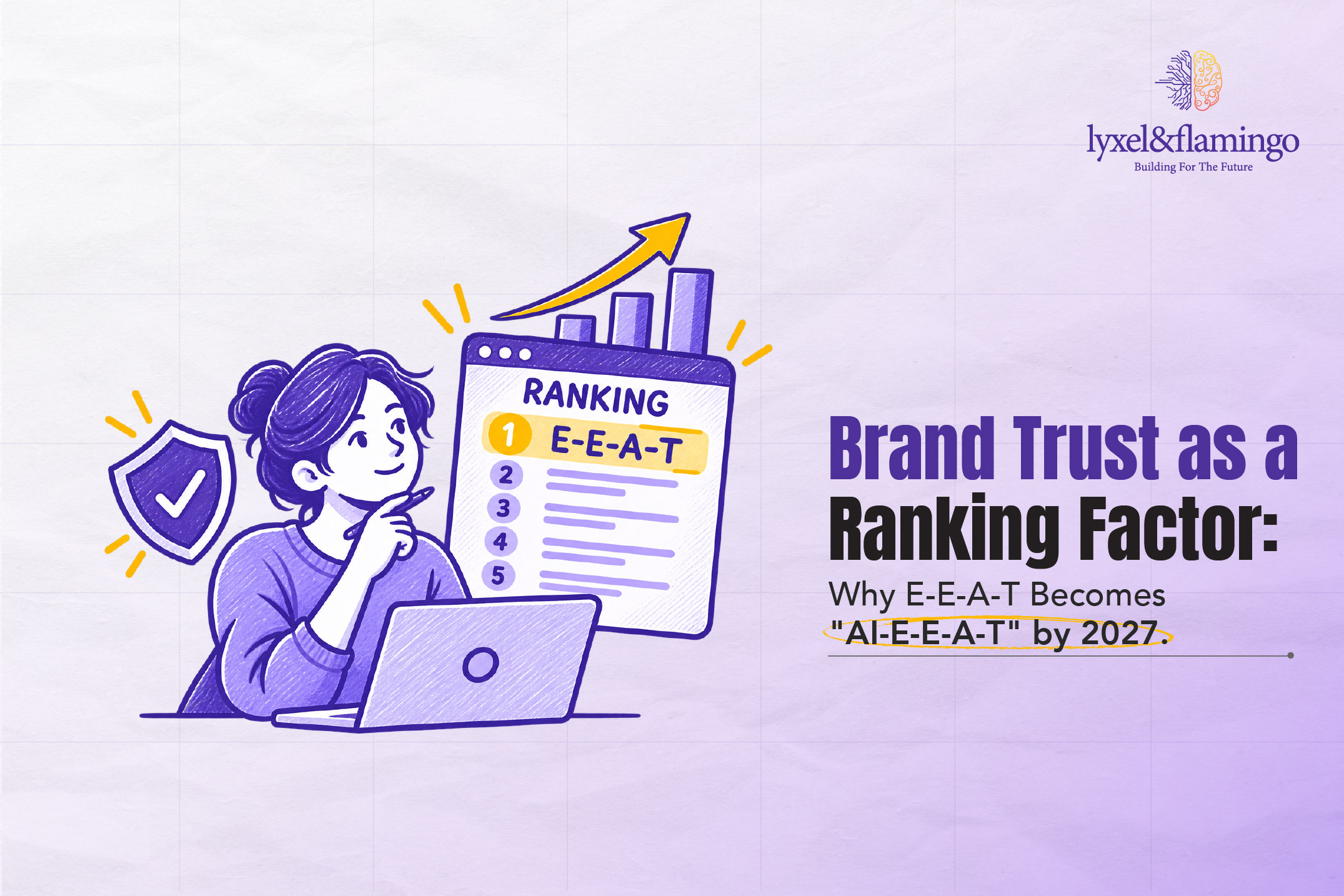
A brand that ranks first on Google and gets skipped by ChatGPT isn’t losing search anymore. It’s losing the decision itself, and most marketing teams haven’t noticed yet.
Half of all consumers now use AI-powered search to make decisions, and only 16% of brands are even tracking whether they show up in it, according to McKinsey’s October 2025 analysis. That gap is not a measurement problem. It is a trust problem wearing a measurement costume.
For a decade, E-E-A-T SEO meant satisfying Google’s Search Quality Rater Guidelines: show expertise, look authoritative, prove you’re trustworthy, and rankings would follow. That playbook still works for Google. It does almost nothing for the growing share of queries answered inside ChatGPT, Perplexity, or Google’s own AI Overviews, where there’s no blue link to click and no rater guideline to satisfy directly. The model has to decide, in real time, whether your brand is safe enough to recommend. That decision runs on a different kind of evidence than a page’s keyword density or backlink count. It runs on trust signals a model can verify independently of your website copy, which is a genuinely harder bar to clear, and one most agencies still practising plain SEO for AI search haven’t rebuilt their process around yet. This is where SEO as a discipline is splitting into two tracks that need separate strategies to win.
The four pillars still matter, while machine-verifiable brand trust adds another layer. AI E-E-A-T systems need clearer signals before citing a brand, and that changes how GEO SEO strategy works.
What Is AI-E-E-A-T?
AI-E-E-A-T is the practice of building brand trust signals that a generative AI system can verify independently, not signals a human reader or a Google crawler would accept on faith. It extends Google’s original E-E-A-T framework (Experience, Expertise, Authoritativeness, Trustworthiness) by adding machine-verifiability as a requirement, not an afterthought.
The distinction matters because AI models don’t take a brand’s word for its own credibility. They cross-reference third-party mentions, citation patterns, structured data, and consistency across the web before deciding whether to surface a source. AI-E-E-A-T matters now because the brands that pass Google’s human-facing trust tests are frequently failing the AI layer’s machine-facing ones, and most have no idea it’s happening.
Your Rankings Look Fine, But Your Brand Is Still Invisible
Search rankings can look healthy while your brand disappears from AI answers. Traditional dashboards rarely show this gap, leaving teams focused on traffic that already exists. The bigger problem is visibility where customers now ask high-intent questions and expect direct answers.
Gartner’s September 2025 consumer survey found 53% of consumers distrust the reliability or impartiality of AI-generated search results, and 41% say AI overviews make searching more frustrating than the old way. AI assistants have a credibility problem too, so they cannot afford unreliable sources. They tend to favour information they can verify, cross-check, and understand with reasonable confidence. That changes how brands need to build online trust.
Strong website copy still matters, but it is not enough when an AI system cannot confirm those claims elsewhere. Reviews, recognised sources, consistent business information, expert contributions, and independent mentions can give those claims more weight.
Most brands still optimise for people who reach their website. The harder question comes earlier: can an AI system find enough reliable evidence to recommend your brand before the customer ever reaches you?
A brand invisible in AI-generated answers isn’t losing a channel. It’s losing the moment the buying decision gets made, and Google rankings can’t tell you that’s happening.
Curious how LLMs read your content differently than Google does? Read this blog: The Future of SEO: Optimising Content for Generative AI & LLMs
Why AI Models Weight Trust Differently Than Google Does
Google can rank your page without trusting your brand. AI search has a harder question to answer: can it trust you enough to cite you?
Google’s ranking systems, even after the Helpful Content updates, still evaluate many signals that exist on the page itself. Internal links, content depth, crawlability, backlinks, structure and relevance all help a page make its case. The page has plenty of room to prove its value through its own signals.
Generative search changes that equation.
When an AI model builds an answer, it is not presenting ten results and asking the user to decide. It may pull information from only a few sources, combine those sources, and present the final answer in one response. That makes source selection more sensitive. If the model cites a weak or inaccurate source, the problem is not limited to that website. The answer itself can look unreliable.
This is where many SEO strategies fall short.
AI systems can look for confirmation beyond your website. Is the same company information available across trusted sources? Do third-party publications describe the brand in a consistent way? Are the people behind the content connected with the subject they discuss? Does the brand have a track record that can be checked elsewhere?
A strong author bio helps, but it cannot carry the whole argument. A page can say that a company has deep expertise, years of experience, or industry knowledge. That claim becomes stronger when independent sources provide similar evidence.
This creates an important difference between traditional SEO and AI visibility. Google can assess whether your page is useful for a query. A generative engine also needs enough external evidence to feel comfortable using that page as part of its answer.
Think less about proving expertise on one URL and more about proving it across the web. Your website makes the claim. Other credible sources need to make the same claim without being asked.
That is becoming an important part of AI E-E-A-T and a practical consideration for any GEO SEO strategy heading into 2027.
Want to see how entities are replacing keywords as the real ranking unit? Read this blog: Entity-Based SEO: How Knowledge Graphs Are Replacing Keywords
The Evidence No One’s Ranking Report Will Show You
- AI search has moved from experimental to default behaviour for a meaningful share of consumers, and it happened fast. Bain’s August 2025 analysis of Sensor Tower data found ChatGPT usage in prompts rose 70% between March and June 2025 alone, with click-through rates on cited links climbing from 2.2% to 5.7% over the same window. For brands, that’s not a niche audience anymore. It’s a fast-growing share of top-of-funnel discovery, and it behaves nothing like a traditional SERP visitor.
- Consumer trust in AI is rising fast, and AI has become a real brand-discovery engine, not a research add-on. BCG’s August 2026 global study of over 13,000 consumers across 12 markets found that trust in AI is projected to grow 15 percentage points by 2030, faster than any other source tracked, and that AI introduces consumers to brands they wouldn’t otherwise consider in more than half of AI-assisted purchase journeys. Yet more than half of consumers said they don’t fully trust any single source in isolation, meaning corroboration across sources matters more to a sceptical buyer, not less.
- Most brands still treat AI search as a side channel rather than a primary discovery surface, and the tracking gap proves it. McKinsey’s October 2025 research found only 16% of brands systematically monitor their AI search performance, even as 44% of AI-powered search users now name it their primary source of purchase insight, ahead of the 31% who still say traditional search.
- Digital ad spend in India is scaling fast enough that visibility gaps compound quickly for brands that get this wrong early. India’s digital advertising market is projected to nearly double to US$22 billion by 2030, according to IBEF’s April 2026 industry analysis, which means the cost of catching up on AI visibility later, once competitors have already built the trust signals, only rises from here.
The GEO Authority Stack: Lyxel&Flamingo’s Framework for AI-E-E-A-T
At Lyxel&Flamingo’s GEO Practice, we use a three-layer model to build the kind of trust signal an AI model can verify, rather than one it has to take on faith. We call it the GEO Authority Stack.
- Entity Consistency Layer: Your brand needs to exist as one coherent, verifiable entity across every surface a model might cross-reference: your site, Wikipedia or Wikidata where applicable, Google Business Profile, LinkedIn, industry directories, and structured data markup. Same name, same facts, same founding details, same claims, everywhere. Inconsistency here is the fastest way to get excluded without ever knowing why, because a model that finds conflicting facts about who you are has no reason to trust anything else you say.
- Third-Party Corroboration Layer: This is the layer most agencies skip because it’s slower and harder to control. It means earning mentions, citations, and data points to your brand from sources the model already trusts, industry publications, named research, press coverage, expert commentary, rather than only publishing claims about yourself on your own domain. In our work with brands in this category, this layer is consistently the most under-invested, and the one with the fastest payoff once it’s built, because a model weighing two similar sources will favour the one it can independently corroborate. This layer alone tends to move brand visibility in AI search faster than any content sprint.
- Structured Proof Layer: Named frameworks, original data, specific numbers, schema-marked FAQ and Article content. This is where the “Experience” and “Expertise” pillars of classic E-E-A-T become machine-legible, not only human-legible, and where brand authority SEO gets built rather than claimed. A vague claim of expertise reads the same to a model as no claim at all. A named framework with sourced numbers reads as evidence.
Trust needs the right foundation first. Build layer one, then two and three, because each layer strengthens the next, while inconsistency can weaken everything built afterwards.
What This Delivered for One FMCG Brand
A leading FMCG brand came to L&F’s GEO Practice with strong Google rankings and close to zero presence in AI-generated answers for its category’s top informational queries, the classic AI-E-E-A-T gap. The approach wasn’t to write more content. It was to rebuild the brand’s entity consistency across structured data and third-party surfaces first, then layer in corroborated data points before publishing a single new page.
- A sharp jump in AI Overview visibility within 12 months of the engagement starting, moving the brand from absent to consistently surfaced
- A significant rise in brand mentions across AI-powered surfaces, measured against the prior 12-month baseline
- Meaningful movement in category-level “what is the best [category]” queries where the brand had previously never appeared in AI-generated answers at all
What this shows is that AI visibility doesn’t move in proportion to content volume. It moves in proportion to how verifiable your existing claims become, a different lever than the one most content calendars pull.
Curious what your GEO gap costs you before you commit budget to it? Read this blog: Enterprise GEO Checklist: How to Get Cited in ChatGPT, Gemini & AI Overviews
5 Things to Fix Before Your Next Content Cycle
- Audit your entity consistency this week. Pull your brand name, founding date, leadership names, and core claims across your site, Wikipedia/Wikidata, LinkedIn, and Google Business Profile. Flag every mismatch. This fix moves faster than any content project.
- Stop publishing claims only on your own domain. If your only proof of expertise lives on pages you control, a model has no independent way to verify it. Prioritise getting your data or point of view picked up by one external, credible publication this quarter.
- Bold your citable sentence in every section you publish. AI models weight bolded, structurally isolated text when selecting what to surface. A page with no standalone quotable claim gives a model nothing clean to cite.
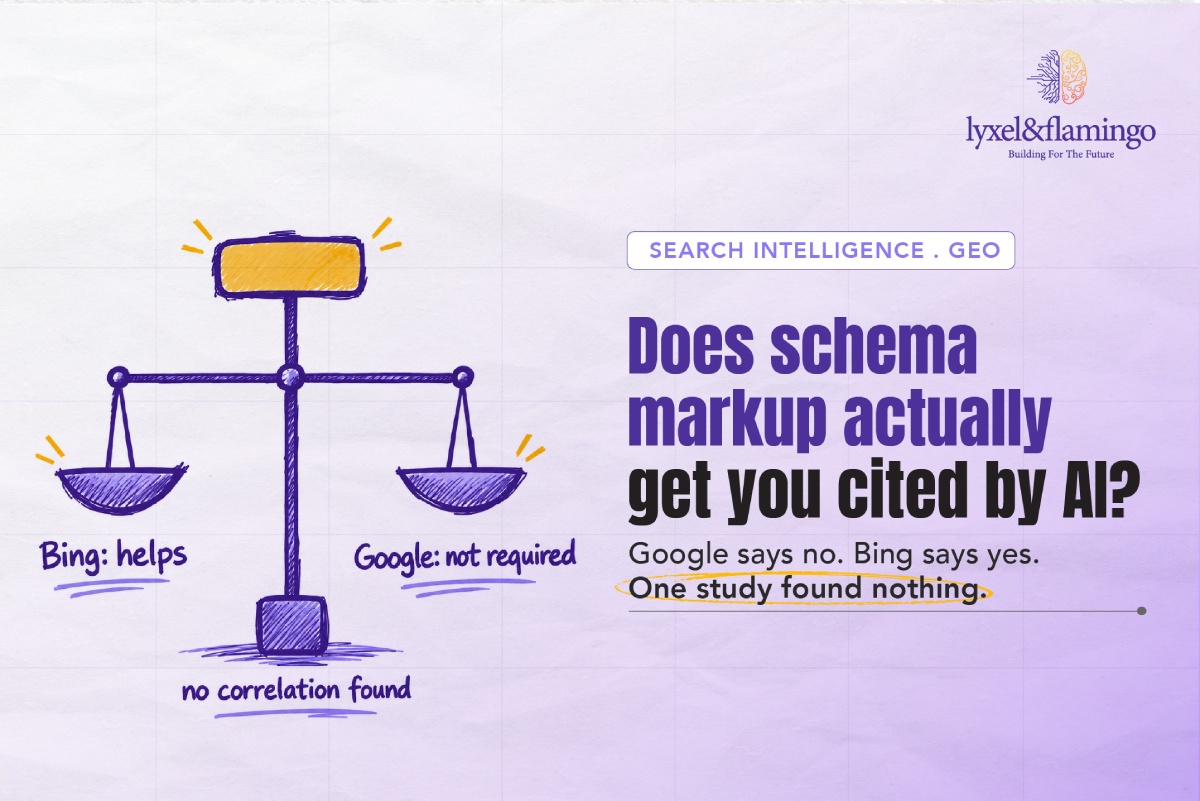
- Add schema markup to your highest-intent pages, not all of them. Article and FAQPage schema on your ten most important pages moves the needle faster than half-implemented schema across two hundred.
- Track AI citation rate as its own metric, separate from organic traffic. You cannot fix a gap you’re not measuring, and 84% of brands, per McKinsey’s own data cited above, currently aren’t measuring this at all. Even a manual monthly check across ChatGPT, Perplexity, and AI Overviews for your top ten queries beats not checking.
Conclusion
E-E-A-T isn’t disappearing by 2027, and nobody serious is arguing it should. What’s changing is who has to be convinced. Google’s version of trust could mostly be argued for on the page itself. AI-E-E-A-T can’t, because the model checking your claims has already decided not to take your word for it, and it’s checking everywhere else first. The brands closing this gap now are building a trust signal that compounds. The ones waiting are building a gap that gets structurally harder to close every quarter they wait.
Frequently Asked Questions
Classic E-E-A-T SEO is judged mostly by a human rater or a crawler reading your page directly. AI-E-E-A-T adds a requirement the old model never needed: your trust signals have to be verifiable by a machine cross-checking sources beyond your own site. Same four pillars, one added bar to clear.
There's no single official dashboard yet, most teams track it manually by running their top queries through ChatGPT, Perplexity, and Google AI Overview and logging whether and how their brand gets cited. Some newer platforms now offer automated AI citation tracking, but manual checks still catch things dashboards miss.
Given that only 16% of brands are even tracking this yet, per McKinsey's 2025 data, a mid-sized brand that starts now is building a lead over most of its category. The cost of starting late compounds because entity trust signals take time to establish, they're not something you can buy instantly.
Before it feels urgent, ideally. Entity consistency and third-party corroboration both take months to build properly, so brands waiting until AI search visibly hurts their pipeline are already several quarters behind where they'd want to be.
Yes, and treating them as competing priorities is the wrong frame. Strong technical SEO and structured content still feed the same signals a generative engine checks, they're not separate disciplines so much as one discipline with a newer, stricter test layered on top.