
What This Blog Covers
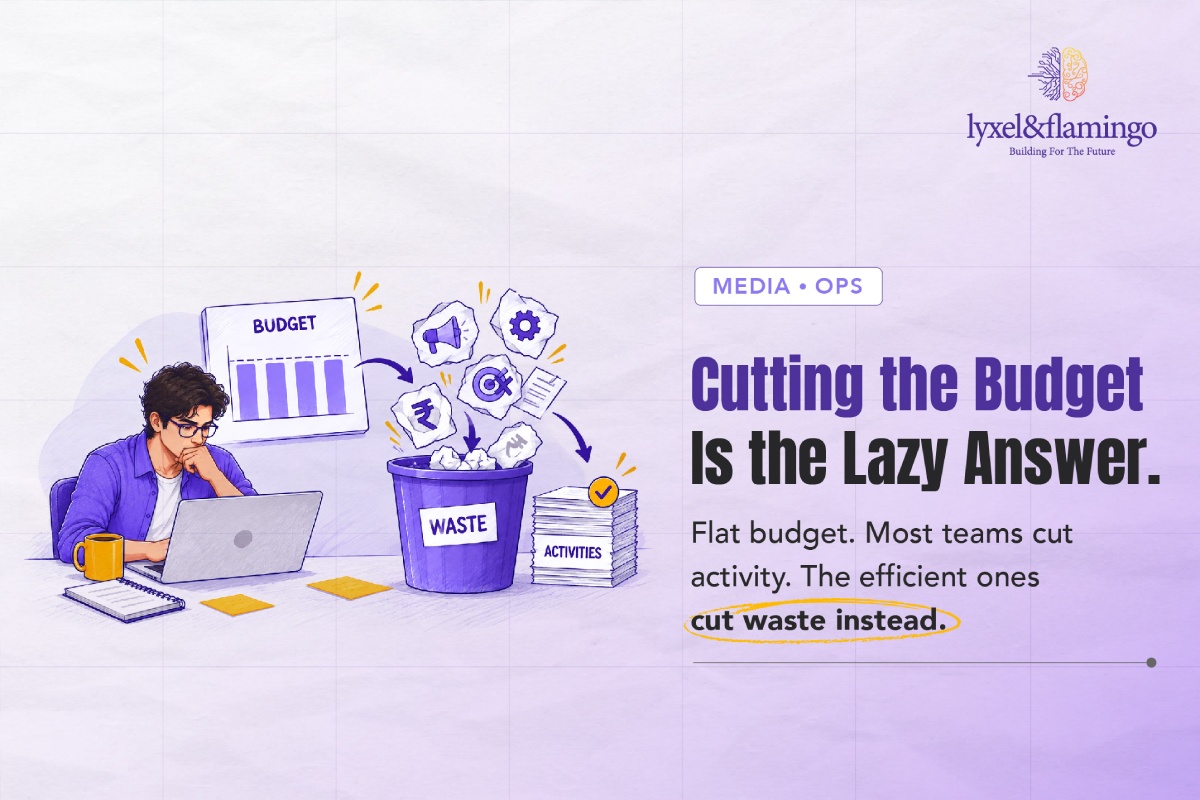
Acquisition gets the marketing budget, the campaign calendar, the leadership attention. Retention, the discipline that actually determines lifetime value and margin, runs on whatever is left over. Here’s the case for treating lifecycle marketing as a growth lever in its own right, not an afterthought funded from what acquisition didn’t spend.
Table of Contents
- The Budget Acquisition Wins by Default
- LTV:CAC Done Properly, Not as a Vanity Ratio
- The Compounding Math of a Small Retention Improvement
- Lifecycle Flows as Infrastructure, Not a Nice-to-Have
- Making the Case for a Dedicated Retention Budget
- The Lifecycle Signal Flywheel: what a retention-first budget case actually rests on
- The Framework Explained
- What Investing in Retention Protects
- Key Takeaways
- The CXO Takeaway
- The Question to Sit With
- Closing
The Budget Acquisition Wins by Default
Acquisition campaigns are visible, measurable within days, easy to defend in a budget review. Retention work compounds slowly, over months, in a way that is genuinely harder to attribute to a single campaign or a single quarter’s spend.
This visibility gap, not a real difference in value, is usually why acquisition keeps winning the budget argument, even in categories where retained customers demonstrably generate more margin per rupee spent.
LTV:CAC Done Properly, Not as a Vanity Ratio
Most brands calculate LTV:CAC once, present it as a headline ratio, and never revisit the assumptions behind it. The number that actually matters is how that ratio moves as retention investment changes, not what it happens to read as a single static snapshot.
This is the same full-funnel discipline argued for in Your ROAS Looks Perfect. That’s the Problem, applied here to the lifetime side of the equation rather than the acquisition side.
The Compounding Math of a Small Retention Improvement
A five-percentage-point improvement in repeat-purchase rate compounds across every future order from every retained customer. The same budget spent on acquisition buys, at best, one additional customer at the current cost to acquire. A fundamentally different kind of return.
This compounding effect is exactly what makes retention underrated on a quarterly budget spreadsheet and overwhelmingly valuable on a multi-year view. A mismatch that explains why so many brands underinvest in it.
Lifecycle Flows as Infrastructure, Not a Nice-to-Have
Email, SMS and WhatsApp lifecycle flows, welcome sequences, post-purchase nurture, win-back campaigns, function as infrastructure that keeps earning long after the initial setup cost. Closer to a compounding asset than a recurring campaign expense.
Treating them as infrastructure to be built once and refined continuously, rather than a campaign run occasionally, is what separates brands that actually capture retention value from brands that merely intend to.
Making the Case for a Dedicated Retention Budget
Making the internal case for retention budget means framing it the way acquisition is already framed: an investment with a measurable return, not a cost centre funded from acquisition’s leftovers. The LTV:CAC and compounding-math evidence above is exactly the argument that framing needs.
A dedicated, protected retention budget, reviewed on its own terms rather than as acquisition’s afterthought, is usually the single change that gets this discipline the investment its actual return justifies.
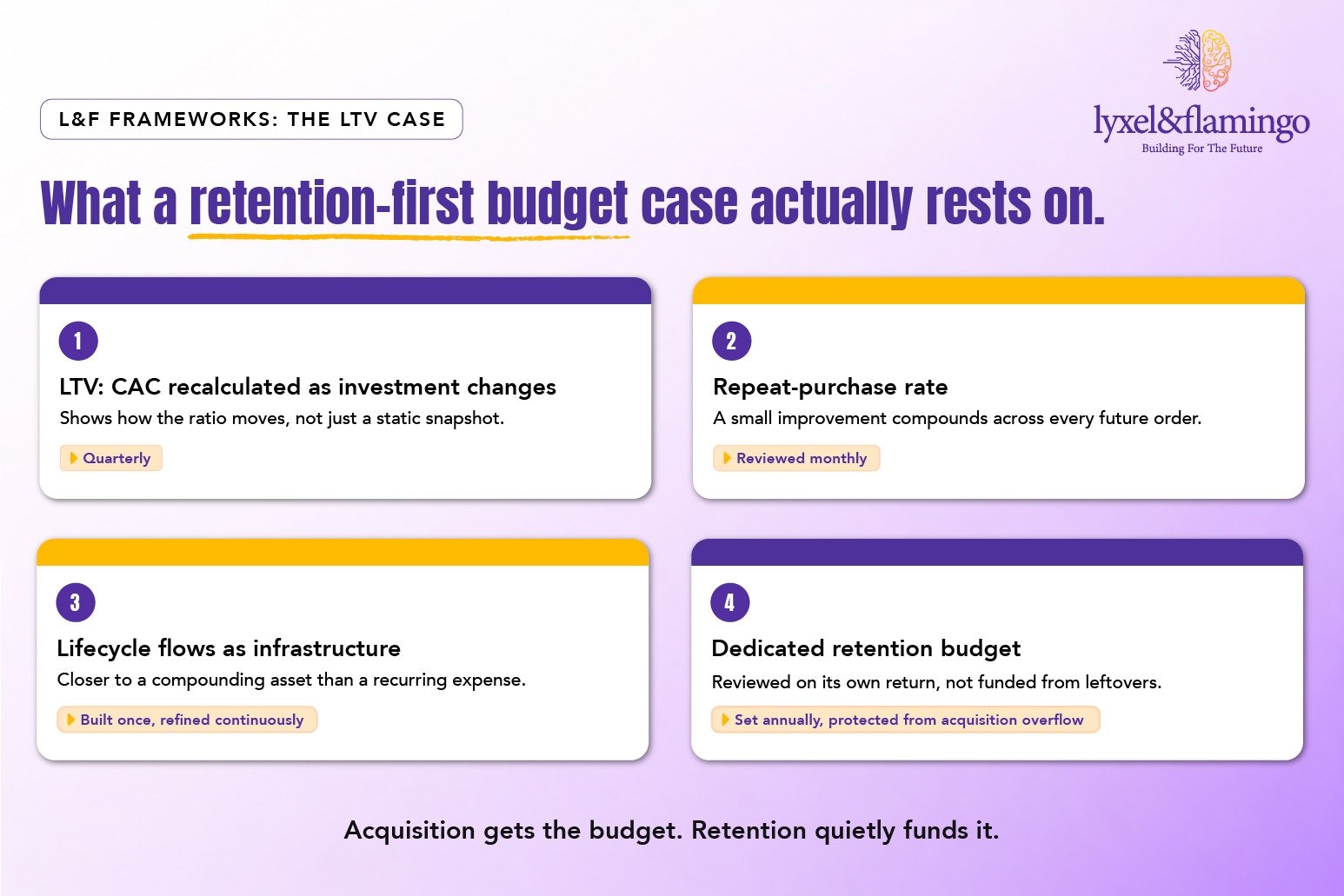
The Lifecycle Signal Flywheel: what a retention-first budget case actually rests on
The Framework Explained
- LTV:CAC recalculated as investment changes: Most brands calculate LTV:CAC exactly once, frame it for a slide, and never touch the assumptions again. The number that actually matters is how that ratio moves as retention investment changes, not what it happened to read the one time anyone bothered to check.
- Repeat-purchase rate: A five-point lift in repeat-purchase rate compounds across every future order from every customer who stays. The same budget spent chasing a new customer buys, at best, one more person at whatever it currently costs to acquire one. Not remotely the same kind of return.
- Lifecycle flows as infrastructure: Welcome sequences, post-purchase nurture, win-back campaigns: these are not campaigns you run occasionally. They are infrastructure that keeps earning long after the setup cost is paid off, closer to a compounding asset sitting on the balance sheet than a recurring line item.
- Dedicated retention budget: Retention funded from whatever acquisition happens not to spend is retention treated as an afterthought, and it gets budgeted like one. A dedicated line, reviewed on its own return, is the only way this discipline gets the investment its actual impact already justifies.
What Investing in Retention Protects
✓ CLIENT PROOF POINT: confirm sign-off before publish. Sleepwell‘s SEO and technical programme illustrates the same compounding logic retention runs on, applied to organic growth: over twelve months, keyword rankings grew 1950% and impressions grew 84%. Results that came from sustained, compounding investment rather than a single campaign burst, the same patient discipline this piece argues retention spend deserves. This is an organic-growth case used here as an illustration of compounding investment, not a retention-specific result. (L&F client work, SEO and technical programme, 12-month result.)
Our Media services team builds lifecycle marketing programmes designed and budgeted as their own growth lever.
Key Takeaways
- Acquisition results are visible within days and easy to defend in a budget review; retention’s value compounds slowly and is harder to attribute.
- Most brands calculate LTV:CAC once as a static ratio and never revisit it as retention investment actually changes.
- A five-point improvement in repeat-purchase rate compounds across every future order, a different kind of return than one new customer at current acquisition cost.
- Lifecycle flows, welcome sequences, post-purchase nurture, win-back, function as infrastructure, not a recurring campaign expense.
- Sleepwell’s compounding, sustained SEO investment grew keyword rankings 1950% and impressions 84% over twelve months, the same patient logic retention runs on.
The CXO Takeaway
For a CXO, the number worth tracking isn’t how much was spent acquiring customers this quarter. It’s how much was actually invested in keeping them, and whether that investment is reviewed on its own return rather than funded from whatever acquisition didn’t spend. Retention treated as its own growth lever, not an afterthought, is what protects the margin already sitting in the customer base.
The Question to Sit With
Stop asking how much was spent acquiring customers. Ask how much was actually invested in keeping them.
Closing
Lyxel&Flamingo builds lifecycle marketing programmes funded and measured as their own growth lever, not acquisition’s leftover budget. Want a clear read on what a dedicated retention budget could actually return for your brand? Start that conversation with L&F →
Frequently Asked Questions
Acquisition results are visible and measurable within days, making them easier to defend in a budget review, while retention's value compounds slowly over months, which makes it harder to attribute to a single campaign or quarter.
Most brands calculate it once as a static snapshot and never revisit it, when the more useful version tracks how the ratio actually moves as retention investment changes over time.
As infrastructure. Built once and refined continuously, welcome sequences, post-purchase nurture and win-back flows keep earning long after the initial setup cost, closer to a compounding asset than a recurring campaign expense.
As infrastructure. Built once and refined continuously, welcome sequences, post-purchase nurture and win-back flows keep earning long after the initial setup cost, closer to a compounding asset than a recurring campaign expense.