
Blog Summary
Total festive revenue lands on a board slide within days of the sale closing. What that revenue actually cost to generate, and whether any of it returns in November, gets skipped almost every year, right up until the next festive sale is already close. This is the read Indian D2C and marketplace teams run to close the loop properly, in the four weeks after the sale, not glossed over in a single celebratory slide.
Table of Contents
- The Headline Number Nobody Stress-Tests
- What the Post-Festive Read Actually Protects
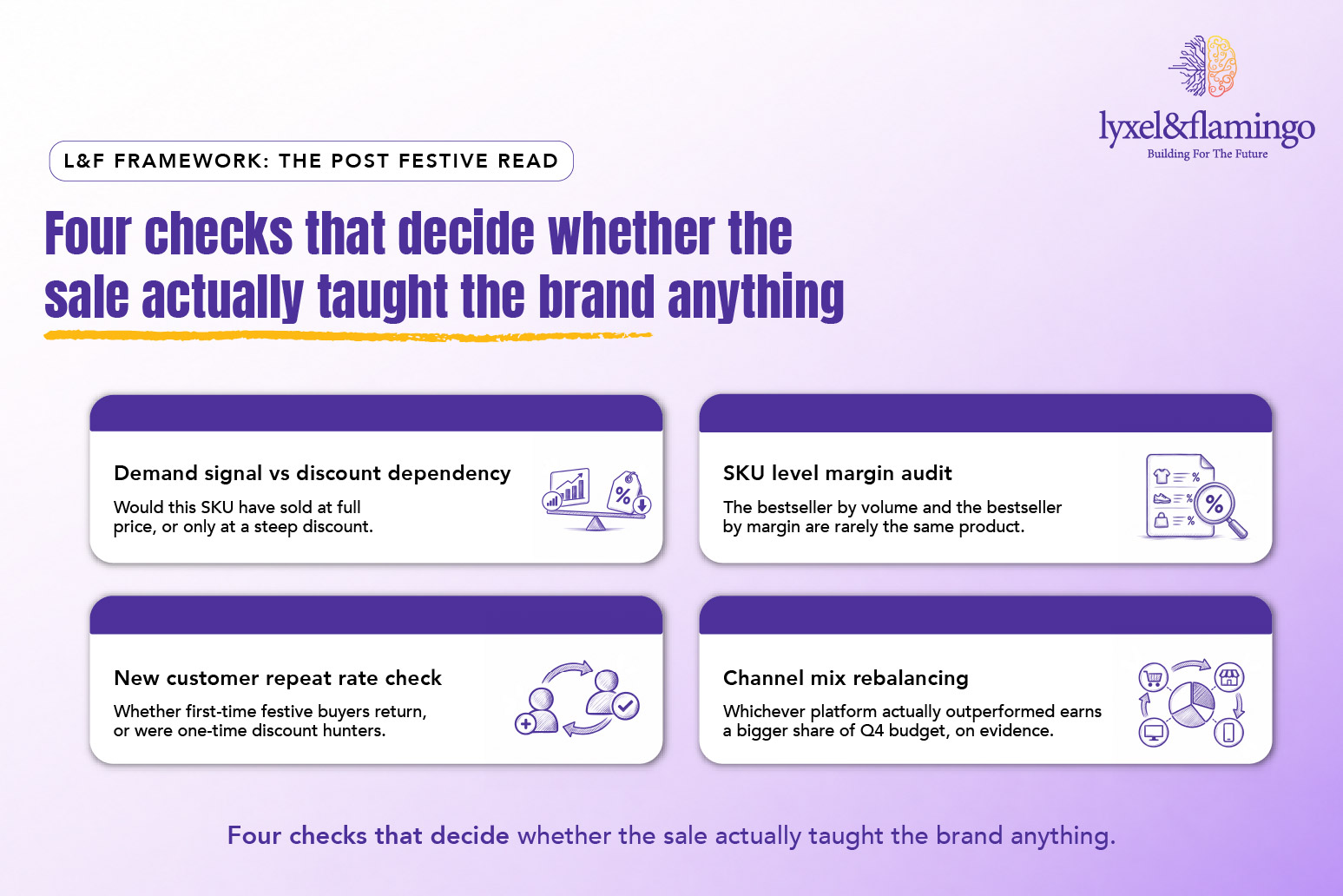
- Demand Signal vs Discount Dependency
- SKU-Level Margin Audit
- New-Customer Repeat-Rate Check
- Channel-Mix Rebalancing
- The Post-Festive Read: Four Checks That Decide Whether the Sale Actually Taught the Brand Anything
- Why Skipping This Read Is Expensive Twice Over
- The Question to Sit With
- Closing
The Headline Number Nobody Stress-Tests
Total festive revenue gets reported to the board within days of the sale closing. What that revenue actually cost to generate (discount, ad spend, returns) and whether any of it comes back as a repeat customer, gets reviewed far less often, right up until the next sale is already close and there is no time left to apply the lesson.
It is the same headline-versus-substance gap covered in “10 festive trends every brand should watch this season”, where the loudest trend and the most profitable one are rarely the same trend.
What the Post-Festive Read Actually Protects
Skipping this review does not just waste an analysis opportunity. It means next year’s festive playbook gets built on this year’s assumptions, unchecked, funded at a bigger budget. The four checks below are what separate a brand that learns from its festive sale from one that simply repeats it.
It is the natural counterpart to the festive readiness playbook run before the sale starts, closing the loop that readiness alone leaves open.
Demand Signal vs Discount Dependency
Would this SKU have sold at full price, or only at forty percent off. If the honest answer is only at a discount, that SKU is not a growth product. It is a liability wearing a growth product’s numbers, and it will keep looking like a win every year until someone actually asks the question.
This is the same full-price-versus-discount test worked through in “pricing and pack sizes built for the ten-minute cart”, now applied backwards to see if it actually held.
SKU-Level Margin Audit
The bestseller by volume and the bestseller by margin are rarely the same product. Chasing the wrong one all quarter, because it looked good on a volume chart, is an expensive and entirely avoidable mistake, one this audit catches every single time it is actually run.
New-Customer Repeat-Rate Check
Festive traffic hands a brand first-time buyers essentially for free. The next sixty days decide whether that was a customer acquired or a one-time discount hunter who will not be seen again, the real read on customer lifetime value, not just acquisition cost. Brands that skip this check cannot tell the difference until the next festive season arrives and the same names do not show up.
Many of these first-time buyers arrive through gifting intent, the pattern covered in the Diwali gifting shopper, and their return rate is the real test of whether that spend built a customer or just moved a gift.
Channel-Mix Rebalancing
Whichever platform actually outperformed earns a bigger share of Q4 budget, on evidence, measured against ROAS by channel, not just topline. Not because it happened to get the biggest slide in last year’s recap deck. Budget follows performance, or it follows habit, and only one of those improves the next sale.
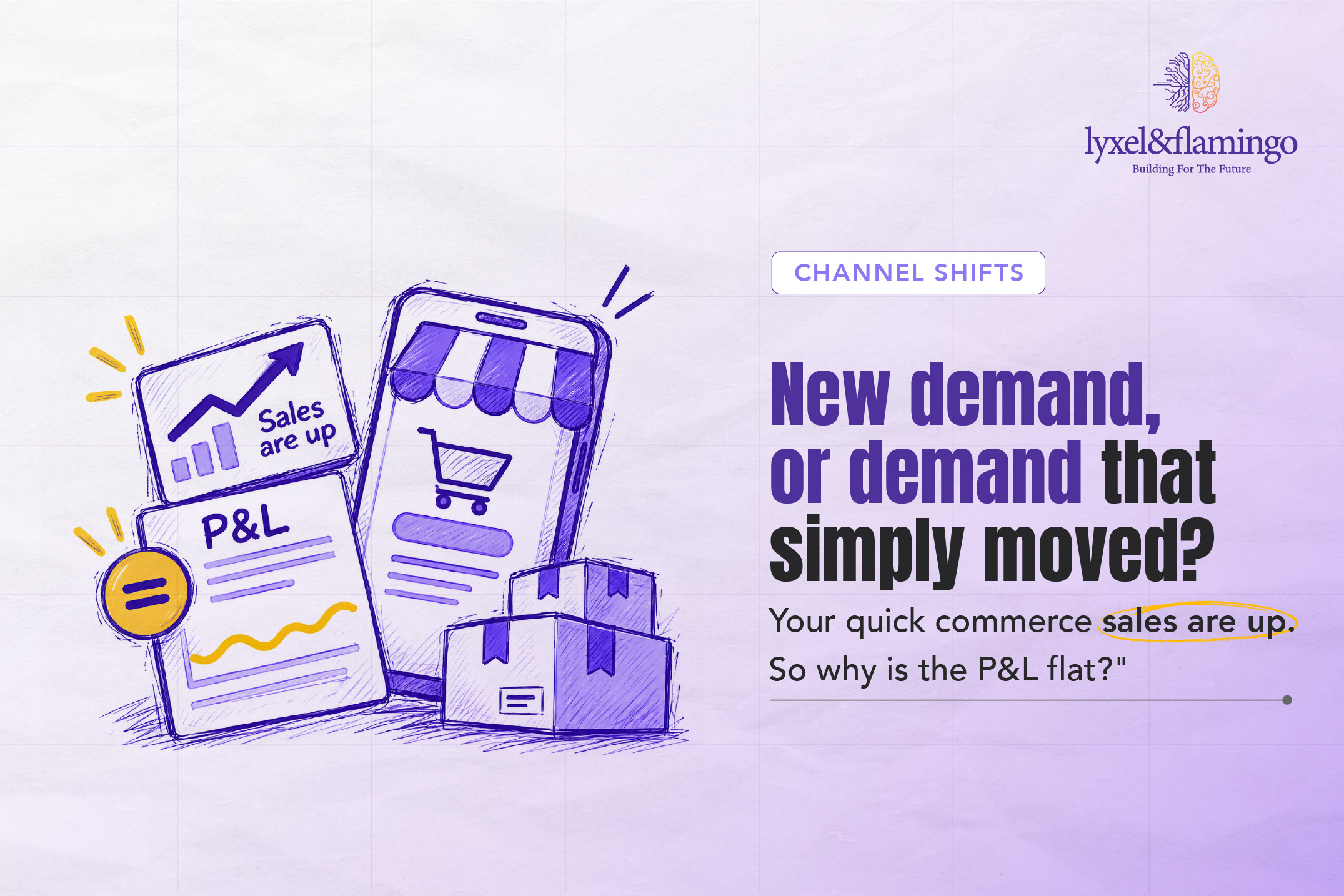
This is also where a brand checks whether quick commerce gains came at the expense of general trade, the exact tension when quick commerce cannibalises your trade covers.
The Post-Festive Read: Four Checks That Decide Whether the Sale Actually Taught the Brand Anything
Why Skipping This Read Is Expensive Twice Over
Big Fashion Festival numbers on Myntra are the post-festive read in practice. Spend increased just 12.1%. ROI nearly doubled, up 95.7%, and ACOS dropped 48.9%, the exact discipline this piece asks every brand to check for: growth that did not come from simply spending more. Clicks rose 34%, CTR improved 40%, ad-attributed orders grew 128%, and ad-driven revenue climbed 86%, all funded by budget moved to SKUs and placements already proving themselves rather than a bigger overall budget. (L&F client work, Myntra BFF, BAU Aug 19-Sept 5 versus BFF Sept 19-Oct 5, 2025.)
Our Third-Party Marketplace management services team runs this exact read with brand teams every November.
The Question to Sit With
It is tempting to close the book on a festive sale the moment the recap deck is approved. The sharper move is to ask whether that deck would survive four honest questions about discount dependency, margin, repeat rate and channel performance. So the question worth carrying past the season is not whether the sale looked good. It is whether it would still look good after someone actually checked.
Closing
Running a proper post-festive read, not just a recap deck, is a discipline, and it is one Lyxel&Flamingo runs alongside brand teams every season. If you want a clear, honest read on what this year’s festive sale actually taught your brand, our marketplace team can run the four checks with you before next year’s plan gets built on this year’s assumptions. Start that conversation with L&F →
Frequently Asked Questions
In the four weeks immediately after the festive sale closes, while the data is fresh and there is still time to apply what it shows to Q4 decisions, not months later when the next sale is already close.
Ask whether the SKU would have sold at full price. If it only moved at a steep discount, it is not evidence of organic demand, it is evidence the discount worked, which is a different and less durable thing.
Because festive traffic brings in first-time buyers cheaply, but only the next sixty days reveal whether they return. Skipping this check means a brand cannot separate real customer acquisition from one-time discount hunting.
Evidence from the read, not habit from the previous year's recap deck. Whichever platform actually delivered should earn a larger share of Q4 budget, based on this year's numbers, not last year's slide.