
What this blog covers
This blog answers the question every finance team eventually asks: does brand spend actually pay back, and when? We separate the two returns marketing produces the short, fast payback of activation and the long, compounding payback of brand-building explain why measuring only the short one makes brand look like a waste, present the Long-and-Short Payback Curve, and show how to fund and measure both. It closes with a self-check and the questions boards ask most.
Table of Contents
- The question behind the question
- Two returns, two timelines
- The short: activation payback
- The long: brand payback
- The Long-and-Short Payback Curve
- Why measuring only the short makes brand look like waste
- How to fund the balance
- How to measure the long payback
- What the payback looks like in practice
- Self-check: are you funding both curves?
- Key takeaways
- Closing
The question behind the question
‘Does brand spend pay back?’ is rarely a neutral enquiry. It usually arrives when a finance team is looking at two line items’ performance, with a clean return next to it, and brand, with nothing measurable next to it, and asking why the second exists. The honest answer is yes, brand spend pays back, often more than activation does over time. But it pays back on a different clock, and if you only ever check the fast one, brand will always look like the loser.
The confusion is not really about whether brand works; decades of evidence say it does. It is about timeframe. Marketing produces two different kinds of return that arrive on two different timelines, and most measurement systems are built to see only the quicker one.
Two returns, two timelines
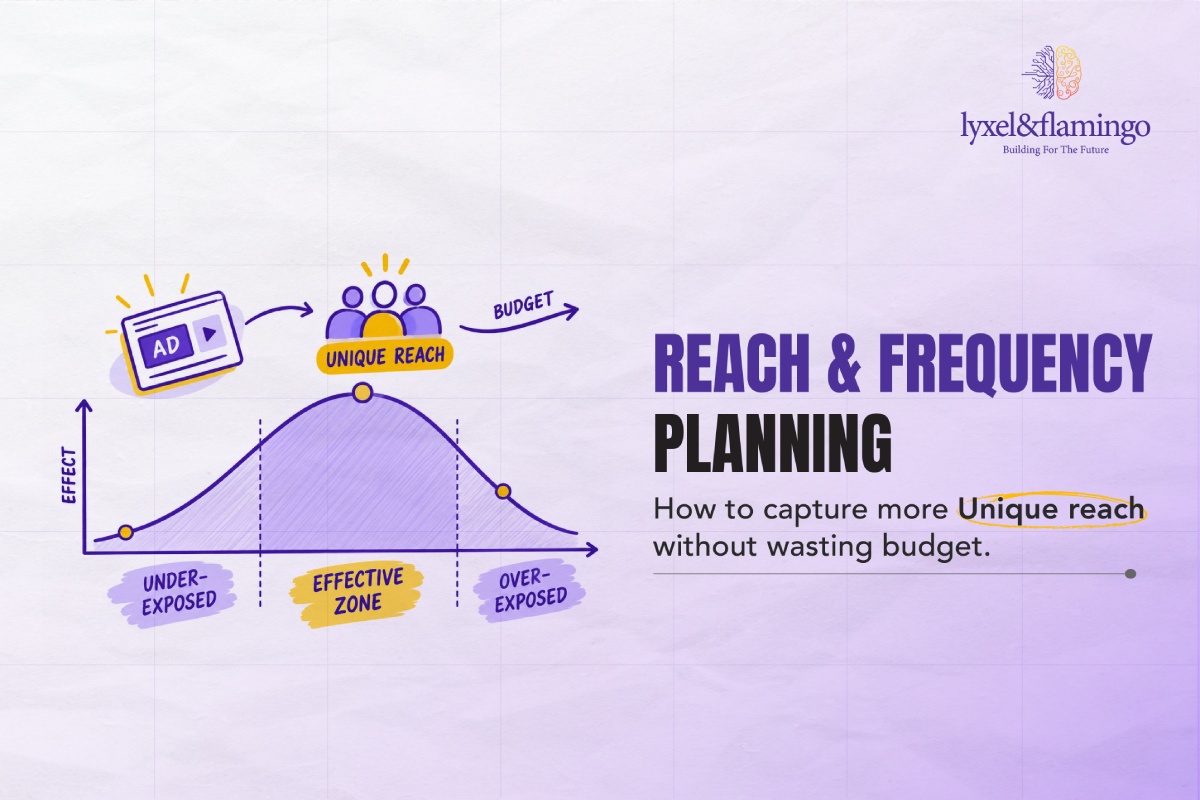
The clearest way to think about it, drawn from the long-running work of Binet and Field, is that marketing does two jobs. Activation the short drives sales now, from people already close to buying. Brand-building, the long grows the base of demand and pricing power over time. Both pay back, but activation pays back fast and decays fast, while brand pays back slowly and compounds. Long-run profit is maximised when the two are held in balance rather than collapsed into pure short-term harvesting (IPA (Binet & Field)).
This is why the argument is never really ‘brand or performance’. They are two returns on two clocks, and a healthy business needs both – the quick cash of activation and the compounding base of brand.
The short: activation payback
Activation is the spend that converts existing demand: search, shopping, retargeting, promotions. Its payback is fast and highly visible: a campaign runs, sales spike within days, and last-click attribution hands it a clean, satisfying return. This is the payback finance loves, because it is immediate and easy to attribute.
But activation’s return has a catch: it decays quickly. The spike is real, but it fades almost as fast as it arrived, because you were harvesting people who were already close to buying. Stop the activation and the sales largely stop with it. Activation is renting demand, not building it, which is fine and necessary, as long as something else is building the demand you are renting.
The long: brand payback
Brand-building is the spend that creates future demand: reach, video, distinctive assets, the work that makes you easy to think of. Its payback is slower and quieter: it accumulates as a base of memory, preference, and pricing power that lifts everything else. You do not see a same-week spike; you see, over months and years, a business that acquires more cheaply, converts more easily, defends its price better, and grows a larger base of loyal buyers.
The crucial property of brand payback is that it compounds. Each wave of brand-building adds to a base that does not fully decay when the campaign stops, so the returns stack over time rather than resetting. That is why, over a multi-year horizon, brand-building typically delivers the larger share of profit growth – and why cutting it for a short-term number is borrowing from your own future.
The Long-and-Short Payback Curve
Put the two returns on one timeline and the whole picture resolves. Activation produces sharp spikes that decay; brand produces a base that rises and compounds. Neither is complete without the other.
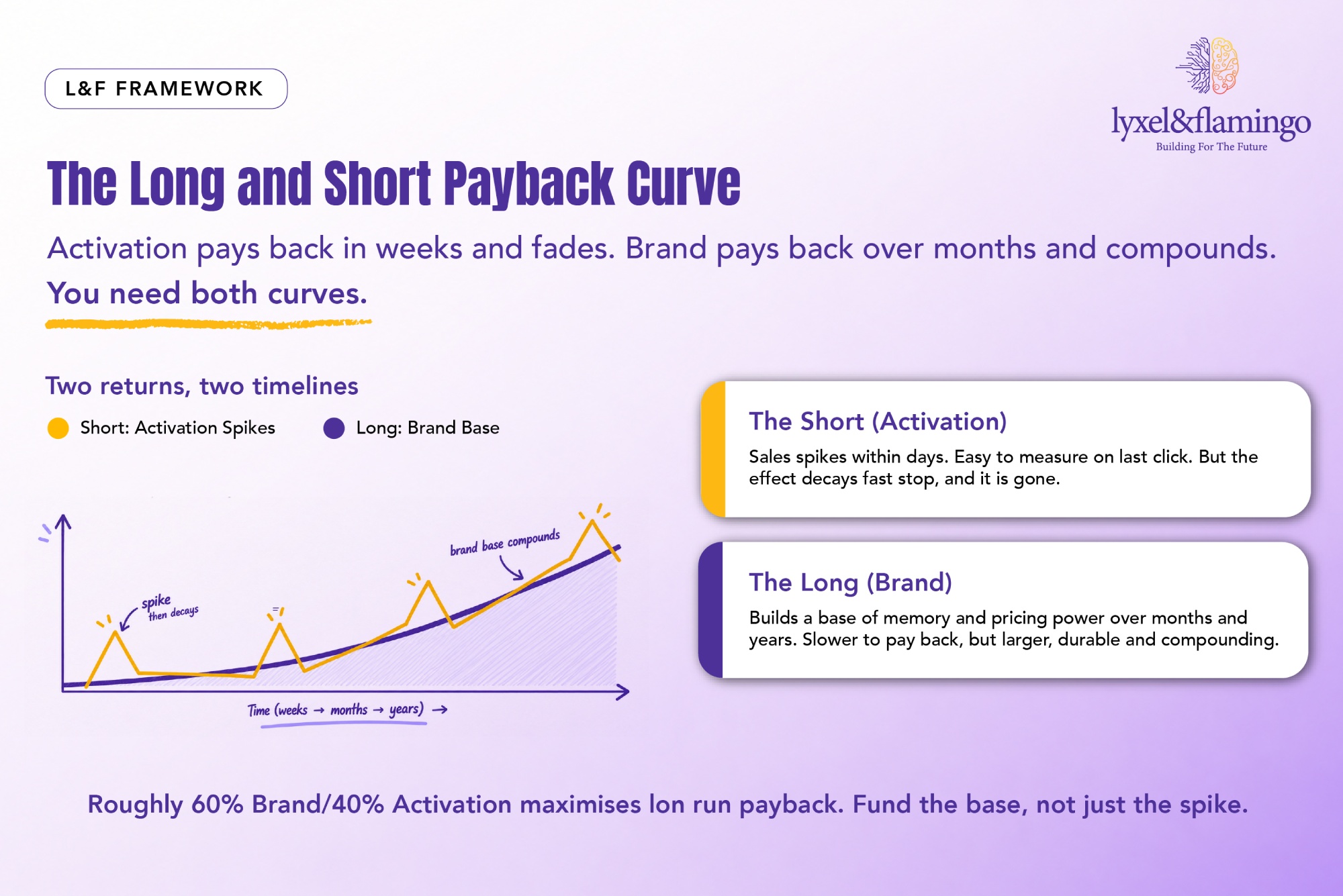
Framework: The Long & Short Payback Curve: activation spikes and fades, brand compounds.
The curve explains the classic failure mode. A brand under pressure cuts the long line to boost the short one, and for a quarter or two it works, because the activation spikes keep coming and the brand base decays slowly enough that no one notices. Then the base erodes: acquisition gets more expensive, activation gets less efficient (it is harvesting a thinner pool), and growth stalls. The damage is delayed, which is exactly what makes it dangerous the bill for cutting brand arrives long after the decision, when it is hard to trace back.
Why measuring only the short makes brand look like waste
Here is the measurement trap. Activation’s payback fits neatly inside a last-click, same-quarter reporting window; brand’s payback does not. So a dashboard built around short-term ROAS sees all of activation’s return and almost none of brand’s – not because brand is not paying back, but because its payback falls outside the window being measured. Steer by that dashboard, and you will optimise past ROAS straight into cutting your most valuable long-term spend.
The fix is not to abandon short-term metrics; they are useful, but to stop treating them as the whole scorecard. Brand payback has to be measured on its own timeline and its own signals, or it will lose every budget argument to a faster number that is easier to see.
How to fund the balance
The most-cited long-run benchmark, again from Binet and Field, is roughly 60% of budget to brand-building and 40% to activation the 60/40 rule – adjusted for category, growth stage, and margin. A younger brand creating a category leans more to brand; a mature, demand-rich business can lean more to activation. Two funding disciplines protect the long curve:
- Fund brand as a fixed base, not a discretionary top-up. If brand is only funded when activation has spare budget, it becomes the first cut in every tight quarter – and the compounding base quietly erodes.
- Judge the two lines on their own clocks. Hold activation to short-term return, and hold brand to leading signals and long-term measures – never to the same last-click yardstick, which brand was never designed to produce.
How to measure the long payback
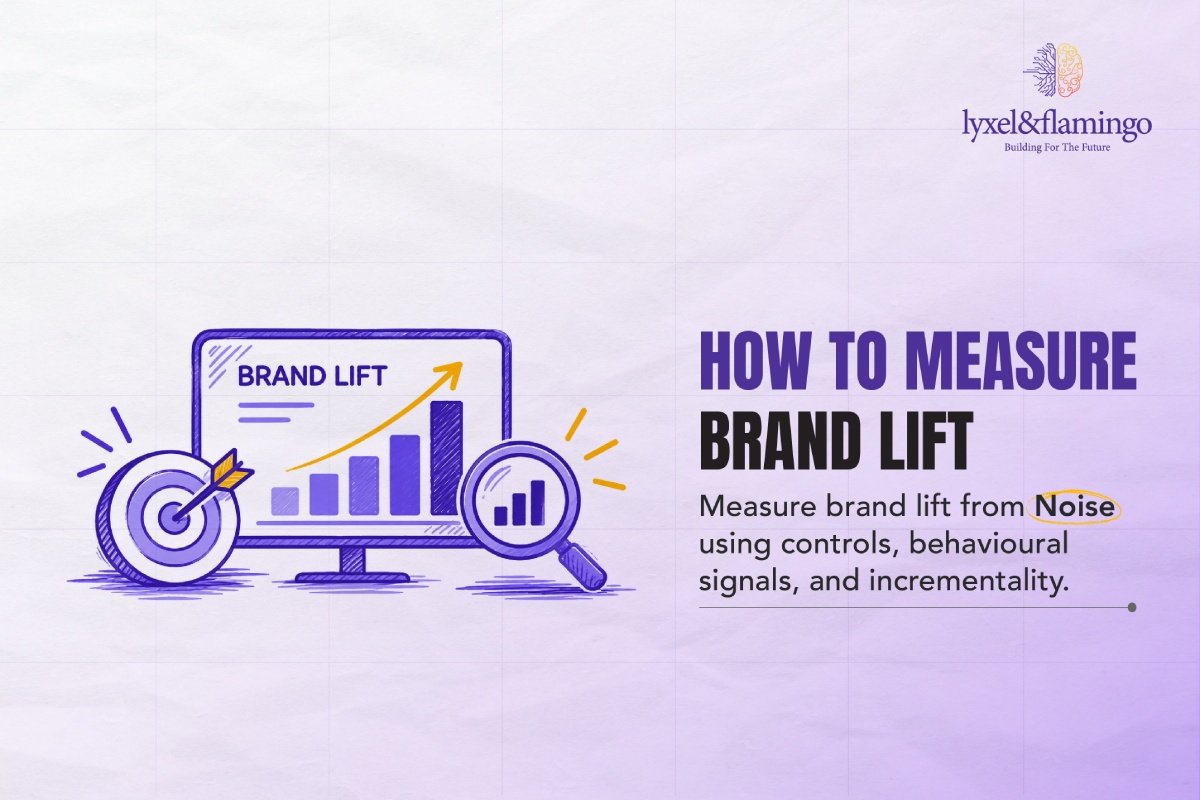
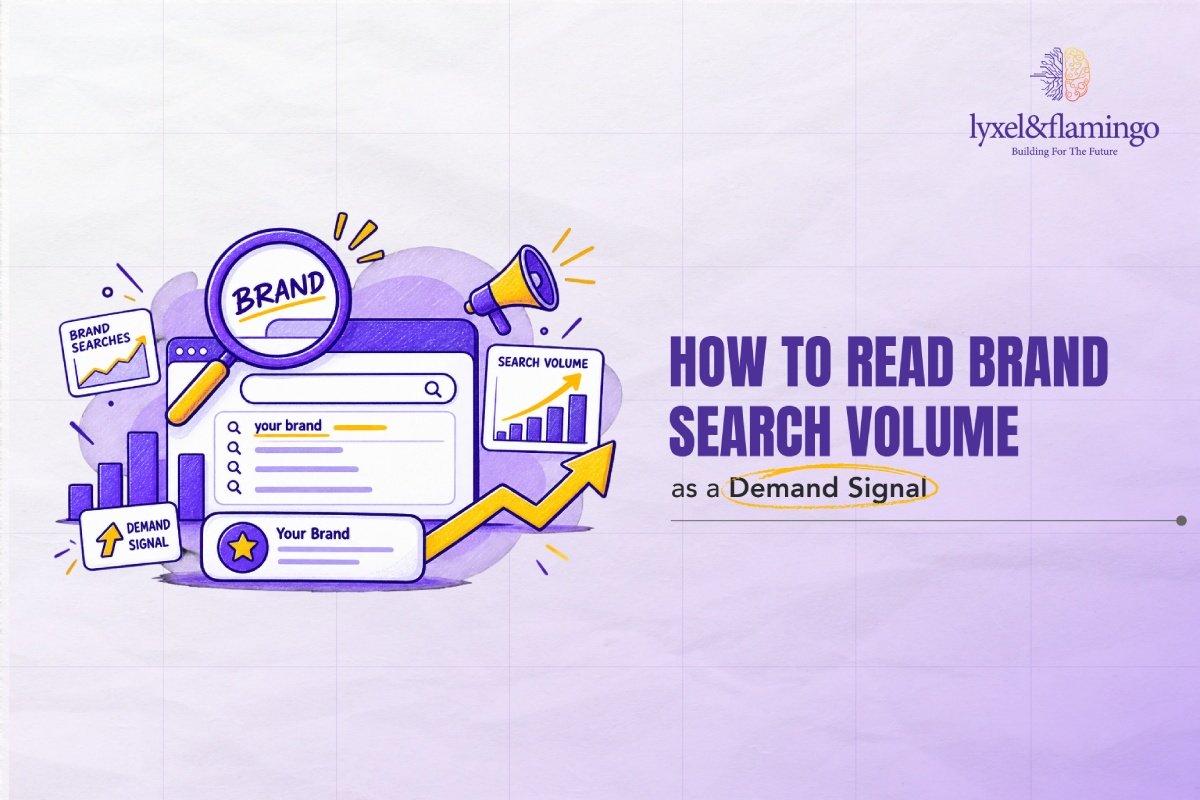
Brand payback is measurable, just not on last click. Three layers make it visible. First, leading signals: branded search and share of search rising as brand-building creates demand, weeks before revenue reacts. Second, incrementality: geo holdouts that isolate the causal contribution of brand campaigns over a proper window. Third, mix modelling: marketing mix models that estimate the long-term base effect activation-focused attribution cannot see. Together they turn “brand pays back eventually, trust us” into an evidenced timeline.
What the payback looks like in practice
The long-and-short pattern is visible across real full-funnel programmes.
- Kurlon (mattresses): Brand-building lifted branded search 42% and built a 90M+ engaged audience over the long curve, which then converted into a 920% net-revenue jump and 25X Google revenue. The base created the harvest.
- IndiGo (aviation): A brand-control approach proved 48% incremental sales at the same ROAS; brand payback made causal and visible, not assumed.
- Lotto (sportswear): Rebuilding cultural recall with pure long-curve brand work lifted CTR 73% even as budgets scaled, because the brand base made every activation rupee work harder.
In each, the brand spend paid back, but the payback showed up as a lifted base that made activation more efficient, not as a same-week spike.
Self-check: are you funding both curves?
Score your own operation one point per yes:
- You can name your split between brand-building and activation spend.
- Brand is funded as a fixed base, not a discretionary top-up.
- You judge activation and brand on different timeframes and metrics.
- Branded search and share of search are tracked as brand-payback signals.
- You run incrementality or mix modelling to capture long-term effects.
- A tight quarter does not automatically cut the brand line first.
- Finance and marketing agree that brand pays back on a longer clock.
Five or more and you are funding both curves. Three or fewer and you are probably borrowing from your long-term base to flatter a short-term number.
Key takeaways
- Brand spend does pay back – but over months and years, not the same quarter as activation.
- Marketing produces two returns: activation (fast, decays) and brand (slow, compounds). A healthy business needs both.
- Measuring only short-term ROAS makes brand look like waste, because its payback falls outside the window being measured.
- Fund brand as a fixed base (roughly 60/40), and judge each line on its own clock and metrics.
- Measure long payback with leading signals, incrementality, and mix modelling – not last click.
Closing
The question is not really whether brand spend pays back; it is whether you are measuring on a clock long enough to see it. Activation is the cash you can count this quarter; brand is the base that makes every future quarter easier. Cut the base to flatter the quarter, and the bill arrives later, disguised as rising costs and slowing growth. Fund both curves, measure each on its own timeline, and brand stops looking like an act of faith and starts looking like what it is – the compounding engine underneath the numbers finance can already see.
Want to prove your brand spend pays back?
Lyxel&Flamingo builds and measures the full payback picture – activation and brand, each on its own clock or consumer brands across India and worldwide. We will show you where the long curve is paying back, and where cutting it is quietly costing you growth. Talk to L&F about brand payback and fund the base, not just the spike.
Frequently Asked Questions
Yes, decades of effectiveness research show brand advertising pays back, and over a multi-year horizon it typically delivers a larger share of profit growth than activation. The catch is timing: brand pays back slowly and compounds, while activation pays back fast and decays. If you only measure the short-term window, brand's return is largely invisible - not because it is not there, but because it falls outside what you are measuring.
The 'short' is activation spend that converts existing demand and drives sales now, with a fast but decaying payback. The 'long' is brand-building spend that creates future demand and builds a compounding base of memory, preference and pricing power. The framing comes from Binet and Field's work, and the core finding is that long-run profit is maximised when the two are balanced, not when everything is pushed into short-term activation.
Longer than activation typically months to years rather than days. Activation produces a sales spike within days that then decays; brand-building accumulates a base over time that lifts acquisition efficiency, conversion, pricing power and loyalty. Leading signals like branded search can show brand-building working within weeks, but the full financial payback builds over a much longer horizon, which is exactly why it needs to be measured on its own timeline.
Because most dashboards are built around short-term, last-click metrics, and brand's payback falls outside that window. Activation's fast, attributable return shows up in full; brand's slow, compounding return mostly does not. So the dashboard is not lying it simply cannot see brand's payback with the timeframe and attribution it uses. The fix is to measure brand on leading signals, incrementality and mix modelling, not to judge it by a yardstick built for activation.
The most-cited long-run benchmark is roughly 60% to brand-building and 40% to activation, adjusted for your category, growth stage and margin. A younger brand or one creating a category leans more to brand; a mature brand in a demand-rich category can lean more to activation. The most important discipline is to fund brand as a protected base rather than a discretionary top-up, so it is not the automatic first cut whenever a quarter gets tight.
You usually get a short-term lift followed by a delayed slump. Activation keeps producing spikes and the brand base decays slowly, so for a quarter or two the numbers look fine. Then the base erodes: acquisition gets more expensive, activation gets less efficient because it is harvesting a thinner pool of demand, and growth stalls. The damage is delayed and hard to trace back to the original cut, which is what makes it such a common and costly mistake.