
What this blog covers
What Generative Engine Optimisation (GEO) is, why it is distinct from traditional SEO, and a practical checklist framework that brand leaders can use to make their content citable, trustworthy, and retrievable by the AI systems their audiences are increasingly relying upon.
Table of Contents
- Generative Engine Optimisation, defined: being the answer, not just a result
- Why the window to build AI citation authority is open now
- Why strong brands stay invisible to AI
- Framework: The GEO Citability Checklist
- The Framework explained
- Real-world scenario: Kurlon
- Going deeper: Implementation priorities by content type
- Key takeaways
- The CXO takeaway
Generative Engine Optimisation, defined: being the answer, not just a result
Generative Engine Optimisation (GEO) is the practice of structuring, writing, and distributing content so that AI-powered answer engines including large language models and retrieval-augmented generation systems are likely to surface, cite, or synthesise your brand’s material when responding to relevant queries.
Where traditional SEO targets the ranking algorithms of Google and Bing, GEO targets the retrieval and citation logic of AI systems that generate direct, conversational responses. The two disciplines share foundational principles particularly around content quality, structure, and authority but GEO introduces additional requirements around answer-readiness, schema implementation, and third-party consensus. Our complete GEO playbook covers the tactical detail; this blog covers the strategic frame a CXO needs.
Why the window to build AI citation authority is open now
Two statistics frame the urgency.
Traditional search engine query volume is predicted to drop 25% by 2026 as AI chatbots and virtual agents absorb an increasing share of information-seeking behaviour (Gartner, Feb 2024). Simultaneously, AI-driven referral traffic to US retail sites surged approximately 693% year on year during the 2025 holiday season (Adobe Analytics, 2025).
Read together: the audience is moving to AI interfaces, and those interfaces are sending commercially meaningful traffic. The brands being cited in AI responses are capturing that traffic. The brands absent from AI responses are losing a share of audience they may not even be measuring.
The window for building AI citation authority is now. Brands that establish structured, authoritative, widely-referenced content today will be significantly harder to displace twelve months from now.
Why strong brands stay invisible to AI
- Invisible to AI systems: A site can rank on page one of Google and be entirely absent from AI-generated responses because ranking signals and citation signals are not the same thing.
- Content designed for keywords, not answers: Most existing content was written to match search queries. AI engines prefer content that directly answers questions in structured, citable prose a different compositional standard.
- No schema implementation: AI retrieval systems, particularly those using RAG (Retrieval-Augmented Generation), benefit significantly from structured data that signals what a piece of content is, who produced it, and when it was last verified. This is closely tied to entity-based SEO, where knowledge graphs are replacing keywords.
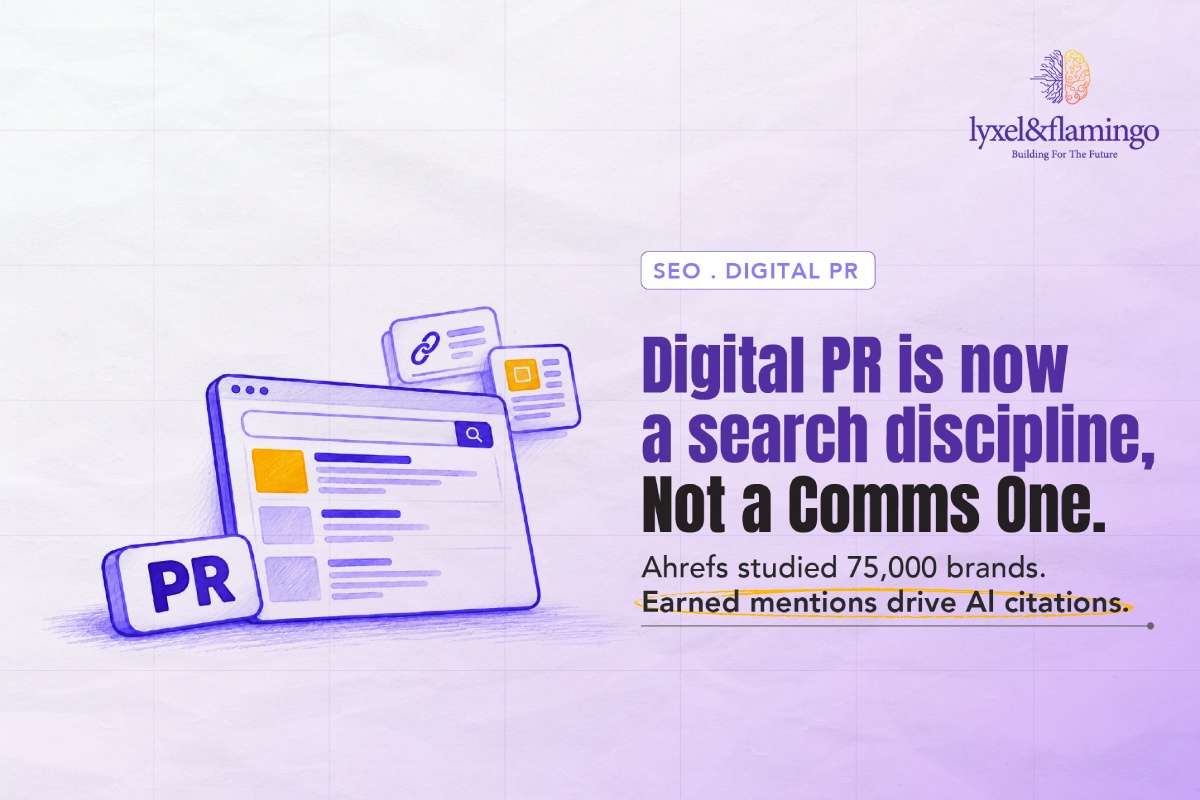
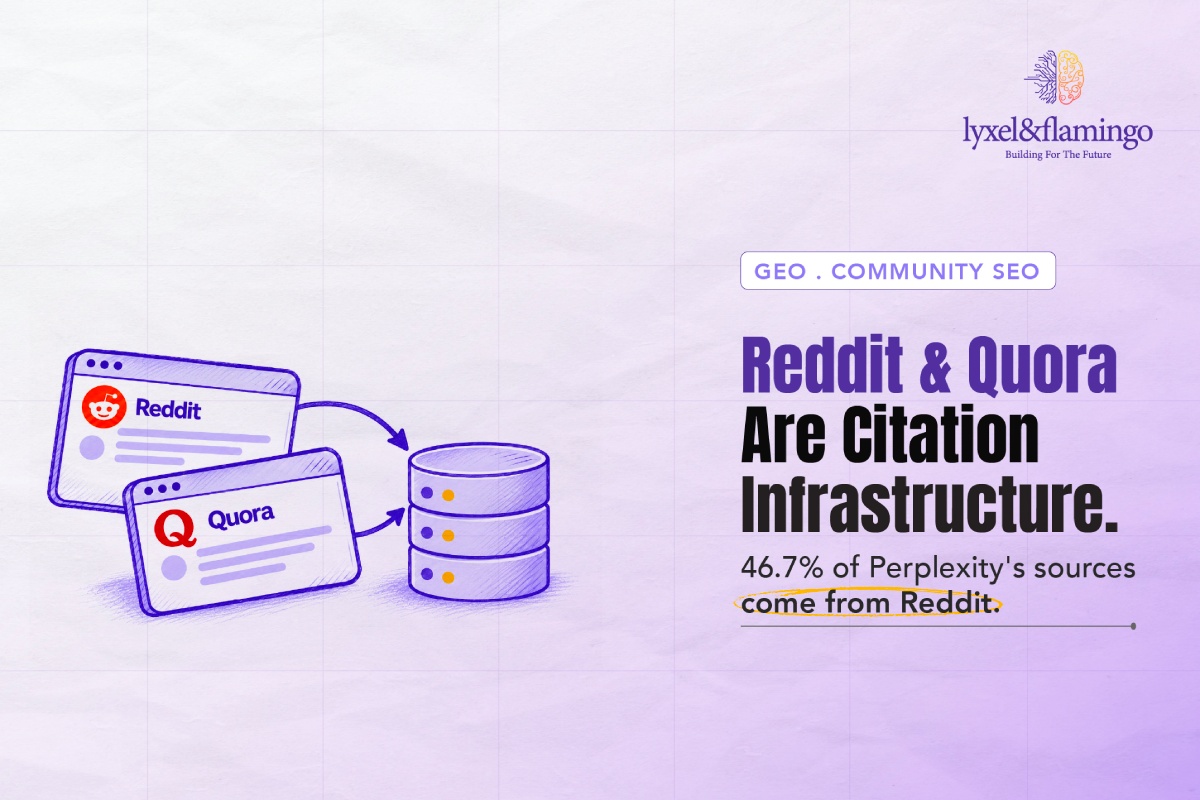
- Lack of third-party consensus: AI systems, like academic citation, favour claims that appear across multiple credible sources. A brand that is only referenced by its own properties lacks the consensus signals that build AI trust, which is why SEO and PR now have to work together.
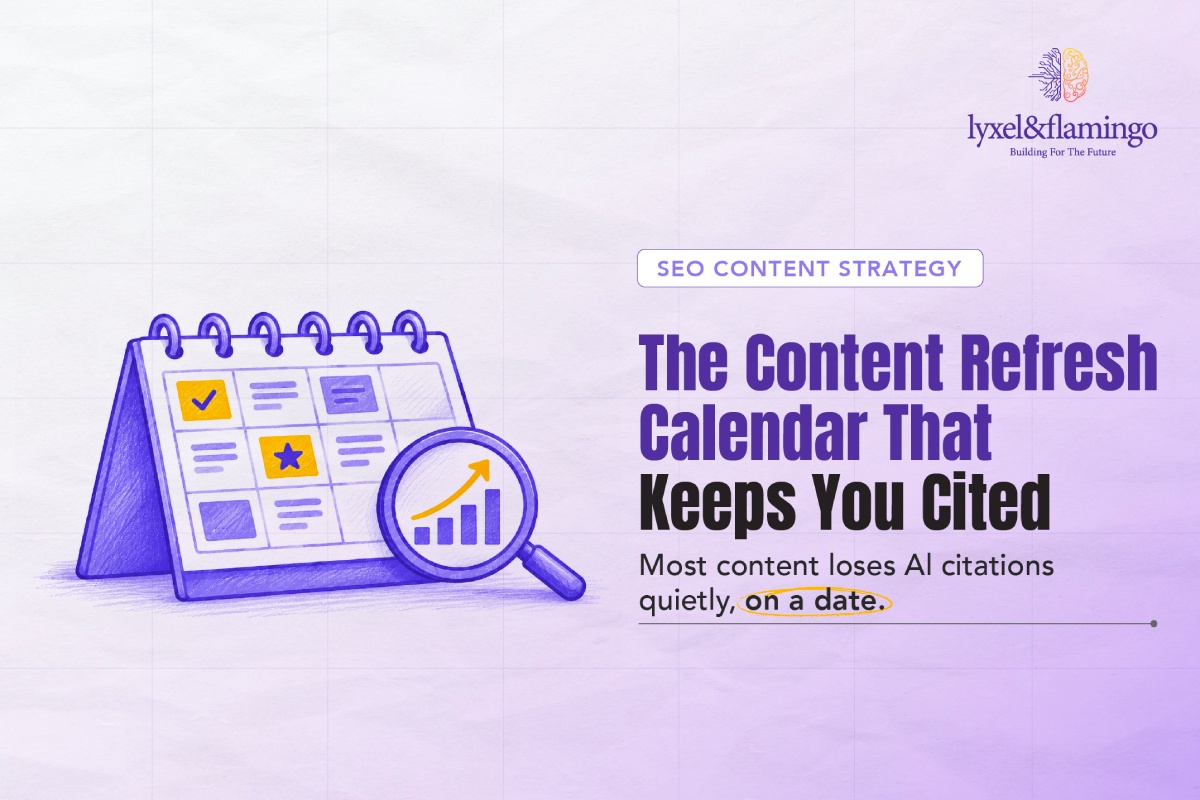
- Content staleness: AI systems deprioritise outdated information. Brands without a content freshness programme regular review, fact-checking, and re-publication will see their citation rates decay over time.
Framework: The GEO Citability Checklist
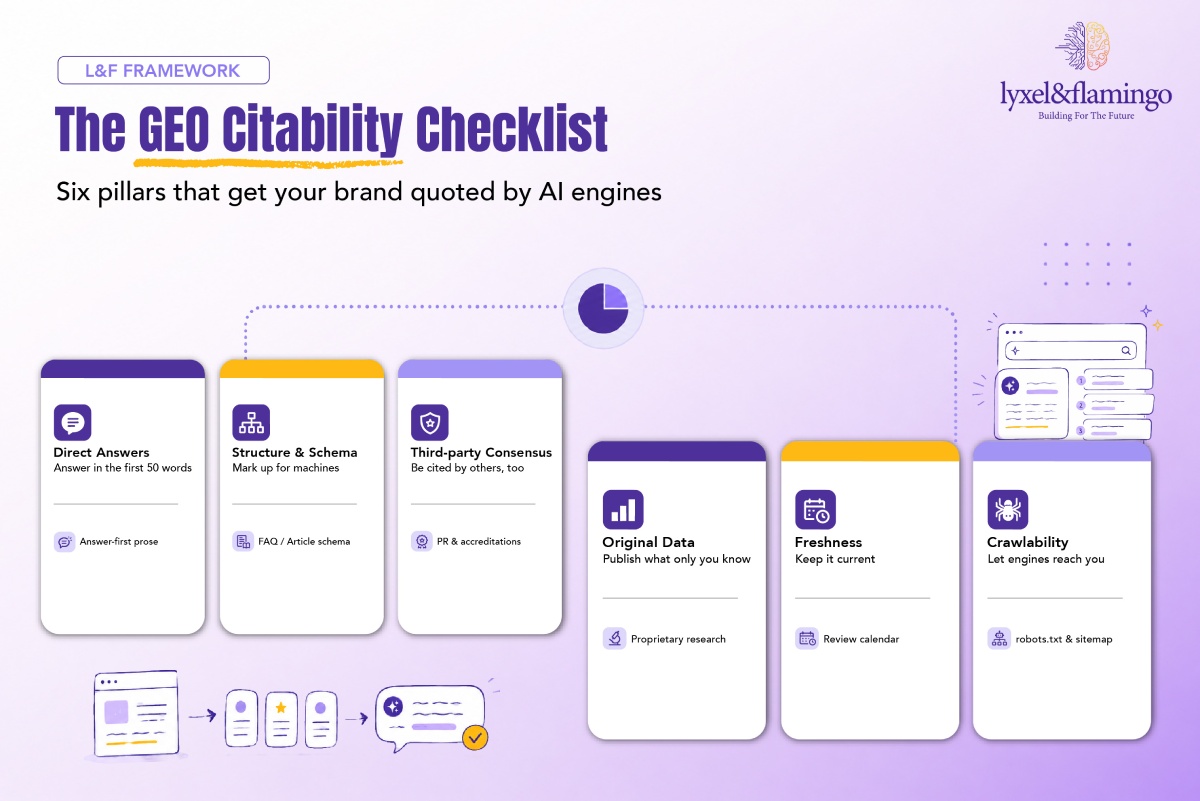
The Framework explained
01. Direct answers: Addresses the most common structural failure in existing content libraries: the answer is buried. Most articles written for traditional SEO begin with context, background, and keyword-rich preamble before eventually reaching the point. AI systems extract and cite the most answer-dense passage they can find and if that passage does not appear in the first paragraph, the system may cite a competitor whose content is more immediately useful. The practical fix is to rewrite article introductions so that the core answer appears within the first 50 words, with the supporting argument developed thereafter. A CXO reviewing content quality should ask: “If an AI system read only the first paragraph of this article, would it have something worth citing?”
02. Structure and schema: Is the technical layer that allows AI retrieval systems to understand not just what your content says but what kind of content it is, who produced it, and when it was verified. FAQPage schema, for instance, explicitly signals to retrieval systems that a page contains question-and-answer pairs designed to be extracted and cited. Organisation schema establishes the identity of the producing entity. Article schema communicates publication and revision dates. Without this markup, AI systems must infer structure from unstructured text a process that introduces uncertainty and deprioritises the content in favour of pages that have declared their own structure clearly. The failure mode is a content library that is well-written but structurally invisible.
03. Third-party consensus: Is the hardest pillar to build and the most durable once established. AI systems, particularly those using retrieval-augmented generation, apply a logic similar to academic citation: claims that appear across multiple independent, credible sources carry more weight than claims that appear only on the originating brand’s own properties. A brand cited in industry publications, government sources, professional association pages, and press coverage has demonstrably stronger AI citation authority than a brand whose expertise exists only on its own website. The practical implication is that PR, thought leadership, and external content partnerships are not supplementary to GEO they are foundational to it. The failure mode is a strong internal content strategy that creates no external footprint.
04. Original data and insight: Functions as a citation magnet precisely because AI systems are designed to surface information that cannot be found anywhere else. A proprietary survey, an internal dataset, a first-hand case study with specific measurable outcomes these are the kinds of content that AI systems quote because they represent genuinely unique information. Generic content that summarises widely available information competes in a crowded space; original research competes almost alone. A CXO investing in content should be asking: “What do we know, from our own experience and data, that no one else can say?” That question is the brief for the highest-value GEO content.
05. Freshness: Matters because AI retrieval systems, particularly those with web access or recent training windows, actively deprioritise content whose publication date suggests it may no longer be accurate. A well-structured, authoritatively written article from three years ago may be displaced by a less authoritative but more recent piece covering the same topic. The implication is that a content programme cannot be treated as a library that is built once and left to perform indefinitely. A review calendar quarterly for high-stakes content, annually for evergreen material is necessary to maintain citation rates over time. The critical discipline is updating published dates only when content has been genuinely revised, not as a cosmetic refresh that provides no new information.
06. Crawlability: Is the foundational prerequisite that makes all other pillars meaningful. An AI system cannot cite content it cannot access. The most authoritative, freshly updated, schema-marked article in your library is invisible to AI retrieval if it is blocked by robots.txt, hidden behind a login wall, excluded from sitemap.xml, or served via JavaScript rendering that retrieval bots cannot process. A crawlability audit is therefore not a technical nicety it is the first step in any GEO programme. The failure mode is spending significant resource on content quality improvements while a configuration error prevents the content from being indexed at all.
Real-world scenario: Kurlon
Kurlon is one of India’s largest and most recognised sleep brands founded in 1962, the pioneer of rubberised coir mattresses, present across 20,000+ retail touchpoints and a pan-India D2C footprint. Its problem was not awareness. It was that a new generation of buyers had begun their purchase journey by asking ChatGPT, Perplexity, and Google’s AI Overview which mattress to trust and the brand with more earned trust than almost anyone in the category was simply not appearing in those answers.
The diagnosis mapped almost exactly onto the GEO Citability Checklist. Kurlon’s content had been built to rank, not to be cited keyword-heavy but intent-thin, with the high-leverage FAQ modules absent. The site carried none of the structured-data signals (Organization, Product, FAQPage, BlogPosting schema) that AI models need to parse and trust a brand. Third-party trust signals reviews, ratings, external mentions were not activated at the depth generative engines weight. And 200+ relevant keywords across 15 collection pages carried a real cannibalisation risk.
L&F rebuilt the ecosystem across four moves that read like the checklist in action: keyword mapping across 200+ terms and 1.17 million monthly searches to eliminate overlap (crawlability and structure); intent-driven FAQ modules and comparison-led content engineered for AI citation (direct answers); reviews, ratings and diversified authoritative backlinks (third-party consensus); and full schema deployment with restructured heading hierarchy and metadata (structure and schema).
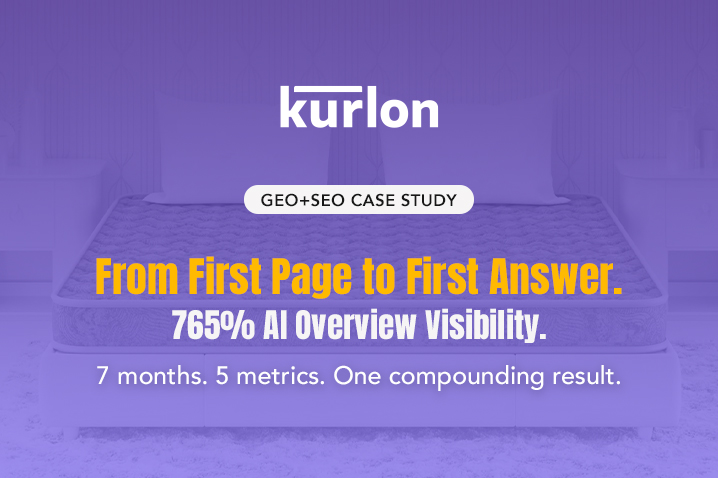
The results across seven months (March to October 2025, measured via Google Search Console and GA4) show the compounding effect GEO produces when it is done properly:
- 765% growth in AI Overview visibility, Kurlon began appearing consistently in AI-generated answers for high-intent mattress queries
- 600% increase in brand mentions across AI results and AI-powered search surfaces
- 67% surge in search impressions GEO authority lifting traditional SEO at the same time
- 40% rise in organic sessions, with buyers arriving already primed by AI responses that had cited the brand
- 22% improvement in top-10 rankings on high-value commercial keywords
The strategic lesson is the one at the heart of GEO: the objective was not to be found, but to be recommended and the two disciplines compound rather than compete.
Going deeper: Implementation priorities by content type
Different content types carry different GEO weight. Prioritise accordingly:
Highest citation potential:
- Long-form, question-answering articles with clear section headers
- Original research and proprietary data reports
- Expert-attributed clinical, technical, or analytical content
- FAQs structured with FAQPage schema
Strong supporting content:
- Case studies with specific, verifiable outcomes
- Comparative and “best of” content in your vertical
- Thought-leadership pieces by named, credentialled authors
Foundation content (necessary but not citation-driving on its own):
- Product and service pages (optimised for conversion; support citation via specificity)
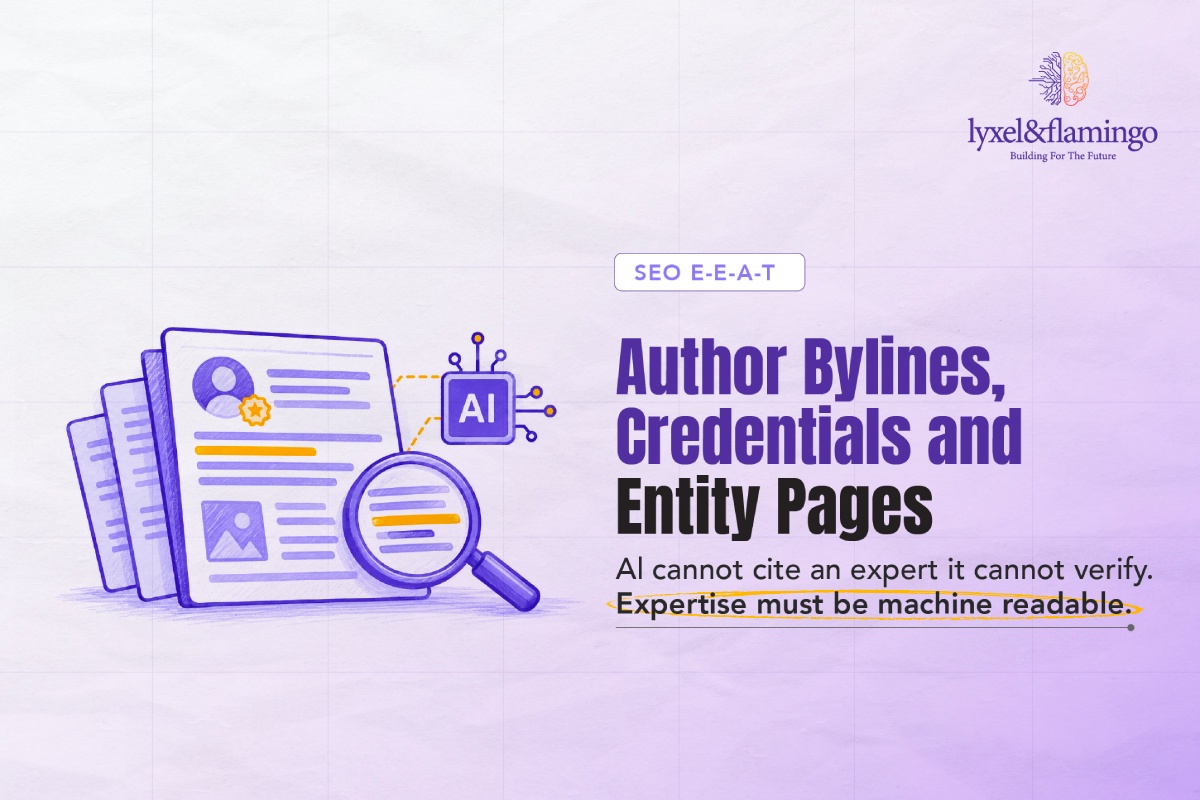
- About and team pages (critical for E-E-A-T; AI systems use these to verify author credentials)
- Press coverage and awards pages (third-party consensus signals)
Key takeaways
- GEO is not a future concern AI engines are already sending substantial referral traffic, and the brands being cited today are building compounding advantages.
- The GEO Citability Checklist provides six pillars: direct answers, structure/schema, third-party consensus, original data, freshness, and crawlability. All six must be addressed.
- E-E-A-T is the evaluative framework that unifies GEO and traditional SEO. Content that genuinely demonstrates expertise and trustworthiness performs across both channels.
- GEO and SEO compound rather than compete; Kurlon’s 765% AI Overview visibility gain arrived alongside a 67% lift in search impressions and a 22% improvement in top-10 rankings.
- Third-party consensus – external citations, accreditations, press coverage is the hardest pillar to build and the most durable competitive advantage once established.
The CXO takeaway
GEO is not a technical discipline that can be delegated to an SEO specialist and forgotten. It is a strategic decision about what kind of brand authority you are building – and for which audience. As AI systems absorb a larger share of information-seeking behaviour, the brands that will be consistently cited are those that have made a sustained investment in genuine expertise, structural clarity, and external credibility. That investment is not fast, and its returns do not appear in a weekly dashboard. But the compounding advantage it creates being the brand an AI engine cites by default when your category is queried, as Kurlon now is for mattresses is one of the most durable forms of visibility available. The question for every CXO is not whether GEO matters. It is whether your content is already building that authority, or ceding it to a competito
Frequently Asked Questions
No, While they share foundational principles - particularly E-E-A-T - GEO requires content to be structured for AI summarisation rather than ranked against keyword queries. The two strategies complement each other but require distinct execution.
You can manually query AI tools (ChatGPT, Perplexity, Google AI Overviews) using the questions your audience is likely to ask. Several specialist monitoring tools are also emerging for AI citation tracking. Build this into your regular analytics review.
Yes, Retrieval-augmented generation systems and structured search features actively parse schema. FAQPage, Article, Organisation and Product schemas in particular help AI systems understand what your content is, who produced it, and how it should be categorised, as Kurlon’s rebuild demonstrated.
Volume matters less than depth and authority. A library of 50 high-quality, deeply structured, expert-attributed articles will outperform 500 shallow, keyword-stuffed pages in both traditional SEO and GEO.
Yes, particularly in niche verticals. AI systems value specificity and depth over brand size. A business with deep expertise in a specific domain, clearly demonstrated through structured content, can earn citations that much larger but more generic competitors cannot.