
What this blog covers
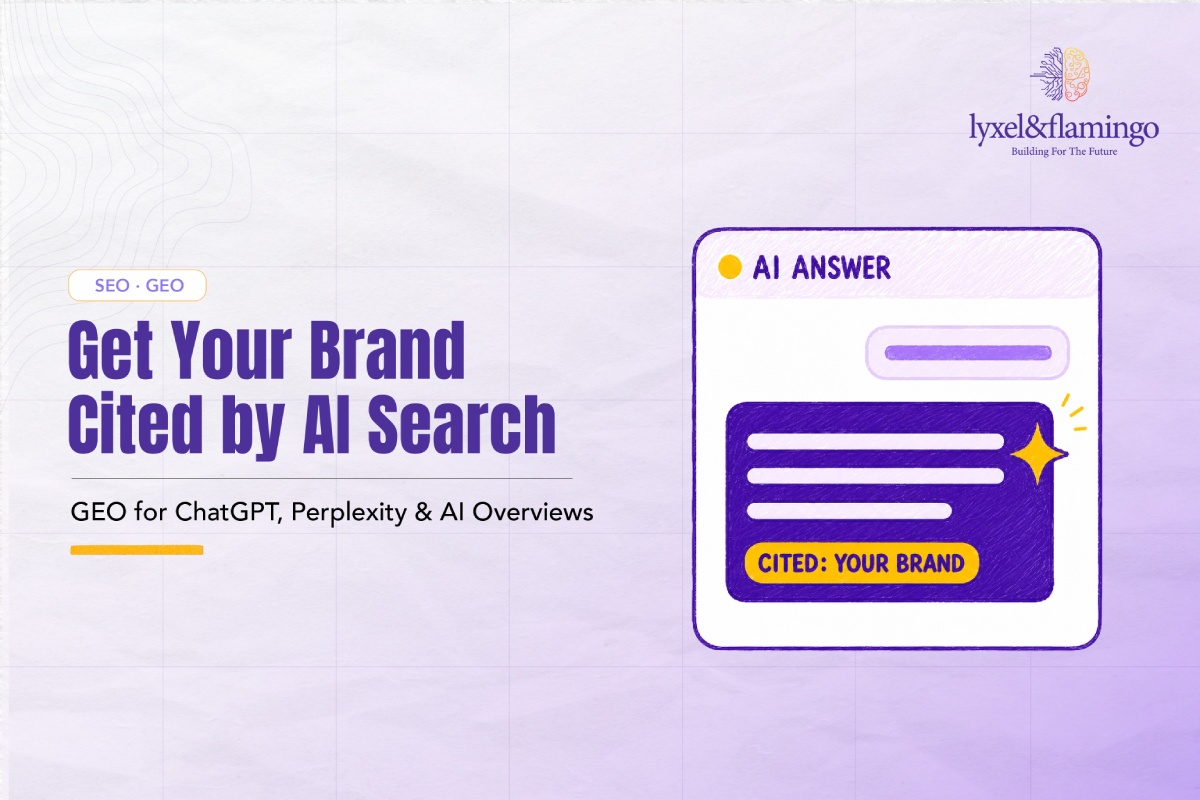
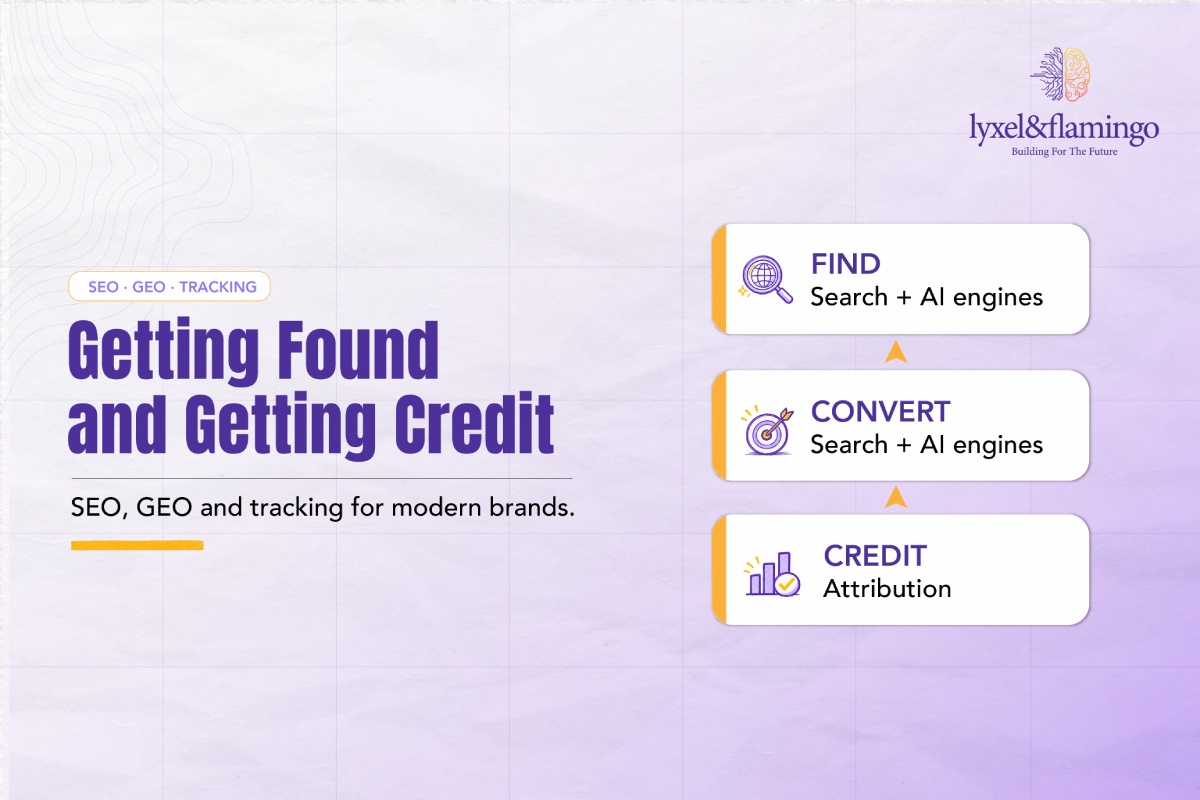
For twenty years, brand visibility meant one thing: being found. You optimised a page, you climbed the rankings, someone searched, someone clicked. That entire model is being rewritten. In 2026, the question isn’t whether your brand can be found, it’s whether your brand gets cited. When someone asks ChatGPT or Perplexity a question and your brand isn’t part of the answer, you don’t rank low. You don’t exist in that conversation at all.
That shift, from being found to being cited, is what LLM SEO is built to address.
Table of Contents
- What Is an LLM, Actually?
- Why This Actually Matters for Marketers
- How LLMs Actually Learn About a Brand
- LLM SEO vs Traditional SEO: The Real Difference
- GEO Is 80% Strategy, Not 20% Schema Markup
- Why the Business Case Is Stronger Than Most Teams Realise
- Ranking Factors That Influence LLM Visibility
- Original Data Is the GEO Tactic Most Brands Skip
- Brands Already Winning at This
LLM SEO, or Large Language Model Optimisation, is the practice of shaping your brand’s content, presence, and credibility so it aligns with how AI models actually process and recall information. It sits under the broader umbrella of generative engine optimization, alongside answer engine optimization and the more familiar work of building topical authority. None of these are keyword games. They’re about semantic clarity, entity-level authority, and giving AI systems a reason to trust and repeat what you say.
LLM brand visibility isn’t optional anymore. It’s the difference between being part of the conversation AI is having with your future customers, and being invisible to it entirely.
What Is an LLM, Actually?
A Large Language Model is AI trained to understand and generate language the way a person would, not by matching keywords but by interpreting intent, summarising complexity, and offering something close to judgment. ChatGPT, Gemini, Copilot, Claude, these are the tools people increasingly consult instead of typing a query into Google. They’re becoming the first stop for “what should I buy,” “which service is worth it,” and “which brand can I trust,” and that makes them a discovery channel no serious marketer can ignore.
Why This Actually Matters for Marketers
Ranking on page one used to be the finish line. Now it’s barely the starting point. If your brand isn’t part of what a model already knows and trusts, you may simply be left out of the answer, no matter how well you’d rank in a traditional search.
That means rethinking the whole approach, not bolting a few tactics onto an existing SEO plan. Understanding how LLMs interpret and recall information is what lets you shape visibility deliberately instead of hoping you show up by accident. And this is as much a mindset shift as a technical one. Marketers now need to think about how they’re teaching machines about their brand, not just how they’re speaking to customers.
How LLMs Actually Learn About a Brand
Models don’t index your content the way a search engine does. They absorb it, interpret it, and fold it into a broader understanding of who you are.
They crawl what’s public. Websites, blog posts, product pages, help centre articles, all of it feeds the model. Brands publishing clear, consistent, well-structured content simply get “understood” more easily.
They pick up on tone, not just facts. Whether your brand reads as formal, casual, or somewhere in between, the model notices, and a consistent voice across platforms makes it easier for AI to form a coherent picture of who you are.
They treat your brand as an entity. Not unlike a person or a place. The more clearly that entity is defined, through structured data, schema markup, factual accuracy, the more reliably the model can place you in context alongside related terms, competitors, and industry concepts.
They listen to what other people say about you. Press coverage, reviews, forum threads, social mentions, none of it needs to link back to your site to matter. These third-party signals are doing real work in how the model judges your credibility.
They study how you actually talk to customers. FAQs, chat transcripts, community discussions, this conversational material teaches the model the kinds of questions people ask about you and the kinds of answers you give.
They get periodically refreshed. Models are retrained on new data over time, so brands that keep publishing get re-ingested and stay current. Brands that go quiet risk being frozen in an older, less accurate version of themselves.
Put together, this is a brand being built inside the model’s memory, one page, one mention, one review at a time. Existing online isn’t enough anymore. You have to actively teach AI who you are.
LLM SEO vs Traditional SEO: The Real Difference
On the surface, LLM SEO can look like a new layer bolted onto old SEO. It isn’t. It’s a genuinely different game.
Traditional SEO is built to help Google’s crawlers find, index, and rank pages using signals like keywords, backlinks, and metadata. The goal is a spot in the results when someone types a query. LLMs don’t return a list of links. They generate an answer, synthesised from whatever they’ve already learned, and that single change rewrites the rules.
Knowledge matters more than keywords. LLM SEO cares less about matching a search term and more about how well your content actually contributes to understanding a topic, context and depth over exact-match phrasing.
Content gets interpreted, not indexed. A search engine matches intent to a result. An LLM reads, summarises, and produces a direct answer, which means content needs to be genuinely informative and easy to extract from, not just crawlable.
Entities matter more than links. Backlinks still carry weight in traditional SEO. In LLM SEO, how clearly and consistently your brand is defined as an entity across the web, through structured data and factual consistency, often matters more than raw link volume.
Recall works differently than indexing. Search engines fetch results live. LLMs answer from what they learned during training, so if a model hasn’t “learned” your brand yet, you won’t appear, no matter how fresh your latest blog post is. That makes LLM SEO fundamentally proactive: you’re teaching the model before anyone asks the question.
Conversational content wins. FAQs, natural dialogue, content structured the way real people actually ask questions, this is what integrates cleanly into an AI-generated conversation. It’s not just about readability anymore.
Traditional SEO isn’t obsolete, not remotely. But it’s no longer the whole picture. Marketers now have to think about how their brand is represented inside the model itself, not just how it ranks in a results page. That’s the gap LLM SEO exists to close, and it’s what moves a brand from merely findable to genuinely recommended.
GEO Is 80% Strategy, Not 20% Schema Markup
Here’s where most guides on this topic go wrong, and it’s worth being blunt about it. Most GEO advice reads like a technical checklist: add schema, structure your FAQs, tighten your headers. All of that matters. None of it is where the real work happens.
The actual split looks more like 80% strategic and 20% technical. The strategic 80% covers positioning, category alignment, and ecosystem presence, how your brand shows up across the press, review sites, industry forums, and third-party publications that AI models already treat as trustworthy sources. That’s brand work, PR work, content strategy work. It doesn’t live in a developer’s ticket queue. The technical 20%, schema markup, clean headings, crawlable structure, is what makes that strategic groundwork legible to a machine. Skip the 80% and the 20% has nothing to amplify.
Most teams do this backwards. They pull the easy 20% first because it feels actionable, and they skip the harder, cross-functional 80% because it requires marketing, PR, and content working from the same playbook. That’s exactly why so many GEO strategy efforts stall out at “we added FAQ schema” and never move the needle on actual AI citations.
Why the Business Case Is Stronger Than Most Teams Realise
If the strategic argument doesn’t land, the conversion numbers should. Traffic from AI platforms is still a small slice of total volume, but it converts at rates traditional organic search doesn’t come close to.
Seer Interactive’s benchmark study, one of the most widely cited in this space, found ChatGPT referral traffic converting at roughly 15.9%, against 1.76% for Google organic on the same sites. Perplexity landed at 10.5%. That’s not a marginal edge, it’s close to a 9x gap. The likely reason is straightforward: someone who’s already had their questions answered inside an AI conversation arrives at your site pre-qualified, not browsing ten blue links hoping one of them is relevant.
The volume is still modest, AI referral traffic remains a small percentage of most sites’ total sessions, but the trajectory is steep and the conversion premium holds up across nearly every independent study on the topic. For a brand weighing where to put next quarter’s content budget, that gap is hard to ignore.
Ranking Factors That Influence LLM Visibility
Traditional search rewards keyword placement and backlinks. LLMs work differently, recalling and generating answers from patterns they’ve already absorbed rather than ranking pages in real time. A few things consistently move the needle on whether a brand gets surfaced.
Entity recognition and authority. LLMs think in terms of entities, people, places, companies, concepts. A brand that’s consistently presented with a clear name, category, and context becomes easier to recall, and a solid presence in structured databases like Wikidata or Google’s Knowledge Graph reinforces that.
Semantic relevance over keyword density. Content that clearly explains what you do and why it matters, in plain language, helps a model understand your brand well enough to reference it. Thin, keyword-stuffed pages don’t give a model much to work with.
Structured data and schema markup. This is the technical 20% that matters. Product data, reviews, FAQs, properly marked up, all of it improves machine-readability and helps a model associate your brand with the right topics.
External mentions and third-party validation. LLMs don’t take a brand’s word for it. Coverage on trusted news sites, forums, and review platforms functions as a credibility signal that your own content simply can’t replicate.
Conversational content format. How-to guides, FAQs, explainer content built around real questions, this format mirrors how LLMs are trained to communicate, which makes it easier to process and easier to cite.
Consistency across channels. When your messaging, tone, and core topics hold steady across your site, blog, and social presence, it reduces the odds of a model misrepresenting or fragmenting your brand identity.
Factual accuracy and freshness. Models are built to avoid hallucinating, so they lean on brands that stay current and verifiable. Regular updates, accurate product details, and recent press keep you trustworthy in a model’s “memory.”
None of this is about gaming an algorithm. It’s about earning a place in how AI already understands the world, and that only happens through content that’s genuinely clear, current, and useful.
Original Data Is the GEO Tactic Most Brands Skip
If there’s one lever worth pulling before any of the others, it’s this: publish content that includes real, original statistics. Research out of Princeton, Georgia Tech, and the Allen Institute for AI, the same group that coined the term generative engine optimization, found that citing sources, quoting experts, and adding concrete statistics can lift a page’s visibility in AI-generated answers by 30 to 40%. That’s not a marginal tweak. It’s one of the largest single levers identified in the research to date.
The logic tracks. A model synthesising an answer needs something specific to attach to a claim, a number, a named source, a study it can point back to. Generic marketing copy gives it nothing to cite. A page built around your own data, a survey you ran, benchmarks from your own client work, original research on your category, gives the model exactly what it’s looking for. This is worth taking seriously as content strategy in its own right, not just a footnote under “best practices.”
Brands Already Winning at This
A handful of brands show up again and again in AI-generated answers, and it’s not an accident.
Nike appears consistently in AI-generated fitness and lifestyle content, largely because of a consistent voice across platforms and a steady stream of authoritative guides that give models something substantial to draw on.
Tesla shows up reliably in AI discussions of electric vehicles and innovation. Deep coverage in tech journalism, structured press releases, and visible thought leadership make it easy for a model to recall Tesla accurately, not just frequently.
Sephora dominates AI-driven beauty queries thanks to rich, structured product data and a content strategy built around customer education rather than pure promotion, exactly the kind of conversational, fact-dense material LLMs are built to lean on.
None of these brands are just visible in traditional search anymore. They’re being summarised, quoted, and recommended by AI tools, and that’s a different, arguably more valuable, kind of visibility than a page-one ranking ever was.
Ready to Be AI-Visible? Let’s Build a Brand the Future Can Find.
Whether you’re a challenger brand or an established name, showing up in AI answers takes intention and structure, not luck. At Lyxel&Flamingo, we combine data-backed strategy with sharp creative execution to make sure your brand isn’t just seen, but remembered by the systems now shaping how people discover what to buy.
Partner with Lyxel&Flamingo for an LLM SEO and GEO strategy built to future-proof your brand’s visibility. Get in touch and let’s talk about where you stand today.
Frequently Asked Questions
Not quite. LLM SEO focuses on how AI interprets, recalls, and cites your brand, not just how a page ranks in a search engine.
Yes, you can make your existing content work with intelligent reformatting, contextual alignment, and added structured data.
You can test using AI assistants like ChatGPT, Gemini, or Bing. Ask questions and observe whether your brand is mentioned or suggested.
Tools like Perplexity, SEMrush, MarketMuse, or custom knowledge panel builders.
Now. The longer you wait, the more AI models embed existing competitors.
GEO focuses on earning citations or recommendations inside AI-generated answers across platforms like ChatGPT and Perplexity. AEO is narrower, aimed at featured snippets and direct-answer boxes. The same content decisions tend to improve both.
No. Clean structure, credible backlinks, and fast pages still feed what AI models draw on. LLM SEO adds a layer on top, it doesn't replace the foundation.
There's no fixed timeline, since it depends on how often the model you're targeting gets retrained. Treat it as an ongoing practice built over months, not a one-time fix.