What this blog covers
A legacy brand’s website redesign carries a category of risk a newer brand simply does not have to manage: established organic rankings, decades of accumulated brand trust, and existing customer navigation habits that a redesign can easily disrupt if protecting them is not built into the process from the start. This blog uses Biotique’s redesign, addressing real discovery and conversion problems while preserving thirty years of brand equity, to lay out what a heritage brand needs to protect during a redesign that a startup can simply ignore.
Quick Answer: A legacy brand’s redesign needs to protect three things a startup redesign does not have to consider: existing organic search rankings (through careful information architecture and technical SEO continuity), established customer navigation habits and trust signals built over years, and brand recognition elements that customers associate with the brand’s identity. Biotique’s redesign addressed genuine usability problems, poor mobile experience, weak product discovery, high bounce rates, while building the new site architecture around customer behavior patterns and embedding SEO into the structure from the start, rather than treating brand equity preservation as a constraint bolted onto a purely aesthetic redesign.
Table of Contents
- Why a Legacy Redesign Is a Different Problem Than a Startup Redesign
- What Biotique’s Redesign Actually Had to Fix
- Protecting Organic Rankings During a Redesign
- Rebuilding Navigation Around Real Customer Behavior
- Why Interactive Prototyping Mattered Before Development
- The Risk of Treating a Redesign as Purely Aesthetic
- Framework Explained
- Key Takeaways
- CXO Takeaway
Why a Legacy Redesign Is a Different Problem Than a Startup Redesign
A startup building its first real website is solving for a blank slate: no existing rankings to protect, no established customer habits to respect, no risk of a redesign feeling unfamiliar to a loyal existing customer base. A thirty-year-old brand redesigning its site is solving a fundamentally different problem, one where the cost of getting it wrong includes losing equity that took decades to build, not just failing to gain new equity.
Biotique’s website redesign captured this tension directly: strong brand recognition and an extensive product range, yet a website that was not translating that recognition into discovery and conversion, a problem that needed fixing without undermining the very brand trust that made the fix necessary to get right.
What Biotique’s Redesign Actually Had to Fix
The existing site had genuine, measurable problems: poor navigation for a wide product catalog, a weak mobile experience despite most visitors arriving on mobile, slow page performance, high bounce rates, and a checkout process that lost customers at the final conversion moment. These are real usability failures, not just an outdated visual aesthetic that needed a refresh.
This distinction matters because it shaped the entire approach: the redesign was not a cosmetic exercise. It was a genuine fix for customers failing to find and buy products they were likely already looking for, which meant success had to be measured in discovery and conversion terms, not just a visual before-and-after comparison.
Protecting Organic Rankings During a Redesign
Any significant site redesign that changes URL structure, page hierarchy, or content organization carries real risk to existing organic search rankings, rankings that, for a thirty-year-old brand, likely represent years of accumulated authority that would be genuinely difficult and slow to rebuild from scratch if lost. Google Search Central’s guidance on site moves is the authoritative technical reference for what preserves ranking signal through a URL or structure change, and what quietly breaks it.
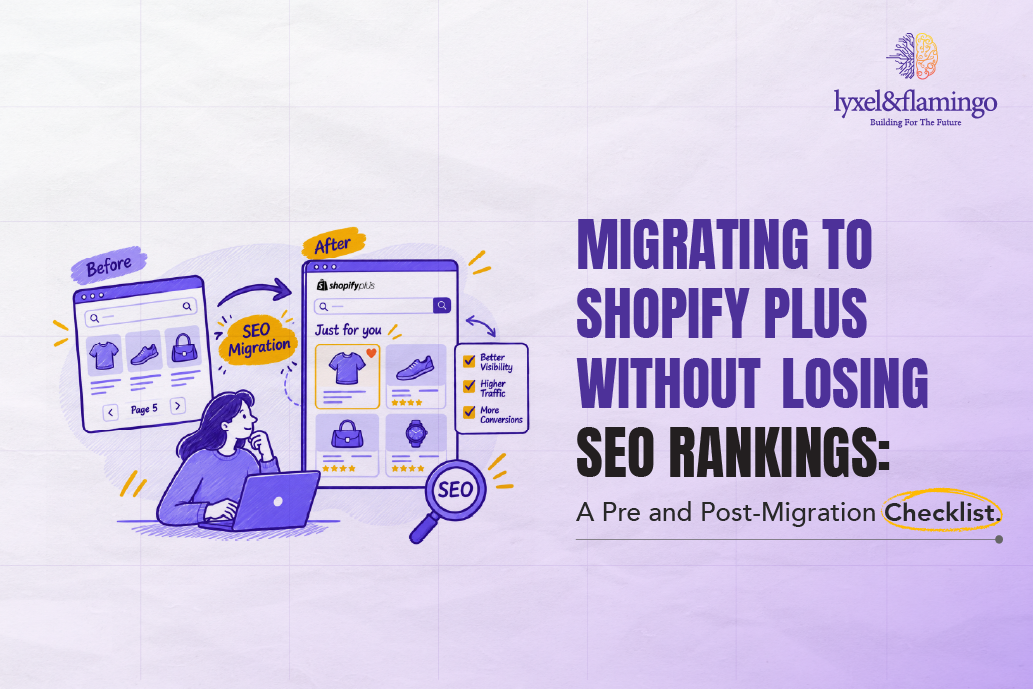
Biotique’s redesign embedded SEO integration into the site architecture from the start, rather than treating search visibility as a separate workstream to patch in after the visual and structural decisions were already finalized. This is the same discipline that protects ranking equity during any major platform or structural change, whether the underlying trigger is a redesign or a full platform migration. For additional technical guidance, see Shopify’s official guide to migrating an existing store.
Rebuilding Navigation Around Real Customer Behavior
Rather than a purely visual redesign, the team rebuilt the experience around how skincare shoppers actually browse, starting from a skin concern and narrowing toward a specific product, rather than a generic category-first navigation structure that assumes customers already know exactly what product type they want.
This behavior-first approach to navigation redesign is particularly important for a legacy brand with an extensive product catalog, since a customer-behavior-led structure surfaces the right products faster than a purely categorical one, directly addressing the discovery problem that was the core issue with the original site.
Why Interactive Prototyping Mattered Before Development
The redesign included interactive prototyping before development began, testing the proposed navigation and structure against real usage patterns before committing engineering resources to building it. This step matters more for a legacy brand than a startup, since the cost of shipping a redesign that does not actually resonate with an established, loyal customer base is higher than the cost of a startup iterating on a newer, less established audience.
Prototyping before building is what let the team validate the skin-concern-first navigation approach before it became a costly-to-reverse architectural decision baked into the live site.
Lyxel&Flamingo also outlines its approach to user experience design, information architecture, and interactive prototyping as part of its technology services.
The Risk of Treating a Redesign as Purely Aesthetic
A legacy brand redesign framed purely as a visual refresh- new colors, new typography, a more modern look- misses the actual risk and the actual opportunity. The risk is that structural changes made without SEO and navigation discipline can quietly damage the search equity and customer familiarity that took years to build. The opportunity is that a genuine usability fix, not just a visual one, is what actually converts brand recognition into the discovery and conversion the brand deserves given its market position.
Biotique’s redesign treated mobile-first design, performance optimization, and SEO integration as foundational priorities alongside the visual refresh, which is the discipline that separates a redesign that protects and builds on legacy equity from one that risks it for the sake of a fresher look.
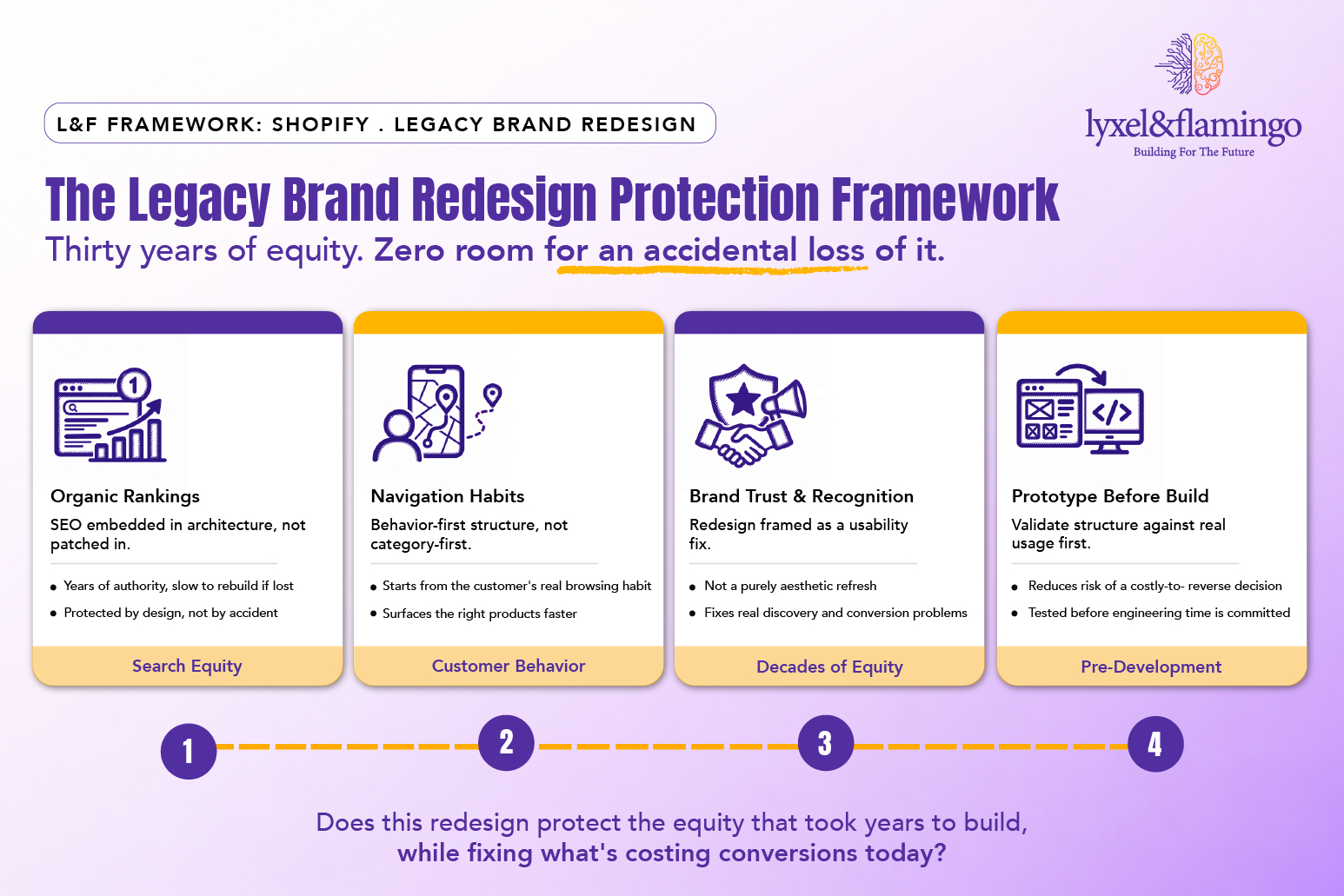
Framework Explained
- Fix usability, not just aesthetics: A legacy redesign should solve real discovery and conversion problems, not simply refresh the visual design.
- Protect rankings by design, not by accident: SEO needs to be embedded into the architecture from the start, not patched in after structural decisions are finalized.
- Navigate by customer behavior, not just category: A behavior-first structure, like starting from a skin concern rather than a product category, surfaces the right products faster for an established, loyal customer base.
- Prototype before you build: Validating structural decisions against real usage patterns before development reduces the risk of shipping a redesign that does not resonate.
Biotique’s redesign addressed poor mobile experience, weak product discovery, and high bounce rates for a thirty-year-old Ayurvedic skincare brand, rebuilding navigation around how skincare shoppers actually browse and embedding SEO into the site architecture from the start. Bounce rates fell, mobile experience improved for the majority-mobile traffic base, and checkout conversion improved through reduced friction, all while preserving the brand equity built over three decades. Read the full Biotique case study. Subway India’s kiosk and digital commerce work shows a similarly established brand protecting operational and brand consistency while modernizing the digital ordering layer underneath it.
Key Takeaways
- A legacy brand’s redesign carries risk a startup redesign does not: existing organic rankings, established customer navigation habits, and accumulated brand trust that took years to build.
- Biotique’s redesign fixed genuine usability problems, mobile experience, product discovery, and checkout friction, rather than treating the project as a purely visual refresh.
- Embedding SEO into the site architecture from the start, rather than patching it in afterward, is what protects ranking equity during a structural redesign.
- Interactive prototyping before development reduces the risk of shipping a redesign that does not resonate with an established, loyal customer base.
CXO Takeaway
The question worth asking before approving a legacy site redesign is not “does this look more modern?” It is: does this redesign protect the search rankings, customer trust, and navigation familiarity that took years to build, while fixing the usability problems actually costing us conversions today?
Biotique’s redesign answered yes to both halves of that question, which is what separates a redesign that builds on legacy equity from one that risks it.
If your brand’s next redesign has not yet answered both halves of that question, Lyxel&Flamingo can build the behavior-led, SEO-protected redesign framework that worked for Biotique. Shopify’s own guidance on migrating an existing store is a useful technical starting point for the platform side of that equation, while premium positioning online covers the adjacent risk of protecting brand equity through restraint rather than through technical continuity alone.
Frequently Asked Questions
This depends heavily on how much URL structure and content organization changes. A redesign that changes page hierarchy or URLs without careful technical SEO continuity planning carries meaningfully more risk than one that preserves the existing structure while improving the visual and navigation layer.
For a legacy brand with an established customer base, prototyping reduces the risk of a costly-to-reverse architectural decision that does not actually resonate with real usage patterns, which tends to save more time than it costs by avoiding a post-launch rebuild.
This starts with understanding how customers actually search and browse, in Biotique’s case, starting from a skin concern rather than a product type, and structuring the site’s information architecture around that real behavior pattern rather than an internal, catalog-driven category structure.
Sometimes both happen together, as with Biotique’s move to a Shopify-based stack alongside the redesign. The two decisions are related, yet distinct: a redesign can happen on an existing platform, and a migration does not automatically require a full redesign, though combining them is often more efficient than treating them as separate projects.