
What this blog covers
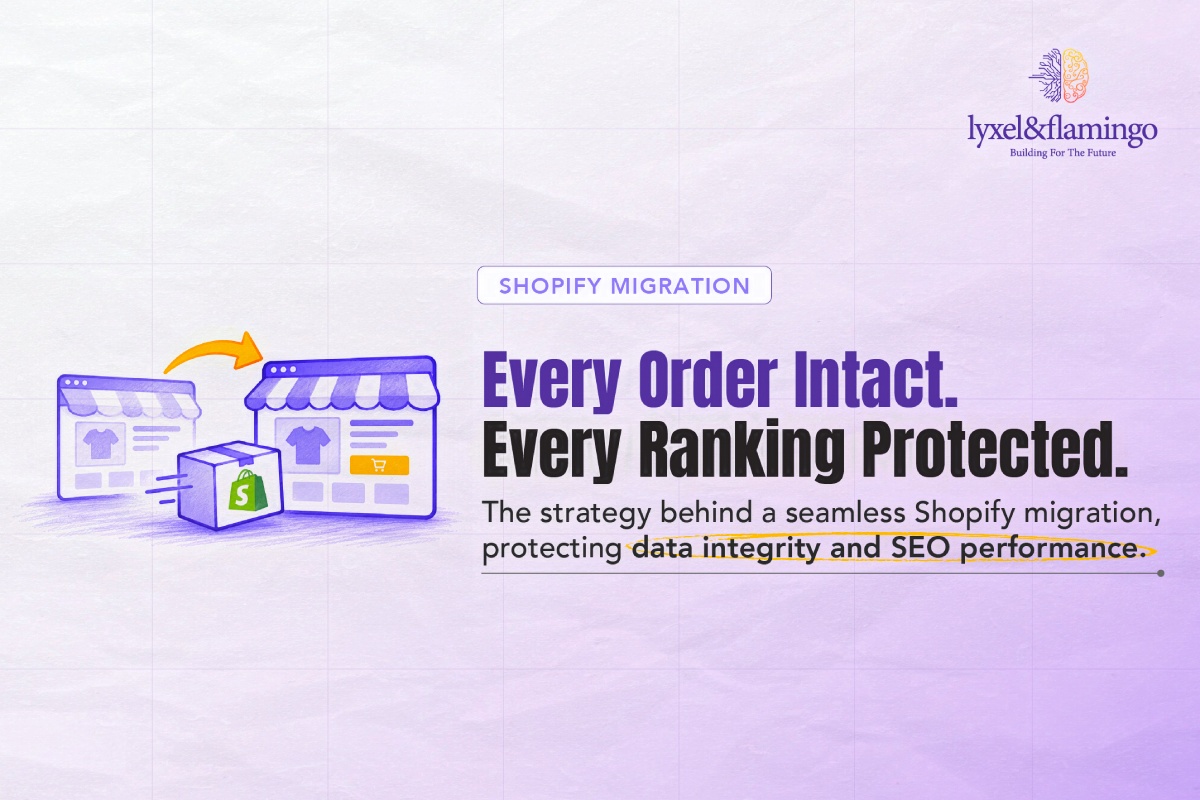
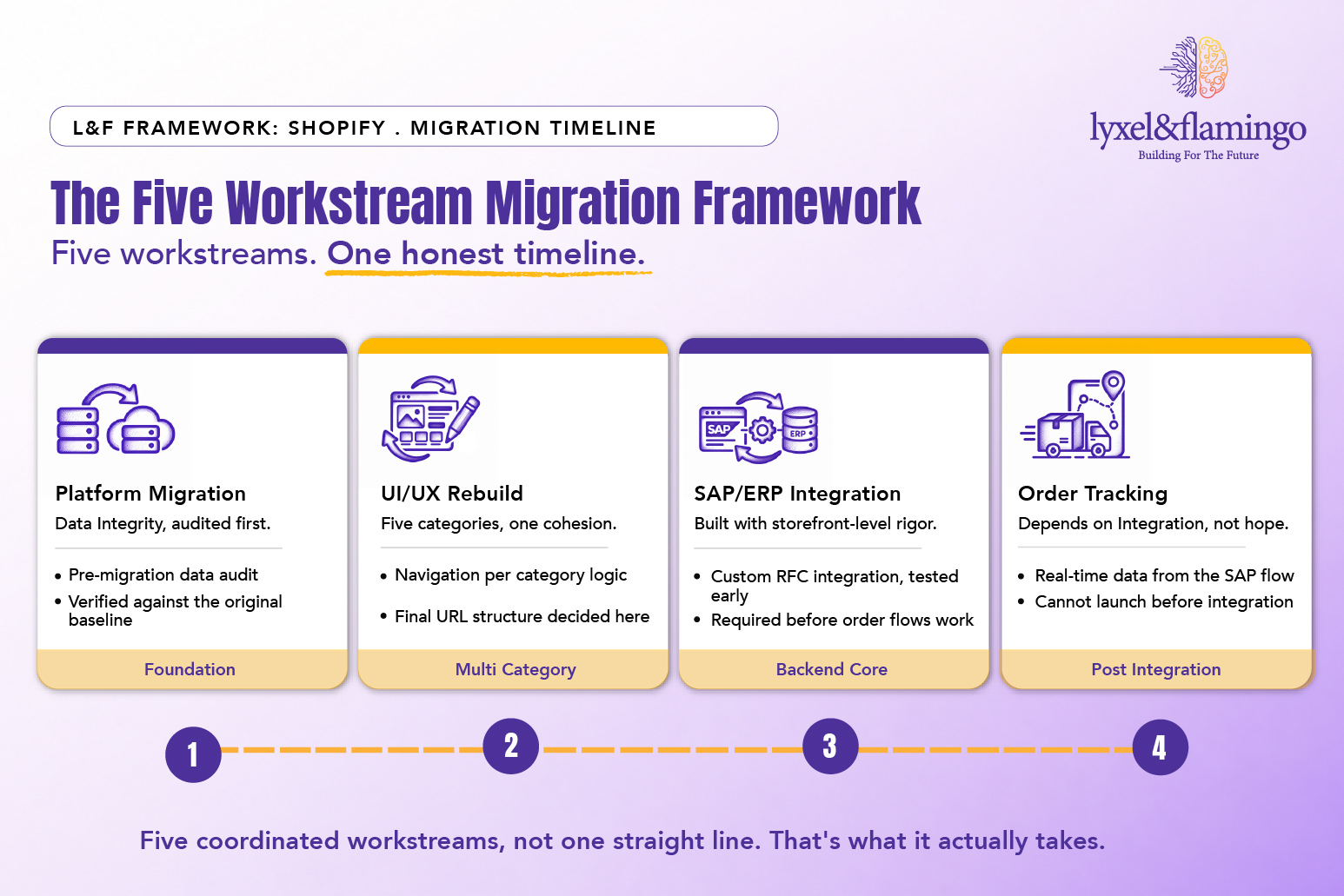
Migration timelines in vendor pitches tend to compress five interconnected workstreams into a single clean project phase, which sets unrealistic expectations for any brand with real operational complexity. This blog walks through what actually had to happen, and in roughly what order, for Kenstar’s Magento-to-Shopify migration: platform migration, a full multi-category UI/UX rebuild, custom SAP integration, real-time order tracking, and SEO ranking preservation, five workstreams that had to be sequenced and coordinated, not simply executed in parallel and hoped to converge cleanly.
Quick Answer: A realistic Magento-to-Shopify migration for a brand with real operational complexity, multiple product categories, an ERP integration, order management systems, is not a single linear project. It runs as five coordinated workstreams: the core platform migration, a UI/UX rebuild for multi-category navigation, backend system integration (like SAP), real-time order tracking implementation, and SEO ranking preservation through comprehensive redirect mapping. These need sequencing, not just parallel execution, since some (like SEO mapping) depend on decisions made in others (like final URL structure).
Table of Contents
- Why Security Testing Gets Skipped Before the Busiest Season
- The Two-Phase VAPT Timeline for Festive Readiness
- What Changes About Vulnerability Testing Under High Load
- Payment Flow and Checkout: The Highest-Stakes Surface
- Coordinating VAPT With Operational Load Testing
- What Happens If You Skip This Step
- Framework Explained
- Key Takeaways
Why Security Testing Gets Skipped Before the Busiest Season
Festive-season preparation tends to concentrate on operational readiness, inventory, checkout speed, server capacity, because those are the failures a brand can see immediately when they happen. A vulnerability that only becomes exploitable under high concurrent load is much easier to overlook until an attacker, or a security researcher, finds it during exactly the traffic spike a brand can least afford disruption during.
This is precisely the wrong season to skip vulnerability testing, since festive-season traffic is also when a brand is processing the highest volume of customer data and payment transactions, making it the highest-value target window for anyone looking to exploit a gap.
The Two-Phase VAPT Timeline for Festive Readiness
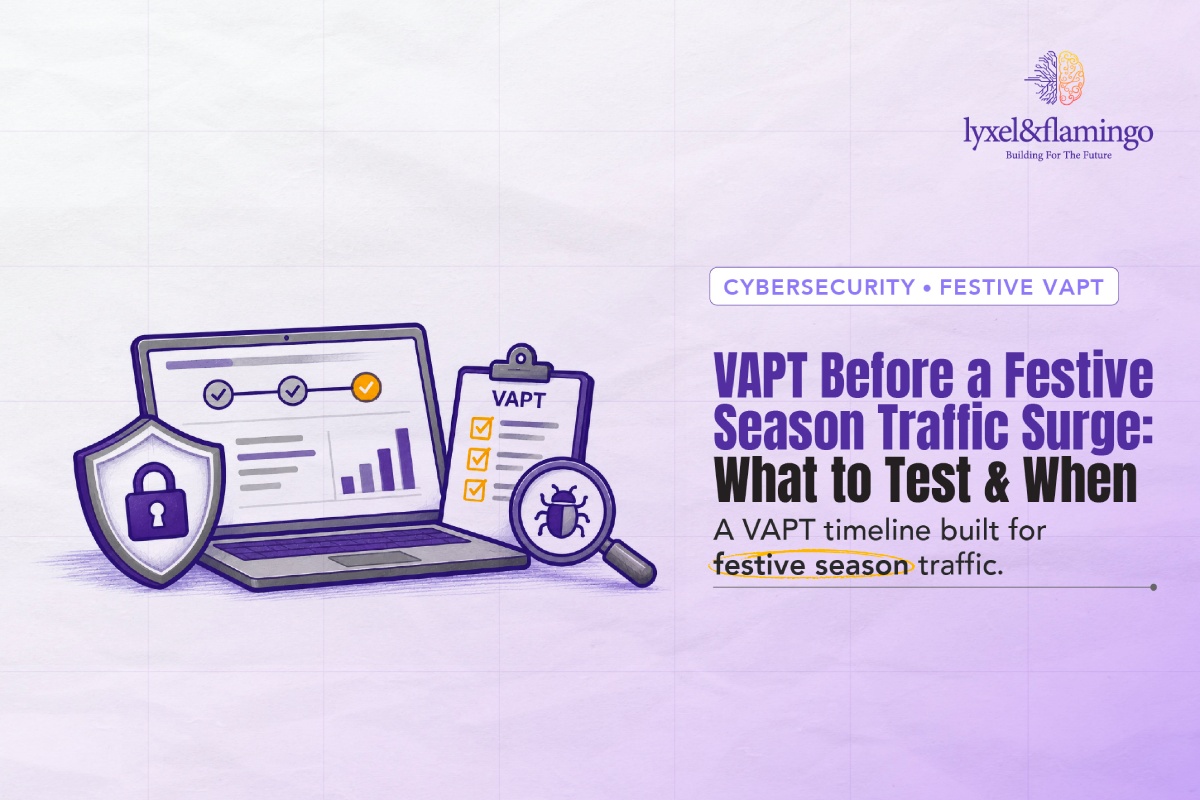
A comprehensive vulnerability assessment and penetration test six to eight weeks ahead of peak season gives real runway to remediate anything serious that surfaces, rather than discovering a critical vulnerability with no time left to fix it properly. This first phase should cover the full application and infrastructure surface, not just the areas expected to see the most festive traffic.
A second, narrower re-test one to two weeks before the peak event confirms that earlier fixes actually held and checks whether any last-minute feature launches or configuration changes, common in the final sprint before a major sale, introduced new gaps. Skipping this second phase is a common mistake: teams treat the first assessment as sufficient even though meaningful changes often happen in the weeks immediately before launch.
What Changes About Vulnerability Testing Under High Load
Some vulnerabilities only manifest under concurrent load: race conditions in checkout or inventory logic, session handling issues that appear only when thousands of concurrent sessions are active, or rate-limiting gaps that a low-traffic test never exercises. A standard vulnerability assessment run under normal conditions can miss these entirely.
This is why festive-season VAPT should include load-simulated testing specifically, not just a standard assessment run at typical traffic levels. The goal is to surface the vulnerabilities that only exist when the system is under the kind of pressure a real sale event actually creates.
Payment Flow and Checkout: The Highest-Stakes Surface
The checkout and payment flow deserves the most rigorous testing of any part of the site during this window, since it is both the highest-value target for an attacker and the part of the experience customers are least forgiving of if something goes wrong. This includes testing payment gateway integration points, session and cart handling under concurrent load, and any third-party payment or fraud-detection tools connected to the flow.
This testing should happen in close coordination with the kind of checkout stress testing before Diwali that ensures the flow performs under 3x normal traffic, since a checkout that is both secure and fast under load is the actual goal, not either one in isolation. The same payment surface is also the target of a different, quieter threat: fraud and chargebacks that slip through under volume, covered in building fraud-proof checkout flows for D2C brands.
Coordinating VAPT With Operational Load Testing
Security testing and operational load testing are often run by entirely separate teams on separate timelines, which means findings from one rarely inform the other even though they are testing overlapping conditions. Coordinating these so that security testing happens under realistic load conditions, and operational load testing includes basic security checks, closes gaps that neither team catches running in isolation.
This coordination does not need to mean merging the teams. It means sharing a timeline and sharing findings, so a vulnerability that only appears under load gets caught by whichever team’s test happens to be running when the conditions align.
What Happens If You Skip This Step
The cost of skipping pre-festive VAPT is not evenly distributed. Most years, nothing visible happens, which reinforces the sense that the step was unnecessary. In the years something does happen, the cost, a breach during the highest-traffic, highest-revenue week of the year, a payment flow compromise, a customer data exposure, is disproportionate to the cost of the testing that would have caught it.
This asymmetry is exactly why VAPT belongs in the festive-readiness checklist alongside inventory and load testing, not as an optional add-on that gets cut when the calendar gets tight. It belongs there next to scraper and scalper bot protection too, since bot traffic and penetration-testable vulnerabilities often target the same high-traffic weeks for the same reason: more cover, more volume, more chance of going unnoticed. Teams scoping the assessment itself can use the OWASP Top 10 as the baseline category list any credible VAPT engagement should at minimum test against.
Framework Explained
- Two phases, not one: A comprehensive test with remediation runway, followed by a focused re-test closer to launch, catches both early and last-minute risks.
- Test under load, not just at rest: Some of the most dangerous vulnerabilities only appear under the concurrent-session conditions a real sale event creates.
- Prioritize checkout and payment: This is the highest-value target and least-forgiving surface, and deserves the most rigorous testing of any part of the site.
- Coordinate, don’t silo: Security and operational load testing should share a timeline and findings, since they are often testing overlapping conditions separately.
This framework draws on Lyxel&Flamingo’s penetration testing and managed security capabilities, applied alongside the operational load-testing discipline behind engagements like the Subway India kiosk rebuild, which addressed the same high-traffic reliability problem from an operational rather than security angle. A dedicated festive-season VAPT case study is not yet publicly available to cite.
Key Takeaways
- Vulnerability testing is often skipped or under-prioritized before the festive season precisely because operational readiness (inventory, checkout speed) is more visible and gets the attention instead.
- A two-phase VAPT timeline, comprehensive six to eight weeks out and a focused re-test closer to the event, catches both early-stage vulnerabilities and last-minute changes.
- Some vulnerabilities only manifest under the concurrent load a real sale event creates, which means standard, low-traffic testing can miss them entirely.
- Checkout and payment flow deserve the most rigorous testing of any part of the site, given both attacker value and customer sensitivity to failure.
Frequently Asked Questions
This scales with the number of distinct categories and how different their navigation and merchandising needs are from each other, rather than a fixed multiplier. It is a meaningful addition to the project, not a marginal one.
It can be scoped later. Doing so risks discovering integration complexity after other workstreams have already assumed it would simply work, which tends to create late-stage delays rather than avoiding them.
Redirect planning should start early. Full finalization depends on the final URL structure, which is typically settled during the UI/UX rebuild. Starting early and finalizing late is the realistic sequence, not doing both simultaneously from day one.
Order tracking and order management failures immediately post-launch, since these depend directly on the integration workstream being genuinely complete and tested, not just technically connected.