
What This Blog Covers
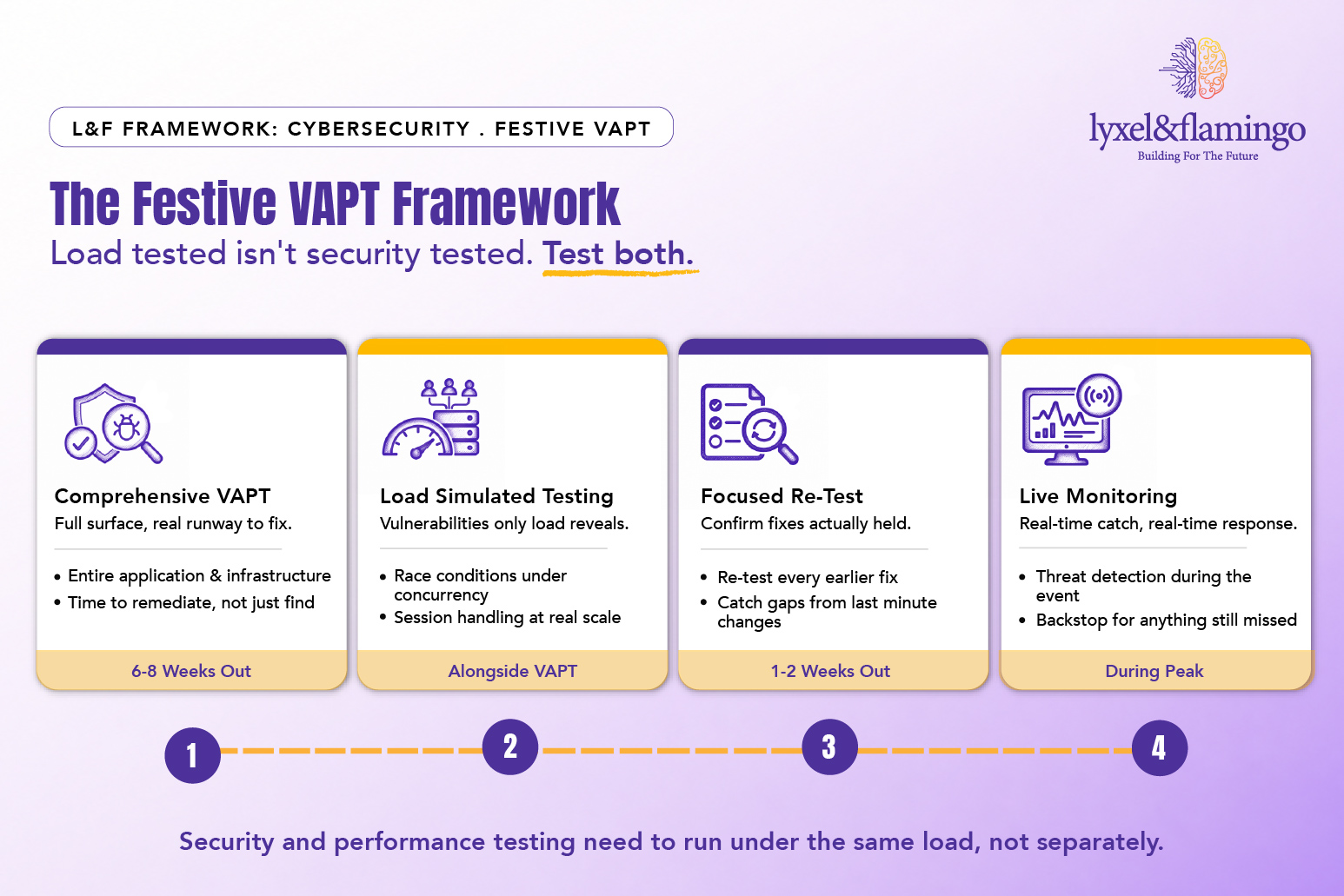
Vulnerability Assessment and Penetration Testing (VAPT) is often treated as an annual compliance checkbox rather than a festive-season readiness step, which means the highest-traffic, highest-stakes weeks of the year go untested for exactly the vulnerabilities that high load tends to expose. This blog lays out a practical VAPT timeline built around the festive calendar: what to test, when to test it, and why running this alongside operational load testing, not instead of it, is what actually protects a sale event.
Quick Answer: VAPT before a festive traffic surge should happen in two phases: a comprehensive assessment six to eight weeks before peak season, giving enough runway to remediate serious findings, and a focused re-test one to two weeks before the peak event, confirming fixes hold and checking any last-minute changes did not introduce new gaps. This should run alongside, not instead of, operational load and stress testing, since capacity issues and security vulnerabilities often surface under the same high-traffic conditions, requiring different remediation.
Table of Contents
- Why Sale Events Punish Premium Brands the Hardest
- Treat the Sale as an Efficiency Exercise, Not a Volume Race
- Use BAU Signals Instead of Category Expansion
- Reserve Top-of-Search for High Intent Only
- Reallocating Spend Toward What Is Already Converting
- What This Protects Beyond the Sale Week
- Framework Explained
- Key Takeaways
- CXO Takeaway
Why Sale Events Punish Premium Brands the Hardest
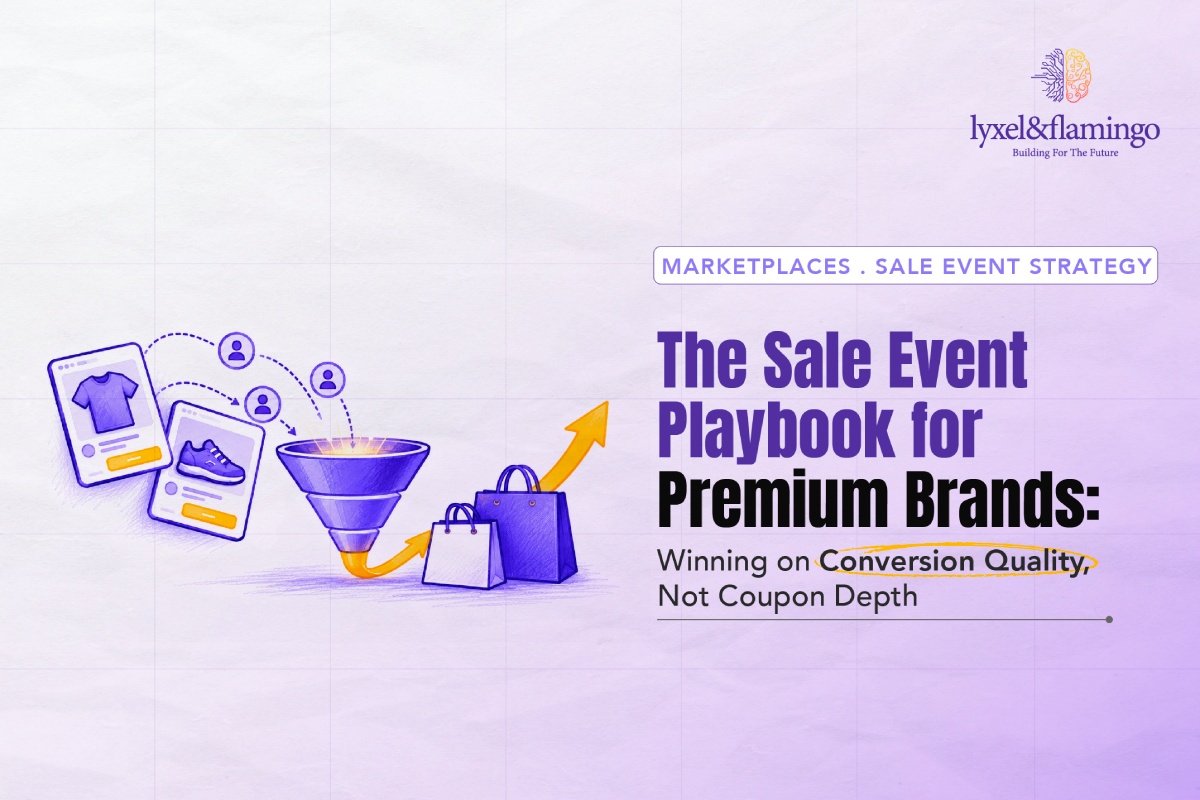
When CPCs inflate across a marketplace sale event, every bidder is paying more for the same inventory. Mass-market sellers can absorb that cost by discounting harder. A premium brand cannot discount as aggressively without damaging the positioning that justifies its price point in the first place.
This is the exact tension Royal Enfield faced on Myntra’s Big Fashion Festival: scale order volume during peak competition while protecting a premium identity that a heavy discount would undercut. The festive marketplace calendar makes this collision unavoidable for any brand selling through a sale-event platform.
Treat the Sale as an Efficiency Exercise, Not a Volume Race
The core inversion in Royal Enfield’s strategy was reframing the objective. Most brands walk into a sale event asking how much impression volume they can buy. Royal Enfield asked how much conversion quality it could protect while volume grew around it.
That single reframe changed every downstream decision, from which placements got budget to how aggressively the team expanded targeting. Efficiency, not reach, became the metric that governed spend.
Use BAU Signals Instead of Category Expansion
Rather than expanding into broad, generic category targeting to capture more of the sale-event traffic surge, the team used existing business-as-usual audience signals as the targeting blueprint. In other words: double down on what already works, instead of gambling on unproven, broader audiences just because the event creates more inventory.
This matters most for brands with complex targeting, like Royal Enfield’s premium positioning, where a generic expansion strategy risks reaching browsers who were never going to convert regardless of the discount on offer.
Reserve Top-of-Search for High Intent Only
The team reserved top-of-search spend, the most expensive and most visible placement, for high-intent placements only, representing 45% of the total budget. Lower-cost placements absorbed the rest of the targeting expansion that sale-event volume typically demands.
This is a deliberate rejection of the instinct to bid up everywhere just because competitors are doing the same. Spending where intent is proven, and stepping back where it is not, is what let the budget increase stay as small as 12.1% despite the order volume growing 128%.
Reallocating Spend Toward What Is Already Converting
As the sale event progressed, Royal Enfield surgically reallocated remaining spend toward high-converting SKUs rather than spreading budget evenly across the catalog. This live reallocation is what separates an efficiency-first strategy from a set-it-and-forget-it sale-event campaign.
The inventory and buy-box discipline that underpins this kind of reallocation matters just as much on Myntra as it does on Amazon: budget can only chase a converting SKU if that SKU is actually in stock and winning its placement.
What This Protects Beyond the Sale Week
A 12.1% budget increase producing 128% order growth is not just an efficient sale week. It is proof that the brand did not have to trade positioning for volume, which matters far more than any single event’s revenue number. The same discipline matters just as much for brands proving a festive lift is genuinely incremental rather than seasonal noise, the question covered in proving incrementality in a Diwali campaign, and in defending ROAS through the festive bidding war, where rising CPCs create exactly the same pressure to chase volume at the expense of efficiency.
Brands that discount aggressively to win a sale week often spend the following quarter rebuilding the price expectations they just reset. Royal Enfield’s approach avoided that entirely, protecting near-2x ROI while still delivering the order growth a sale event is supposed to produce. This is exactly the kind of result worth reporting against the marketplace KPIs a CXO should actually track during festive sales, rather than order volume alone.
Framework Explained
- Reframe the objective: measure the sale event by conversion efficiency, not by impression or reach volume.
- Protect proven signals: use BAU targeting data as the blueprint before expanding into new, unproven audiences.
- Ration premium placement: reserve the most expensive inventory, like top-of-search, for demonstrated high intent only.
- Reallocate live: shift spend toward SKUs converting in real time rather than holding a static pre-event plan.
Royal Enfield grew orders by 128% on Myntra’s Big Fashion Festival while holding ROI near 2x, on a budget increase of just 12.1%. The strategy reserved 45% of spend for high-intent, top-of-search placements and used existing BAU audience signals instead of broad category expansion. Read the full Royal Enfield case study.
Key Takeaways
- Premium brands cannot discount their way through a sale event without undercutting the positioning that justifies their price point.
- Reframing a sale event as an efficiency exercise, not a volume race, changes how every rupee of budget gets allocated.
- Using proven BAU audience signals instead of broad category expansion protects targeting precision when CPCs are inflated.
- Reserving premium placements like top-of-search for high-intent traffic is what let Royal Enfield grow orders 128% on a 12.1% budget increase.
CXO Takeaway
The question is not whether your brand can afford to discount during the next sale event. It is: can your brand afford what discounting trains customers to expect afterward?
An efficiency-first strategy costs more discipline upfront and protects far more value afterward.
If your brand sells on Myntra, Amazon, or Flipkart and needs sale-event growth without a positioning trade-off, Lyxel&Flamingo can build the same efficiency-first framework that delivered 128% order growth for Royal Enfield.
Frequently Asked Questions
Six to eight weeks before peak traffic is expected gives enough runway to remediate serious findings properly, rather than rushing a fix under time pressure right before the event.
Yes, especially if any feature launches, configuration changes, or third-party integrations happened between the first assessment and the event. The re-test specifically catches issues introduced after the comprehensive assessment.
Not fully. Operational load testing focuses on performance and capacity; it can surface some security issues incidentally. It is not a substitute for testing specifically designed to find vulnerabilities under load conditions.
Checkout and payment flow, given both the concentration of customer and financial data and the customer-facing impact if something fails during a live sale event.