
What this blog covers
Festive ad creative fatigue is often a planning problem rather than a creative quality issue. As sales campaigns run for several weeks, repeating the same ads can reduce click-through rates and increase the cost per purchase. Many brands respond by requesting new creatives after performance drops, but production delays can leave campaigns struggling during their busiest days.
This blog explains how businesses can manage creative fatigue through a planned refresh strategy. Lyxel&Flamingo’s Festive Relay approach divides campaigns into three phases: launch, middle, and final push. It recommends preparing distinct creatives before launch, introducing new ads alongside existing ones, and setting clear performance indicators to guide refresh decisions.
The blog also highlights the importance of varying hooks, creators, messaging angles, offers, and formats instead of making minor edits to existing ads. KIMIRICA’s Rakhi 2026 campaign demonstrates the approach, delivering 2.7x revenue compared with Rakhi 2025. Planning creative refreshes early helps brands maintain performance throughout festive sales.
Table of Contents
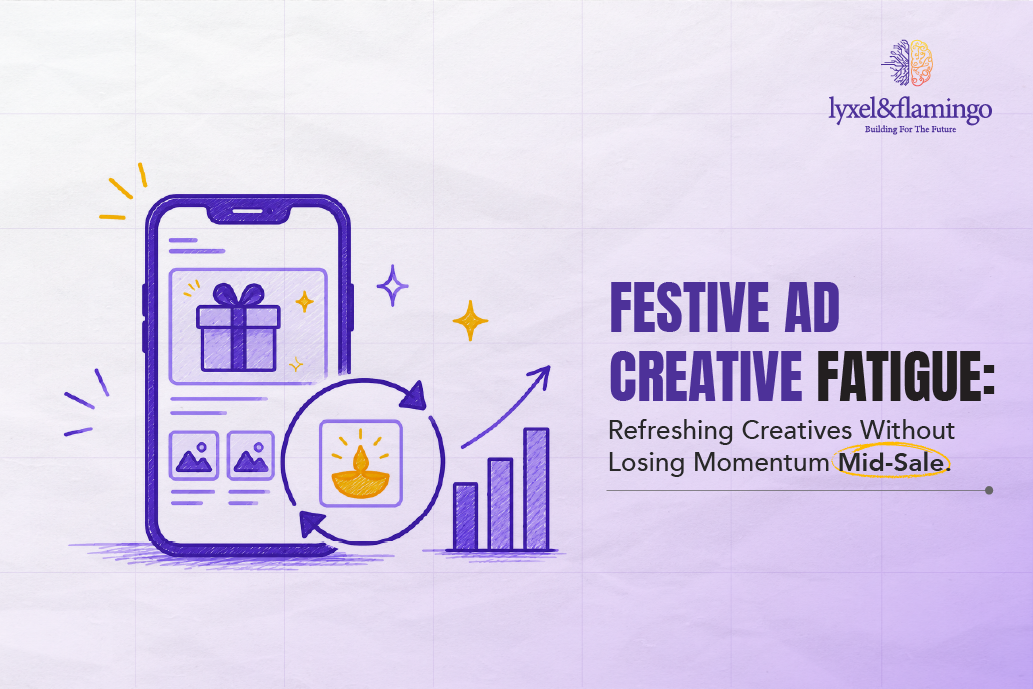
Ad creative fatigue during a festive sale is a planning failure first and a creative failure second. Brands rarely run out of ideas by week three. They run out of finished ads that are ready to ship. In the Media Creative Optimisation work we do at L&F, the worried message about falling click-through rates usually lands after the sale has started.
The festive race is getting bigger and louder, and the growth numbers show it. Redseer expects online festive sales in India to grow 25% in the 30 to 35 days before Diwali, against 16% last year. Meta’s ad system now treats the creative as its main signal for who sees what, so a thin bench of ads shows up in your costs fast. Most teams plan the media budget to the rupee, while the refresh gets planned on the day somebody panics.
Here is the part that most dashboards hide from you. A new headline on the same video may not count as a new ad at all, so the usual quick fix buys a day or two at best. Real refreshes add different ads, and they need building before day one.
What Is Ad Creative Fatigue?
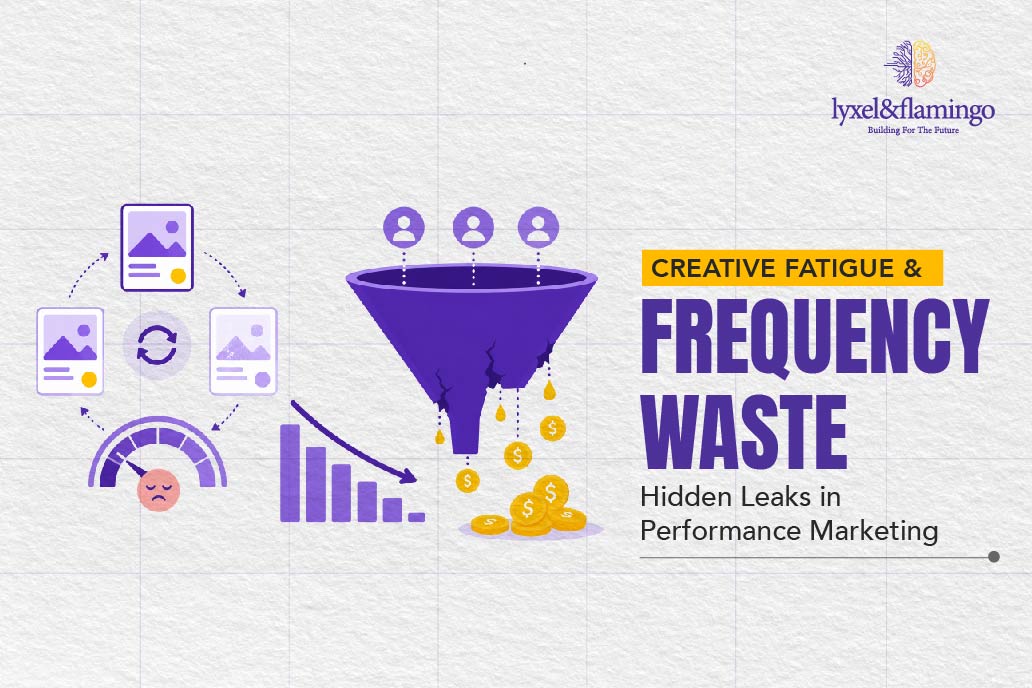
Ad creative fatigue is the drop in an ad’s results after the same people see it too many times. Click-through rate slides, cost per purchase climbs, and the ad stops winning auctions. Creative fatigue in advertising is not the same as a bad ad, because a strong ad can tire out too.
On Meta and Google platforms, creative fatigue in digital advertising shows up in three places together: frequency (how often one person sees the ad), click-through rate, and cost per purchase. Ad creative optimisation is the routine of testing, rotating and replacing ads so fatigue never gets that far.
It matters more this season because festive sales run for weeks, and fatigue arrives while spend is high and production teams have no time to rebuild.
Why Ad Creative Fatigue Hits Hardest When Your Sale Is Busiest
As we are getting close to Diwali, click-through rate on your best video has slipped, cost per purchase is up, and somebody opens the team chat to say new creatives are needed. Your designers need five working days, the sale has 23 days left.
Most teams read this as a quality problem and ask for better ads. That diagnosis is wrong, and the fix it triggers arrives too late. The ads were fine in week one, but nobody made anything for week three because the team built the whole calendar around launch.
Scale makes this gap wider than most plans allow for. Bain’s How India Shops Online 2026 report says festive periods bring around one in four new online shoppers, with nearly triple the daily traffic during events such as Flipkart’s Big Billion Days. More new shoppers means more brands pushing the same hero ad at the same people, so repeat views pile up faster than in a normal month. Flipkart’s sale began on 9 October, and Myntra’s festival opened a day earlier, so the race is already on.
Many teams treat ad creative optimisation as a reaction to a dashboard alert, which in our scenario fires on day 12 with a third of the sale already gone. Festive ad campaigns need the opposite habit: build the refresh first, then press launch.
Most festive ad creative fatigue comes from a refresh plan that starts after the sale does, not from weak creative.
How Meta Ad Creative Fatigue Builds Up Inside the Auction
Two Meta systems matter most for this problem. Search Engine Land’s breakdown says Andromeda decides which ads are eligible to be shown to a person, and GEM decides what should be shown next. Under Andromeda, creatives became the primary signal, and early advertiser observations listed faster creative fatigue.
Think of Andromeda as a shortlist and GEM as the final pick. With fewer ads to choose from, the same few get picked again and again until people stop reacting. That is Meta ad creative fatigue in plain terms. Ad creative performance now depends on how different your ads are from each other, not only on how good each one looks, so ad creative optimisation means tuning the whole set, not one ad at a time.
A Marketing Brew report quotes a global paid media director who says engines treat ads with matching visuals or the same opening hook as fundamentally the same ad. Meta says its guidance is outcome-based and that it does not disclose how its ranking models represent individual creative assets, so treat the agency view as a working theory. Search Engine Land’s August 2026 report on a creative diversity column in Ads Manager, still labelled in development and graded Low, Medium or High, points the same way: uploading 20 ads with the same image, opening shot and spokesperson does not create diversity.
Editing live ads costs you a second time, because frequent edits reset the learning phase, the stretch when Meta is still working out who responds.
Search Engine Land lists the elements worth varying: hook, creator, visual style, messaging angle, offer, customer pain point, emotional appeal and format. Here is how we sort real changes from cosmetic ones.
| Counts as a real refresh | Counts as a slight edit |
| A new opening hook in the first three seconds | The same hook with a new headline |
| A new creator or spokesperson | The same creator in a different outfit |
| A new messaging angle, such as gifting versus self-treat | The same angle with new button text |
| A new format, such as static to short video | The same video trimmed by two seconds |
Real change gives the system something new to read. Cosmetic change gives it the same ad twice.
Want to know which numbers should trigger a refresh?
Read this blog: Creative Fatigue and Frequency Waste: The Hidden Leaks Draining Your Performance Marketing Budget
Four Numbers That Should Change Your Festive Plan
Four recent data points show why creative fatigue in digital advertising needs a plan, not improvisation.
- Tier 2 and smaller cities now bring around 65% of incremental online shoppers in India. Your back-half audience is different from your launch audience, so one metro-flavoured hero ad cannot carry 35 days of festive ad campaigns.
- GEM lifted ad conversions about 5% on Instagram and 3% on Facebook Feed in Q2. The ranking model now does more of the matching, so ad creative performance depends more on the range of ads you give it than on tweaks to any single ad.
- 56% of CMOs say their marketing team lacks the budget to deliver its 2026 strategy, and budgets only rose to 7.8% of revenue from 7.7%. Buying your way out of fatigue is not an option for most, so ad creative optimisation has to get more from every rupee already planned.
- Nearly 60% of marketers now use AI multiple times a week, yet only 10% have fundamentally redesigned their workflows. Cheap variants are easy to mistake for real difference, so ad creative optimisation has to measure difference, not volume. McKinsey says one phrase echoed more than almost any other at Cannes Lions 2026: “mediocrity at scale.”
The Lyxel&Flamingo Festive Relay: Plan the Handover Before the Sale Begins
This is how to overcome ad fatigue without pausing your best ads or losing the momentum your launch built. At Lyxel&Flamingo’s Media Creative Optimisation practice, we plan a festive advertising strategy as a relay, not a sprint. We call it The Festive Relay, and it turns ad creative optimisation into a calendar with three legs.
- The Bench: Before launch, build creatives for all three phases of the sale (launch, middle and final push), not only the first. Each idea must differ from the others on at least two things: the opening hook, the creator, the messaging angle, the offer or the format. Four distinct ideas, cut into two or three versions each, beat twenty edits of one idea.
- The Handover: Add the next phase’s ads beside the current ones, and never edit a live ad that’s working. Give each new batch a week or 50 to 75 conversions (whichever comes first) before judging it, the no-touch window Search Engine Land suggests, and let the old ads fade on their own.
- The Stopwatch: Write your tripwires down before day one: frequency, click-through rate against the ad’s own first week, and cost per purchase against target. Name the person who decides, and agree that the next batch goes live within 24 hours of a tripwire.
Build the bench before launch, add instead of edit, and agree the switch points in advance.
On the festive plans we review, the Stopwatch is usually the missing leg. Teams know what to make, but nobody wrote down when to switch, so the decision waits for a meeting.
The trade-off is real, so weigh it before you commit. The Bench pushes production cost to the front, and a week-long no-touch window feels slow inside a 35-day sale. We think that costs less than a mid-sale rescue shoot, but it needs sign-off before launch, not during it.
Proof: How KIMIRICA Kept Creatives Fresh Through Rakhi 2026
KIMIRICA, a premium vegan fragrance and self-care brand, came to L&F for its Rakhi 2026 gifting window with one of its hardest problems: staying strong all the way through to conversion, not only launching strong.
We built the creative plan by funnel stage and category instead of stretching one hero ad across the window. Influencer-led content opened the funnel with audiences who had never met the brand, user-generated content carried the middle and bottom, and we produced fresh creative hooks for each cycle in every category. That is ad creative optimisation run as a calendar, not an alert.
- 2.7x revenue against Rakhi 2025
- 2.3x sales of the Rakhi Gift Box
- 1.83x brand search volume
Creative refresh was one of seven decisions in this plan, so it earns part of the credit, not all of it. What the numbers show is that fresh work kept moving through the whole window, and the campaign delivered the brand’s highest-ever monthly revenue.
Need creatives that stop the scroll in the first three seconds?
Read this blog: Creative That Converts in 3 Seconds: Designing for Short-Form, Scroll-First Audiences
5 Things to Do Before Your Next Sale
Use this as your ad creative optimisation checklist before the next sale. These five habits improve ad performance during sale weeks more reliably than any new tool, and none needs outside help.
- Decide now how you will refresh creatives during a sale, in three phases. In a 35-day window, that means launch, middle and final push, with finished ads assigned to each and handovers planned near day 10 and day 22.
- Brief every new ad on at least two real differences. Change the opening hook, creator, angle, offer or format, because a new headline on the same video doesn’t count.
- Add new ads beside tired ones and leave live ads alone. Frequent edits reset the learning phase, so pause an old ad only after its replacement has run a week or collected 50 to 75 conversions.
- Write three tripwires down before the first day of the sale. Use frequency, click-through rate against the ad’s own first week, and cost per purchase against target, then put one name next to the decision.
- Plan every shoot so it can be cut into several opening hooks. One creator shoot can give you different hooks, lengths, thumbnails, and product-first and creator-first edits, so write the cut list before the camera rolls.
Plan the Second Half Before the Sale Starts
By Diwali week the gap between brands will show in two places: cost per purchase and the mood of the team. Brands who build the second half of the sale before the first half starts will not need a rescue plan in week three. Everyone else will brief designers while the budget runs.
You don’t need a bigger creative team for this. You need a calendar that gives day 20 the same weight as day one, plus a sign-off that happens before launch. Treat creative fatigue in advertising as a scheduled event, and ad creative optimization becomes a routine instead of an emergency.
If your festive advertising strategy has a launch set and a blank space after it, speak with a creative strategist at L&F about your next festive calendar.
Related reading: our Diwali gifting shopper guide and how AI video production cuts festive turnaround.
Frequently Asked Questions
Watch three signs together: frequency rising, click-through rate sliding from the ad's own first-week level, and cost per purchase moving above target. One signal alone can mislead you, because a weekday dip or a price change can move any single number.
Add new ads beside the tired ones instead of editing them. Give the new batch a week or 50 to 75 conversions before you judge it, then let the old ads fade out on their own.
Plan the handover dates before launch, then move them earlier if your tripwires fire. In a 35-day festive run, two planned handovers near day 10 and day 22 make a workable starting point.
Usually not, and the edit can reset learning too. Meta does not publish how it groups ads, but agency experience and Search Engine Land's reporting suggest a new headline on the same video can count as the same ad. Change the hook, creator, angle, offer or format instead.
Shoot once, cut several opening hooks, and schedule them across three phases. Keep the idea human and use AI for resizing and captions, since sameness is the risk McKinsey flagged at Cannes Lions 2026. This is the cheapest way to improve ad performance during sale weeks.