
Table of Contents
Here’s what it covers
Enterprises that rely on search engine marketing are moving through a major shift, and most brands are still measuring visibility through systems built for an older version of the internet. Organic rankings may still appear steady across core keyword clusters in reporting dashboards, but user behaviour has changed underneath them. Platforms like Google AI Overviews, OpenAI ChatGPT, and Perplexity AI now answer many research queries directly inside the interface. Users compare vendors, evaluate products, and build shortlists without ever reaching a website.
Most enterprise SEO strategies were built around rankings, traffic growth, and click-through behaviour that worked reliably between 2018 and 2023. AI answer engines operate differently. They prioritise entity clarity, structured content blocks, third-party authority, freshness signals, and schema relationships much more aggressively than traditional search ever did. Content written mainly for human browsing patterns can perform poorly when AI systems attempt to extract citable information from it.
The article answers that engine optimisation is becoming a necessary expansion layer for enterprise SEO teams. Brands that build AI citation visibility now are gaining an advantage that competitors may struggle to recover from later, especially as zero-click behaviour keeps increasing across search environments.
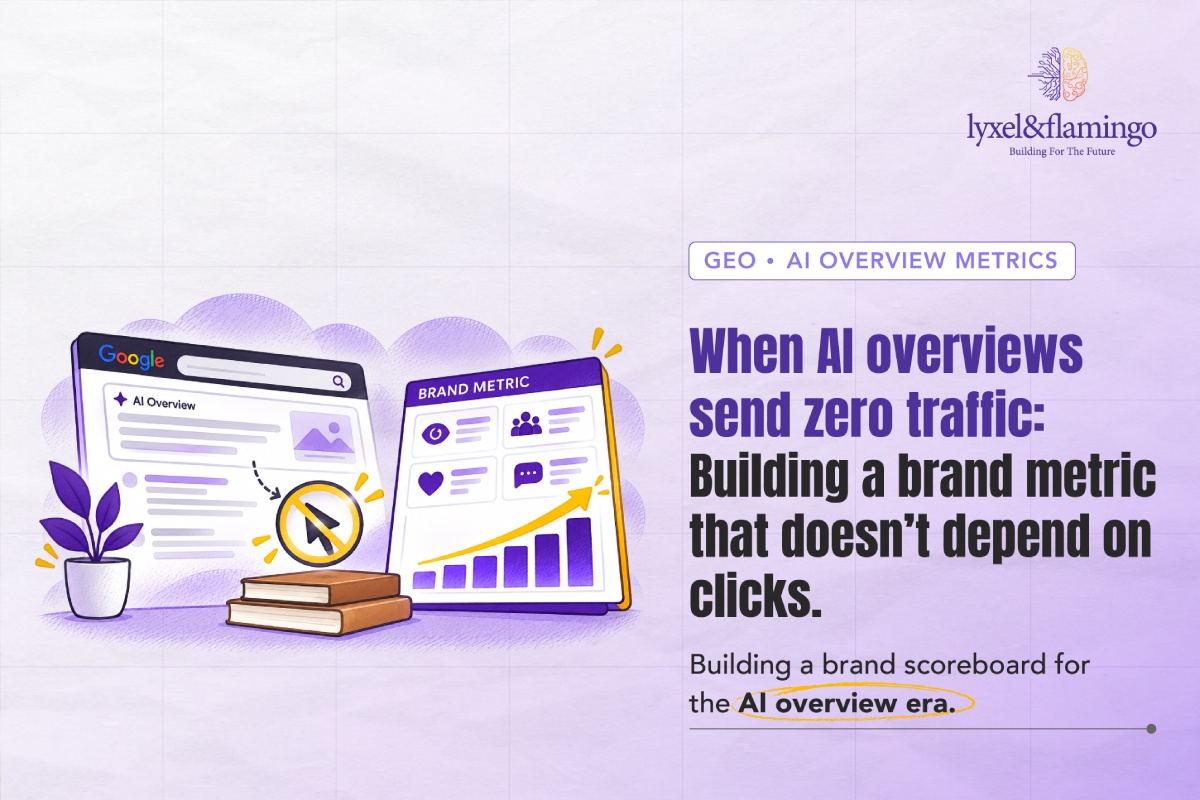
Enterprise brands still relying on traditional search engine marketing metrics are starting to measure only part of their actual visibility now. Organic clicks no longer reflect the full influence a brand has across modern search behaviour. Large portions of discovery and consideration now happen inside AI-generated answer environments without producing measurable website traffic afterwards.
This is because 60% of all Google search sessions end without a single click to any website. When Google’s AI Overview triggers, that number climbs to 83%, and in Google’s AI Mode, which was rolled out to all US users in December 2025. 93% of searches end without a click because of Google’s AI Mode, per Semrush’s analysis.
Most enterprise marketing teams are still tracking organic traffic volumes and SEO search rankings as their primary visibility metrics, and that’s not wrong. The user saw your brand, processed your claim, and made a decision within an AI-generated answer before you ever had a chance to count the session.
The brands not visible inside AI answers are invisible at the exact moment decisions get made.
This shift demands a different playbook. Not a replacement for traditional SEO marketing, but a serious expansion of what enterprise-grade search engine marketing actually means in 2026.
What Is Zero-Click AI Search?
Zero-click AI search happens when platforms like Google AI Overviews, OpenAI ChatGPT, or Perplexity AI answer a user’s query completely inside the interface itself. The system gathers information from different sources, builds a conversational response, and often ends the user journey before any website visit happens.
This works differently from older featured snippets in traditional search results. Featured snippets usually pull one answer from one webpage directly. AI Overviews and answer engines now combine multiple sources, decide which brands appear in the response, and shape how users compare vendors or products.
What makes this shift important for enterprise SEO teams is that AI citation visibility rarely appears inside traditional reporting systems today. A brand can influence user decisions through AI-generated answers without producing measurable traffic or sessions afterwards. According to Yahoo, only 14% of marketers currently track AI citation metrics properly. That leaves most enterprise teams operating with very limited visibility across one of the fastest-growing search environments now shaping user behaviour.
The Problem Most Enterprise Teams Are Still Getting Wrong
Most enterprise brands already have established SEO and content strategies running across their websites today. Many of those systems were built around website search optimisation patterns that performed extremely well between 2018 and 2023. The problem is that very few large organisations have adapted those strategies for AI-generated answer environments where search visibility now behaves quite differently from traditional rankings and click-based discovery.
But the problem is that ranking on Google search is no longer sufficient to guarantee inclusion in AI answers. The two systems have surprisingly different logic. 28.3% of ChatGPT’s most cited pages have zero organic visibility in traditional Google results, as per Ahrefs’ October 2025 analysis. Pages that rank brilliantly in blue-link results sometimes don’t show up in AI answers at all. And vice versa.
Enterprise SEO teams still create content mainly for human readers browsing traditional search results pages. That usually means long-form editorial structure, layered explanations, and highly nuanced writing styles. AI answer engines process information very differently, though. They look for structured facts, attributed statistics, clear entity references, and extractable claims. Content that reads well for people can still perform poorly when language models attempt to identify reliable information worth citing in generated answers.
The structural cause is that traditional SEO optimises for click-through. Answer engine optimisation (AEO) optimises for citation. These are fundamentally different objectives, and they require fundamentally different content architecture.
The gap between what enterprise teams are building and what AI engines actually need is where most large brands are losing ground. Quietly, and without any dashboard alerting them.
How AI Answer Engines Actually Select Sources
Understanding the mechanism is where most strategies seo briefings fall short. It’s not enough to know that you need to appear in AI answers. You need to understand why an AI system picks one source over another.
There are four layers to it.
- Entity clarity: AI systems process webpages very differently from how normal users browse and understand online content today. They focus more on entity clarity, authority signals, and broader web presence consistency. Google AI Overviews still prefer stronger organic rankings, while OpenAI ChatGPT and Perplexity AI evaluate freshness, citations, and structured authority through different visibility patterns altogether.
- Structured content architecture: AI models extract structured content more efficiently than prose. Comparison pages with three data tables earn more ChatGPT citations, and list-heavy pages earn more. FAQ schemas, numbered frameworks, and definition blocks aren’t just good UX. They are directly correlated with AI citation rates.
- Off-site authority signals: This is the part most enterprise content teams miss entirely. 86% of AI brand mentions originate from third-party sources, not from a brand’s own website. What industry publications, analyst reports, and authoritative platforms say about your brand matters more to an AI’s citation logic than what your own site says.
- Freshness: AI models, particularly Perplexity and ChatGPT in browse mode, weigh recency heavily. Pages not refreshed on a quarterly basis are 3x more likely to lose AI citations compared to recently updated pages, per AirOps. In a category where your competitors are publishing actively, stale content gets deprioritised fast.
The Lyxel&Flamingo Enterprise AI Visibility Stack
At Lyxel&Flamingo’s GEO Practice, we’ve built and refined a model for enterprise brands that need to compete across both traditional Google search optimisation and AI-generated answer surfaces simultaneously. We call it the Enterprise AI Visibility Stack, a five-layer architecture that treats AI citation as a structured capability, not a content accident.
Layer 1: Knowledge Node Architecture
Before any content gets written, we audit what AI systems currently know about your brand. That means testing your brand’s entity representation in ChatGPT, Perplexity, Google AI Overviews, and Gemini, not for keyword ranking, but for factual accuracy, citation depth, and competitive presence.
For a leading BFSI brand we worked with, this audit revealed that three AI platforms were either misrepresenting the brand’s product set or omitting it entirely in response to queries their own sales team was fielding from prospects. The problem wasn’t SEO. It was entity clarity. We rebuilt their structured data, and seeded authoritative third-party mentions. AI citation share improved measurably within 60 days.
Layer 2: Answer-First Content Architecture
Enterprise content teams now need to evaluate pages based on answer block density and how many extractable claims appear within short content sections. Long introductions, positioning language, and slow editorial build-ups reduce AI citation potential more than most teams realise. Stronger AI visibility usually comes from leading with structured definitions, attributed statistics, direct claims, and clearly organised information early in the content itself.
Layer 3: Schema Stacking
Most enterprise websites still rely on basic Article or WebPage schema implementations across their content structure. That setup no longer gives enough context for AI citation visibility. More advanced strategies now connect FAQPage, HowTo, Organisation, Article, and BreadcrumbList schema together through layered JSON-LD relationships. FAQPage schema matters particularly because AI systems already generate responses using structured questions and answer formats that closely match how this schema organises information.
Layer 4: Multi-Platform Authority Distribution
Since 85% of AI brand mentions originate from third-party sources, the critical question is:
What are the platforms your target AI engines are actually scraping?
- Google AI Overviews frequently surface Facebook and Yelp.
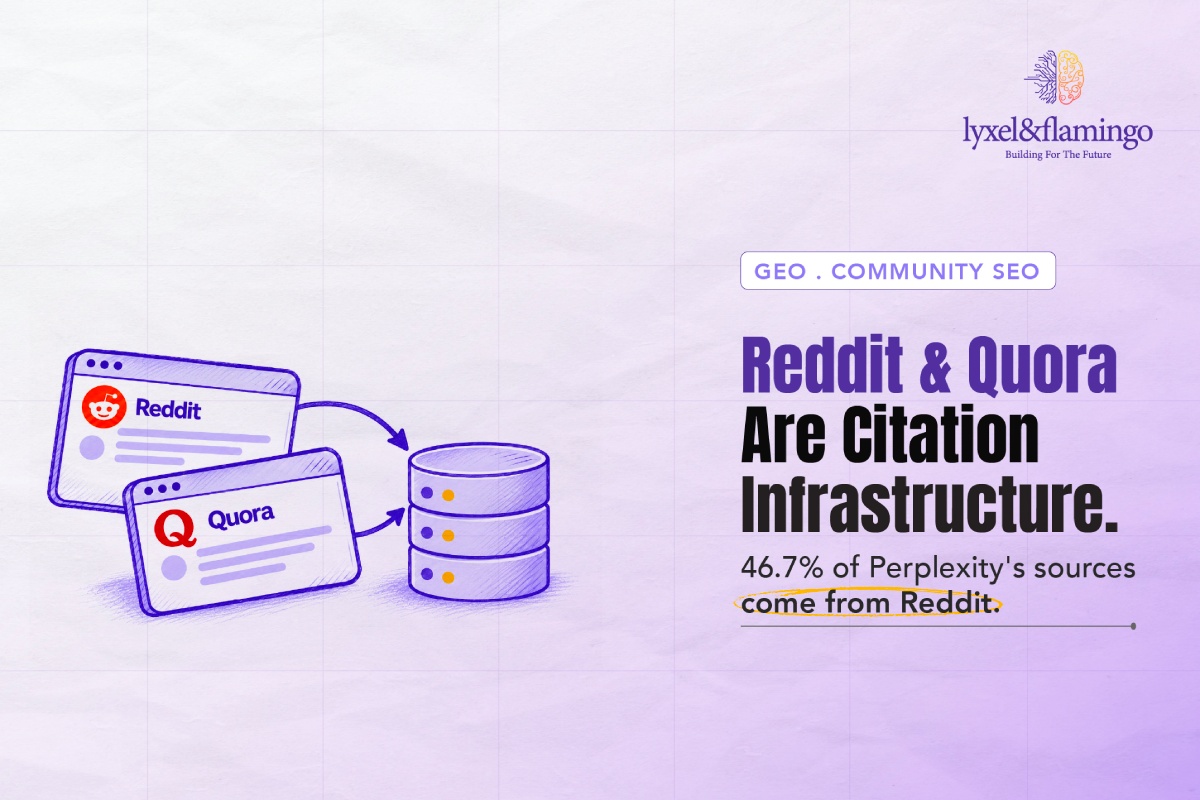
- ChatGPT cites Reddit and Wikipedia heavily.
- Perplexity weights Reddit, LinkedIn, and G2.
The enterprise brands winning AI citation share in 2026 are not just publishing on their own domains, they are systematically seeding authoritative claims across the exact third-party platforms AI models trust.
Layer 5: AI Citation Monitoring and Freshness Cadence
We build measurement infrastructure that goes beyond Google Search Console. Using tools like Otterly.ai and SE Ranking’s Visible module, we track citation frequency and position across ChatGPT, Perplexity, Google AI Overviews, and Gemini on a weekly basis. Citation performance decays without fresh signals. We run a quarterly content refresh cycle tied directly to citation monitoring data, not to editorial calendar assumptions.
Results From the Field
A mid-market SaaS brand in the B2B marketing technology space came to L&F’s GEO Practice with a specific problem: their organic traffic from traditional Google search optimisation was stable, but the pipeline from inbound search was declining. When we ran the initial AI citation audit, we found the brand was absent relevant ChatGPT and Perplexity responses on queries their own sales team was regularly fielding.
What we did differently was treat their content architecture as a citation infrastructure problem, not a keyword strategy problem. We rebuilt their top-20 pillar pages with structured answer blocks, deployed full schema stacking across priority URLs, and ran a 90-day third-party authority seeding programme across five platforms, their target AI engines were confirmed to be scraping.
5 Things Enterprise Teams Should Do Before Next Quarter
Run an AI Citation Audit Before Anything Else
Search your brand’s core product and service queries in ChatGPT, Perplexity, and Google AI Overviews. Document where your brand appears, how it’s described, and which competitors are being cited instead. This takes three hours and produces a sharper brief than any keyword research tool available today. Most enterprise teams have never done this. Start here.
Rebuild Your Top-10 Pillar Pages With Answer Block Architecture
For your highest-traffic informational pages, restructure the opening 300 words to lead with a direct definition, a citable statistic, and a structured list or table. Add the FAQPage schema to every page that contains question-based headings. The content does not need to be shorter, it needs to front-load its most extractable claims. This is the highest-leverage change available to most enterprise website search optimisation teams right now.
Map Your Third-Party Presence Against the Platforms’ AI Engines That Actually Scrape
Identify which AI engines are most relevant to your buyer’s research journey. Then identify the five to eight third-party platforms that engines weigh most heavily, it varies by platform, category, and query type. Audit your current presence on each. For B2B categories, this typically means LinkedIn thought leadership, G2 reviews, relevant Reddit communities, and industry analyst coverage. Build a systematic programme to seed accurate, citable claims across these surfaces.
Add AI Referral Tracking to Your Analytics Stack
Set up referral source tracking for chatgpt.com, perplexity.ai, gemini.google.com, and bing.com/chat in Google Analytics. You are almost certainly already receiving AI-referred sessions that are either being attributed to Direct traffic or going entirely untracked. Before you can optimise your organic search performance in AI environments, you need to know what’s already coming in from them.
Build a Quarterly Freshness Protocol, Not Just a Content Calendar
Identify your top-20 AI-citable pages. Build a quarterly update protocol that refreshes statistics, adds new data points, and updates publication dates with clear “Last Updated” signals. Pages not refreshed quarterly lose AI citation share 3x faster than maintained pages. This is a maintenance operation, not a creative one, but it is the single most underinvested area in enterprise seo marketing today.
Conclusion
The brands building AI citation authority right now are compounding an advantage that will be structurally difficult to close twelve months from now. The search engine marketing discipline has not ended, it has expanded into territory that most enterprise teams have not yet entered.
Google search is still the volume channel. Organic traffic from traditional Google search optimisation still feeds pipelines. Many purchase-influencing searches now happen quietly inside AI answer engines before any formal vendor conversation even begins. Comparisons, shortlist building, and brand evaluation often happen inside OpenAI ChatGPT or similar platforms without generating measurable clicks, sessions, or visible attribution data afterwards for marketing teams.
The opportunity is significant, and it is open. The majority of enterprise competitors have not yet built systematic strategies seo for AI citation. That gap will not last.
If you’d like to understand where your brand currently stands across AI answer surfaces, and what it would take to move from invisible to cited, speak to L&F’s GEO Practice team for a complimentary AI Citation Audit.
Frequently Asked Questions
Zero-click AI search happens when platforms like Google AI Overviews, OpenAI ChatGPT, or Perplexity AI answer the user query completely inside the interface itself. Traditional SEO search focused on earning clicks from ranked search listings. AI search environments work differently now. Brands need content structures, schema signals, and authority indicators that increase the chances of being cited directly inside generated answers instead of simply ranking on a results page.
A zero-click answer is a fully synthesised response delivered by an AI system, like Google AI Overviews or Perplexity, that satisfies the user's query without requiring them to click through to any source. The AI draws from multiple websites, attributes its sources, and presents a consolidated answer. For brands, the goal shifts from earning the click to earning the citation.
The most effective approach combines three things: restructuring content to front-load citable definitions and data points, deploying FAQPage and structured data schema across priority pages, and building authority signals across the third-party platforms that AI engines like ChatGPT and Perplexity are confirmed to scrape. Content quality matters, but so does content architecture.
It does both. AI Overviews reduce organic CTR for position-one pages by up to 58% on informational queries, per Ahrefs. But brands that appear inside AI Overviews see 35% better CTR than those absent from them. The shift is not purely from traffic loss, it is a redistribution. Organic search traffic becomes more concentrated on commercial and transactional queries, while informational queries get resolved in AI environments. Measurement frameworks need to expand accordingly.
Each platform has distinct selectability logic. ChatGPT favours authoritative long-form content and existing Google top-10 pages. Perplexity weights fresh, well-cited articles with original data and sources from Reddit, LinkedIn, and G2. Google AI Overviews predominantly draw from pages already ranking in the top 10 organic positions. All platforms reward entity clarity, structured schema markup, and third-party validation, meaning what other authoritative sources say about your brand matters as much as what your own site publishes.
Knowledge nodes act as recognised reference points that AI systems use while generating answers across search environments. Brands, product categories, claims, and people all become part of those connected entity structures. If a company lacks strong representation across trusted databases and industry sources, AI systems struggle to reference it confidently. That visibility gap remains one of the weakest areas across many enterprise SEO strategies right now.
The practical impact is a reframing of what search marketing is actually measuring. Organic traffic volumes and click-through rates will continue declining for informational queries. But influence at the point of decision, the AI answer that mentions your brand before a prospect ever visits your site, grows in importance. Enterprise teams will need to track AI citation share, branded search volume (as a downstream proxy for AI mention impact), and AI-referred session quality alongside traditional seo marketing metrics.
Answer engine optimisation (AEO) focuses on making brands visible inside AI-generated responses rather than only inside traditional search rankings. It structures content and authority signals so AI platforms select the brand as a cited source during answer generation. Traditional SEO still matters, but AEO adds another visibility layer that strongly influences trust, brand perception, and future purchasing decisions even when no measurable click happens afterwards.