
What this blog covers
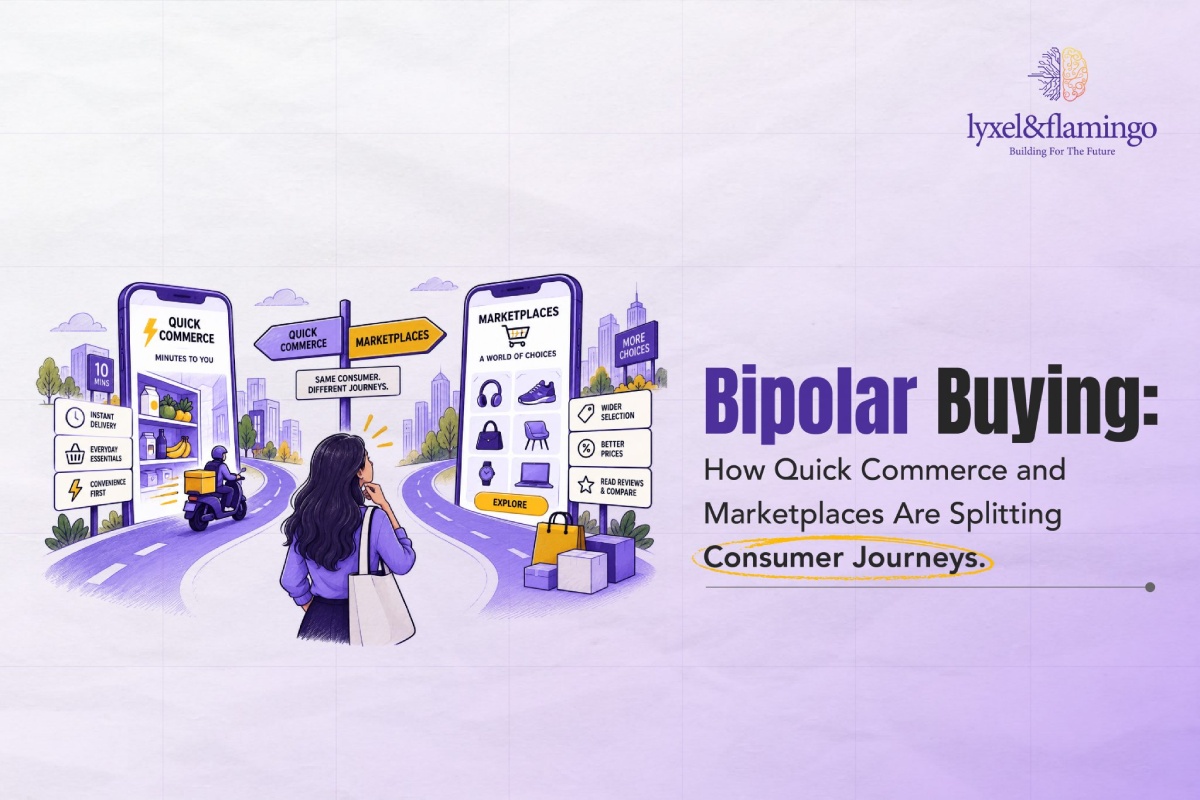
Quick commerce in India is not just faster e-commerce. It behaves differently at almost every level, and most brands still haven’t caught up to that in 2026. They run ads, push budgets, launch on all three platforms in the same week, but the funnel underneath isn’t built for what these apps reward. The real shift is simple but gets missed constantly. The journey from opening the app to paying for the order happens inside a few minutes, not across days like a typical D2C funnel. So the goal is no longer awareness. It’s immediate, in-session conversion, and very few teams are set up to plan for that.
Table of Contents
- Quick Commerce in India: Why the Funnel Works Differently
- Why Most Brands Get Stuck After Launch on Blinkit, Zepto and Instamart
- How Platform Algorithms and Inventory Drive Advertising on Q-Commerce
- What the Numbers Say About Q-Commerce Performance
- The Lyxel&Flamingo Commerce Velocity Stack: A Framework for High-Conversion Q-Commerce Funnels
- What a High-Velocity Brand Setup Looks Like in Practice
- 5 Things to Do This Quarter Before You Scale Q-Commerce Spend
Most brands struggle after launch, and it’s not because the platform failed them. The issue lives lower down, in the structure underneath the ads. Inventory is unstable in most cities, so ads simply don’t show up in a large chunk of the addressable pin codes. Then measurement confusion sets in on top of that. Zepto and Instamart still calculate quick commerce ROAS off MRP rather than the actual, post-discount selling price, which inflates performance and pushes brands toward scaling decisions that don’t hold up once the real numbers come in. It looks like growth on the dashboard. It isn’t real growth, though, not fully anyway.
Algorithms on all three apps reward strong fundamentals before they reward bid size. Conversion rate, fill rate, and repeat purchase all carry weight in ranking. You cannot outbid a weak fundamentals problem, no matter how aggressive the budget gets. Supply chain and marketing sit closer together here than in almost any other channel, and a surprising number of teams still underestimate exactly how tightly they’re linked.
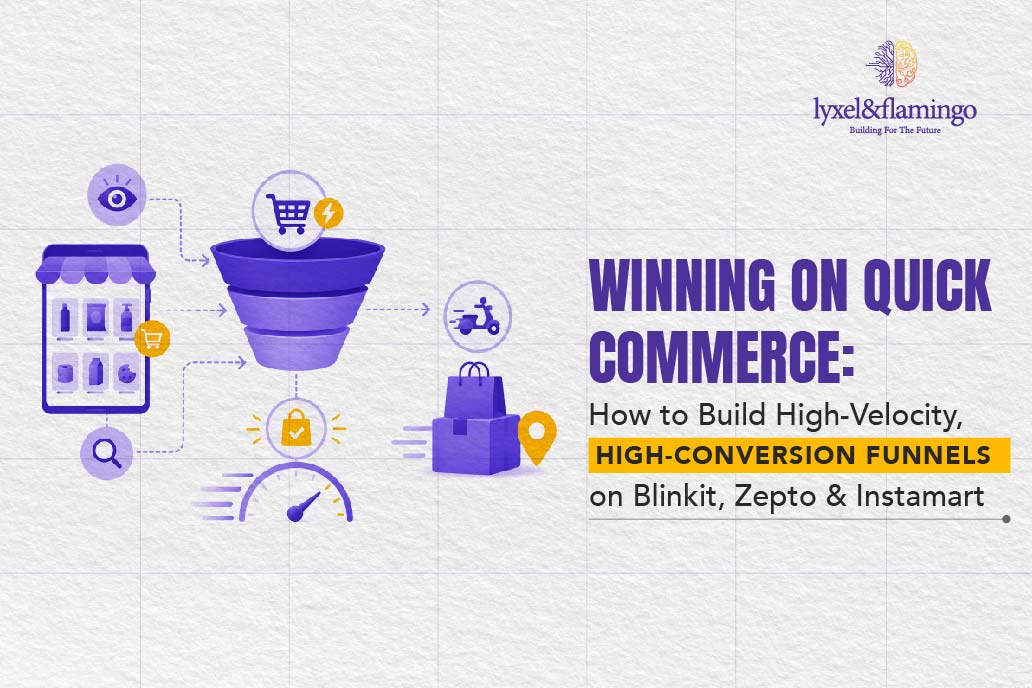
The brands that win build a full-funnel system instead of chasing tactics. Fix inventory and availability first, before anything else. Then build platform-specific ad architecture around that foundation. Only after that, optimise across platforms and reallocate spend where it’s earned. It’s a structured, somewhat slow-moving approach, and it ends up more sustainable than the alternative once you’re a few quarters into it.
Most brands entering Blinkit, Zepto, and Instamart in 2026 are still running playbooks meant for a much slower channel. They set up Google-style campaigns, manage dark store inventory like it’s an Amazon warehouse, and read ROAS off the dashboard the way they’d read a Meta report. The cost of that mismatch shows up faster than most teams expect.
One founder spent ₹6 lakh getting listed across all three platforms in early 2025. Three months in, combined revenue sat at ₹1.2 lakh. The platforms had collected their listing fees on schedule. He’d collected a lesson instead, and a fairly expensive one. At ZOFF Foods, quick commerce now accounts for close to 65 to 70% of the business, yet the brand spends 10 to 15% of GMV just to stay visible on the channel, and margins keep compressing further as platforms shift from subsidising brands toward extracting revenue through Swiggy Instamart advertising and similar ad products across the category. At SouLilly Toys, founder Sonalika Sabharwal flagged something more structural: sellers frequently can’t even tell whether a spike in orders came from paid media, organic ranking, or something entirely unrelated to either. Three very different brands, three different categories. Yet the same underlying problem kept showing up. All three entered with a listing strategy, not a funnel strategy.
The brands building durable positions in quick commerce are the ones that answered one question before spending a rupee: how do we control the session between app-open and checkout, and what does that conversion cost at a sustainable margin? That’s the question this piece is built around, and by the end of 2026, it’s arguably become the only question that matters in this channel.
None of the old playbooks transfers cleanly to Q-commerce. The system runs faster, demands quicker decisions, and punishes teams that plan in weekly cycles instead of daily ones. Brands usually work this out only after they’ve already spent the money, and by that point the cost of the confusion is sitting right there in the P&L.
India’s quick commerce advertising landscape has crossed a structural threshold that’s hard to ignore now. Gross order value for the sector touched roughly ₹64,000 crore in FY25, more than double the year before, and most analysts still expect the market to reach somewhere near $40 billion by 2030. The category has kept moving even faster on the advertising side specifically. Combined advertising revenue across Blinkit, Zepto, and Instamart is projected to reach roughly ₹4,900 crore in 2026, up from about ₹3,000 crore in 2025. Zoom out further and total quick commerce advertising India 2026 spend across every category, not just the platforms’ own take, is now estimated at somewhere between ₹5,000 and ₹6,000 crore annually, up from close to ₹4,000 crore the year before. That’s not a niche ad channel anymore. That’s a full-fledged retail media business sitting inside a grocery app.
- Blinkit crossed 50% market share as of late 2025 and has widened that lead through the first half of 2026.
- Zepto and Swiggy Instamart are still fighting hard for second position, and the gap between them narrows and widens depending on the quarter.
- The three platforms collectively crossed ₹3,000 crore in annual advertising revenue in 2025 and are on track for close to ₹4,900 crore this year.
- These are media businesses first at this point, that also happen to deliver groceries in 10 minutes. It’s worth sitting with that framing for a second, because it changes how you should be budgeting for this channel.
The brands building durable positions in quick commerce are the ones that entered with a funnel strategy, not a listing strategy. The difference matters more than it sounds like it should. A listing strategy asks how you get onto the platform. A funnel strategy asks how you control the session between app-open and checkout, and what that conversion costs per order at a margin you can live with over the long run.
Quick Commerce in India: Why the Funnel Works Differently
Quick commerce, or Q-commerce, is the model of fulfilling everyday product orders within 10 to 30 minutes, using a dense network of micro-warehouses called dark stores, usually positioned within 1 to 3 kilometres of demand clusters. In India, three players dominate that model, and the gap to whoever’s in fourth remains large, at least for now.
- Blinkit holds over 50% market share.
- Zepto holds roughly 29%.
- Swiggy Instamart is around 24%.
Together, the three control over 90% of the consolidated market as of mid-2026, though that number is starting to move as newer players push in from the edges (more on that further down).
What separates Q-commerce from the high-conversion ecommerce funnels brands have spent years optimising, more than anything else, is temporal compression. On Google or Meta, the gap between ad exposure and conversion is measured in hours, sometimes days. On Blinkit, Zepto, and Instamart, that same journey, from app-open to placing the order, happens inside one session, often well under 10 minutes. Full attribution at SKU level and city level is available in near real time, which sounds like an advantage until you realise it also means there’s nowhere to hide a weak funnel.
This shifts the marketing logic in a way many teams still miss, even two years into the category’s growth. Awareness campaigns built for recall across multiple touchpoints simply don’t work the same way here. They feel right on paper, at first glance. The results stay limited regardless of how good the creative looks.
What drives performance day to day is much more immediate than a brand campaign. The goal is getting into the cart at the exact moment of intent, not later, not after a retargeting nudge three days on. The focus moves from top-of-mind to top-of-cart, and that’s a genuinely different discipline. A lot of brands are still optimising for the wrong objective without realising it, and that mismatch gets expensive fast once budgets scale.
The 2026 Category Landscape at a Glance
Before going deeper into funnel mechanics, it helps to see where each platform stands right now, because the scale gap between the leaders has widened noticeably through FY26. Brands often ask which platform to prioritise first, and the honest answer starts with the numbers below rather than a gut call.
| Platform | FY26 Orders | FY26 Revenue | Dark Stores (FY26 end) | Market Position |
| Blinkit | ~916 million | ₹37,779 crore | ~2,243 | Market leader, over 50% share |
| Zepto | ~640 million | ₹22,624 crore | ~1,139 | Strong #2, fast growth |
| Swiggy Instamart | ~412 million | ₹3,859 crore | ~1,143 | #3, ecosystem-driven |
A quick note on how to read this table properly, because the numbers alone can mislead you a little. Blinkit’s order volume is now close to matching Zepto and Instamart combined, and it reached adjusted EBITDA profitability in Q4 FY26 while both competitors continued posting losses in the thousand-crore range. That doesn’t automatically mean every brand should lead with Blinkit spend, though. Instamart’s revenue looks small next to the other two, but its ecosystem pull from Swiggy’s food delivery base still makes it a genuinely useful trial channel for certain categories, particularly anything impulse-adjacent to food. Scale and marketing usefulness aren’t the same thing on this channel, and treating them as interchangeable is one of the more common mistakes we still see brands make in 2026.
Why Most Brands Get Stuck After Launch on Blinkit, Zepto and Instamart
Here’s a situation we keep running into at Lyxel&Flamingo, over and over, almost like clockwork. A brand spends somewhere around ₹3 to ₹6 lakh getting listed on Blinkit, Zepto, and Instamart. Campaigns go live, dashboards show impressions climbing, and everything looks reasonably active on the surface. Three months later, revenue barely covers what went into the launch, let alone the ad spend sitting on top of it.
The usual conclusion brands jump to is that quick commerce just doesn’t work for their category. That’s rarely true, in our experience working with brands here. The platform usually isn’t the actual problem. The funnel sitting underneath it is the real culprit.
The first mistake happens at the inventory level, before a single rupee gets spent on media. Brands start running ads before dark store stock is even stable. On Blinkit specifically, ads only display in areas where inventory genuinely exists nearby, full stop. If stock is missing in a pin code, the ad simply doesn’t run there, no matter how well the campaign is structured. Most teams try to fix this by tweaking the campaign settings. The real fix lives in the supply chain, not in the ads manager, and no amount of bid adjustment changes that.
The second issue comes from measurement, and it catches even experienced performance marketers off guard. Zepto and Swiggy Instamart dashboards calculate Zepto ads ROAS and Instamart ROAS off MRP, not the actual selling price after discounts and platform-side promotions are applied. This inflates reported returns by a fair margin, sometimes dramatically so. A product with an MRP of ₹500 and an actual selling price of ₹340 after discounts, for instance, will show up roughly 47% more efficient on the dashboard than it truly is. Brands then scale budgets against that inflated number, and the gap between what the dashboard says and what the bank account shows only widens as spend goes up. It looks like growth from a distance. It’s mostly a reporting artefact dressed up as one.
The third issue shows up later, and a surprising number of brands miss it entirely, even after fixing the first two. SKU strategy matters more than most catalogue teams assume going in. Listing too many SKUs across a limited number of stores tends to reduce performance across the board, because availability gets spread thin and fill rate drops on everything at once. Fewer SKUs held at consistently high availability tend to outperform a wide catalogue that’s unstable everywhere. Platforms reward consistency and fill rate over raw catalogue breadth, and that reward compounds the longer you stay disciplined about it.
This isn’t a discovery challenge, and it isn’t really a creative problem either. It’s structural, through and through, at every level of the funnel. It needs a different operating model from the ground up, not a better ad creative.
How Platform Algorithms and Inventory Drive Advertising on Q-Commerce
Understanding why dark store visibility determines so much of your Q-commerce outcome starts with the ranking logic each platform runs on underneath. It isn’t a pure auction, and brands that treat it like one will consistently underperform against brands that don’t. All three platforms use hybrid ranking systems that weight organic performance signals right alongside paid bids. Conversion rate matters a great deal here. Fill rate matters too, arguably more than most teams give it credit for. Repeat purchase velocity and return rate both carry real weight too. A brand with weak organic signals cannot simply outbid its way into category leadership, because spend stops converting the moment the underlying fundamentals are broken, and no amount of budget fixes that on its own.
Blinkit moved to a first-party, seller-led model back in 2025, which changed day-to-day operations for brands considerably. The platform controls pricing and stock directly under this model. For brands, category team coordination now matters a lot more than it used to, and ad formats span listings, banners, and full brand pages. Blinkit’s ad revenue grew 126% year-on-year in FY25, following an earlier 220% year-on-year jump in Q3 FY24, and Blinkit advertising cost as a share of total platform revenue now stands at roughly 15%, among the highest of any retail media business operating in India today.
Zepto runs on a vendor and purchase-order model instead, which changes the daily rhythm for brands quite a bit compared to Blinkit’s approach. You supply inventory while Zepto handles distribution across its dark store network. Operations feel simpler in some ways, though inventory visibility drops noticeably compared to a first-party setup. Zepto’s system leans heavily on hyperlocal demand forecasting and relevance signals. Relationships with category teams also shape performance more than most brands realise going in, and that part gets overlooked constantly, even by teams that are otherwise fairly sophisticated about the rest of the funnel. Zepto’s advertising vertical grew from roughly $40 million to $200 million in annualised run rate within a single year, and its ad revenue crossed ₹1,636 crore in FY26 alone, a 151% jump that now represents about 7% of the platform’s total operating revenue. That’s a genuinely fast scale-up, even by quick commerce standards, and it tells you where the platform’s own priorities are heading.
Swiggy Instamart works differently from the other two, and that difference shows up quickly once you start comparing performance across platforms. Its real strength isn’t algorithmic sophistication so much as ecosystem reach. A large share of Instamart’s users arrive from Swiggy’s food delivery base, which creates a natural cross-sell flow that neither Blinkit nor Zepto can replicate the same way. A food delivery user trying groceries on the same app lowers acquisition cost for brands meaningfully, more than it might seem at first glance. Delivery times have also improved on Instamart over the past year, which points to real operational investment happening behind the scenes rather than just marketing spend. Its Megapod setup supports a wide SKU range across categories, making it a reasonable fit for brands running broader catalogues where distribution depth matters more than sheer speed.
The mechanism tying all three platforms together is easy to miss and genuinely important once you see it. Quick commerce ad spend is never independent of supply chain performance, on any of the three apps. The funnel starts at dark store inventory, and everything downstream of that, ad delivery, ranking, conversion rate, ROAS, all of it, depends on stock being in the right store at the right time. Brands that get this right build a flywheel that compounds quarter over quarter. Brands that don’t end up paying for expensive media that drives traffic straight into a funnel that breaks before checkout, and they usually don’t realise it until the quarterly numbers come in flat.
What the Numbers Say About Q-Commerce Performance
The market is large, still growing fast, and already crowded at the brand level, more crowded than it was even a year ago. India’s quick commerce sector reached roughly ₹64,000 crore in GMV in FY25 and is projected to grow toward ₹2 lakh crore by 2028 on current trajectories. The top three platforms collectively processed over 4 million daily orders through 2025, and that figure has kept climbing through the first half of 2026.
Quick commerce advertising delivers a meaningfully higher conversion funnel than traditional digital channels, though the advantage is a bit more perishable than it first looks. Industry data consistently shows sales conversion rates of 3 to 8% on Blinkit, Zepto, and Instamart, compared to 1.5 to 3% on Meta and Google campaigns running the same category of product. That’s a genuinely real edge, on paper. It just doesn’t hold up if the inventory underneath the ad isn’t there.
The ROAS reporting gap creates systematic over-investment across the category, and it’s arguably the single biggest source of wasted budget we see in brand audits. Zepto and Instamart dashboards still report quick commerce ROAS on MRP rather than actual post-discount selling price, which makes performance look considerably stronger than it really is. Many brands scale spend based on this inflated number without realising the gap. If you don’t manually recalculate on net value before making budget decisions, those decisions drift off course, and the gap tends to widen further as spend increases rather than shrink. This remains one of the more under-discussed problems in the entire category, and most competitor guides on quick commerce advertising still gloss right over it.
Advertising now accounts for roughly 15% of Blinkit’s total revenue, and both Blinkit and Zepto crossed ₹1,000 crore in annual ad revenue during FY25, with Zepto alone pushing past ₹1,636 crore by FY26. The collective annualised ad revenue run rate across all three platforms sat at ₹3,000 to ₹3,500 crore through most of 2025 and has since climbed toward the ₹4,900 crore mark projected for 2026. These aren’t incidental revenue lines anymore, not by any stretch. They’re core to each platform’s business model at this point, which means every one of these platforms is structurally motivated to keep raising ad rates over time, not lower them. Brands that build organic ranking alongside paid spend end up significantly better insulated against that upward trajectory than brands relying on paid media alone.
Who Else Is Entering the Category
It’s worth flagging briefly that the competitive set here is widening, and any brand planning 2027 budgets right now should have this on the radar even if it’s not the main focus yet. Flipkart Minutes has scaled to around 1,000 micro-fulfilment centres across roughly 130 cities as of mid-2026, with plans to push toward 1,500 centres and 180 cities within the next few months, and order volumes reportedly up five-fold since its network expansion began in earnest. Amazon Now, meanwhile, has expanded from about 15 cities to a stated target of 300, backed by a reported ₹2,800 crore investment, with orders said to be doubling roughly every quarter since launch. Neither has caught up to the scale Blinkit, Zepto, or even Instamart command today, not even close. But both are moving into electronics, beauty, and lifestyle categories alongside grocery, which will eventually pull ad budgets in more directions than the current three-platform framework accounts for. Worth watching, even if it isn’t yet worth restructuring your whole media plan around.
The Lyxel&Flamingo Commerce Velocity Stack: A Framework for High-Conversion Q-Commerce Funnels
At Lyxel&Flamingo’s Commerce Strategy practice, we’ve built and optimised Q-commerce funnels across FMCG, beverages, health, and personal care categories, for brands sitting at very different stages of scale. The brands that manage to sustain performance over time tend to share a common architecture underneath, whatever their category. We call it the Q-Commerce Velocity Stack, a three-layer model that treats quick commerce as one integrated commercial system rather than a set of separate platform campaigns running in parallel with no shared logic between them.
Layer 1: Inventory Infrastructure (The Foundation)
No funnel converts if stock isn’t present in the right dark store at the right time, and this part genuinely isn’t marketing at all. It’s supply chain, full stop, plain and simple. But it controls everything that happens above it in the stack.
Top-performing brands track Daily Run Rate (DRR) at SKU and city level every single day, not weekly like most traditional retail reporting cadences. Every morning matters here, more than it seems like it should from the outside. This lets teams see which locations need restocking before shelves go empty, because once a dark store runs out of stock, ads stop running in that area immediately, with zero warning on the dashboard.
Moving from weekly checks to daily tracking reduces stockouts noticeably, in nearly every brand audit we’ve run. In a lot of cases, it improves delivery and conversion even before any ad changes get made at all. The supply chain fix drives media performance here, not the other way around, which is the opposite of how most performance marketing teams are trained to think.
For Blinkit, push stock to individual stores directly, not just central warehouses. For Zepto, relationships with category teams matter more than most brands initially expect. For Instamart, use the Megapod setup properly and don’t half-commit to it. Wider availability creates more chances for discovery across the board, and discovery is where most of the funnel gets won or lost.
Layer 2: Platform-Calibrated Ad Architecture (The Engine)
Layer 2 should only start once Layer 1 is genuinely stable and fill rate has crossed roughly 93%. Running ads before that threshold usually sends traffic into a weak funnel that can’t absorb it, and it wastes more budget than most teams expect going in.
Ad setup changes meaningfully across platforms too, and that part gets ignored more often than it should be. On Blinkit, Sponsored Products work as the base layer, with banners layered in during key sales pushes. Building out a Brand Store genuinely helps if you’re aiming for a stronger, more permanent presence rather than campaign-by-campaign visibility.
Zepto needs separate budgets for search and browse placements, kept fully apart. The two behave very differently in practice, and mixing them into one campaign reduces clarity on what’s working and what isn’t. Instamart functions more as a discovery channel than a pure conversion engine. ROAS will look lower there on paper, but the cross-platform lift it generates tends to matter more than the standalone number suggests.
Also, don’t trust dashboard ROAS blindly, on any of the three platforms. Always calculate using net values instead of the MRP-based figure the dashboard hands you by default. The gap can be bigger than expected, sometimes considerably so, and it changes real profitability more than most brands account for when setting quarterly targets.
Layer 3: Cross-Platform Flywheel (The Multiplier)
The strongest brands in Q-commerce today aren’t choosing just one platform and sticking with it. They run Blinkit, Zepto, and Instamart together, then adjust budgets based on actual performance data rather than gut preference. A 55/45 split between Blinkit and Zepto works reasonably well as a starting point in most categories we’ve tested it in.
Instamart should be treated separately in this mix, since it drives trial more than it drives direct, immediate conversion. Rebalance budgets every single month, without skipping cycles. Shift somewhere around 10 to 15% toward better-performing SKUs specifically, not toward overall brand-level numbers, which tend to hide which products are carrying the real weight.
The flywheel effect compounds meaningfully over time, more than it might seem in the first quarter or two. As organic rank improves off strong fill rate and conversion signals, the marginal cost of paid placement drops in step. A brand that reaches category top-3 organically on Blinkit in its primary city spends less per conversion than a brand holding position entirely through paid spend, and that position is far more defensible when competitors bid up keywords during festive windows, when ad rates on quick commerce platforms typically jump 40 to 50% above baseline for a few weeks at a stretch.
What a High-Velocity Brand Setup Looks Like in Practice
Take a mid-sized beverage brand we worked with, one with a genuinely strong direct-to-consumer operation and a product that performed well everywhere else. Its Blinkit and Zepto numbers stayed disappointing for months regardless, with ROAS sitting well below what the category should have supported given the product quality.
The root cause wasn’t competitive pressure, which is what the brand’s internal team had assumed going in. Dark store availability was too thin, capping how much delivery capacity existed in the first place. On top of that, the brand was bidding heavily on broad search terms while more or less ignoring Zepto’s browse placements, which is where most of the actual product discovery happens on that platform, whether teams realise it or not.
The fix ran in two sequential phases, in this order and not the reverse. First, supply chain restructuring: daily inventory tracking plus faster replenishment cycles pushed fill rate up to around 94% within a few weeks. Second, and only after that first phase held steady, advertising recalibration: concentrating spend on flagship SKUs, with separate budget lines across placement types, produced a clear, measurable lift within the following month. The model genuinely works when it’s given the chance to. It only works if the sequence gets followed properly, though, and skipping straight to phase two is exactly the mistake that gets most brands stuck in the first place.
5 Things to Do This Quarter Before You Scale Q-Commerce Spend
Build a Daily Run Rate tracker before you run a single ad
Set up an internal dashboard tracking units sold per day, per SKU, per city, and check it every morning rather than once a week. This one habit catches inventory depletion before products vanish from dark store shelves entirely, which directly prevents ad delivery gaps in specific pin codes down the line. Teams tend to skip this step because launching campaigns feels more urgent in the moment. It’s still, in our experience, the single most impactful habit a quick commerce brand can build in year one.
Recalculate your ROAS manually before making any spending decisions
Pull net transaction values, meaning actual selling price after platform discounts, and use only that figure for ROAS calculations going forward. Dashboard numbers from Zepto and Instamart significantly overstate performance when they’re based on MRP instead. The inflated reporting can misrepresent true profitability by roughly 30 to 47%, depending on how deep the discount stack goes on a given SKU. Fixing this measurement gap before scaling spend prevents a lot of expensive mistakes further down the line.
Achieve 93% or higher fill rate on hero SKUs before increasing ad budget
Audit active dark stores for your top 3 to 5 products and make sure each one holds at least a 93% fill rate before touching the ad budget upward. SKUs sitting below that threshold shouldn’t get more spend thrown at them. The problem there is supply chain accessibility, not media delivery, and no amount of extra budget fixes an availability gap. Increasing spend on an unstable SKU just wastes resources driving traffic toward a product that isn’t reliably there to buy.
Separate your Zepto browse budget from your search budget
Keep distinct budgets for Zepto’s two placement types, because they serve genuinely different consumer moments in the funnel. Browse reaches users still in discovery mode. Search captures people who already know roughly what they want. Combining both into one campaign creates an averaging effect that hides which one is driving results and which one is riding along. Give it a minimum 30-day evaluation window before making any call on consolidating them.
Set distinct success criteria for Instamart, not a unified ROAS target
Don’t apply the same ROAS target across all three platforms uniformly. For Instamart specifically, prioritise trial rate, particularly first-order-to-second-order conversion within 30 days, as the primary performance signal rather than immediate ROAS. Instamart’s real value lives in trial generation, and the cross-ecosystem lift it gets from Swiggy’s food delivery base converting into grocery buyers. Applying identical ROAS benchmarks across all three platforms tends to cause premature budget cuts on Instamart specifically, based on expectations that were misaligned with what the platform is genuinely good at in the first place.
Conclusion
Winning brands in 2026 won’t necessarily be the ones spending the most. They’ll be the ones who understand channel mechanics before they scale aggressively, and that distinction is becoming sharper as the category matures and ad rates climb across the board. Blinkit, Zepto, and Instamart function as retail media environments now, not just delivery apps with an ads tab bolted on. Purchase journeys compress into a matter of minutes, demanding near-immediate decisions, and everything hinges on product availability and precise timing rather than creative or bid strategy alone. Marketing and supply chain are fundamentally interdependent on these platforms, whatever the org chart says internally, and brands that keep treating them as separate functions will keep losing budget to brands that don’t.
The category is also getting more crowded from the edges, not just among the current top three. Flipkart Minutes and Amazon Now are scaling fast enough now that they deserve a line item in next year’s planning conversation, even if they’re not the main event yet. That widening competitive set makes the fundamentals in this piece more relevant going forward, not less, because the brands that already have inventory discipline and platform-calibrated ad architecture in place will adapt faster to a fourth or fifth major platform than brands still catching up on the basics of the first three.
Quick commerce rewards brands that treat it as one integrated commercial system, requiring real operational sophistication alongside advertising expertise, not either one in isolation. Lyxel&Flamingo’s Commerce Strategy practice runs diagnostic audits to identify where a brand’s setup is genuinely strong and where it’s leaking performance without anyone noticing, often in places the internal team hasn’t thought to look yet.
Frequently Asked Questions
Blinkit shows stronger conversion metrics in major metros like Delhi NCR and Mumbai, and it's pulled further ahead on raw scale through FY26, with roughly 916 million orders against Zepto's 640 million. Zepto still resonates more with younger audiences and discovery-led categories, though. A reasonable starting allocation is around 55% to Blinkit and 45% to Zepto, adjusted monthly using SKU and city-level performance data rather than aggregate brand numbers, which tend to smooth over exactly the detail you need to make good decisions.
The foundation has to start with dark store inventory, not ad spend, and that sequencing matters more than most teams initially give it credit for. Keeping fill rates high on primary SKUs matters more than tweaking media in the early stages. From there, build platform-specific ad architecture, then reallocate budget monthly based on real performance. That structured progression tends to produce stable returns rather than short-lived spikes that fade once the initial push ends.
Both platforms deliver fast enough now that speed alone doesn't meaningfully separate conversion outcomes between them anymore. Most consumers perceive the two as functionally equivalent on that front. What drives conversion, more than anything else, is product availability in nearby dark stores. Improving inventory coverage moves the needle far more than shaving another minute or two off delivery time ever will.
Blinkit structures cost through per-SKU listing fees that convert into ad credits, plus a mandatory monthly spend minimum, and Blinkit advertising cost generally runs from ₹2 to ₹15 per click depending on category competitiveness and city. Zepto bundles onboarding and advertising into packages, typically ₹5 to 6 lakh, with an optional analytics add-on through Zepto Atom running roughly ₹30,000 a month. Instamart runs on a quarterly fee structure instead, generally ₹8 to 10 lakh per quarter. All figures attract 18% GST on top, which brands sometimes forget to budget for upfront.
The fundamental difference comes down to proximity to the purchase moment itself. Google and Meta campaigns typically span multiple days and several touchpoints before someone converts. Blinkit, Zepto, and Instamart compress that entire journey into a single app session lasting under 10 minutes, with instant SKU-level attribution. On top of that, quick commerce advertising carries a supply-chain dependency that search and social simply don't have. Ads only display in zones where physical inventory exists in a nearby dark store, which makes platform performance partly a supply chain outcome rather than a pure media one.
It's a user-facing savings feature that clears slower-moving inventory while simultaneously creating visibility for emerging or challenger brands. Brands can use it for trial-phase growth at a lower acquisition cost than standard placements. If a product gets substituted out through the feature, though, loyalty can take a hit unless the brand's own ranking strength and conversion performance are solid enough to hold onto that customer despite the substitution happening.
Most often, it's inventory availability rather than campaign setup, contrary to what most teams assume when troubleshooting. Blinkit restricts ad delivery to zones with confirmed physical stock in nearby dark stores, and missing inventory blocks ad execution in that region entirely, with no error message and no warning on the dashboard. Keyword mismatches with how consumers really search rank as a secondary factor. Always check inventory status first before touching bids or campaign structure, because optimising the wrong layer wastes time that could go toward the actual fix.
Products with stronger margins generally need a blended quick commerce ROAS of around 4 to 6x to stay profitable once all costs are accounted for. High-performing campaigns clear that range comfortably, while a lot of smaller brands sit closer to 1.2 to 1.5x, which usually points to a margin problem rather than a platform performance problem. Always calculate using net value rather than MRP. The standard dashboard metric misrepresents true profitability by a wide enough margin that decisions made off it alone tend to go wrong.
Start with supply chain, not advertising, and treat that sequencing as non-negotiable. Track daily run rates and fix fill rate gaps before anything else gets touched. Then build platform-specific ad architecture with separate budget lines per placement type. Review everything monthly at the SKU level, not the brand level. Recalculate ROAS manually before trusting any dashboard figure at face value. And activate all platforms roughly together rather than sequentially, so you're not leaving market share on the table for competitors to pick up while you're still onboarding platform two.