
Table of Contents
- What Is Topical Production?
- The Moment Calendar Indian Brands Are Working With
- The Problem: High Production Volume, Zero Topical Memory
- How AI Search Reads Moment-Based Content
- Why the Gap Is Growing Right Now
- The Lyxel&Flamingo's Framework: The Moment Authority Stack
- What Structured Topical Production Delivers
- Five Decisions to Make Before Your Next Moment Campaign
Here’s what it covers
Topical production today often delivers strong engagement but limited long-term visibility. The issue is not creativity, it is a structure missing underneath. Content gets published, performs briefly, and then fades from discovery.
In an environment where platforms like Google AI Overviews and ChatGPT synthesise answers from multiple sources, brands need connected content, not isolated campaigns, as they do not get picked up easily. Brands need to build around moments, not just post for them.
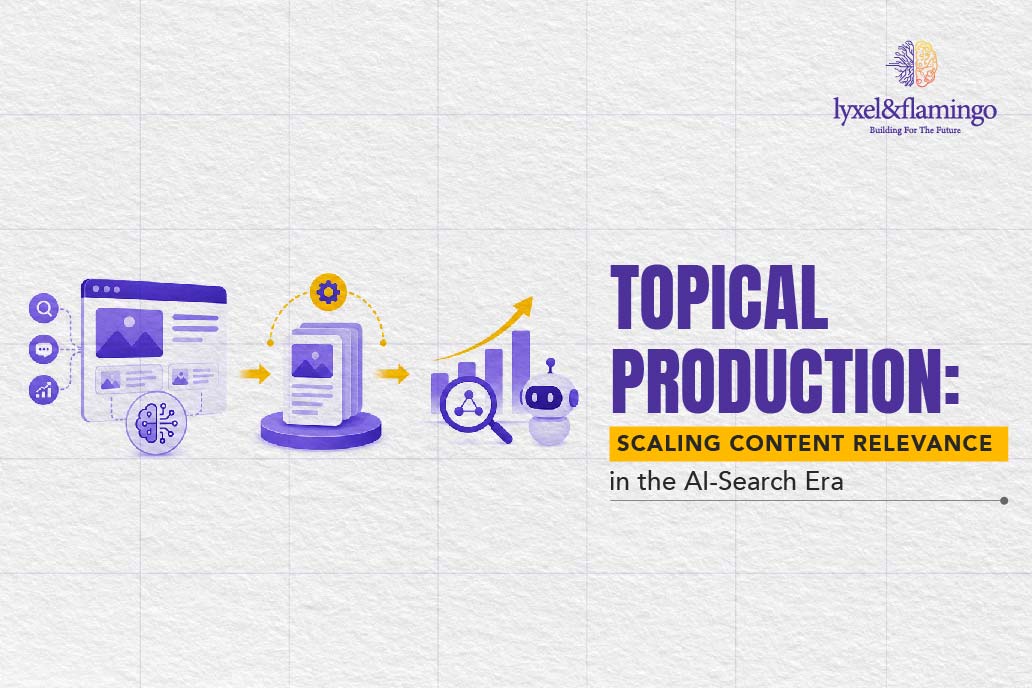
The Moment Authority Stack addresses this with a clear framework. A structured landing page anchors the topic. Supporting clusters expands coverage around related queries. A pillar piece connects everything over time.
Together, this builds depth and improves discoverability. Visibility becomes more stable, not just moment-based.
When we audit content for Indian brands, the same issue shows up again and again. Teams create moment-driven content across festivals and occasions. The output volume is not the problem here.
The real gap appears after the campaign ends. That content stops being visible and stops working for the brand. It does not show up in search or AI-generated answers. Consumers are still asking related questions, but the brand is missing from those results. The content was built for short-term engagement, not long-term discovery.
No structure was added for indexing or reuse. The system that surfaces information later was never considered. So the effort does not compound over time. It stays limited to the moment it was created for.
This is the core problem with how topical production gets executed today. It is treated as a creative output, not a content infrastructure decision. And in a search environment where Google AI Overviews now appear in more than 52% of queries across 9 industries, where ChatGPT has crossed 900 million weekly active users, and where AI models are composing answers by synthesising content across multiple sources simultaneously, producing moment-based content without a supporting architecture is a significant and measurable missed opportunity.
The brands scaling content relevance in the AI-search era are not producing more moments. They are producing moments that compound into lasting topical authority.
What Is Topical Production?
Topical production is the practice of creating content anchored to specific, recurring cultural moments: festivals, national days, health observances, social occasions, and any calendar event that reliably concentrates consumer attention and intent.
In India, the content calendar is already quite dense and active. Festivals like Diwali, Holi, Eid, and Christmas drive consistent content production every year. Cultural and regional moments also add more layers to this cycle.
On top of that, brands create content for multiple observance days. Campaigns around Mother’s Day, Women’s Day, and Independence Day are common. Category-specific moments like Valentine’s Day also get attention based on relevance.
So the effort is not missing. Teams are already investing time and resources into content creation. Campaigns are planned, executed, and published regularly. The issue is not about participation. Brands are showing up consistently across these moments.
The debate that actually needs to happen is a different one: whether the content being produced is doing anything beyond occupying a media slot for ten to fourteen days. Topical production for AI search reframes this from a creative execution question into a content architecture question. The moment is just the entry point. The architecture around it is what determines whether the content compounds into authority or evaporates into the archive.
The Moment Calendar Indian Brands Are Working With
Before solving the structural issue, it helps to understand the scale of content being produced. Most mid-sized Indian brands activate across multiple moments each year. The number is not small at all.
A typical brand covers around eight to fourteen key occasions annually. Some campaigns are large and require higher investment and planning. Others are smaller, faster executions built for quick engagement. Across formats, the output stays consistent through the year. Teams are actively producing and publishing without long gaps.
So the effort is already happening at scale. The question is what happens to that content after the moment passes.
What that calendar rarely accounts for is the AI search behaviour that runs alongside it. Consider the query landscape around just a few of these moments:
- What are some good Rakhi gift ideas for my brother living abroad?
- How do Indian brands actually celebrate World Health Day in a meaningful way?
- What are some real and thoughtful ways to show my mom I care on Mother’s Day?
- Which FMCG brands ran strong Eid campaigns this year in India?
- Which wellness brands in India actually acknowledge World Heart Day properly?
These are real queries that real users are directing at AI systems like Google’s Gemini, Perplexity, and ChatGPT. The brands that appear in those answers are not necessarily the ones with the biggest production budgets. They are the ones whose content architecture gives AI models enough connected, structured, semantically coherent content to cite confidently. Scaling content relevance with generative AI is not a single-campaign decision. It is a calendar-wide architecture decision.
The Problem: High Production Volume, Zero Topical Memory
Here is what the structural failure actually looks like in practice.
A personal care brand creates a strong Mother’s Day video that connects well with its audience. The film performs well on social platforms and gathers solid engagement. The team feels satisfied with the results, which makes sense at that stage.
But the value fades quickly after the moment ends. Within weeks, the content stops generating any organic visibility. By mid-year, it is no longer discoverable through search or AI queries. There is no structured page supporting it. No related content builds around the theme. Internal links are missing, so the piece stays isolated.
For discovery systems, it almost disappears. The effort was real, but the long-term impact never materialised properly.
The same pattern repeats across Rakhi, Eid, and World Health Day campaigns. Content is created with real effort and intent. But once spend stops, visibility drops quickly. Without structure, these pieces become invisible to search and AI systems over time.
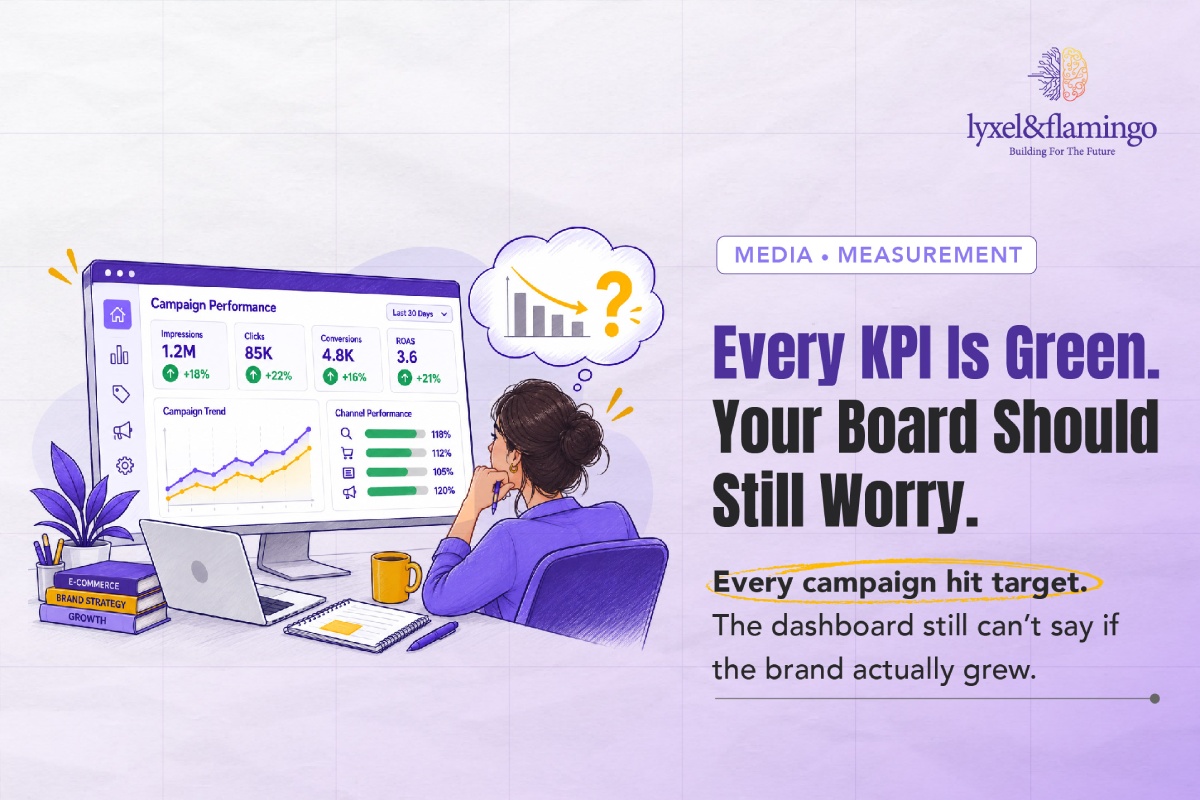
This is not a creative problem. The work is often genuinely good. It is a full-funnel content marketing strategy problem. The content is being produced for media performance metrics and not for sustained content authority. And in an AI-search environment, those two things increasingly require different decisions at the production planning stage.
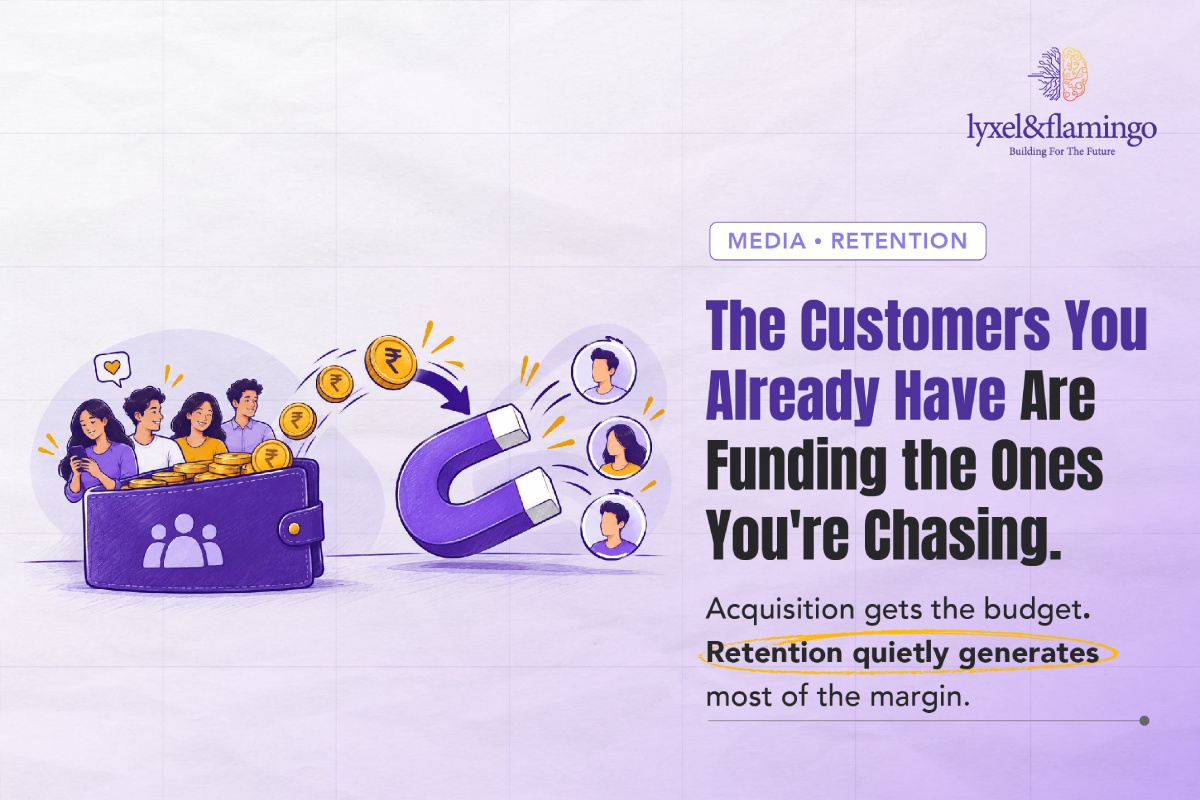
India’s digital advertising market in 2025 set new records for festive and seasonal campaign spend, with brands across FMCG, D2C, retail, and BFSI scaling their moment-based creative investment significantly. But scaling production volume without building the content architecture to support it means that every rupee spent on moment-based content starts from zero authority the next time. There is no compounding, no topical memory. Just a recurring cost with no accumulation of brand equity in the content layer.
How AI Search Reads Moment-Based Content
Understanding why topical production for AI search needs a different approach requires understanding how AI systems actually process moment-based content when composing answers for users.
Google’s AI Overviews, powered by Gemini 3.0, and platforms like Perplexity and ChatGPT do not retrieve a single document and surface it. They run what researchers describe as query fan-out, meaning the system issues multiple related sub-queries in parallel and then synthesises sources across all of them into a single coherent answer.
When a user asks, “How do Indian brands use World Health Day to build brand relevance?” the AI is not looking for one well-written article. It is looking for a body of connected content that collectively demonstrates genuine topical authority on that subject.
This is where semantic SEO for brand authority becomes a production decision and not just an SEO team concern. Google’s 2025 core updates specifically rewarded sites that covered subjects thoroughly, consistently, and credibly across a topic area, rather than rewarding individual high-quality pages sitting in isolation. A healthcare brand that produces a World Heart Day post every year but never builds supporting content around cardiovascular awareness, preventive health behaviour in India, or consumer attitudes toward heart health, that brand has no topical depth for AI systems to draw from.
The retrieval logic operates across three layers:
Layer 1: Entity and Keyword Matching. The AI identifies content that contains the right entities, Rakhi, Mother’s Day, World Health Day, Eid, alongside brand or category signals relevant to the query. Most moment-based content clears this layer simply by mentioning the occasion.
Layer 2: Semantic Cluster Coherence. The AI evaluates whether the brand’s content around a topic area feels complete. A single campaign video landing page scores poorly. A pillar article supported by four related pieces, each targeting a distinct sub-question, scores significantly higher and earns meaningfully more citation consideration from the AI system.
Layer 3: Structured Signals and Freshness. Schema markup, FAQ layers, and updated publication dates signal credibility and recency. 87.6% of AI panels cite Position 1 content, but properly structured content can outperform its actual ranking position when it directly and precisely answers a sub-question the AI is trying to resolve. These structural signals are not optional for AI-search content optimisation. They are the mechanism by which AI systems decide what to trust and cite.
Most Indian brands are operating at Layer 1. For a limited window around each moment. Then they reset to zero.
Why the Gap Is Growing Right Now
AI Overviews now reach 1.5 billion monthly users globally, and zero-click searches have risen from 64.8% in 2020 to 85% by 2025, meaning fewer than two in ten searches today actually result in a user clicking through to a website. For moment-based content specifically, AI-generated answers are increasingly the first and only touchpoint.
Content organised into topical clusters drives approximately 30% more organic traffic and holds rankings 2.5 times longer than standalone pieces, according to a 2025 analysis of clustered versus isolated content strategies. This differential is sharper for seasonal and moment-based content than for evergreen content because the indexing window before peak search demand is tight.
India accounts for 12% of global AI usage in content marketing, ahead of many developed markets in absolute adoption of AI content tools. But that adoption has largely been applied to production speed, not to content architecture quality. The gap between the volume of AI-assisted content produced and content that actually earns an AI citation is widening.
Over 70% of festive and occasion-based ad engagement in India in 2025 came from short-form video, confirming video as the dominant moment-based format. But short-form video without supporting text cluster content generates negligible AI citability. The video drives the engagement spike. The surrounding content architecture is what builds lasting topical authority.
AI search visitors convert at 4.4 times the rate of regular organic search visitors, making AI citation during high-intent moment searches, such as someone asking about the best Mother’s Day gift, the most credible Eid campaign, or the most useful World Health Day resource, a quality-of-intent advantage most brands are not yet measuring or building toward. Source: StoryChief and Ahrefs, 2025
The Lyxel&Flamingo’s Framework: The Moment Authority Stack
At Lyxel&Flamingo’s Creative Intelligence practice, we use what we call the Moment Authority Stack, a three-layer framework for turning topical production from a recurring campaign exercise into a compounding content asset that earns authority across every moment a brand activates, whether that is Rakhi, World Heart Day, Christmas, or Mother’s Day.
This framework applies equally across all moment types. Festivals, health days, social observances, and cultural occasions all follow the same structural logic. The moment changes. The architecture does not.
Layer 1: The Moment Asset (The Creative Execution)
This is the film, the Reels series, the influencer activation, the branded post series. The core creative output for the cultural moment itself. Brands generally execute this layer with increasing confidence and quality. The Eid film is emotional and well-shot. The Mother’s Day Reel genuinely connects with the audience. The World Health Day content series is informative and on-brand. The creative work is not the problem.
What is missing is the AI-discoverability layer wrapped around the creative. Every Moment Asset needs a dedicated landing page with structured text of at least 300 words, a clear descriptive heading, proper metadata, and an FAQ section. Short-form video drives engagement, but text is what AI models actually index and cite. A Rakhi film that lives only as a YouTube URL with no text content around it does not exist in AI search, regardless of its view count or engagement rate.
This is a production planning decision, not a post-campaign afterthought. The landing page, the text layer, the metadata, and the FAQ section should be briefed and delivered alongside the creative asset itself.
Layer 2: The Cluster Architecture (The Strategic Gap)
For every moment a brand activates, build a content cluster of three to five supporting pieces that each target a distinct, semantically related sub-query. The moment gives the brand the right to enter a topic. The cluster is what actually earns topical authority in that topic area.
For a healthcare brand activating on World Heart Day, the cluster might include:
- “What Indian consumers actually do differently for heart health after awareness campaigns” (informational, top of funnel)
- “How brands can make World Heart Day content feel less performative and more useful” (thought leadership, middle of funnel)
- “Preventive heart health habits that Indian urban professionals are adopting in 2025” (fresh data signal for AI systems)
- “Brand examples: World Heart Day campaigns that delivered genuine behaviour change” (authority and EEAT depth)
For a gifting brand activating on Rakhi, the cluster looks structurally identical but covers entirely different sub-queries: regional gifting variation, how purchasing behaviour around Rakhi has evolved, what sentiment actually drives the occasion beyond the obvious, and which brand approaches have felt culturally authentic versus transactional.
The cluster is what feeds the full funnel content marketing strategy at scale. Each piece links internally to the others and to the Moment Asset landing page. Together, they create the semantic coherence that AI systems require to identify a brand as a topically authoritative source, and to cite it in answers that reach users at exactly the moment of highest intent.
In our experience, this is the most consistently under-invested layer in the topical production process. The Moment Asset gets the full brief, the full budget, and the full team’s attention. The cluster content, if it exists at all, gets produced reactively and without a clear AI-discoverability brief. That needs to change.
Layer 3: The Perennial Content Layer (The Compounding Asset)
This is the layer that converts annual creative investment into a permanent topical authority asset. A single evergreen pillar piece for each major moment type that the brand owns, updated every year with fresh data, new campaign references, and evolved consumer insights.
A beauty brand might maintain
- “The Indian Woman’s Gifting Calendar: Moments, Motivations, and What Actually Works.”
A healthcare brand might own
- “How Indian Brands Approach Preventive Health Moments: A Running Analysis.”
A D2C brand might build
- “Festive Marketing in India: What the Data Shows Year Over Year.”
The perennial layer is what makes the brand’s topical production cumulative rather than cyclical. Every new Moment Asset landing page links back to the perennial pillar. Every cluster piece adds internal link weight to it. After three or four years of consistent updates, that pillar becomes the default citation source for AI models composing answers on the topic. The creative strategy for AI visibility is not just about the next campaign. It is about the content that sits permanently on the brand’s site and accumulates authority with every cycle.
What Structured Topical Production Delivers
A personal care brand working across FMCG and D2C channels came in with a familiar challenge. They had been producing moment-based content consistently for two years. Campaigns across Diwali, Mother’s Day, Holi, and Rakhi were already in place. Production quality was strong, and engagement numbers looked decent.
But something was clearly missing from a performance standpoint. Organic search visibility during those moments was almost zero. The brand also did not appear in AI-generated answers for relevant queries.
We audited their content structure to understand the gap. The same issues showed up across every campaign. There were no dedicated landing pages with structured content. No supporting cluster pieces existed at any moment.
Internal linking was missing completely. Schema markup was not implemented on any page. There was also no long-term pillar content connecting these efforts.
Each campaign was treated as a separate event. Nothing was built to connect or compound over time.
We reworked the approach using a structured model. Four key moments were selected across the year. For each one, we created supporting content pieces alongside the main asset.
Structured landing pages were added with proper markup. A central pillar piece connected all clusters. This created a system that could sustain visibility beyond the campaign window.
Five Decisions to Make Before Your Next Moment Campaign
Audit every existing moment asset for AI indexability before the next brief goes out.
Take any campaign from the last two years, a Rakhi film, a Mother’s Day post series, a World Health Day activation. Does each asset have a dedicated landing page with at least 300 words of structured text? Does that page carry an FAQ section with schema markup? If the answer is no for most of them, your existing topical production investment has generated almost no AI citability. That is worth quantifying and surfacing to the team before the next cycle begins.
Brief the cluster content at the same time as the hero creative.
The cluster content is not a content marketing add-on. It is the structure that makes the hero asset AI-discoverable. Brief three to four supporting cluster pieces for every major moment activation at the same stage as the creative brief itself. Define the sub-queries each piece will target, assign owners, and set publishing timelines relative to the moment date rather than relative to whenever the hero asset is finalised.
Build one perennial pillar per moment category that the brand regularly activates.
Every brand that consistently produces moment-based content should have at least two or three evergreen pillar pieces on its site, one per broad moment category they genuinely own. A BFSI brand might own festive savings and gifting. A wellness brand might own health observance moments. A gifting platform might own the full Indian gifting calendar. These pillars anchor all future cluster content and grow stronger every time they are updated and linked to by new campaign assets.
Make schema markup a launch-gate requirement for every content piece.
Article schema, FAQPage schema, and BreadcrumbList schema should appear on every piece of content published in connection with a moment campaign. This is not an optional SEO enhancement. For AI-search content optimisation, these structured signals are the mechanism by which AI models confirm what a piece of content is about, who produced it, and how it relates to surrounding content. If schema markup is not on the launch checklist, it will not happen consistently, and the AI citability of the entire cluster will suffer as a result.
Set a content freshness calendar that runs eight weeks ahead of each moment.
Moment-based content needs to be indexed, crawled, and evaluated by AI systems before the peak search window opens, not during it. Building and publishing cluster content four weeks before a moment, which is the current norm for most Indian brand teams, leaves almost no indexing runway. Eight to ten weeks is the practical minimum. Build a rolling content freshness calendar for the year, with cluster publication timelines mapped to moment dates, and treat it as a production schedule rather than a content guideline.
Conclusion
The topical production calendar is not changing. Rakhi arrives every August. Mother’s Day returns every May. World Health Day comes around every April 7. Eid, Christmas, Holi, and the full spread of Indian cultural and observance moments will keep recurring on schedule. What is changing rapidly is where consumers encounter brands around those moments, and what structural decisions actually determine whether a brand appears in those high-intent discovery touchpoints.
A brand that runs a strong Mother’s Day film and a structurally invisible Rakhi campaign every year is not building content authority. It is running an expensive creative exercise that resets to zero every time. Topical production for AI search is the practice of ensuring that does not happen. That every moment the brand activates becomes a building block in a compounding content architecture rather than a standalone campaign that expires with the news cycle.
The brands that build that architecture now are creating a structural advantage in AI-search visibility that will be genuinely difficult for competitors to close in 24 months.
The moments are already on the calendar. The question is what you build around them.
Speak to Lyxel&Flamingo’s Creative Intelligence team about building a Moment Authority Stack for your brand.
Frequently Asked Questions
Topical production focuses on building content around recurring moments with long-term value. It is not just about campaign traffic or short visibility. The goal is to stay discoverable and useful even after the moment has passed.
AI search systems rely on structured text, not just high-performing media content. A video with strong engagement but no supporting page or structure becomes invisible in search. Social views and AI visibility work differently. A brand can have millions of views and still not appear in relevant AI-generated answers.
The structure stays consistent across different moments, even when the content changes. You build a main landing page and support it with related cluster pieces. All of it connects back to a central pillar. Topics shift based on the moment, but the architecture remains the same throughout.
Content needs to go live at least eight to ten weeks before the moment peak. AI systems require time to process and evaluate new content properly. Publishing too late reduces visibility. This should be treated as a fixed production timeline, not a flexible content plan with shifting deadlines.
Smaller brands can benefit even more from this approach than larger ones. It is not about budget, it is about structure and clarity. One strong cluster often performs better than multiple disconnected campaigns. AI systems reward depth and connection. Fewer moments, built properly, create stronger visibility over time.