
Table of Contents
- Why Omni-Channel CX Breaks at the Moment It Matters Most
- WhatsApp’s Structural Advantage Over Other Channels
- Conversational Marketing as a Consideration-Stage Engine
- Customer Engagement via Messaging Across the Lifecycle
- Treating WhatsApp as a Channel, Not a Support Function
- Conversational CX Tactics Embedded in Media Operations
- Marketing Automation via Messaging Without Eroding Trust
- WhatsApp in DTC, Retail, and Marketplace Ecosystems
- Data-Driven Creative Insights in Messaging
- Measuring WhatsApp’s True Business Impact
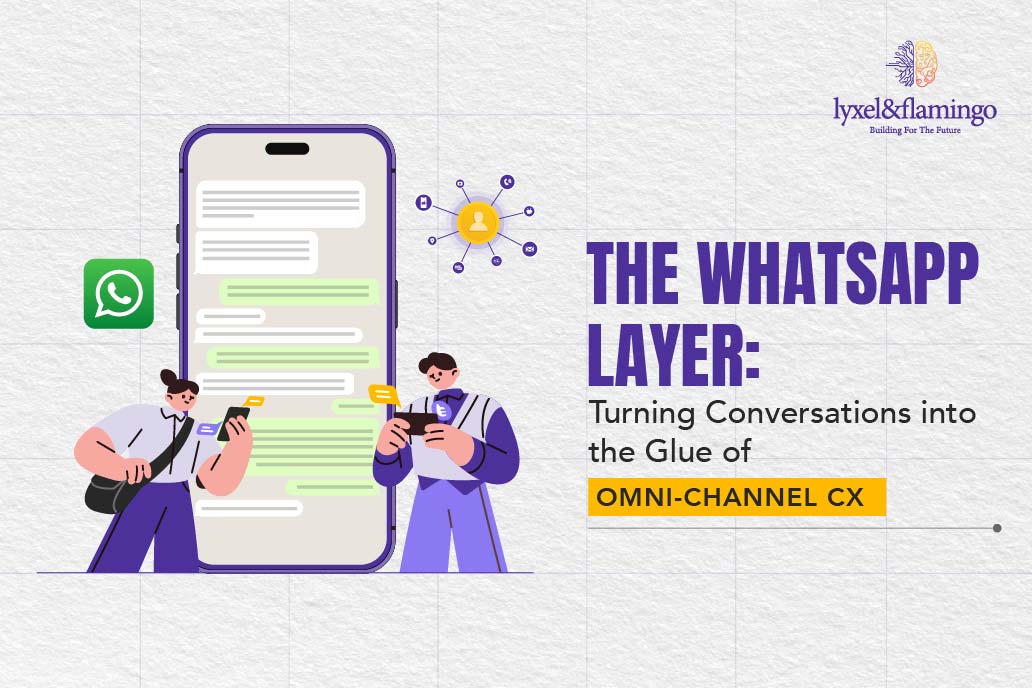
Digital growth today does not fail because brands lack channels. It fails because channels do not connect. Consumers discover brands across ads, content, search, marketplaces, and stores, but their experience fragments the moment intent turns into interaction. Each handoff resets context. Each touchpoint forgets the previous one. The result is friction at precisely the moments where reassurance, trust, and momentum matter most.
This is why WhatsApp has emerged as one of the most critical experience layers in modern marketing and commerce. No longer limited to customer support, a well-designed WhatsApp marketing strategy functions as the connective tissue that binds acquisition, consideration, conversion, service, and retention into a single, continuous journey. It transforms fragmented touchpoints into an integrated omni-channel customer experience.
In this deep dive, we examine how WhatsApp operates as a post-click and post-purchase accelerator, how conversational marketing reshapes consideration-stage behaviour, and why customer engagement via messaging now directly influences conversion quality and lifetime value. We also explore what true WhatsApp business optimisation looks like in practice, moving from reactive replies to systemised, measurable experience design.
Why Omni-Channel CX Breaks at the Moment It Matters Most
Most omni-channel strategies look comprehensive on paper. Paid media drives traffic. Websites host content. CRM manages data. Customer service resolves issues. Yet these systems are often optimised independently, not orchestrated together.
The break usually occurs at moments of uncertainty. A user clicks an ad but hesitates before checkout. A customer places an order but feels anxious about delivery. A first-time buyer has a question that is not answered quickly enough. These micro-moments decide whether intent converts into confidence or drops into abandonment.
Traditional digital interfaces struggle here. Forms feel impersonal. FAQs feel generic. Chatbots often fail when nuance is required. WhatsApp, by contrast, enters at the level of conversation, which is how humans naturally resolve doubt.
A strong omni-channel customer experience requires continuity of context. WhatsApp provides that continuity by carrying conversation across stages instead of resetting it at every touchpoint.
WhatsApp’s Structural Advantage Over Other Channels
WhatsApp’s power is not accidental. It is rooted in structural behaviour.
First, WhatsApp is permission-based. Users opt in consciously, which changes the psychological contract. Messages are expected, not intrusive. Second, it is real-time. Delays feel personal. Third, it is persistent. Conversations live on, allowing brands to build history rather than restart interaction.
This makes WhatsApp uniquely suited to high-intent moments where reassurance, clarity, or confirmation is required. Unlike email, it is not asynchronous. Unlike social DMs, it is not noisy. Unlike call centres, it does not demand immediate availability from the user.
When planned intentionally, WhatsApp becomes the most human digital interface a brand owns.
Conversational Marketing as a Consideration-Stage Engine
The most underutilised role of WhatsApp is in the consideration stage. Brands often focus on driving clicks and measuring last-click performance, but overlook what happens between curiosity and commitment.
Consider a mid-sized DTC skincare brand in India. Paid media drives high traffic, but cart abandonment remains elevated. Analysis reveals a pattern. Customers hesitate around product suitability, usage routines, and authenticity concerns.
By introducing WhatsApp entry points at high-intent pages, the brand allows users to ask questions in real time. These are not support tickets. They are decision conversations. Clarifying ingredients, routines, and delivery timelines reduces uncertainty. Conversion rates improve, but more importantly, returns drop and satisfaction increases.
This is conversational marketing functioning as a consideration-stage accelerator. WhatsApp does not replace content or ads. It completes them.
Customer Engagement via Messaging Across the Lifecycle
Customer engagement via messaging evolves as the relationship matures. WhatsApp’s role changes, but its continuity remains constant.
In the discovery and consideration stage, it answers questions and builds trust. In the conversion stage, it nudges intent through reminders, limited-time prompts, or assisted checkout. Post-purchase, it becomes a reassurance layer through order updates, delivery coordination, and service resolution.
Over time, WhatsApp transitions into a retention and loyalty channel. Brands that use it effectively do not push constant promotions. They provide value through updates, community access, early launches, or personalised recommendations.
This lifecycle continuity is what turns WhatsApp from a tool into an experience layer.
Treating WhatsApp as a Channel, Not a Support Function
One of the biggest mistakes brands make is positioning WhatsApp as a reactive support inbox. This limits its impact and creates operational chaos.
True WhatsApp business optimisation starts by defining WhatsApp as a channel with objectives, governance, and measurement. This includes deciding which journeys belong on WhatsApp, which messages are automated, when humans intervene, and how performance is evaluated.
For example, a consumer electronics brand redesigned its WhatsApp usage from pure support to structured journeys. Pre-purchase queries were routed to trained sales advisors. Post-purchase issues followed defined resolution flows. Marketing nudges were carefully timed and capped.
The result was not just higher conversions, but lower service costs and higher customer satisfaction. WhatsApp became more efficient because it was planned, not improvised.
Conversational CX Tactics Embedded in Media Operations
WhatsApp’s impact multiplies when integrated into Media Operations. This means connecting media signals with conversational entry points.
Imagine a scenario where high-intent search traffic lands on a product comparison page. Instead of forcing users to decide alone, a WhatsApp prompt offers instant clarification. Or a retargeting campaign invites users back into a conversation rather than a static landing page.
These Conversational CX tactics allow the media to extend beyond exposure into assistance. Campaigns stop being one-way messages and start becoming two-way interactions.
Over time, insights from WhatsApp conversations inform creative optimisation. Frequently asked questions shape ad messaging. Objections surface earlier. The media becomes smarter because conversations feed back into planning.
Marketing Automation via Messaging Without Eroding Trust
Automation is essential for scale, but poorly implemented automation damages trust quickly. The goal of marketing automation via messaging is not volume, but relevance.
Effective automation handles predictable moments. Order confirmations, delivery updates, appointment reminders, and simple nudges can be automated without friction. More complex or emotional interactions require human escalation.
A large retail brand implemented automation for order updates and basic FAQs while reserving human agents for complaints, exchanges, and advisory conversations. Response times improved dramatically, but customer satisfaction rose because human effort was focused where it mattered.
Automation works when it feels invisible. Customers should feel helped, not processed.
WhatsApp in DTC, Retail, and Marketplace Ecosystems
WhatsApp’s role varies by business model, but its value remains consistent.
In DTC, WhatsApp functions as a digital store associate. Customers ask about sizing, usage, and delivery. These interactions directly influence conversion quality and reduce post-purchase dissatisfaction.
In retail, WhatsApp bridges online and offline. Store availability, appointment booking, and post-visit follow-ups extend the in-store experience digitally.
In marketplaces, WhatsApp becomes a differentiation lever. While platforms commoditise listings, WhatsApp restores direct brand connection, especially post-purchase.
As seen in how WhatsApp marketing is changing the DTC world, brands that treat messaging as part of their commerce stack outperform those that treat it as a service add-on.
Data-Driven Creative Insights in Messaging
Messaging is creative. Language, timing, and structure influence outcomes as much as visuals do in ads.
By analysing conversation data, brands uncover patterns. Which phrases reassure. Which offers convert. Which questions signal hesitation. These data-driven creative insights improve not only messaging but upstream creative strategy.
A fashion brand discovered that customers repeatedly asked about fit consistency. This insight reshaped both WhatsApp scripts and ad messaging. Conversion rates improved because expectations were set earlier.
Messaging becomes a research layer as much as a response channel.
Measuring WhatsApp’s True Business Impact
Measuring WhatsApp purely on open rates or response times misses its value. WhatsApp influences assisted conversions, return rates, repeat purchases, and service efficiency.
Advanced measurement links WhatsApp interactions to downstream behaviour. Customers who engage via WhatsApp often convert at higher value and churn less. Service queries resolved via messaging reduce call centre load.
When WhatsApp is measured correctly, it justifies its place as a revenue and experience driver.
Organisational Design for Messaging at Scale
Scaling WhatsApp requires organisational clarity. Who owns it. Who responds. Who analyses performance.
The most effective brands treat WhatsApp as a shared responsibility across marketing, CX, and operations. Governance frameworks define tone, escalation, and usage frequency. Training ensures consistency.
Without this structure, WhatsApp becomes noisy, inconsistent, and eventually abandoned.
How Lyxel&Flamingo Builds WhatsApp as an Experience Layer
Lyxel&Flamingo approaches WhatsApp as an experience system, not a tool deployment. The focus is on designing journeys that carry context across touchpoints.
By embedding Conversational CX tactics within Media Operations and structuring marketing automation via messaging, Lyxel&Flamingo helps brands build WhatsApp layers that scale without losing human nuance.
Each conversation is designed to reduce friction, strengthen confidence, and move the relationship forward.
Conclusion
WhatsApp has become one of the most powerful layers in modern customer experience because it connects what digital systems fragment. When executed through a thoughtful WhatsApp marketing strategy, it transforms disconnected touchpoints into a coherent omni-channel customer experience.
Through disciplined conversational marketing, intentional customer engagement via messaging, and scalable WhatsApp business optimisation, brands can turn conversations into long-term value. WhatsApp is no longer just where customers ask questions. It is where brands earn trust, confidence, and loyalty.
Frequently Asked Questions
It is a seamless, connected experience across all customer touchpoints and channels.
By enabling real-time, personalised, and permission-based conversations.
Yes, when automation is contextual, timely, and supported by human intervention.
Assisted conversions, response time, retention impact, satisfaction, and opt-out rates.
Yes, WhatsApp can integrate with CRM and analytics systems for personalised engagement.