
Marketing has always evolved, but the pace and nature of change heading into 2026 feels fundamentally different. This is not a year where incremental optimisation will be enough. It is a year where underlying assumptions about how growth happens are being tested in real time.
Over the last few years, brands adapted to platform volatility, rising acquisition costs, and shifting consumer expectations. Many of those adaptations were tactical. New tools were added. Budgets were rebalanced. Teams learned to operate under pressure. But as we move into 2026, the challenge is no longer tactical resilience. It is strategic coherence.
The Marketing trends 2026 conversation is increasingly shaped by one reality: complexity has become permanent. Consumers move across channels without friction. Platforms automate delivery and optimisation at scale. AI alters how intent is expressed and interpreted. Measurement grows noisier even as expectations for accountability increase.
This Digital marketing forecast does not aim to predict the next shiny channel or format. Instead, it focuses on five expert marketing strategies that need deliberate refinement by Q2. These are not speculative ideas. They are strategic shifts already underway, and the brands that address them early will find themselves far better positioned as 2026 unfolds.
Why 2026 Is a Structural Inflection Point for Marketing
Every few years, marketing enters a phase where old playbooks stop delivering predictable returns. 2026 is one of those moments.
Several forces are converging at once. Acquisition costs remain elevated across most paid channels. Organic discovery is being reshaped by AI-driven interfaces and changing search behaviour. Consumer trust is harder to earn and easier to lose. At the same time, leadership teams are demanding clearer links between marketing investment and business outcomes.
What makes 2026 particularly challenging is that these pressures are not isolated. They interact with each other. Rising costs amplify the impact of inefficiency. Signal loss makes optimisation harder. AI increases speed while reducing transparency. The result is that many brands feel busy but uncertain.
Q2 matters because it is the point where annual plans either stabilise or unravel. Brands that enter Q2 without refining their future marketing strategies often spend the rest of the year reacting to symptoms instead of addressing causes. Those that refine early gain room to experiment, learn, and course-correct before pressure peaks.
Strategy 1: Move From Channel Performance to Full-Funnel Intelligence
For years, marketing performance was evaluated channel by channel. Search teams optimised for search KPIs. Paid media teams chased ROAS. Social teams measured engagement. CRM teams focused on retention. Each function improved its own metrics, often without considering how those metrics interacted.
In 2026, this approach is no longer sustainable.
Consumers do not experience brands in channels. They experience brands across journeys. A single purchase decision may involve search, social, creators, reviews, email, marketplaces, and offline influence. Measuring each touchpoint in isolation creates blind spots that distort decision-making.
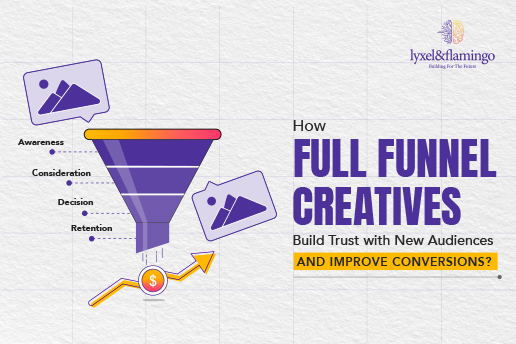
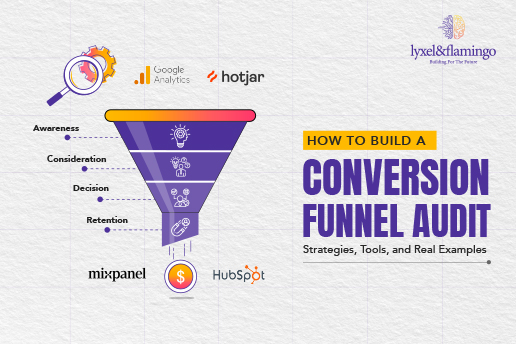
This is why Future-ready full funnel marketing has moved from theory to necessity. Full-funnel intelligence shifts the focus from individual channel success to system performance. Instead of asking which channel converted, we ask how different signals contributed to movement through the journey.
This refinement changes how budgets are allocated. Upper-funnel activity is no longer treated as expendable. Mid-funnel engagement is no longer undervalued. Lower-funnel performance is no longer over-attributed. Each stage is evaluated based on its role, not its immediacy.
Brands that refine this approach by Q2 2026 gain a clearer view of what actually drives demand. They stop oscillating budgets based on short-term noise and start building momentum across the funnel.
Strategy 2: Treat AI as a Strategic Layer, Not a Toolset
The AI impact on marketing is often discussed in terms of productivity. Faster copy. Smarter bidding. Automated reporting. While these gains are real, they barely scratch the surface of AI’s strategic implications.
In 2026, an effective AI-driven marketing strategy is less about execution speed and more about decision quality. AI increasingly shapes how platforms prioritise content, how users discover information, and how intent is inferred from behaviour.
Search behaviour is a clear example. Queries are no longer the sole expression of intent. Conversational interfaces, recommendations, and AI-generated responses change how users explore options. This makes SERP behavior analysis and search intent optimization more complex than ever.
AI’s true value lies in pattern recognition. It can surface relationships across datasets that humans cannot process manually. But this only works when guided by clear strategic questions. Without that guidance, AI accelerates activity without improving outcomes.
Brands refining their AI approach by Q2 2026 focus on where AI adds leverage. They use it to prioritise opportunities, test hypotheses faster, and reduce decision latency. AI becomes a strategic layer that informs planning, not just a tool that executes it.
Strategy 3: Redesign Omnichannel Planning Around Behaviour, Not Platforms
Omnichannel marketing planning is often misunderstood as omnipresence. Be visible everywhere. Repurpose assets. Maintain consistency. This mindset leads to duplication rather than coherence.
In 2026, Omnichannel marketing planning must begin with behaviour. Consumers move fluidly across touchpoints, guided by context rather than channel loyalty. They may discover a brand on social, validate it through AI search, compare it on marketplaces, and convert via a remarketing nudge.
Planning around platforms ignores this reality. Planning around behaviour embraces it.
Behaviour-led planning asks different questions. What is the user trying to solve at this moment? What uncertainty exists? What reassurance is missing? Each touchpoint is then designed to reduce friction rather than repeat messaging.
When omnichannel planning is refined this way, creative, media, and messaging align naturally. Frequency becomes intentional. Sequencing improves relevance. Waste decreases without sacrificing reach.
Brands that fail to make this shift often find themselves overspending on presence while underserving intent.
Strategy 4: Build Automation That Scales Judgment, Not Just Output
Scalable marketing automation trends is frequently positioned as a way to save time. While efficiency matters, automation without judgment leads to volume without value.
In 2026, automation must scale decision logic, not just execution.
This requires rethinking what should and should not be automated. Repetitive actions benefit from automation. Strategic decisions do not. The goal is to free teams from operational drag while elevating human oversight where it matters.
Automation works best when it mirrors the customer journey. Triggers should reflect behaviour, not internal convenience. Messaging should adapt based on signals, not schedules. Testing should be structured, not random.
Brands that refine automation by Q2 2026 reduce dependence on individual heroics. Systems become resilient. Learning compounds. Execution quality becomes consistent rather than variable.
Strategy 5: Redefine Measurement Around Directional Truth
Attribution has been under strain for years. In 2026, the pursuit of perfect attribution is increasingly counterproductive.
Modern journeys are fragmented. Privacy constraints limit visibility. Platform-reported metrics often conflict. In this environment, the goal shifts from precision to usefulness.
A mature measurement approach focuses on directional truth. It looks for patterns across cohorts, channels, and timeframes. It combines quantitative data with qualitative insight. It asks which activities contribute to sustained demand rather than short-term spikes.
This is where AI-driven search behavior analysis and intent modelling play a role. Measurement becomes a tool for learning, not justification.
Brands that refine measurement early in 2026 spend less time debating dashboards and more time improving strategy.
What Many CMOs Are Still Getting Wrong
Despite growing awareness, several patterns continue to hold brands back.
Many organisations treat refinement as a threat rather than an opportunity. Legacy KPIs remain untouched. Teams are incentivised to protect channels instead of improving systems. AI is adopted without clarity on purpose. Automation is layered on top of broken workflows.
The result is activity without alignment.
Refinement requires letting go of familiar comfort metrics. It requires rethinking roles, incentives, and planning processes. Brands that resist this discomfort often mistake motion for progress.
How We Think About 2026 Strategy at Lyxel&Flamingo
At Lyxel&Flamingo, we approach 2026 planning as a systems design challenge. We look at how data, media, creative, automation, and measurement interact rather than treating them as separate functions.
Our focus is on coherence. Coherence between strategy and execution. Between insight and action. Between short-term performance and long-term growth. We see Full Funnel Marketing and Automation not as tactics, but as structural enablers.
By refining how decisions are made, brands gain clarity even in complex environments. This clarity is what allows teams to move faster without losing control as 2026 unfolds.
Conclusion
The Digital marketing forecast for 2026 points to a simple but demanding truth: complexity is permanent. The brands that succeed will not be those that chase every trend, but those that refine how their systems work together.
By addressing these five expert strategies by Q2, brands can enter the rest of the year with confidence rather than reactivity. Marketing trends 2026 favour those who prioritise alignment, learning, and relevance over volume and noise.
From our perspective, the future belongs to teams that treat marketing as an operating system, continuously refined, rather than a collection of campaigns revisited once a year.
FAQs
Q. Why should brands plan for 2026 early?
A. Because the forces shaping 2026 are already active, and early refinement reduces risk while increasing flexibility.
Q. Which marketing strategies need refinement most urgently?
A. Full funnel marketing, AI integration, omnichannel planning, automation design, and measurement frameworks.
Q. How will AI change marketing in 2026?
A. AI will increasingly influence how intent is expressed, how content is surfaced, and how decisions are prioritised.
Q. Why is full funnel marketing important now?
A. Because fragmented journeys make channel-level optimisation misleading and inefficient.
Q. How can brands stay competitive long term?
A. By building integrated systems that prioritise behavioural relevance, learning, and strategic coherence over short-term metrics.