
Table of Contents
- Why Quick Commerce Marketing Is Different from Traditional E-commerce
- Understanding the Quick Commerce Funnel
- Dark Store Advertising India: The New Media Buying Model
- FMCG Quick Commerce Playbook: What Actually Works
- Case Example: Festive Quick Commerce Growth Strategy (Gits)
- Building a Q-Commerce Brand Strategy for Blinkit, Zepto, Swiggy Instamart
- Geo-Based Media Allocation Strategy for Quick Commerce Platforms
- The Role of Marketplace Strategy in Quick Commerce
- Key Metrics Brands Must Track in Quick Commerce
Quick commerce has fundamentally changed how FMCG brands compete in digital retail. In traditional e-commerce, brands compete for search visibility and conversions. In quick commerce, brands compete for instant visibility, location-based availability, and top-of-app placement within a very small decision window. The consumer is not browsing; the consumer is buying immediately. This changes the entire marketing strategy.
For brands operating on platforms like Blinkit, Zepto, and Swiggy Instamart, success is no longer driven only by discounts or product demand. It is driven by visibility architecture, hyperlocal media buying, and dark store-level strategy. This is where quick commerce marketing becomes a specialized discipline rather than an extension of marketplace advertising.
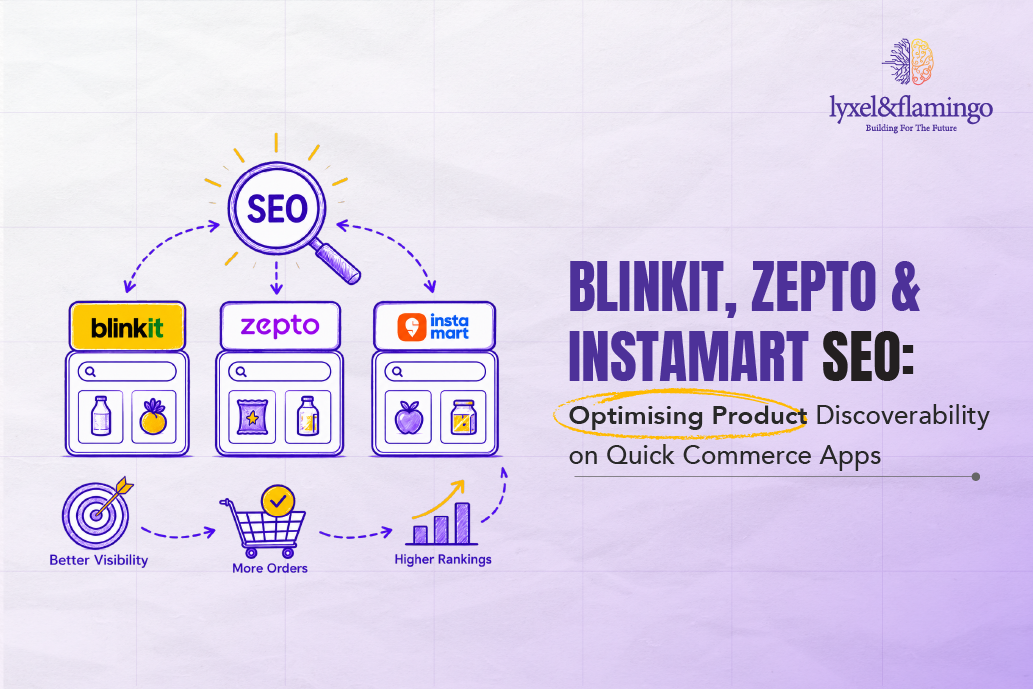
This article explains the quick commerce marketing strategy India, how brands should structure their q-commerce brand strategy Blinkit Zepto Swiggy Instamart, and what a practical FMCG quick commerce playbook looks like in the 10-minute delivery ecosystem.
Why Quick Commerce Marketing Is Different from Traditional E-commerce
In traditional marketplaces, the consumer journey is longer: search → compare → review → purchase. In quick commerce, the journey is compressed into 10-30 seconds, not minutes.
| Traditional E-commerce | Quick Commerce |
| Search-driven | Visibility-driven |
| National targeting | Hyperlocal targeting |
| Long consideration | Instant decision |
| SEO + Ads | Placement + Availability |
| Discounts influence conversion | Visibility influences conversion |
In quick commerce, availability + placement = sales.
If the product is not visible in the first few sections of the app, it effectively does not exist for the consumer.
This is why 10-minute delivery brand visibility is the most important metric in quick commerce marketing.
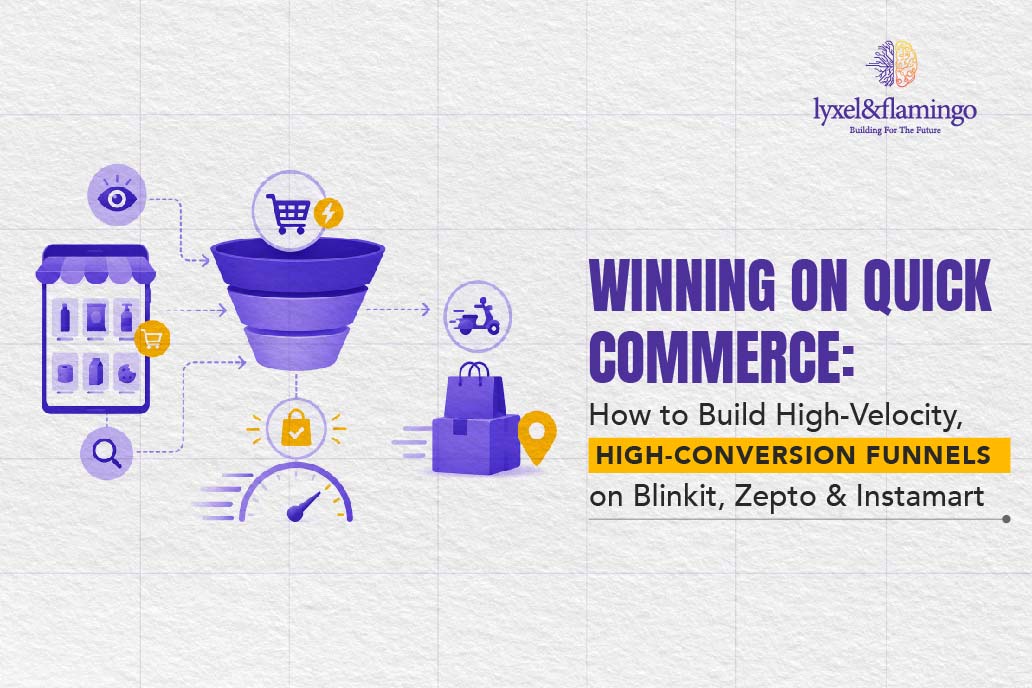
Understanding the Quick Commerce Funnel
Unlike traditional funnels, quick commerce works on a compressed funnel:
| Funnel Stage | Quick Commerce Equivalent | Media Strategy |
| Awareness | App banners | Platform display ads |
| Consideration | Category listing | Sponsored listing ads |
| Conversion | Top search / recommendation | Keyword + placement bidding |
| Retargeting | Past purchasers / browsers | Platform remarketing |
This is why performance marketing for e-commerce becomes critical in quick commerce. Brands cannot rely only on bottom-of-funnel ads. Visibility at multiple touchpoints is necessary to win the category.
Dark Store Advertising India: The New Media Buying Model
One of the most important and least understood aspects of quick commerce is dark store advertising India.
Quick commerce platforms operate through dark stores (micro-warehouses), and product visibility is often controlled at a dark store or city cluster level, not only at a national level.
This means media planning should not be done only by total budget. It should be done by city tier, dark store demand, and SKU availability.
A typical hyperlocal commerce media buying structure looks like this:
| City Type | Strategy | Budget Approach |
| Metro High Demand | Visibility domination | High bids |
| Tier 1 Stable | Balanced growth | Moderate bids |
| Tier 2 Emerging | Efficiency | Low CPC focus |
This is called hyperlocal commerce media buying, and it is one of the core pillars of quick commerce success.
FMCG Quick Commerce Playbook: What Actually Works
Based on quick commerce performance campaigns, the most effective strategy framework for FMCG brands includes the following:
1. Visibility First, Not Discounts First
In quick commerce, visibility drives conversion more than discounts. A product placed in:
- Top search
- Category top rows
- App banner
- Recommendation widgets
will outperform a discounted product with low visibility.
2. High-CVR Keyword Bidding
Quick commerce platforms allow keyword and category targeting. The correct approach is:
- Aggressive bidding on high-conversion keywords
- Controlled bidding on discovery keywords
- Brand keyword protection
- Competitor keyword targeting
3. Pack Size Strategy
Quick commerce growth often comes from:
- Larger packs → Higher GMV
- Smaller packs → Higher acquisition
So media strategy should be split by value packs vs trial packs.
4. Time-Based Bidding (Dayparting)
Quick commerce demand is not uniform. Most orders happen during:
- Morning household refill hours
- Evening snack & grocery hours
- Festival / weekend spikes
So bids should increase during peak hours and reduce during low-intent hours.
5. New Launch Strategy
New products require:
- Banner visibility
- Category placement
- High-intent keyword bidding
- Geo-priority targeting
Without this, new launches get buried in the category.
This entire structure forms a practical FMCG quick commerce playbook.
Case Example: Festive Quick Commerce Growth Strategy (Gits)
A good example of quick commerce strategy execution is a festive campaign where the objective was to build traction for new launches and larger packs while scaling overall GMV during a seasonal demand period.
The strategy was structured around three key areas:
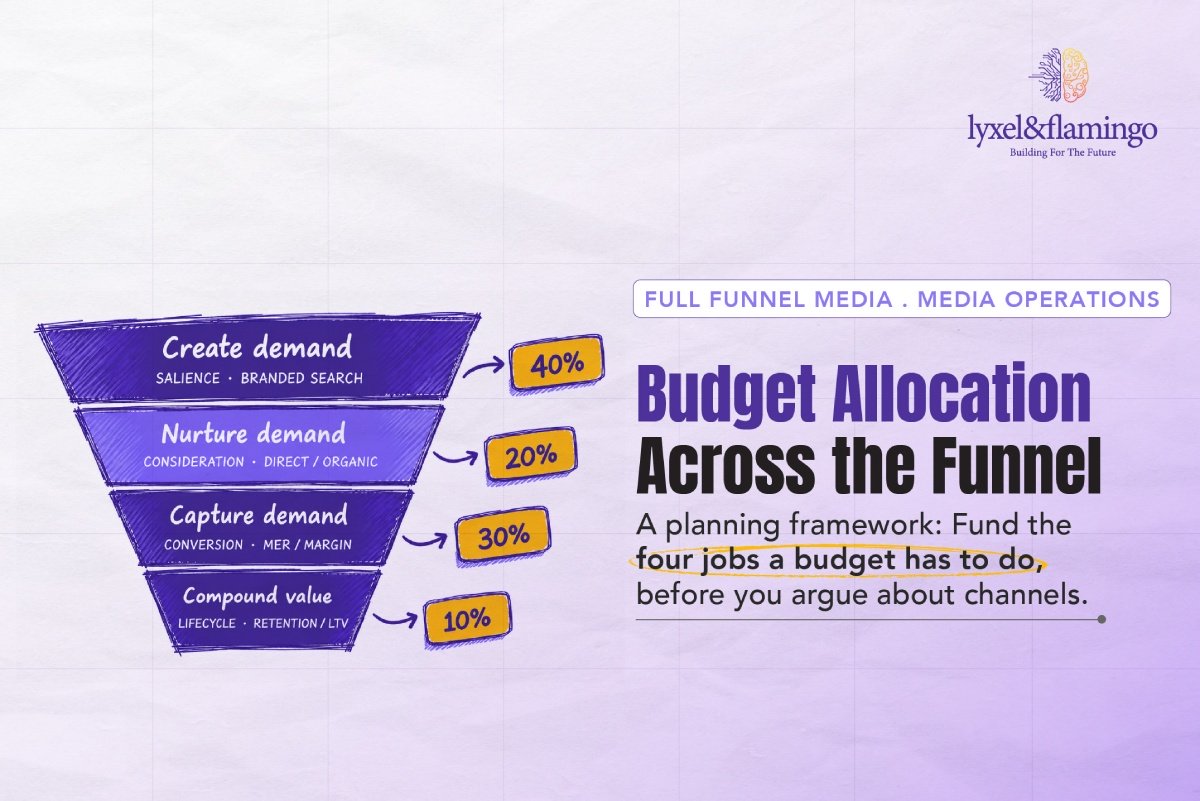
1. Full Funnel Investment Structure
Budget allocation was structured as:
- 60% Bottom of Funnel: High-intent users, conversion-focused placements
- 40% Mid Funnel: Discovery and category visibility
This ensured that high-intent traffic converted while new users were continuously entering the funnel.
2. Geo-Based Media Planning
Cities were divided into three groups:
- Revenue Drivers: High visibility and aggressive bidding
- Consistent Contributors: Balanced spending
- Slow Movers: Efficiency-focused campaigns
This is a classic example of hyperlocal commerce media buying rather than flat national spending.
3. Keyword & Product Strategy
- High-conversion keywords → Aggressive bidding
- Low-conversion keywords → Controlled bids
- Larger packs → GMV growth focus
- Economy packs → Customer acquisition focus
Results Achieved
This structured quick commerce strategy resulted in:
- Share of Voice increase of ~30%
- ROI improvement of ~53%
- GMV growth of ~5X vs business-as-usual
- Ad revenue growth of ~3.5X
- CTR improvement indicating stronger visibility and relevance
This clearly shows that quick commerce growth is driven by visibility strategy, geo targeting, and keyword bidding discipline, not only by increasing ad spend.
Building a Q-Commerce Brand Strategy for Blinkit, Zepto, Swiggy Instamart
A strong q-commerce brand strategy Blinkit, Zepto, Swiggy, Instamart should include the following framework:
| Strategy Area | What Brands Should Do |
| Visibility | Invest in top search & category placements |
| Brand Protection | Bid on brand keywords |
| Competitor Conquesting | Target competitor product pages |
| Geo Strategy | Allocate budget city-wise |
| Pack Strategy | Promote high GMV packs |
| Time Strategy | Increase bids during peak hours |
| Retargeting | Target past viewers and buyers |
| New Launch | Banner + category + search visibility |
Quick commerce is not a single campaign. It is an ongoing visibility management system.
Geo-Based Media Allocation Strategy for Quick Commerce Platforms
One of the most common mistakes brands make in quick commerce is allocating media budgets platform-wise instead of geo-wise. Quick commerce demand is highly city-dependent, and each platform has stronger penetration, dark store density, and user adoption in specific cities. This means media allocation should be done city-first, platform-second, not the other way around.
In quick commerce, market share is measured nationally, but visibility is won city by city.
Platform priority by city is typically determined by a combination of dark store density, platform penetration, and category demand concentration, rather than official city-level market share disclosures, as quick commerce companies do not publish city-level share data publicly. Industry analyses from platforms such as Inc42, brokerage market reports, and company disclosures consistently show Blinkit as the overall market leader, with Zepto and Swiggy Instamart holding strong positions across major metro markets and expanding rapidly across Tier 1 and Tier 2 cities. This is why media allocation decisions in quick commerce are made based on delivery coverage, order density, and platform strength by city, not just national market share.
A practical geo-based hyperlocal commerce media buying model for India typically looks like this:
| City | Platform Priority | Strategy Focus |
| Delhi NCR | Blinkit, Instamart | High visibility & Top-of-Search |
| Mumbai | Zepto, Blinkit | Category dominance |
| Bengaluru | Zepto, Instamart | New customer acquisition |
| Hyderabad | Instamart | Conversion efficiency |
| Chennai | Instamart | Category visibility |
| Pune | Blinkit, Zepto | Balanced growth |
| Kolkata | Blinkit | Visibility building |
| Tier 2 Cities | Instamart | Cost-efficient scaling |
This type of allocation ensures that brands are not overspending on platforms that are weaker in certain cities while underspending where demand is highest. It also aligns dark store availability, media buying, and demand density, which is critical in quick commerce.
For most FMCG brands, quick commerce growth does not come from national scale immediately. It comes from winning key cities first, building category visibility, and then expanding distribution and media investments to new locations.
This is why geo-based planning is a core part of any quick commerce marketing strategy India.
The Role of Marketplace Strategy in Quick Commerce
Quick commerce should not be isolated from overall marketplace strategy. It should be part of a broader marketplace growth strategy approach, where brands manage:
- Amazon & Flipkart for depth of catalog
- Quick commerce for velocity and impulse purchase
- D2C for brand control
- Retail for distribution
Each channel plays a different role in the overall growth model.
Quick commerce specifically drives:
- High-frequency purchases
- Impulse buying
- New product trials
- Festive and seasonal spikes
- Category visibility
Key Metrics Brands Must Track in Quick Commerce
| Metric | Why It Matters |
| Share of Voice (SOV) | Visibility in category |
| Top of Search % | Conversion visibility |
| CTR | Visibility effectiveness |
| CVR | Conversion efficiency |
| ROI / ROAS | Profitability |
| GMV | Scale |
| New-to-Brand Customers | Growth |
| Repeat Orders | Retention |
Quick commerce success is not measured only by sales. It is measured by visibility share and conversion efficiency.
Final Strategic Insight
Quick commerce is often misunderstood as a logistics or supply chain advantage. In reality, it is a visibility and media buying advantage.
- In traditional retail, the best shelf wins.
- In e-commerce, the best search result wins.
- In quick commerce, the most visible product within a delivery radius wins.
This is why brands that approach quick commerce with only a discounting strategy often struggle with profitability, while brands that invest in Share of Voice, Top-of-Search visibility, dark store presence, and hyperlocal media buying scale faster and more sustainably.
To win in the 10-minute delivery brand visibility economy, brands need to build capabilities in:
- Dark store advertising India
- Hyperlocal commerce media buying
- Keyword and category bidding
- Geo-priority budget allocation
- Pack size strategy
- Full funnel investment strategy
- Visibility share tracking
Quick commerce should be treated as a media-driven growth channel, not only a distribution channel.
Brands that understand this early are able to build category dominance, not just temporary sales spikes.
How Lyxel&Flamingo Helps Brands Win in Quick Commerce
Quick commerce requires a different media approach compared to traditional marketplaces. It requires dark store level planning, hyperlocal bidding, visibility strategy, and full funnel investment planning rather than only running sponsored ads.
Lyxel&Flamingo works with brands to build structured quick commerce growth models that include:
- Platform-wise visibility strategy for Blinkit, Zepto, and Instamart
- Hyperlocal commerce media buying and city-level budget allocation
- Dark store advertising India planning and SKU-level visibility
- Keyword and category bidding strategy
- Pack size and portfolio strategy for GMV growth
- Full funnel investment planning and ROI optimization
- Seasonal and festive scale-up strategy
The objective is not just to increase sales, but to increase Share of Voice, improve visibility, and build category dominance within quick commerce platforms.
For brands looking to scale sustainably on quick commerce, the focus should be on visibility architecture, media efficiency, and conversion strategy, not only on discounts and platform participation.
Frequently Asked Questions
Quick commerce marketing strategy India focuses on improving product visibility, top-of-search placement, and hyperlocal availability on platforms like Blinkit, Zepto, and Swiggy Instamart to drive high-intent purchases within short delivery windows.
Dark store advertising India refers to location-based advertising and product visibility optimization within specific quick commerce warehouse zones, where media spend is allocated city-wise or store-wise to improve delivery-area level sales and visibility.
Quick commerce marketing is visibility-driven and hyperlocal, while traditional e-commerce marketing is search-driven and national. Quick commerce focuses on placement, availability, and instant conversion rather than long consideration journeys.
Share of Voice (SOV) and Top-of-Search visibility are the most important metrics in quick commerce because most purchases happen from the first few visible products in the app.
FMCG brands grow using a structured FMCG quick commerce playbook that includes top search ads, category visibility, geo-targeted campaigns, high-conversion keywords, and promoting larger pack sizes for GMV growth while using smaller packs for customer acquisition.
Yes. Quick commerce is no longer limited to impulse purchases. Premium personal care, health supplements, baby products, and specialty foods are performing well, especially in metro cities, where customers are willing to pay more for convenience and fast delivery.