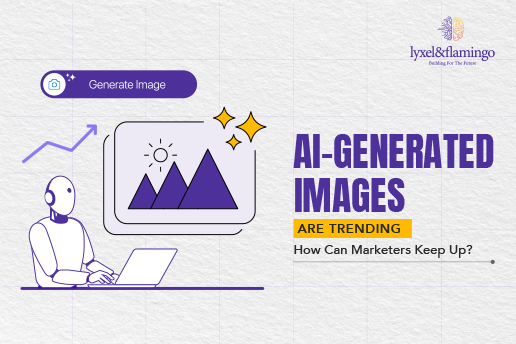

In this digital world, advertising is no longer just about a clever tagline or a beautifully shot video. It’s about capturing attention in real-time, adapting to user behaviour, and delivering results at scale. Enter AI-generated ad creative, an innovation that has sparked a powerful debate: AI vs human creativity. Can technology truly match or even surpass the imagination and intuition of the human mind?
As AI ad creative generators become increasingly sophisticated, they’re reshaping how brands conceptualise and execute campaigns. These tools can instantly analyse data, predict trends, and generate content variations that would take human teams days to produce. But does this mean machines are outpacing humans in creativity?
Let’s look into the evolving landscape of creativity through the lens of AI versus human intelligence.
What Is AI Creativity?
At first glance, the term AI creativity may seem like a contradiction. After all, creativity has long been considered a distinctly human trait, driven by emotion, experience, and imagination. But with the rise of powerful algorithms and machine learning, artificial intelligence is entering the creative arena in ways few could have imagined a decade ago.
In the context of advertising, AI creativity refers to the ability of machines to analyse data, detect patterns, and generate content that serves a specific purpose, whether it’s a catchy headline, a banner design, or an entire video ad. Using vast datasets and real-time feedback, an AI ad creative generator can produce tailored messaging across multiple formats at a scale that would overwhelm most human teams.
But does this qualify as true creativity, or is it simply clever automation?
That’s where the debate of AI vs human creativity begins. Machines can generate ideas based on logic, performance history, and predictive models. However, AI versus human intelligence raises questions about originality, emotional depth, and context. While an algorithm might know what works, a human creative often knows why it works.
Still, the capabilities of AI-generated ad creative continue to evolve. From personalising visuals to adapting tone based on audience behaviour, artificial intelligence is pushing boundaries. As this technology matures, brands must re-evaluate how they define creativity and who (or what) should lead it.
AI vs Human Creativity: The Imaginative Showdown
The battle between machine logic and human imagination is no longer a science fiction concept; it’s playing out in creative studios and digital marketing teams across the globe. The rise of AI-generated ad creative has prompted a pressing question: In the context of AI vs human creativity, who truly leads the way?
On one hand, AI ad creative generators are redefining speed and efficiency. These tools can analyse user data, predict outcomes, and churn out high-performing creatives in record time. From automated ad variations to responsive content, artificial intelligence excels at scaling creativity and optimising it for performance.
However, what machines possess in data processing, they often lack in emotional depth. This is where human creative talent holds its ground. Humans understand subtle cultural references, abstract thinking, and the unspoken nuances of emotion. Whether it’s humour, empathy, or storytelling with soul, these are qualities that set human-led campaigns apart.
When it comes to originality, the contrast becomes sharper. Machines generate ideas based on past data; they replicate patterns. Humans, on the other hand, can break those patterns, inventing new styles and concepts from lived experiences. This is the core of the AI vs human intelligence debate: machines learn from what has been; humans imagine what could be.
The reality is, AI versus human intelligence doesn’t have to be a battle. Instead, it presents an opportunity for collaboration where AI handles the heavy lifting, and humans focus on ideation and emotional connection. The most effective creative campaigns today are often born from this partnership.
As we continue exploring the limits of both, it becomes clear that innovation lies not in choosing sides but in integrating the strengths of both worlds.
Strengths and Limitations: AI vs Human Intelligence
When evaluating AI vs human intelligence in advertising, it’s not about who wins; it’s about understanding where each excels and where each falls short. Both offer unique strengths, but each also comes with limitations that shape the way they impact modern creative processes.
Strengths of Artificial Intelligence
- Speed and Scale
An AI ad creative generator can produce hundreds of content variations in minutes, far faster than any human team.
- Data-Driven Precision
Artificial intelligence excels at analysing large datasets to identify trends and performance insights, enabling highly targeted creative decisions.
- Consistency
AI delivers brand-aligned visuals and messaging across platforms without fatigue or deviation.
- Performance Optimisation
With real-time testing and feedback loops, AI-generated ad creative can be automatically improved for better results.
Limitations of Artificial Intelligence
- Lack of Emotional Depth
While machines can mimic tone, they don’t understand context, irony, or the emotional undercurrent behind a message.
- Creativity Bound by Data
AI typically works within existing patterns and struggles with original, abstract thinking, unlike a human creative.
- Cultural and Ethical Blind Spots
Artificial intelligence vs human intelligence highlights AI’s limited grasp of nuanced cultural dynamics and ethical considerations.
Strengths of Human Intelligence
- Emotional Intelligence
Humans understand empathy, humour, and subtlety. These are the key ingredients for meaningful storytelling.
- Cultural Awareness
A human creative can draw from lived experiences, trends, and social context in ways that algorithms simply can’t replicate.
- Original Thought
Humans can imagine what hasn’t been done before, taking bold risks and exploring the unconventional.
Limitations of Human Intelligence
- Time-Intensive Process
Creative ideation, execution, and refinement take time, especially when multiple ad formats are involved.
- Subjectivity and Bias
Unlike data-driven machines, human decisions can be clouded by personal preferences or assumptions.
- Limited Capacity
Humans can only handle a finite amount of creative output at once, making scalability a challenge.
The AI vs human conversation shouldn’t be framed as a competition. The real opportunity lies in collaboration. While AI-generated ad creative ensures efficiency and data-backed decisions, human creatives infuse campaigns with emotional relevance and originality.
Rather than debating AI versus human intelligence, forward-thinking brands are asking: How do we get the best of both?
How Are AI Ad Creative Generators Changing Campaign Dynamics?
The advertising landscape is experiencing a rapid transformation. At the centre of this shift are AI ad creative generators. These powerful tools are redefining how brands approach campaign development, moving away from traditional timelines and manual processes to a faster, more data-driven model. Here’s how:
- From Manual Creation to Automated Scale
Traditionally, producing multiple versions of an ad for various platforms required significant time, effort, and manpower. With the introduction of AI-generated ad creative, brands can now generate dozens of content variations, tailored by audience, device, or region, in just minutes. This shift allows for real-time responsiveness and campaign agility that human teams alone cannot match.
- Smarter, Not Just Faster
What makes these generators especially impactful is their ability to learn from performance data. By analysing which visuals, headlines, or formats drive better engagement, AI ad creative generators fine-tune future outputs for optimal results. This goes beyond simple automation; it’s an intelligent system that adapts to audience behaviour.
- Personalisation at Scale
One of the most game-changing aspects of artificial intelligence vs human intelligence in advertising is personalisation. AI can deliver hyper-targeted creatives based on user preferences, online activity, and even mood signals, something that would be overwhelming for a human team to manage at scale.
- Redefining the Creative Brief
The use of AI tools is also shifting the role of the human creative. Rather than building every asset from scratch, creatives now curate, supervise, and enhance machine-generated content. This evolution allows teams to focus more on big-picture thinking, brand storytelling, and emotional nuance, areas where humans continue to outperform machines.
- Collaborative Intelligence Is the Future
While AI vs human conversations often highlight differences, campaign dynamics today increasingly rely on collaboration between the two. Machines provide efficiency and insight, while humans offer originality and brand soul. This blend is where high-performing, culturally relevant, and emotionally resonant campaigns are born.
The rise of AI-generated ad creative isn’t replacing human talent; it’s reshaping it. Campaigns are no longer just produced; they’re engineered for performance, precision, and adaptability.
Intelligence Is Not a Contest, It’s a Collaboration
The conversation around AI vs human intelligence often takes on a competitive tone, as if machines and people are locked in a zero-sum game. But in reality, the future of advertising doesn’t belong to one or the other; it belongs to both.
While artificial intelligence delivers unmatched speed, precision, and scalability, it still depends on human vision to steer it in the right direction. The human creative brings emotional intelligence, cultural understanding, and intuitive thinking: elements that are still beyond the reach of any algorithm. These are not opposing forces; they are complementary.
When used thoughtfully, an AI ad creative generator becomes more than just a tool; it becomes an extension of human imagination. It allows marketers to test ideas quickly, reach diverse audiences with personalised messages, and optimise performance with minimal effort. At the same time, it’s the human mind that defines the tone, message, and narrative that holds everything together.
In this evolving landscape, the question isn’t about AI vs human, or whether AI-generated and creative is better than traditional design. Instead, it’s about how artificial intelligence vs human intelligence can work together to take creativity to new heights.
The most successful brands will be those that stop choosing sides and start building bridges, where machine learning informs strategy, and human insight infuses emotion into execution. In this collaboration, intelligence isn’t measured by competition, but by connection.
Partner with Lyxel&Flamingo to Future-Proof Your Brand
At Lyxel&Flamingo, we don’t choose between artificial intelligence and human intelligence; we combine them. With our data-led creativity and human-centred design thinking, we build ad campaigns that perform and connect.
Whether you are curious about integrating AI ad creative generators into your workflow or ready to scale performance with precision, we’re here to help you explore, experiment, and evolve.
Let’s talk about building campaigns where intelligence meets imagination.
FAQs
Q. What is the difference between AI vs human creativity in advertising?
A. AI thrives on data, speed, and optimisation, while human creativity brings emotion, culture, and storytelling. Together, they can build more impactful campaigns.
Q. Can an AI-generated ad creative outperform a human-made one?
A. Yes, in areas like personalisation, performance testing, and speed. However, emotional resonance still favours human creatives.
Q. Are AI ad creative generators replacing human creatives?
A. No. They are augmenting their work, allowing humans to focus on strategic and conceptual aspects.