
Table of Contents
- Understanding B2B SEO: Beyond Traditional Search Optimisation
- Laying the Foundation: Smart B2B Keyword Research
- Creating SEO Content That Converts B2B Leads
- On-Page SEO for B2B: Optimising Every Touchpoint
- Mastering Technical SEO: Building a Scalable Foundation
- The B2B SEO Conversion Funnel: From Clicks to Contracts
- Advanced B2B SEO Strategies for Sustainable Growth
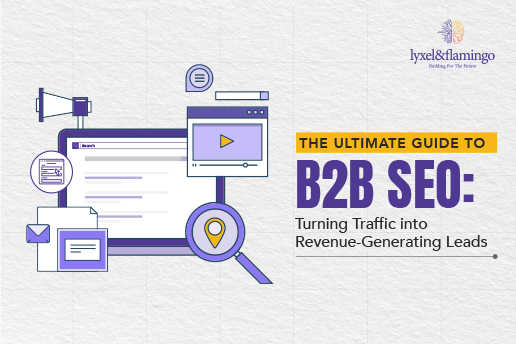
B2B SEO is no longer just about ranking higher on search engines; it’s about driving qualified leads and real business growth. The goal isn’t simply to attract traffic, but to convert that traffic into revenue-generating opportunities.
Unlike B2C, where quick decisions often rule, B2B buying journeys are longer, data-driven, and trust-based. This makes SEO a strategic function, one that combines intent-focused keyword research, conversion-optimised content, and technical excellence to engage decision-makers at every stage of the funnel.
Modern B2B SEO strategies prioritise value over volume, focusing on visibility that translates into measurable outcomes. It’s not just about search performance; it’s about building credibility, nurturing relationships, and using SEO for lead generation that fuels your pipeline.
At Lyxel&Flamingo, we see SEO as more than optimisation; it’s a transformation. Let’s uncover how you can turn your visibility into value, and your traffic into tangible business results.
Understanding B2B SEO: Beyond Traditional Search Optimisation
B2B SEO goes far beyond ranking for keywords; it’s about building visibility with purpose. Unlike B2C, where the focus is on quick conversions, B2B SEO targets longer sales cycles, multiple decision-makers, and complex buying journeys. Each search query represents a step in a carefully considered path, from research to trust to purchase.
At its core, B2B SEO aligns with the conversion funnel, driving awareness through thought-leadership content, nurturing consideration with in-depth resources, and supporting decisions through solution-focused pages and case studies. Every optimised page plays a role in moving prospects closer to a partnership or sale.
When done strategically, B2B SEO becomes more than a traffic generator; it’s a growth engine. It strengthens brand authority, attracts high-quality leads, and delivers measurable sales outcomes by connecting the right audience to the right solution at the right time.
Laying the Foundation: Smart B2B Keyword Research
In B2B SEO, success starts with understanding intent, not just chasing search volume. Smart keyword research means identifying what your target decision-makers are searching for: whether they are exploring a challenge, comparing solutions, or ready to buy. The focus shifts from generic terms to intent-driven, solution-based keywords that mirror each stage of the buyer’s journey.
Tools like LinkedIn insights, competitor analysis, and buyer persona mapping help uncover these opportunities. For instance:
- Top-of-funnel keywords: “What is marketing automation?”, “Benefits of ERP for SMEs” builds awareness and education.
- Bottom-of-funnel keywords: “Best B2B marketing automation software”, “Enterprise ERP pricing” drive purchase decisions.
By aligning keyword strategy with user intent and business goals, brands can attract prospects who are genuinely ready to engage. The right keywords are the foundation of an SEO strategy built to drive sales, not just traffic.
Creating SEO Content That Converts B2B Leads
In B2B marketing, content is the bridge between discovery and decision. Effective SEO content for B2B leads blends thought leadership with conversion intent, educating prospects while subtly guiding them toward action.
The most successful brands create a mix of formats that serve every stage of the funnel: whitepapers that build authority, case studies that prove credibility, comparison pages that drive decisions, and educational blogs that attract top-funnel interest. Each piece works together to nurture trust and move leads closer to conversion.
The magic lies in combining storytelling, data, and intent alignment, showing expertise while addressing real buyer challenges. When done right, content transforms from a knowledge source into a lead-generation engine.
In B2B SEO, content doesn’t just inform; it influences decisions and fuels growth.
On-Page SEO for B2B: Optimising Every Touchpoint
On-page SEO is where strategy meets execution. Every element on your site should work together to attract, engage, and convert. The key pillars include optimised titles, compelling meta descriptions, schema markup for better visibility, internal linking for context, and clear CTAs that guide users through the buyer journey.
For B2B audiences, these elements must align with buyer intent, reflect industry tone, and communicate value with clarity. For instance, a high-performing B2B landing page might open with a problem statement, highlight key benefits, include social proof like case studies, and end with a strong call to action such as “Book a Free Demo” or “Get a Custom Quote.”
Each optimised title, heading, and link isn’t just improving SEO; it’s nudging the user toward trust and action. In B2B SEO, every page element is a micro-conversion point that brings you closer to the sale.
Mastering Technical SEO: Building a Scalable Foundation
Behind every high-performing B2B website lies a strong technical SEO foundation. Speed, responsiveness, and structure are the silent drivers of visibility and user trust. Core elements like site speed optimisation, mobile responsiveness, crawl depth management, schema implementation, and index control ensure search engines and your prospects can navigate your site seamlessly.
For larger enterprises, Enterprise B2B SEO takes this further. Scalable architectures, automation tools, and advanced analytics become essential to manage vast content ecosystems and complex global sites efficiently.
Tools such as Google Search Console, Ahrefs, and Screaming Frog help diagnose issues, monitor health, and uncover opportunities for improvement.
In today’s fast-paced digital environment, technical excellence isn’t optional; it’s the baseline. Your site must perform with the same precision and speed your prospects expect from your business.
The B2B SEO Conversion Funnel: From Clicks to Contracts
In B2B marketing, SEO’s real value lies in how effectively it fuels your sales pipeline. To bridge the gap between visibility and revenue, businesses must connect SEO metrics to lead-generation KPIs, focusing on traffic quality, engagement depth, and conversion pathways rather than vanity metrics.
The B2B SEO conversion funnel maps this journey: From awareness (discovery through educational content) to consideration (solution comparisons) to decision (demo requests or consultations). Each stage aligns user intent with tailored content and strategic calls to action, transforming prospects into Marketing Qualified Leads (MQLs).
Conversion optimisation techniques like gated content, retargeting campaigns, CRO-driven CTAs, and analytics-based tracking refine the funnel further, ensuring no valuable lead slips away.
SEO success isn’t defined by rankings; it’s defined by pipeline impact. The goal isn’t just to attract visitors, but to convert intent into trust, and trust into contracts.
Advanced B2B SEO Strategies for Sustainable Growth
B2B SEO is evolving from a static optimisation exercise into a dynamic, predictive system. The brands leading this shift aren’t reacting to search trends; they’re anticipating them. Sustainable growth now depends on integrating technology, data, and strategic foresight into every SEO initiative. Have a look at the advanced B2B SEO strategies:
- AI-Driven Content Optimisation
Artificial intelligence is transforming how content performs. By analysing engagement patterns, semantic context, and intent signals, AI tools help refine headlines, structure, and tone to resonate with decision-makers and boost organic reach.
- Search Intent Modeling
Understanding why someone searches is more important than what they search. Intent modeling helps align keywords, content formats, and messaging to specific buyer stages, ensuring relevance from discovery to decision.
- Voice and Semantic Search
With voice assistants and AI chat interfaces on the rise, content must sound natural and answer real questions. Optimising for conversational queries and semantic relationships enhances accessibility and visibility in these evolving search environments.
- Predictive Analytics for Keyword Evolution
Predictive data empowers brands to forecast emerging trends before competitors do. By identifying rising topics and intent shifts early, businesses can secure authority in new niches and drive consistent long-term growth.
In this new era, modern SEO isn’t just about keeping pace; it’s about setting direction. The most successful B2B brands use insight and innovation to guide search behavior, not chase it. Because the best B2B SEO strategies don’t follow algorithms; they lead them.
Boost Your Growth Strategy with Lyxel&Flamingo
At Lyxel&Flamingo, we don’t just optimise keywords, we engineer growth. As a digital transformation and performance marketing partner, we help B2B brands leverage data-driven SEO strategies, marketing automation, and creative intelligence to turn visibility into qualified leads.
From platform migrations to enterprise B2B SEO and conversion-optimised content ecosystems, we empower businesses to scale sustainably. Because the future of search isn’t about discovery; it’s about direction. Let’s chart yours.
Frequently Asked Questions
B2B SEO focuses on longer buying cycles, niche keywords, and lead quality rather than mass traffic, aligning content with complex decision-making journeys.
SEO drives high-intent traffic to conversion-ready content, helping convert organic visitors into qualified leads through precise funnel mapping and optimised CTAs.
AI-enhanced keyword research, topic clustering, personalised content experiences, and technical scalability are leading the next wave of SEO for lead generation.
Track metrics beyond traffic. Focus on MQLs, SQLs, and revenue contribution through analytics attribution models.
AI enhances content optimisation, keyword discovery, and user intent analysis, enabling brands to personalise messaging and predict future search trends. When used strategically, it helps transform SEO from reactive optimisation into proactive demand generation.