
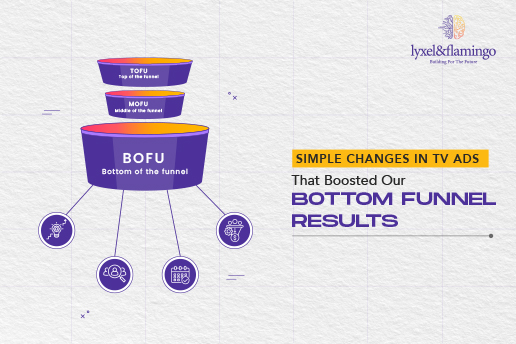
For decades, TV advertising was seen as a tool to drive awareness, great for mass reach but too broad to influence real-time conversions. In other words, it sat comfortably at the top of the funnel. But with changing viewer habits and the rise of smarter platforms, that narrative has shifted. Connected TV advertising (CTV) has emerged as a game-changer, blending storytelling with targeting precision and measurable outcomes.
At Lyxel&Flamingo, we questioned the status quo. Can Performance TV advertising do more than entertain? Can it drive clicks, sign-ups, and sales: the kind of results typically associated with bottom funnel marketing? The answer, we discovered, is yes.
This blog unpacks the surprisingly simple yet effective changes we made to our TV ad strategy. These changes didn’t just reshape our campaigns; they significantly improved outcomes at the funnel’s most critical stage.
Whether you’re new to CTV advertising platforms or re-evaluating your top-of-the-funnel marketing, this is your roadmap to making TV work harder and smarter for your brand.
What Is Bottom Funnel Marketing? Why It Matters Now More Than Ever?
In the customer journey, the bottom of the funnel represents a decisive moment, the point where interest turns into action. Bottom funnel marketing is aimed at turning informed prospects, those familiar with your brand, into paying customers. This stage isn’t about creating demand; it’s about capturing it with precision.
Traditionally, this phase was powered by search ads, retargeting campaigns, and direct response tactics. With consumers engaging across screens, the opportunity to influence purchase decisions has expanded beyond static formats. This is where Connected TV advertising is making its mark.
Unlike conventional linear TV, CTV advertising platforms allow brands to target high-intent audiences using data-rich insights. Whether it’s through personalised messaging or retargeting capabilities, Performance TV advertising is now playing a pivotal role in pushing users to convert, bridging the gap between storytelling and sales.
Bottom funnel marketing is the final stretch in a brand’s dialogue with its audience. And when platforms like CTV are used strategically, even a traditionally top-of-the-funnel medium like TV can become a powerful tool for closing the loop.
Breaking the Myth
For years, brands have looked at TV advertising as a broad-reach medium, ideal for building awareness, but too generalised for driving measurable actions. It was the go-to channel for top-of-the-funnel marketing, where impressions mattered more than conversions, and performance was tough to quantify. Today, that assumption doesn’t stand true.
The rise of Connected TV advertising has completely reframed how marketers approach this channel. Thanks to digital integration, targeting capabilities, and real-time data, TV is no longer limited to casting a wide net. It’s now about precision, intent, and impact. With the help of CTV advertising platforms, brands can serve tailored ads to high-value audience segments, track their engagement, and follow their path to conversion.
By pairing compelling visual narratives with smart targeting and clear CTAs, it’s easy to transform traditional TV ads into conversion engines. This shift challenges an outdated belief and opens new doors for brands ready to embrace a more dynamic, data-driven approach to TV.
The Simple Changes That Made the Difference
Shifting TV ads from brand awareness to measurable results didn’t require an overhaul, just smarter execution. Here are the key changes that need to be made to yield bottom funnel marketing outcomes using Connected TV advertising:
- Performance-Centric Creative
Restructure ad formats with clarity and purpose: shorter durations, focused messaging, and bold CTAs. The goal: to guide high-intent viewers toward action without losing the emotional appeal of traditional TV.
- Audience Targeting with CTV Advertising Platforms
Instead of casting a wide net, use CTV advertising platforms to micro-target viewers based on behavior, demographics, and purchase signals. This shift ensured that ads reach people ready to convert, not just watch.
- Intelligent Scheduling
Align ad delivery with peak engagement times. By scheduling campaigns based on when the audience is most active, it’s easy to increase ad relevance and reduce wastage.
- Conversion Tracking Integration
By plugging in performance tools and attribution models, it’s easy to gain visibility into user journeys post-ad exposure. This way, you can measure the true impact of Performance TV advertising down to the last click.
Each of these strategic moves was simple, but when executed together, they turn a traditional top-of-the-funnel marketing channel into a high-impact driver of conversions.
How Do These Changes Impact Funnel Performance?
By applying focused changes to our Connected TV advertising strategy, you can ensure a tangible uplift in your bottom-line metrics, proving that TV can deliver real impact beyond brand awareness.
Here’s how our bottom funnel marketing performance shifted:
- Higher Conversion Rates
Post-campaign analysis showed a noticeable increase in user actions, ranging from website visits to product purchases. What was once a top-of-the-funnel marketing channel now contributes directly to conversions.
- Improved Cost Efficiency
With sharper targeting through CTV advertising platforms, we reduced ad spend wastage. Serving ads to high-intent viewers meant more qualified leads and a stronger return on ad spend (ROAS).
- Shorter Sales Cycles
By aligning performance-driven creatives with precise delivery times, we noticed prospects moving faster through the funnel. The result? A quicker journey from interest to action.
- Real-Time Performance Insights
Through Performance TV advertising, we tapped into real-time analytics, allowing us to make swift optimisations mid-campaign. This level of visibility helped us track ad effectiveness with the same rigor as digital channels.
These outcomes confirmed that with the right strategy, TV advertising isn’t just a brand-building tool; it’s a powerful performance driver at the bottom of the funnel.
Why Is Connected TV Advertising the New Frontier for Performance Marketers?
The advertising landscape is evolving. Connected TV advertising is leading the charge. CTV has evolved beyond traditional awareness campaigns and now stands out as a powerful tool for driving performance.
Here’s why performance marketers are taking notice:
- Precision Meets Scale
CTV advertising platforms combine the broad reach of television with digital-level targeting. Brands can now serve ads to niche audiences based on behavior, location, or even purchase intent.
- Real-Time Analytics and Measurable Impact
Unlike traditional TV, Performance TV advertising provides detailed metrics: impressions, views, clicks, and conversions. This data transparency empowers marketers to fine-tune their bottom funnel marketing efforts with confidence.
- Seamless Integration Across the Funnel
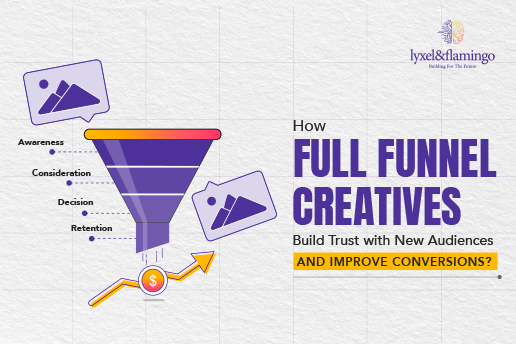
CTV bridges the gap between storytelling and action. It can generate awareness at the top, nurture interest mid-funnel, and drive results at the bottom, all within the same ecosystem.
- Viewer Engagement on Their Terms
With audiences increasingly streaming content on-demand, top-of-the-funnel marketing efforts now reach viewers when they’re most attentive, creating more room for engagement and eventual conversion.
For performance-driven brands, Connected TV advertising is no longer optional; it’s essential. It’s where creativity meets accountability, and where the future of full-funnel marketing unfolds.
The Performance-First Future of CTV Advertising
Television is no longer just a storytelling medium; it’s a results-driven marketing channel. The rise of Connected TV advertising has reshaped how brands engage audiences, blending emotional resonance with measurable outcomes.
Here’s what the future looks like:
- Accountability at Every Stage of the Funnel
With advanced targeting and analytics from CTV advertising platforms, campaigns can now be planned with precision, from top-of-the-funnel marketing to bottom-of-the-funnel marketing. Marketers can map user behavior, track actions, and optimize for conversions.
- Dynamic, Data-Led Creativity
Creative approaches are adapting to reflect real-time data and audience behavior. Brands can now test, adapt, and personalize Performance TV advertising in ways traditional TV never allowed.
- Seamless Cross-Device Experience
As viewers move fluidly across screens, CTV offers a consistent brand message while guiding them toward action. This flexibility makes it an ideal performance tool in today’s fragmented media landscape.
- Measurable ROI, Not Just Media Spend
In the performance-first era, CTV stands out by delivering on what matters: conversions, cost-efficiency, and customer acquisition, not just views and impressions.
The future of TV is measurable, targeted, and conversion-ready. It’s time to embrace Connected TV advertising to unlock the full power of your marketing funnel.
Ready to Rethink Your Funnel with CTV? Let Lyxel&Flamingo Lead the Way
As a digital agency blending deep insight with boundless curiosity, Lyxel&Flamingo helps brands explore the untapped potential of Connected TV advertising.
Whether you’re optimising your top of the funnel marketing or unlocking new conversions at the bottom, our performance-first strategies deliver results.
Partner with us to future-proof your funnel.
FAQs
Q. What’s the difference between top and bottom funnel marketing in TV ads?
A. Top-funnel is about brand exposure. Bottom-funnel focuses on conversions and actions, such as signups, downloads, or purchases.
Q. How do CTV advertising platforms help measure bottom funnel metrics?
A. CTV platforms offer advanced analytics, including impressions, click-throughs, and attribution tracking across devices.
Q. Can TV ads drive measurable ROI for performance campaigns?
A. Absolutely. With strategic tweaks and attribution tools, TV can be a high-ROI channel, even at the bottom of the funnel.
Q. How is Connected TV advertising different from traditional TV advertising?
A. Connected TV advertising offers advanced features like targeted audience reach, real-time data insights, and measurable performance. These are the advantages that traditional TV doesn’t provide. It transforms television from a one-way awareness channel into a full-funnel marketing tool, especially effective for bottom-funnel marketing and measurable ROI.