
Table of Contents
Marketing today isn’t about launching a single brand building campaign and hoping it sticks. It’s about understanding that every customer is on a journey, one that doesn’t start at the checkout page or end with a click.
This is where full-funnel marketing comes in. It’s a strategic approach that looks beyond isolated wins and builds a continuous, connected path for your audience. Unlike one-off campaigns that treat marketing like a spotlight, bright but short-lived, full-funnel thinking works like a roadmap, guiding users through discovery, evaluation, purchase, and beyond.
For brands navigating today’s crowded digital world, this isn’t just a shift in method; it’s a shift in mindset. Let’s explore how full-funnel marketing strategy transforms fleeting interest into long-term impact.
What Is Full-Funnel Marketing?
Full-funnel marketing takes a comprehensive view of customer engagement, focusing on the entire buying journey rather than individual, disconnected interactions. It’s built on the understanding that consumers rarely make purchasing decisions in a single step. Instead, they move through a series of stages:
- Becoming aware of a brand
- Considering their options
- Deciding to buy
- If nurtured well, returning as loyal advocates
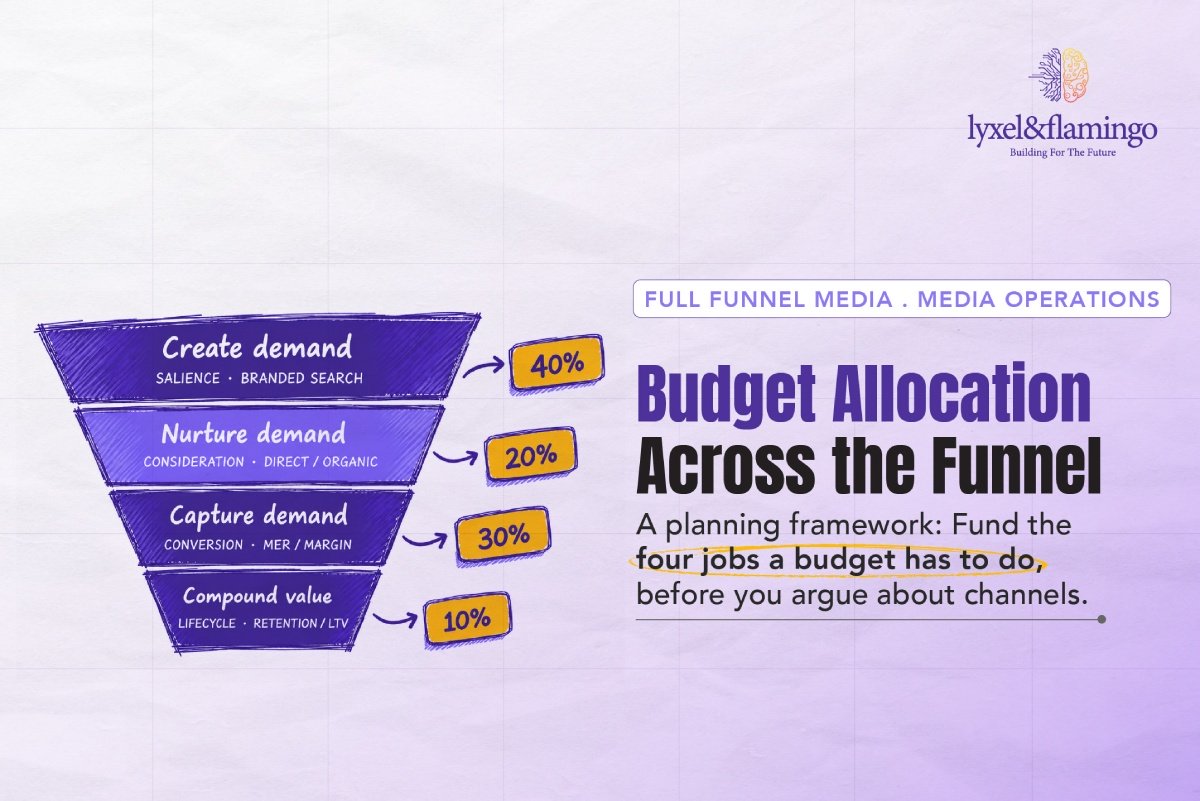
This method aligns marketing strategies with each of these stages, ensuring your brand shows up with the right message at the right time. At the top of the funnel, efforts focus on visibility and awareness, capturing attention with bold storytelling and value-led content.
In the middle, the goal shifts to education and trust-building through informative content, comparisons, testimonials, and retargeting. At the bottom, it’s all about nudging conversion with personalised offers, strong CTAs, and seamless user experience. Post-purchase, you’re not done; engagement continues to strengthen relationships and fuel repeat business.
What sets full-funnel marketing apart is its ability to create continuity. Instead of treating each campaign strategy as a separate effort, it threads all messaging and tactics into a unified narrative. It acknowledges that people need time, context, and confidence before making decisions and that earning trust is an ongoing process.
For brands willing to look beyond short-term wins and build lasting value, full-funnel marketing isn’t just effective. It’s essential.
The Core Essentials of Full-Funnel Marketing
Full-funnel marketing isn’t just about showing up at every stage of the customer journey; it’s about showing up with purpose, clarity, and consistency. To build a strategy that works from the first impression to long-term loyalty, there are a few key components that every brand must get right.
These essentials form the foundation of a truly connected marketing approach:
-
Deep Audience Understanding at Every Stage
Success begins with insight. Full-funnel marketing acknowledges that. At the awareness stage, you are casting a wider net, often targeting broader interests. But as the customer moves closer to purchase, you need sharper segmentation, more relevant messaging, and a deeper understanding of behaviour patterns.
Knowing who you are speaking to and where they are in their decision-making journey is what drives effective communication.
-
Content That Matches Intent
A single campaign message doesn’t work across the funnel. Content should evolve alongside your audience’s needs. At the top, bold and inspiring storytelling sparks curiosity. In the middle stage, informative and benefit-focused content helps establish trust and authority. At the bottom, persuasive product details and compelling calls to action encourage conversion. And after purchase, nurturing content reinforces loyalty and keeps the conversation going. The goal is to communicate with relevance and timing, not simply increase the volume of messaging.
-
Integrated Channels Working in Sync
Full-funnel marketing lives across platforms. From organic social and search to email marketing, paid ads, influencer campaigns, and CRM, each channel plays a specific role. The magic happens when these tools are aligned to support a single, seamless journey. Integration ensures that your customer isn’t just seeing your brand; they’re experiencing it coherently and consistently, no matter where they engage.
-
Data as a Living Feedback Loop
The most effective strategies aren’t static; they’re adaptive. Full-funnel success depends on ongoing measurement, learning, and refinement. Data should inform everything from creative tweaks to media placements. Whether it’s tracking drop-off points, adjusting messaging, or reallocating budget based on performance, brands that use data to evolve are the ones that stay ahead.
Full-funnel marketing is as much about mindset as it is about method. When brands commit to these core essentials, they move from fragmented outreach to a structured, impactful strategy that meets people where they are and guides them where they need to go.
Why Isolated Campaigns Fall Short in Today’s Ecosystem?
In a digital environment where attention is scarce and competition is fierce, running isolated campaigns may seem like a quick fix, but it’s a short-sighted one. These standalone efforts often focus on driving immediate results, like a spike in clicks or a short burst in engagement. But without a broader strategy behind them, their impact fades fast.
One of the biggest issues with isolated campaigns is the lack of context. When marketing efforts aren’t connected across the funnel, messages appear disjointed, and potential customers are left without a clear sense of who you are or why they should care. A flashy top-funnel awareness ad might grab attention, but if it isn’t followed by supportive content and timely nudges, interest fizzles out.
These brand building campaigns also fail to build momentum. Without a system for nurturing leads or retargeting interested audiences, brands miss the opportunity to deepen connections and guide decision-making. It’s like hosting a brilliant first date and then disappearing. There’s no follow-up, no relationship, and no loyalty.
What’s more, measuring success becomes difficult. Isolated campaigns may deliver short-term metrics, but they offer little insight into long-term performance. Are those new customers coming back? Are they turning into brand advocates? Without a full-funnel marketing strategy, you’re flying blind.
How Brands Win with Full-Funnel Strategy?
The real power of full-funnel marketing becomes visible when we look at how brands use it to fuel sustainable, long-term growth. Unlike isolated campaigns that rely on a burst of visibility or short-term clicks, full-funnel strategies build layered brand experiences, leading to higher engagement, better conversions, and stronger loyalty.
Brands that adopt this approach consistently outperform their peers in key areas like return on ad spend (ROAS), customer lifetime value (CLTV), and brand recall. One consumer brand, for instance, increased its repeat purchase rate by 50% simply by introducing post-purchase communication into its funnel. Another B2B company doubled its qualified lead volume through a seamless content experience tailored to decision-makers at every stage.
The lesson is clear: When every touchpoint serves a purpose and supports the bigger picture, marketing becomes more than a campaign; it becomes a journey that keeps delivering.
Looking to Connect the Dots in Your Marketing Strategy?
We don’t just launch campaigns, we architect journeys. At Lyxel&Flamingo, we combine deep marketing wisdom with fearless experimentation to deliver marketing that moves, from discovery to delight.
Whether you are seeking scale, retention, or market domination, our performance marketing is your unfair advantage. Let’s build your full-funnel roadmap.
Frequently Asked Questions
Absolutely. Full-funnel marketing isn’t just for large-scale enterprises; it’s scalable. Startups can adopt a lighter version of the funnel, focusing on the most critical stages, and then expand as their goals and resources grow. The key is to align your funnel depth with your current stage of business maturity.
Results typically begin to show within 30 to 60 days, especially in terms of engagement and quality lead generation. However, the true strength of full-funnel marketing lies in its long-term impact. As campaigns build and data accumulates, the benefits compound, resulting in stronger conversions and increased customer lifetime value over time.
If you have launched campaigns but are struggling to turn awareness into retention or if your leads seem to drop off before converting, that’s a clear sign. Full-funnel strategy brings structure and intent to your marketing, helping you nurture relationships, not just transactions.
Definitely. In fact, B2B often benefits even more from a full-funnel approach. With longer buying cycles, multiple decision-makers, and higher stakes, B2B journeys require sustained engagement, education, and trust, all of which full-funnel marketing is designed to support.
Data is the engine that powers the funnel. It helps identify audience intent, optimise creative messaging, allocate budgets smartly, and refine touchpoints post-conversion. Without data, a full-funnel strategy is like sailing without a compass, directionless.