
Table of Contents
- How Can Global Brands Implement Hyperlocal Marketing?
- What Are the Best Strategies for Targeting Local Audiences?
- How Does Hyperlocal Discovery Improve Customer Engagement?
- Which Tools Help Brands Implement Location-Based Marketing?
- What Are Examples of Successful Hyperlocal Campaigns?
- How Can AI Optimise Hyperlocal Marketing Strategies?
- What Metrics Measure the Success of Hyperlocal Marketing Campaigns?
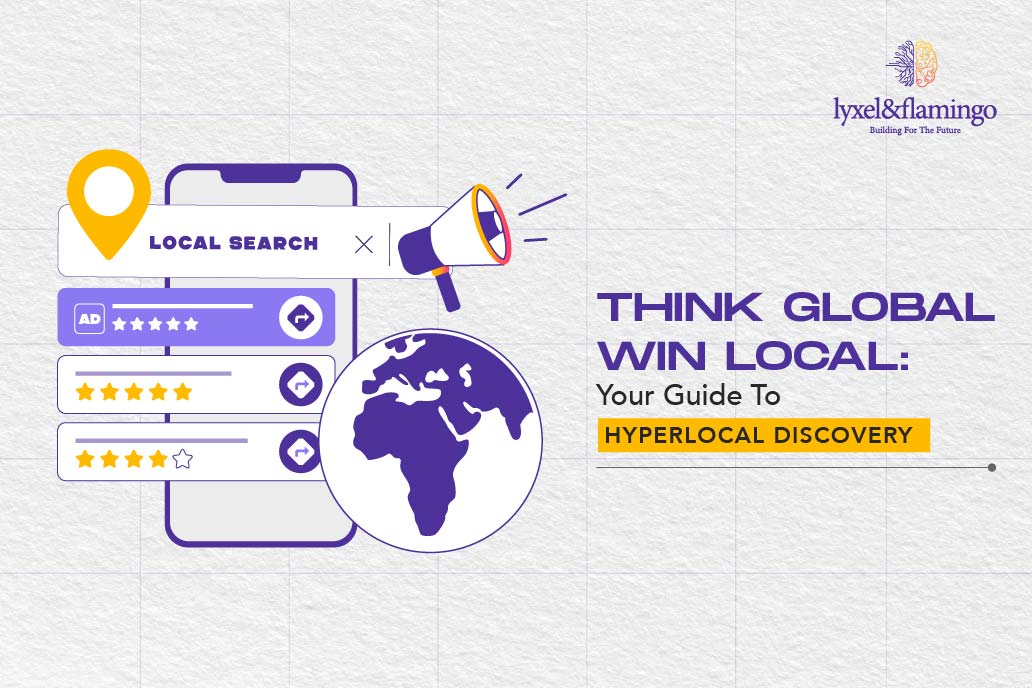
In an increasingly connected world, brands often focus on global reach. Yet, real growth happens when global ambition meets local relevance. This is where hyperlocal marketing strategies reshape how brands show up for customers. Whether you are an established organisation or a fast-scaling digital brand, learning how to operate at a neighbourhood level while maintaining global consistency is now essential.
Across India and other diverse markets, hyperlocal discovery is shifting how people search, compare, and choose brands. Audiences expect communication that reflects their location, culture, preferences and immediate context. This is why local audience targeting, local language campaigns, and location-based marketing strategies are becoming central to modern marketing ecosystems.
At Lyxel&Flamingo, we work with brands that operate across multiple geographies and need structured, scalable ways to stay locally relevant. Below, we explore how global brands can win local markets through smarter hyperlocal approaches.
How Can Global Brands Implement Hyperlocal Marketing?
For global brands, hyperlocal strategy does not mean shrinking your ambition. Instead, it means strengthening relevance in every region you enter. The aim is to blend global consistency with local nuance.
Here are foundational principles:
1. Local Context Built Into the Strategy Framework
Before designing campaigns, brands must understand the local environment. This includes cultural behaviours, language preferences, local competitors and seasonal purchase triggers.
2. Region-Specific Creative and Messaging
Global templates rarely resonate with neighbourhood-level audiences. Creative assets must adapt to local customs, visuals and emotional cues, supported by strong local language campaigns.
3. Local Search and Discovery Systems
Strong local SEO for global brands ensures that users discovering products nearby see your most relevant content first.
4. Local Partnerships
Collaborations with local businesses, influencers, creators and retail communities increase authenticity. These networks help global brands land smoothly in new geographies.
The goal is simple: create impact at a local level while maintaining the brand DNA that holds the global story together.
What Are the Best Strategies for Targeting Local Audiences?
The strongest hyperlocal marketing strategies combine behavioural insight with cultural intelligence. Global consistency is important, but local precision is what drives engagement.
Here are high-impact approaches:
1. Build Customer Micro-Segments
Segment audiences by locality, cultural clusters, language groups and micro-communities.
2. Use Region-Specific Creative
Adapt imagery, references and narratives to reflect local lifestyles and local cultural cues.
3. Activate Local Festivals and Calendar Moments
Local festivities are powerful demand generators. They offer ready-made emotional connections.
4. Optimise for Local Search
Local pages, structured data, micro-sites and map listings help your brand appear where customers expect you.
5. Develop Region-Led Social Content
Short videos, creator partnerships and memes that reflect regional humour outperform global content templates.
When done well, this mix ensures precision across cities, towns and even neighbourhoods.
How Does Hyperlocal Discovery Improve Customer Engagement?
Hyperlocal discovery allows brands to show up where users are, not where the brand prefers to be. It aligns customer context with brand intent.
It improves engagement through:
1. Higher Relevance
Users see offers and content tailored to their locality. This boosts click-throughs and conversions.
2. Contextual Timing
Local moments such as weather, festivals and neighbourhood events influence buying decisions.
3. Better Personalisation
Location insights improve segmentation, messaging and on-ground marketing efforts.
4. Local Trust Signals
People trust brands that feel present and active in their community. Local content builds credibility.
This is why hyperlocal customer engagement has become a decisive advantage for multi-region brands.
Which Tools Help Brands Implement Location-Based Marketing?
Hyperlocal execution requires the right technical ecosystem. Modern tools support everything from targeting to analytics.
Key tool categories include:
1. Location Intelligence Platforms
Tools that map footfall patterns, local behaviour clusters and live location insights.
2. Ad Platforms With Geo-Targeting
Meta, Google, Snapchat and programmatic platforms allow pin-code, radius and neighbourhood-level targeting.
3. Local SEO Tools
Platforms for managing listings, local keywords, reviews and structured data.
4. Customer Data Platforms (CDPs)
Used to unify regional behavioural data and personalise experiences.
5. AI-Led Creative Engines
Tools that create multiple versions of hyperlocal banners, captions and short-form videos at scale, supporting hyperlocal marketing campaigns efficiently.
These tools help central teams manage local precision without inflating operational load.
What Are Examples of Successful Hyperlocal Campaigns?
Many brands in India and global markets have used hyperlocal thinking to create impact.
Examples include:
1. Zomato and Swiggy
Neighbourhood-specific messaging, localised humour and pin-code targeted creatives consistently outperform generic campaigns.
2. OYO
Used city-level segmentation, localised offers, and regional language ads to boost weekend travel conversions.
3. Amazon India
Local festival campaigns and regional supply chain messaging built trust across diverse markets.
4. Telecom Brands
State-wise tariff messaging and regionally tailored campaigns improved enrolment and retention.
5. Retail and FMCG Brands
Geo-specific product launches and hyperlocal influencer content have significantly improved trial and purchase cycles.
Each example reflects a mix of creativity, data intelligence and cultural fluency.
How Can AI Optimise Hyperlocal Marketing Strategies?
AI adds scalability, efficiency and predictive intelligence to hyperlocal systems. Brands use it to automate tasks that previously required large teams.
AI enhances hyperlocal marketing through:
1. Automated Geo-Specific Creative Versions
AI tools generate multiple creative variations tailored for cities, languages and micro-segments.
2. Behaviour Prediction Models
Machine learning predicts which audiences will convert based on locality, dayparts or seasonal patterns.
3. Dynamic Bidding for Local Ads
Automated bidding adjusts budgets across regions depending on live performance.
4. Local Language Content Creation
AI-enabled translation with human refinement helps brands roll out local content faster.
5. Local SEO Optimisation
AI identifies emerging local keywords, search patterns and review signals that strengthen visibility.
With the right governance, AI accelerates discovery while keeping brand integrity intact.
What Metrics Measure the Success of Hyperlocal Marketing Campaigns?
Success depends on measuring both performance and cultural alignment. For hyperlocal marketing campaigns, the most reliable metrics include:
- Digital Metrics
Local CTR
Local conversion rate
Localised cost per acquisition
Store visit data
Pin-code level impressions - Local SEO Metrics
Map listing performance
Local keyword ranking
Local review volume and sentiment
Clicks to call or direction requests - Brand-Led Metrics
Local brand recall
Lift in regional preference scores
Cultural relevance indicators through social listening - Operational Metrics
Creative turnaround speed
Cost of generating multi-region content
Geo-specific testing bandwidth
These insights help brands refine their market-level strategies based on real impact.
What the Hyperlocal Era Means for Brands, According to Lyxel&Flamingo
Hyperlocal marketing campaigns are changing how customers search, compare and make decisions. They require a close understanding of neighbourhood-level behaviour, flexible creative systems and marketing structures that respond quickly to local signals. For brands working across multiple regions, the real question is not whether to explore hyperlocal, but how quickly they can build the capability to support it.
At Lyxel&Flamingo, we see strong hyperlocal performance emerging from three pillars: grounded cultural insight, adaptable creative frameworks and accurate location-level measurement. When these elements strengthen, brands naturally improve local audience targeting, hyperlocal customer engagement and local SEO optimisation across cities and micro-markets.
The future belongs to brands that understand communities as closely as they understand consumers. Start with listening, adapt with precision and let hyperlocal marketing strategies guide your scale.
Frequently Asked Questions
By combining local insights, geo-specific targeting, region-led creative and strong local SEO foundations.
Use regional segmentation, cultural storytelling, location-based offers, creator partnerships and multilingual content.
It increases relevance, trust, click-throughs and conversion by matching content with local context.
Geo-targeting ad platforms, CDPs, location intelligence tools, local SEO suites and AI-driven creative engines.
Local CTR, conversions, map search visibility, review sentiment and region-wise brand lift.