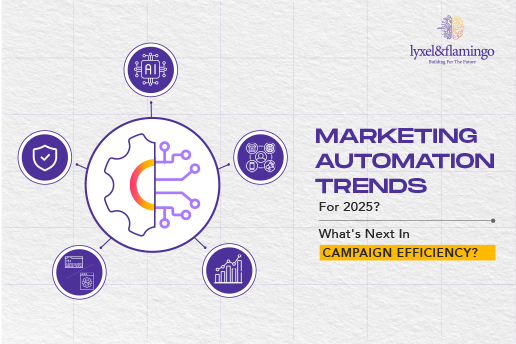

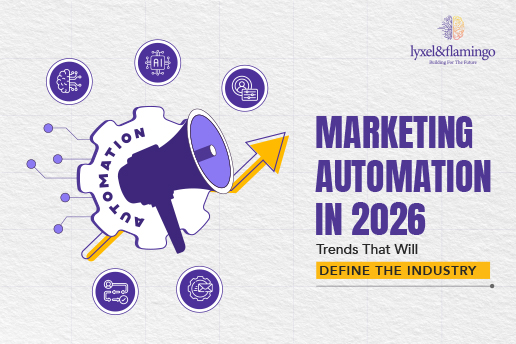
The marketing world is evolving faster than ever. At the center of this transformation lies marketing automation. What began as a set of tools designed to streamline repetitive tasks has now matured into an intelligent ecosystem capable of learning, predicting, and personalising every customer interaction.
As we step into 2025, automation is no longer just about efficiency; it’s about intelligence, adaptability, and impact. Brands today are looking beyond “set and send” email campaigns toward predictive, AI-driven systems that anticipate customer needs and create experiences in real time.
From automated customer journeys that guide users seamlessly through the funnel to personalisation in automation that tailors messages with human-like precision, the possibilities are redefining how marketers connect with audiences.
The future of marketing automation is powered by data, creativity, and technology working in harmony. Artificial Intelligence (AI), machine learning, and predictive analytics are turning marketing systems into proactive strategists rather than reactive tools. For brands that dare to explore this next era, the reward is not just automation; it is evolution.
Let’s decode the top marketing automation trends 2025. Whether you’re a visionary brand or a data-driven marketer, this is your roadmap to understanding how automation will empower smarter, more human marketing in the years ahead.
The Evolution of Automation: From Efficiency to Intelligence
The story of marketing automation began with a simple promise: To make marketing more efficient. In its early years, automation was primarily about saving time: scheduling emails, posting on social media, and managing leads through predefined workflows. Marketers relied on templates, triggers, and static data to reach audiences at scale. It’s an impressive feat for its time, but still limited in understanding why customers acted the way they did.
As technology evolved, so did the expectations. The emergence of automation technology in marketing marked a shift from task automation to decision automation. Tools began integrating with customer data platforms (CDPs), analytics dashboards, and CRM systems to deliver campaigns that were not only faster but also smarter. Marketers could now see beyond surface-level metrics and dive deep into behavioral patterns, engagement trends, and customer intent.
Today, marketing automation has entered an age of intelligence. Powered by AI and machine learning, automation systems don’t just execute commands; they learn, adapt, and optimise. These systems can predict when a user is most likely to engage, recommend the right product, and even personalise communication at scale. The result is a more connected, humanised experience that balances data precision with emotional resonance.
What was once a reactive marketing process has transformed into a proactive ecosystem: one that enables businesses to act in real time, scale personalisation efforts, and measure success with sharper accuracy. Automation is no longer a back-end function; it’s a strategic driver of growth, creativity, and customer trust.
In 2025, marketing automation isn’t about doing more; it’s about doing better, faster, and smarter.
AI and Predictive Marketing Automation: The Smart Core of 2025
In 2025, AI in marketing automation stands as the engine of intelligence, transforming static workflows into dynamic, self-optimising systems. Machine learning models now analyse vast streams of behavioral data to uncover what customers want before they even express it.
This is the power of predictive marketing automation. It shifts marketing from reactive campaigns to proactive engagement. Brands can now forecast buying intent, segment audiences in real time, and deliver hyper-relevant content that resonates on an individual level.
For instance, predictive email triggers can identify when a customer is most likely to open or click, churn prediction models can signal when a user is about to disengage, and AI-led content personalisation ensures every message feels timely, contextual, and human.
The future belongs to brands that don’t just react; they predict, plan, and perform proactively.
Personalisation in Automation: Creating Human Connections at Scale
In 2025, personalisation has evolved far beyond using a customer’s first name. With AI-driven automation, brands can now deliver context-aware messages that adapt to user behavior, preferences, and timing, all in real time.
This new wave of personalisation in automation blends data and empathy. Every touchpoint, from emails to product recommendations, feels intuitive and human, not mechanical. It’s about scaling authenticity without losing individuality.
When automation understands emotions, not just actions, marketing becomes more than communication; it becomes a connection.
True personalisation is not about reaching everyone; it’s about resonating with each one.
The Rise of Automated Customer Journeys
The days of one-size-fits-all marketing are long gone. In 2025, automated customer journeys will have become the backbone of meaningful engagement, guiding users seamlessly from awareness to advocacy.
Powered by AI and integrated CRM systems, these journeys adapt in real time, responding to each customer’s actions and preferences. Whether it’s a B2C purchase reminder or a B2B marketing automation nurture sequence, every interaction feels intentional and timely.
By connecting channels, data, and emotions, brands can now deliver consistency and relevance across the entire customer lifecycle.
Automation isn’t about leading customers through a path; it’s about walking beside them every step of the way.
Email Automation Trends 2025: Smarter, Sharper, and More Sentient
Even as new marketing channels emerge, email continues to be one of the most powerful and personal ways to connect with audiences. But in 2025, this familiar tool has evolved dramatically, powered by AI, predictive analytics, and interactivity that makes every message feel alive.
Modern email automation trends are no longer about mass distribution. They’re about precision and relevance. Predictive analytics now determines not just what to send, but when and why. AI-driven tools generate compelling subject lines, optimise send times based on user behavior, and even adapt message tone and visuals to match emotional context.
Interactive elements powered by AMP technology, like embedded polls, product carousels, and in-mail checkout options, make emails more dynamic and conversion-friendly. Combined with hyper-segmentation, brands can now tailor content to micro-audiences with unparalleled accuracy.
But amid all this automation, creativity remains the bridge that turns technology into trust. Successful brands blend data intelligence with storytelling, ensuring every email feels less like a campaign and more like a conversation.
The inbox remains a personal space. Automation should make it feel more personal, not more robotic.
Top Automation Tools 2025: The Tech Behind the Transformation
Behind every powerful marketing strategy lies smarter technology. The top automation tools of 2025 are redefining how brands plan, personalise, and perform.
These platforms are leading the charge:
- HubSpot AI
- Salesforce Einstein GPT
- Marketo Engage
- ActiveCampaign
- Klaviyo AI
These tools leverage machine learning to optimise workflows, refine targeting, and deliver predictive insights in real time. They are known for blending automation, analytics, and personalisation into a single, intelligent ecosystem.
Choosing the right platform isn’t about scale alone; it’s about synergy. Selecting tools that align with your goals, data maturity, and brand vision.
The right automation tool doesn’t just execute your strategy; it evolves with it.
The Future of Marketing Automation: What Lies Beyond 2025?
As we look beyond 2025, the future of marketing automation points toward systems that think, feel, and adapt in real time. The next wave will see emotion-aware AI, voice and visual automation, and hyper-personalised storytelling powered by predictive data.
Imagine automation that senses customer mood, adjusts messaging tone instantly, and creates immersive, cross-channel experiences that evolve with every interaction. From voice-driven campaigns to AI-generated visuals, automation will become less about mechanics and more about meaning, weaving creativity and data into seamless, human experiences.
Ethical AI, privacy-driven personalisation, and human-centered automation will take precedence, ensuring that technology enhances trust, not just efficiency. We’ll also see greater convergence between marketing, sales, and customer experience systems. Unified data ecosystems will power predictive decision-making, allowing brands to anticipate needs and deliver cohesive journeys across every digital and physical touchpoint. The goal isn’t to replace human creativity, but to amplify it with intelligence and precision.
The future of automation isn’t artificial; it’s profoundly human, where intelligence meets empathy, and technology becomes a true extension of creativity.
Build Smarter, More Human Marketing with Lyxel&Flamingo
At Lyxel&Flamingo, we help brands harness the power of automation technology in marketing, transforming workflows into seamless, intelligent ecosystems.
From predictive automation strategies to AI-driven personalisation, our team ensures your brand doesn’t just follow trends; it defines them.
Discover how we can improve your marketing automation strategy. Let’s design the future, together.
FAQs
Q. What is predictive marketing automation?
A.It uses AI and data analytics to anticipate customer behavior and automate personalised marketing actions before customers act.
Q. How is AI leading the change in marketing automation in 2025?
A.AI enables smarter segmentation, predictive insights, and hyper-personalisation, making automation systems more intuitive and effective.
Q. What are the best marketing automation tools for 2025?
A.Top contenders include HubSpot AI, Salesforce Einstein GPT, Marketo Engage, and ActiveCampaign for both B2B and B2C campaigns.
Q. Is marketing automation suitable for B2B businesses?
A.Absolutely. B2B marketing automation streamlines lead nurturing, account-based marketing, and client retention with data-driven precision.
Q. What’s next for email automation trends?
A.Interactive content, dynamic design, and predictive personalisation will dominate email automation trends in 2025.