
Table of Contents
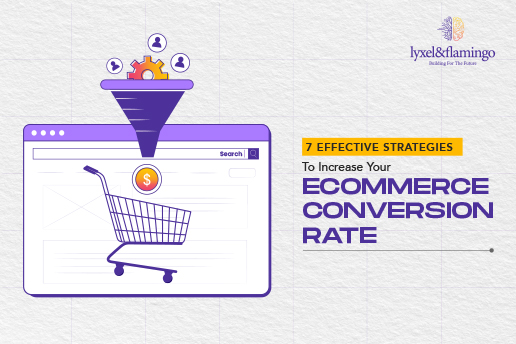
In eCommerce marketing, traffic alone is no longer enough. Brands are investing heavily to bring users in, but the true differentiator lies in how many of those visitors complete a purchase. That’s where your conversion rate becomes the silent hero or hidden hurdle of your digital performance.
Behind every percentage point lies untapped potential. Your conversion rate isn’t only a number, it’s a story to tell. A reflection of how intuitive your user experience is, how compelling your value proposition feels, and how confidently your brand communicates trust.
This blog is your roadmap to decoding that number. Whether you are an emerging startup or a scaling brand, the strategies we’ll walk you through are proven, practical, and primed for performance.
So, if you’re ready to go beyond surface level tweaks and tap into meaningful growth, let’s begin.
What is the eCommerce Conversion Rate?
Your eCommerce conversion rate reveals the effectiveness of your website in turning visitors into customers by measuring the percentage of those who complete a desired action, typically a purchase. It’s a key performance indicator calculated as:
Conversion Rate=(Number of Purchases/Total Visitors)×100
But this metric is more than just a calculation, it’s a compass. A true North Star for digital success.
Why Is It Your North Star?
In an age where online traffic is expensive and attention spans are fleeting, understanding and optimising your conversion rate tells you how effectively your site turns interest into action. It reflects the harmony (or disconnect) between your user experience, product appeal, trust elements, and checkout process.
For example, you could be attracting thousands of visitors through paid campaigns, but if your site isn’t converting them, you’re essentially leaving money and growth on the table.
Whether you are aiming for a modest increase or chasing a complete funnel transformation, your eCommerce conversion rate offers the clearest signal of where to look, what to test, and how to improve.
And here’s where it gets even more exciting: even a small increase in conversion rate can result in exponential revenue gains, without increasing your traffic or ad spend. That’s what makes it such a high-leverage metric and a strategic focal point for any eCommerce brand serious about scaling.
Key Influencing Factors
Before diving into specific strategies, it’s crucial to understand the fundamental elements that significantly impact your eCommerce conversion rate. These are the underlying factors upon which successful optimisation efforts are built:
- Trust and Credibility
Building confidence in your brand and website is paramount. This includes factors like secure payment gateways, transparent return policies, customer reviews, security badges, and professional website design.
When visitors feel safe and trust your business, they are far more likely to make a purchase.
- User Experience (UX) and Website Usability
A seamless and intuitive browsing experience is essential. This encompasses easy navigation, clear product information, fast loading times, mobile responsiveness, and a straightforward checkout process. Friction and frustration during the shopping journey are major conversion killers.
- Value Proposition and Pricing
The perceived value of your products or services relative to their price is a critical driver. This involves clear articulation of benefits, competitive pricing, compelling offers, and transparent shipping costs. Customers need to feel they are getting a good deal.
- Quality of Product Information
Providing comprehensive and accurate details about your products, including high-quality images, videos, and detailed descriptions, empowers customers to make informed decisions. Uncertainty and lack of information lead to hesitation and abandonment.
- Effective Calls to Action (CTAs)
Clear, concise, and compelling calls to action guide visitors towards the desired outcome. Well-placed and action-oriented buttons and links encourage engagement and conversions. Ambiguous or weak CTAs leave visitors unsure of what to do next.
- Target Audience Relevance
Ensuring your website content, product offerings, and marketing efforts align with the needs and preferences of your target audience is crucial. Irrelevant content and offers will not resonate with potential customers.
- Website Performance and Technical Stability
A website that loads slowly, has broken links, or experiences technical issues will deter visitors and negatively impact conversions. A reliable and well-functioning website is fundamental for a positive user experience.
Understanding and addressing these key influencing factors will create a fertile ground for your eCommerce conversion rate optimisation strategies to thrive.
By focusing on building trust, providing a positive user experience, and communicating value, you lay the groundwork for increased sales and customer satisfaction.
Clear 7 Strategies That Drive Confident Actions
When it comes to digital shopping, simplicity isn’t just elegant, it’s effective. An optimised website, both in terms of speed and ease of use, directly leads to higher eCommerce conversion rates.
At its core, simplification is about respecting your user’s time, reducing cognitive load, and guiding them with clarity, not clutter. A seamless experience signals professionalism, intent, and brand confidence, everything your customer needs to keep moving forward.
Here are 7 effective eCommerce marketing strategies that drive conversions:
Strategy 1: Simplify Your User Experience
A well-optimised website is not optional; it’s essential for success. Every second of delay, every unnecessary click, and every confusing layout adds friction to your customer’s journey.
Why It Works?
The modern shopper expects clarity and speed. By removing barriers, you reduce drop-offs and keep users engaged all the way to checkout.
Check This Out:
- Compress images and reduce scripts for faster page loads.
- Use intuitive navigation and search filters.
- Minimise form fields during sign-up and checkout.
Pro Insight: A Google study found that a 0.1-second improvement in site speed can boost conversion rates by up to 8%. That’s not a tweak, it’s a transformation.
Strategy 2: Optimise Product Pages Of Your Site with High-Converting Elements
Your product pages are your virtual storefront. They must build trust, answer questions, and create desire, all within seconds.
Why It Works?
Customers can’t touch or try your product, so they rely on clear images, detailed descriptions, and signals of credibility to guide their decision.
A Proactive eCommerce Marketing Strategy:
- Use high-resolution images on your site with zoom and 360° views.
- Add customer reviews and testimonials.
- Showcase trust badges, delivery timelines, and return policies.
Pro Insight: Adding user-generated content like real-customer photos can increase conversions by a significant percentage.
Strategy 3: Leverage Personalisation and AI-Powered Recommendations
Generic is out. Your users expect a shopping journey tailored to their needs and preferences. Personalised experiences make users feel seen and understood— all key drivers of engagement and loyalty.
What Needs To Be Done?
- Use browsing and purchase history to optimise for certain products.
- Personalise homepage banners and email marketing flows.
- Offer dynamic pricing or bundles based on user behavior.
Strategy 4: Use Strategic Pop-Ups Without Disrupting UX
Pop-ups should be helpful nudges, not intrusive interruptions. When timed right, they can significantly boost conversions.
Why It Works?
Exit-intent offers, time-based deals, or scroll-triggered messages meet users at moments of hesitation and provide value.
Check Out These Tactics:
- Display first-time buyer discounts after 10 seconds on the site.
- Use exit-intent pop-ups to save abandoned carts.
- Try an A/B test copy and design for maximum impact.
Pro Insight: The most effective pop-ups offer real value, appear at the right time, and are easy to close.
Strategy 5: Build Trust with Transparent Policies and Social Proof
Trust can’t be bought, it must be earned through clarity, credibility, and consistency. Unclear policies or a lack of social proof can make users hesitate. Transparency eliminates doubt and builds confidence.
What Can You Do?
- Clearly outline shipping, return, and refund policies.
- Use real-time purchase notifications or review widgets.
- Highlight your brand story and sustainability commitments.
Strategy 6: Reduce Cart Abandonment with Smart Retargeting
Expect that most visitors won’t buy on their initial visit. That’s where retargeting becomes your second chance.
Cart abandoners are high-intent shoppers. Smart follow-ups remind them of what they loved and give them a reason to come back.
Key Points Of This Strategy:
- Send cart recovery emails within 1–3 hours of abandonment.
- Retarget with display ads or social campaigns showing saved items.
- Provide incentives like limited-time discounts or free shipping on products.
Strategy 7: Test, Measure, Repeat – eCommerce Conversion Rate Optimisation is a Journey
What eCommerce strategy works for one brand may not work for you. That’s why consistent experimentation is the only sustainable path to growth.
Why It Works?
From the color of your call-to-action buttons to your site’s layout and the words you use, every detail influences whether visitors convert. Testing these elements will uncover what resonates best with your target customers.
What Can You Do?
- Run A/B tests for key landing pages, headlines, and buttons.
- Use heatmaps to see where users click or drop off.
- Track KPIs like bounce rate, time on page, and funnel drop-offs.
Pro Insight: Brands that adopt a test-and-learn mindset stay ahead by evolving with their customers, not just reacting to them.
Every click, scroll, and interaction shapes how your brand is perceived. A streamlined experience doesn’t just improve usability, it builds trust that turns browsers into buyers. Start with speed, follow with structure, and finish with frictionless functionality for eCommerce Conversion Rate Optimisation. Because when your customer journey flows, so do your conversions.
Unlock the Future of eCommerce Growth with Lyxel&Flamingo
At Lyxel&Flamingo, we don’t just follow trends, we pioneer scalable, data-first digital strategies that unlock new dimensions of growth for your brand.
Whether you’re optimising your checkout funnel or reimagining your entire customer journey, our experts guide you from insight to impact.
Let’s explore what’s next together. Connect with our eCommerce marketing agency today.
FAQs
Q. What’s a healthy conversion rate for an online store?
A. While it varies by industry, aiming for 2-4% is often a sign of strong performance.
Q. How frequently should I be tweaking my website to boost sales?
A. Think of optimisation as an ongoing process – continuous testing and improvements should be a core part of your growth strategy.
Q. Will these conversion tips work for smaller or very specific online shops?
A. Definitely! These are adaptable methods that can be tailored to fit your brand’s current size and target customers.
Q. Do I need a huge marketing budget to see better conversions?
A. Not at all. Many effective strategies begin with small, impactful changes that don’t break the bank.