
Table of Contents
- What Is the Real Difference Between UGC Content and Branded Content?
- Why Does Balancing UGC and Branded Content Matter for ROI?
- How Does UGC Content Build Trust and Engagement?
- How Does Branded Content Strengthen Brand Equity and Consistency?
- How Can Brands Combine UGC and Branded Content Within a Unified Content Marketing Strategy?
- How Can AI Help Balance UGC and Branded Content More Effectively?
- What Role Does UGC Play in a B2B Content Strategy?
- How Should Brands Measure ROI Across UGC and Branded Content?
- What Does a Future-Ready Brand Content Marketing Framework Look Like?
In an era where authenticity drives attention and attention fuels conversions, brands are rethinking how they communicate. The question is no longer whether to use UGC content or branded content, but how to balance both for maximum performance and return on investment.
At Lyxel&Flamingo, we believe that blending human creativity with strategic precision delivers the most powerful results. This guide explores how brands can strike the right balance between UGC content and branded content within a modern content marketing strategy, leveraging AI insights, authentic storytelling, and audience behaviour data.
What Is the Real Difference Between UGC Content and Branded Content?
The difference lies in who creates the story and how it is told.
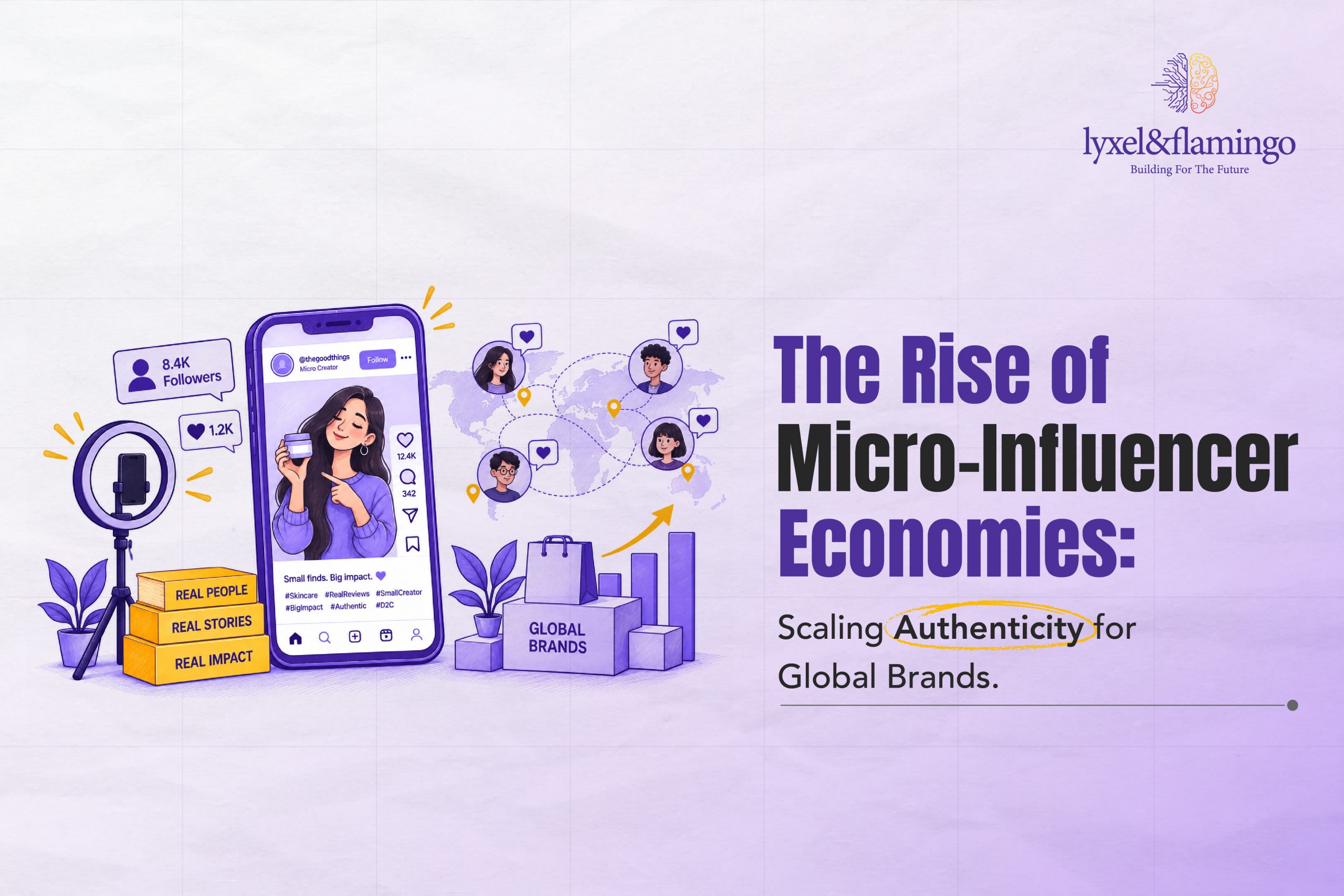
UGC content (user-generated content) is produced by real customers, community members, or fans. It includes social posts, reviews, photos, or videos that highlight genuine experiences with a brand. It’s spontaneous, relatable, and trusted because it reflects real human voices.
Branded content, on the other hand, is created by the brand or agency. It communicates the company’s purpose, tone, and visual identity across blogs, videos, or campaigns. It is deliberate, controlled, and strategic, designed to build long-term trust and reinforce a consistent brand narrative.
Both are essential, but their power lies in how they are combined within a coherent content marketing strategy. The key is using each format where it performs best: UGC for credibility and engagement, branded content for authority and direction.
Why Does Balancing UGC and Branded Content Matter for ROI?
Finding the right balance between UGC content and branded content directly impacts return on investment.
An overreliance on polished, brand-produced content can appear disconnected from real audiences, while relying only on user-generated posts may weaken brand control and message consistency.
When the two are integrated effectively, brands benefit from both authenticity and structure. UGC captures attention and builds community, while branded storytelling reinforces positioning and professionalism.
Campaigns that merge both elements achieve higher engagement rates, longer dwell time, and stronger conversion outcomes. The combination makes content feel relatable yet credible, an emotional and rational balance that drives ROI.
How Does UGC Content Build Trust and Engagement?
Authenticity is the new currency of influence. Audiences are more likely to engage with UGC content because it reflects genuine opinions, not marketing spin.
User reviews, testimonials, and social posts create a sense of transparency. They showcase real outcomes and allow potential customers to see themselves in the experience. This kind of peer validation is especially powerful during the research and consideration stages of the funnel.
When Lyxel&Flamingo partners with brands to grow their UGC content strategies, we prioritise visibility, diversity of voices, and measurable engagement outcomes. The result is a continuous stream of content that fuels community growth while increasing trust in the brand.
By repurposing top-performing UGC content across email, paid media, and landing pages, brands can achieve greater reach without escalating production costs.
How Does Branded Content Strengthen Brand Equity and Consistency?
While UGC content builds credibility, branded content establishes identity.
Every brand needs to articulate its vision, values, and voice. That’s what branded content does best. It gives direction and clarity to all communication, ensuring every message aligns with the brand’s purpose.
At Lyxel&Flamingo, branded storytelling is treated as a long-term equity investment. Well-crafted branded assets, whether blogs, short films, or visual campaigns, maintain tone consistency, deliver thought leadership, and build lasting recall.
This type of content sets the framework for all creative expression, guiding how UGC should be integrated to maintain alignment.
How Can Brands Combine UGC and Branded Content Within a Unified Content Marketing Strategy?
The most effective content marketing strategy merges UGC and branded material to form a single, cohesive narrative.
Start by defining the brand voice and message pillars, then invite the audience to participate. Encourage customers to create content through social challenges, brand hashtags, or community features. Each piece of UGC content should reinforce your brand story while maintaining authenticity.
Clients should build a content calendar that alternates between branded storytelling and user-led experiences. This creates a rhythm that keeps content fresh, diverse, and audience-centric.
Brands like Glossier and GoPro have perfected this approach, blending brand-generated narratives with real customer stories to form an organic ecosystem of advocacy.
How Can AI Help Balance UGC and Branded Content More Effectively?
Artificial intelligence is reshaping how marketers plan and measure performance across content types. Integrating AI tools into your content creation strategy helps balance creativity with precision.
AI can identify which UGC content resonates most with audiences, analyse engagement metrics, and surface patterns in sentiment or topic performance. These insights guide marketers in curating high-impact posts and amplifying what works.
For branded campaigns, AI simplifies production by automating keyword clustering, predictive analytics, and SEO scoring. This ensures every branded content asset is aligned with intent and search visibility.
What Role Does UGC Play in a B2B Content Strategy?
In a B2B context, UGC content typically takes the form of case studies, client testimonials, peer reviews, or expert opinions. These assets enhance trust and authority among decision-makers.
B2B buyers are influenced by validation from other professionals, making user stories more persuasive than generic marketing claims. Integrating authentic voices from clients or industry leaders into campaigns signals credibility and expertise.
Lyxel&Flamingo’s B2B clients leverage UGC content to demonstrate proof of performance, while using branded content such as whitepapers and webinars to establish thought leadership. This combination accelerates buyer confidence and shortens the sales cycle.
How Should Brands Measure ROI Across UGC and Branded Content?
Effective measurement requires tracking both quantitative and qualitative outcomes.
For UGC content, key metrics include engagement rates, shares, sentiment analysis, and referral traffic. For branded content, focus on reach, dwell time, lead generation, and brand recall.
At Lyxel&Flamingo, we recommend a unified performance model that evaluates:
- Engagement-to-cost ratio
- Conversion attribution across UGC and branded assets
- Retention uplift and repeat interaction rates
By combining these metrics, brands can clearly identify which mix of UGC content and branded content generates the highest ROI.
Continuous analysis and optimisation ensure that every campaign remains relevant, efficient, and scalable.
What Does a Future-Ready Brand Content Marketing Framework Look Like?
A future-ready brand content marketing framework prioritises authenticity, agility, and automation.
At its core, it blends human creativity with data intelligence, using UGC content to foster connection and branded content to sustain credibility.
We are in the next generation of content ecosystems where:
- Brands use AI to amplify community stories without losing human tone.
- UGC insights feed into branded campaign concepts.
- Content creation becomes faster, more consistent, and performance-driven.
This integrated approach ensures long-term visibility and higher marketing efficiency, setting brands up for sustained success in the digital-first world.
Creating Connection and Performance Through Balance
The future of marketing belongs to brands that blend authenticity with strategy. Balancing UGC content and branded content allows companies to connect emotionally while maintaining authority.
At Lyxel&Flamingo, we help brands build that balance through performance-focused storytelling, data-led creativity, and AI-enabled optimisation. The result is a content ecosystem that not only engages audiences but drives sustained business impact.
Discover how Lyxel&Flamingo can improve your content marketing strategy.
Visit Lyxel&Flamingo to learn more.
Frequently Asked Questions
UGC stands for user-generated content. It includes photos, reviews, and videos created by customers or users who share their real experiences with a brand.
UGC builds authenticity and trust, making audiences more likely to engage and convert compared to traditional promotional content.
Branded content is created by the company to communicate its story and maintain consistency, while UGC reflects the real experiences of customers.
AI tools assist marketers by analysing performance data, identifying trends, and automating optimisation, helping balance creativity and precision.
Lyxel&Flamingo helps brands design balanced content ecosystems that integrate UGC content, branded content, and AI insights to achieve measurable ROI.